
Works for:
based on ingredients and %- Anti-aging
- Moisturizing
- Evens skin tone
- Anti-oxidation
Can it cause trouble?
- Irritation risk: high
- Comedogenic risk ingredients: 0
Key actives

Product Summary
"G9SKIN - White In Whipping Cream" has a good moisturizing formula. As we expect from a proper moisturizer, the formula includes a combo of effective humectants and emollients. These are the two different types of ingredients that are essential for improving the skin hydration and supporting a healthy skin barrier. Humectants in this product (betaine, glycerin and trehalose) help to increase the water content in the upper layer of the skin. (These ingredients do so by "capturing" water molecules from the outside air or from within the deeper layers of the skin). Emollients in this formulation (salvia hispanica seed extract, dimethicone, peg-10 dimethicone, cyclopentasiloxane and hydroxypropyl cyclodextrin) help to reduce the moisture loss from the skin. They also soften the skin surface and relieve the feeling of dryness and tightness.
Ingredient callouts
- We particularly like that there is a good concentration of Niacinamide (1.70% - 2.10%) in this moisturizer. Niacinamide is a well-studied multi-tasking active. It is a great ingredient to have in a moisturizer. It is stable, and can work well in almost any hydrating formulation. There is solid evidence that Niacinamide can help support skin barrier, regulate oil production and reduce acne and clogged pores. It also helps to fight photodamage and help improve the skin tone, reducing pigmentation marks.
- Adenosine 0.30% - 0.60%. It is a compound that in involved in many biological processes inside the skin cells. According one high-quality clinical trial, topical Adenosine in low concentrations can somewhat help improve "deep wrinkles" - the wrinkles that appear with age in places where our faces are most dynamic (for example, on the forehead or in the corners of the eyes).
Irritation risk
There are quite a few common irritants in this product, including ingredients without particular skin benefits. We would not recommend it for sensitive skin. We assess the overall irritancy of this moisturizer to be high. For a detailed overview of all potential irritants: click here
You can see the detailed formula review with the breakdown of all actives in the product and the full ingredient list with estimated concentrations in the tables below.
Price
The product retails for 26.50A$ in Australia.
For a detailed price comparison: click here.
Anti-aging
What does the product description say?
Instant tone-up cream hydrates and improves skin complexion Niacinamide and Milk Protein Extracts brighten and nourish skin Centella and Witch Hazel Extract soothes skin while Adenosine reduces appearances of fine lines and wrinkles
Source: Lila Beauty
This product can help reduce and prevent fine lines and wrinkles, improve skin elasticity and firmness because it contains adenosine, niacinamide.
These ingredients in the product can also be helpful, even though there is less evidence for their effectiveness: resveratrol.
Keep in mind that it typically takes at least 6 weeks to notice any results because the changes that are needed to improve fine lines and elasticity happen in the deeper layers of the skin. No topical anti-aging product can “erase” wrinkles or fully reverse signs of aging.
Might help improve cell turnover and reduce inflammation in skin. One study shows that the ingredients might be able to help reduce dynamic wrinkles (for example, in the corners of the eyes or on the forehead)
Is proven to be effective in reducing blemishes, evening out skin tone and helping to improve lines and wrinkles. It helps the skin to repair sun damage, calm down inflammation and keep maintain good levels of moisture. The concentration of about 2% is effective for supporting the skin barrier and evening out the skin tone. Concentration of 4-6% is better for helping with acne and balancing the sebum production
Helps neutralize free radicals in skin and might help reduce fine lines and wrinkles, as well as even out the skin tone
A yeast ferment filtrate (also known as Pitera - a trademarked name for the filtrate reserved by the SK-II brand). It helps attract water to the upper layer of the skin, can help neutralize antioxidants and can be helpful in evening out the skin tone. It might be somewhat helpful in preventing premature skin aging but solid evidence is lacking. A small manufacturer study also shows that, when used in high concentrations, it can help reduce sebum production and help against blocked pores
A plant extract that has been shown to be able to reduce inflammation in skin, support restoration of skin barrier function, as well as support collagen production. Contains active compounds called centelloids: asiaticoside, madecasosside, asiatic acid and madecassic acid. Might be helpful in preventing stretch marks. It can be itself be irritating though.
Can contain potent anti-oxidant compounds (abbreviated ECG, GCG, EGC, and EGCG) that might help protect the skin from free radicals. Can help calm down inflammation and has some anti-bacterial properties. Unfortunately, these antioxidants are unstable and lose their effectiveness very quickly in products. The concentration of the antioxidant compounds in the extract also tends to be low to be effective in topical formulation
A stable derivative of vitamin C. It is oil-soluble which means it is more likely to penetrate the skin compared to the pure form of vitamin C (which is water-soluble), but it is less bio-available and is way less effective in stimulating collagen and reducing wrinkles compared to the pure form of vitamin C (L-ascorbic acid) and its other derivatives (for example, magnesium ascorbyl phosphate). At the same time, this vitamin C derivative has been shown in studies to be effective in reducing acne, blemishes and clogged pores. It is less irritating then the pure form of vitamin C
Anti-blemish
This product can help reduce breakouts and clogged pores because it contains the following ingredient: niacinamide. This ingredient is used for treating acne and can have a noticeable effect.
Is proven to be effective in reducing blemishes, evening out skin tone and helping to improve lines and wrinkles. It helps the skin to repair sun damage, calm down inflammation and keep maintain good levels of moisture. The concentration of about 2% is effective for supporting the skin barrier and evening out the skin tone. Concentration of 4-6% is better for helping with acne and balancing the sebum production
A stable derivative of vitamin C. It is oil-soluble which means it is more likely to penetrate the skin compared to the pure form of vitamin C (which is water-soluble), but it is less bio-available and is way less effective in stimulating collagen and reducing wrinkles compared to the pure form of vitamin C (L-ascorbic acid) and its other derivatives (for example, magnesium ascorbyl phosphate). At the same time, this vitamin C derivative has been shown in studies to be effective in reducing acne, blemishes and clogged pores. It is less irritating then the pure form of vitamin C
A plant extract that has been shown to be able to reduce inflammation in skin, support restoration of skin barrier function, as well as support collagen production. Contains active compounds called centelloids: asiaticoside, madecasosside, asiatic acid and madecassic acid. Might be helpful in preventing stretch marks. It can be itself be irritating though.
A yeast ferment filtrate (also known as Pitera - a trademarked name for the filtrate reserved by the SK-II brand). It helps attract water to the upper layer of the skin, can help neutralize antioxidants and can be helpful in evening out the skin tone. It might be somewhat helpful in preventing premature skin aging but solid evidence is lacking. A small manufacturer study also shows that, when used in high concentrations, it can help reduce sebum production and help against blocked pores
Can contain potent anti-oxidant compounds (abbreviated ECG, GCG, EGC, and EGCG) that might help protect the skin from free radicals. Can help calm down inflammation and has some anti-bacterial properties. Unfortunately, these antioxidants are unstable and lose their effectiveness very quickly in products. The concentration of the antioxidant compounds in the extract also tends to be low to be effective in topical formulation
Anti-oxidation
This product contains antioxidants (glutathione, resveratrol) that can help neutralize free radicals in skin. By doing so, they can lessen the damage the skin gets from the UV light (sun).
The following ingredients - camellia japonica flower extract also can have an antioxidant effect, but there is less evidence to confirm their effectiveness in skin.
A peptide that can help neutralize free radicals in skin and reduce melanin production resulting in skin lightening effect and reduction in hyperpigmentation. It can also help attract moisture to the upper layer of the skin
Helps neutralize free radicals in skin and might help reduce fine lines and wrinkles, as well as even out the skin tone
A plant extract that might help neutralize free radicals in skin
A plant extract that may contain a small amount of essential oils. Might be helpful in neutralizing free radicals in skin
A plant extract. Can have an anti-oxidant effect, but can also contain irritants
A plant extract that might help neutralize free radicals in skin
Might help improve cell turnover and reduce inflammation in skin. One study shows that the ingredients might be able to help reduce dynamic wrinkles (for example, in the corners of the eyes or on the forehead)
Might help neutralize free radicals in skin
An extract from fungus (mold) that typically appears on rice. It can help attract water to the upper layer of the skin, might help neutralize free radicals and possibly somewhat reduce hyperpigmentation
A plant extract that can be irritating. It might contain a compound anthocyanin that could be helpful in neutralizing free radicals
A berry extract. Might have some anti-oxidant properties
A yeast ferment filtrate (also known as Pitera - a trademarked name for the filtrate reserved by the SK-II brand). It helps attract water to the upper layer of the skin, can help neutralize antioxidants and can be helpful in evening out the skin tone. It might be somewhat helpful in preventing premature skin aging but solid evidence is lacking. A small manufacturer study also shows that, when used in high concentrations, it can help reduce sebum production and help against blocked pores
Can contain potent anti-oxidant compounds (abbreviated ECG, GCG, EGC, and EGCG) that might help protect the skin from free radicals. Can help calm down inflammation and has some anti-bacterial properties. Unfortunately, these antioxidants are unstable and lose their effectiveness very quickly in products. The concentration of the antioxidant compounds in the extract also tends to be low to be effective in topical formulation
A plant extract that has been shown to be able to reduce inflammation in skin, support restoration of skin barrier function, as well as support collagen production. Contains active compounds called centelloids: asiaticoside, madecasosside, asiatic acid and madecassic acid. Might be helpful in preventing stretch marks. It can be itself be irritating though.
A stable derivative of vitamin C. It is oil-soluble which means it is more likely to penetrate the skin compared to the pure form of vitamin C (which is water-soluble), but it is less bio-available and is way less effective in stimulating collagen and reducing wrinkles compared to the pure form of vitamin C (L-ascorbic acid) and its other derivatives (for example, magnesium ascorbyl phosphate). At the same time, this vitamin C derivative has been shown in studies to be effective in reducing acne, blemishes and clogged pores. It is less irritating then the pure form of vitamin C
A more stable but less bio-available form of vitamin E compared to Tocopherol. Might help moisturize and protect the skin from free radicals, but mostly used in low concentrations to stabilize other ingredients.
Evens skin tone
What does the product description say?
Instant tone-up cream hydrates and improves skin complexion Niacinamide and Milk Protein Extracts brighten and nourish skin Centella and Witch Hazel Extract soothes skin while Adenosine reduces appearances of fine lines and wrinkles
Source: Lila Beauty
This product can help reduce hypepigmentation and even out the skin tone because it contains the following effective ingredients: glutathione, niacinamide
The following ingredient (ingredients) in this product might be helpful, but there is no evidence to confirm that it actually can help even out the skin tone: resveratrol.
Keep in mind that you would need to apply any topical skincare targetted at hypigmentation consistently for a couple of months to get a result. No topical skincare product can help get rid of hyperpigmentation (including post-acne marks and age spots) instantly.
A peptide that can help neutralize free radicals in skin and reduce melanin production resulting in skin lightening effect and reduction in hyperpigmentation. It can also help attract moisture to the upper layer of the skin
Is proven to be effective in reducing blemishes, evening out skin tone and helping to improve lines and wrinkles. It helps the skin to repair sun damage, calm down inflammation and keep maintain good levels of moisture. The concentration of about 2% is effective for supporting the skin barrier and evening out the skin tone. Concentration of 4-6% is better for helping with acne and balancing the sebum production
Helps neutralize free radicals in skin and might help reduce fine lines and wrinkles, as well as even out the skin tone
An extract from fungus (mold) that typically appears on rice. It can help attract water to the upper layer of the skin, might help neutralize free radicals and possibly somewhat reduce hyperpigmentation
A yeast ferment filtrate (also known as Pitera - a trademarked name for the filtrate reserved by the SK-II brand). It helps attract water to the upper layer of the skin, can help neutralize antioxidants and can be helpful in evening out the skin tone. It might be somewhat helpful in preventing premature skin aging but solid evidence is lacking. A small manufacturer study also shows that, when used in high concentrations, it can help reduce sebum production and help against blocked pores
Can contain potent anti-oxidant compounds (abbreviated ECG, GCG, EGC, and EGCG) that might help protect the skin from free radicals. Can help calm down inflammation and has some anti-bacterial properties. Unfortunately, these antioxidants are unstable and lose their effectiveness very quickly in products. The concentration of the antioxidant compounds in the extract also tends to be low to be effective in topical formulation
Moisturizing
What does the product description say?
White In Whipping Cream
Source: From product name
This product can help improve hydration of the skin with the two types of ingredients.
The first type is called “humectants”:
these ingredients help attract water.
When humectants are on the surface of the skin, they “pull in” the moisture from the outside environment, or from
within deeper layers of the skin. The following ingredients in this product do the job:
betaine, glycerin.
This product also contains ingredients called “occlusives”. They help reduce the speed with which our skin loses moisture to the outside environment. These ingredients also help soften the upper layer of the skin, so it feels less tight and nicer to the touch. The following ingredients in this product do the job: dimethicone, peg-10 dimethicone.
The following ingredients in this product are especially good for supporting the skin barrier and helping with the hydration level: niacinamide
A silicone that helps to reduce water loss from the surface of the skin. Can temporarily "fill in" lines and wrinkles, absorb oil, and create a nice product finish
Helps attract water to the upper layer of the skin and improves the product texture
Helps support skin barrier function improving skin hydration and reducing sensitivity
A peptide that can help neutralize free radicals in skin and reduce melanin production resulting in skin lightening effect and reduction in hyperpigmentation. It can also help attract moisture to the upper layer of the skin
One of the best moisturizing ingredients. Naturally present in skin. It attracts water to the upper layer of the skin working as a humectant
Is proven to be effective in reducing blemishes, evening out skin tone and helping to improve lines and wrinkles. It helps the skin to repair sun damage, calm down inflammation and keep maintain good levels of moisture. The concentration of about 2% is effective for supporting the skin barrier and evening out the skin tone. Concentration of 4-6% is better for helping with acne and balancing the sebum production
A silicone that works to soften the upper layer of the skin and reduce its water loss
A plant extract that typically contains linolenic and linoleic acids that help soften the upper layer of the skin and can support skin barrier function
A sugar that attracts water to the upper layer of the skin
Might help improve cell turnover and reduce inflammation in skin. One study shows that the ingredients might be able to help reduce dynamic wrinkles (for example, in the corners of the eyes or on the forehead)
An extract from fungus (mold) that typically appears on rice. It can help attract water to the upper layer of the skin, might help neutralize free radicals and possibly somewhat reduce hyperpigmentation
A silicone that helps improve the product texture and spreadability. Can absorb oil creating a short-term mattifying effect on the skin
A type of silicone that helps water and oil mix together. Can help to soften upper layer of the skin
Used to stabilize product formulations and help soften the upper layer of the skin
A plant extract that has been shown to be able to reduce inflammation in skin, support restoration of skin barrier function, as well as support collagen production. Contains active compounds called centelloids: asiaticoside, madecasosside, asiatic acid and madecassic acid. Might be helpful in preventing stretch marks. It can be itself be irritating though.
A yeast ferment filtrate (also known as Pitera - a trademarked name for the filtrate reserved by the SK-II brand). It helps attract water to the upper layer of the skin, can help neutralize antioxidants and can be helpful in evening out the skin tone. It might be somewhat helpful in preventing premature skin aging but solid evidence is lacking. A small manufacturer study also shows that, when used in high concentrations, it can help reduce sebum production and help against blocked pores
Can contain potent anti-oxidant compounds (abbreviated ECG, GCG, EGC, and EGCG) that might help protect the skin from free radicals. Can help calm down inflammation and has some anti-bacterial properties. Unfortunately, these antioxidants are unstable and lose their effectiveness very quickly in products. The concentration of the antioxidant compounds in the extract also tends to be low to be effective in topical formulation
How honest is this product?
| Promise | Can it deliver? |
|---|---|
| Anti-aging | |
| Moisturizing | |
| Evens skin tone |
Total Promises Fulfilled score: 100/100.
We receive a small commission for purchases made through these links at no cost for you. Thank you for your support! Learn more
Potential irritants
Comedogenic ingredients
No comedogenic ingredients detected
User reviews (0)
Averages from community submissions.
No reviews yet for this product.
Be the first to share your experience!
Tried this product?
Help capture what the ingredient list can't—texture, finish, pilling, scent, and more. Answer what you can, skip the rest.
Takes ~30 seconds.
Reviews are shown in aggregate. No personal details.
| Product | Similarity | Price | Irritancy |
|---|---|---|---|
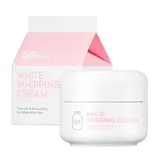 G9SKIN White In Whipping Cream | Current | ≈ $18.49 | |
 Secret Key Hyaluron Aqua Soft Cream | 85% | $11.40 | |
 BYROE SALMON CREAM | 84% | $120.00 | |
 Holika Holika Mechnikov's Probiotics Formula Radiance Cream | 83% | ≈ $49.12 | |
 innisfree Orchid Youth-Enriched Cream | 82% | $19.10 | |
 Manyo Galactomy Essence Cream | 81% | $8.75 |
Key Actives
Is proven to be effective in reducing blemishes, evening out skin tone and helping to improve lines and wrinkles. It helps the skin to repair sun damage, calm down inflammation and keep maintain good levels of moisture. The concentration of about 2% is effective for supporting the skin barrier and evening out the skin tone. Concentration of 4-6% is better for helping with acne and balancing the sebum production
A plant extract that has been shown to be able to reduce inflammation in skin, support restoration of skin barrier function, as well as support collagen production. Contains active compounds called centelloids: asiaticoside, madecasosside, asiatic acid and madecassic acid. Might be helpful in preventing stretch marks. It can be itself be irritating though.
A yeast ferment filtrate (also known as Pitera - a trademarked name for the filtrate reserved by the SK-II brand). It helps attract water to the upper layer of the skin, can help neutralize antioxidants and can be helpful in evening out the skin tone. It might be somewhat helpful in preventing premature skin aging but solid evidence is lacking. A small manufacturer study also shows that, when used in high concentrations, it can help reduce sebum production and help against blocked pores
Can contain potent anti-oxidant compounds (abbreviated ECG, GCG, EGC, and EGCG) that might help protect the skin from free radicals. Can help calm down inflammation and has some anti-bacterial properties. Unfortunately, these antioxidants are unstable and lose their effectiveness very quickly in products. The concentration of the antioxidant compounds in the extract also tends to be low to be effective in topical formulation
Helps neutralize free radicals in skin and might help reduce fine lines and wrinkles, as well as even out the skin tone
Might help improve cell turnover and reduce inflammation in skin. One study shows that the ingredients might be able to help reduce dynamic wrinkles (for example, in the corners of the eyes or on the forehead)
A peptide that can help neutralize free radicals in skin and reduce melanin production resulting in skin lightening effect and reduction in hyperpigmentation. It can also help attract moisture to the upper layer of the skin
A silicone that helps improve the product texture and spreadability. Can absorb oil creating a short-term mattifying effect on the skin
A silicone that helps to reduce water loss from the surface of the skin. Can temporarily "fill in" lines and wrinkles, absorb oil, and create a nice product finish
Helps support skin barrier function improving skin hydration and reducing sensitivity
One of the best moisturizing ingredients. Naturally present in skin. It attracts water to the upper layer of the skin working as a humectant
Works as a UV filter when used in high concentrations. It is photostable and is effective mostly against the UVB light, with some protection in the UVA range. In small concentrations, used for its ability to improve the color of cosmetic products. Is usually well tolerated by the skin
A sugar that attracts water to the upper layer of the skin
A plant extract that might help neutralize free radicals in skin
Helps attract water to the upper layer of the skin and improves the product texture
A silicone that works to soften the upper layer of the skin and reduce its water loss
A plant extract that typically contains linolenic and linoleic acids that help soften the upper layer of the skin and can support skin barrier function
Potential irritants
A berry extract. Might have some anti-oxidant properties
A plant extract that might help neutralize free radicals in skin
A plant extract that may contain a small amount of essential oils. Might be helpful in neutralizing free radicals in skin
A plant extract that can help calm down inflammation in skin. Can, however, itself be irritating
A plant extract that one one hand, can contain compounds that can help calm down skin irritation, but, on the other hand, its other compounds (especially fragrant ones) can themselves be irritating
An aromatic blend of unspecified and possibly irritating ingredients
A plant extract. Can have an anti-oxidant effect, but can also contain irritants
A plant extract that can be irritating. It might contain a compound anthocyanin that could be helpful in neutralizing free radicals
Helps to control the skin's pH level. Maintains the skin's natural film of amino-lactic acids and oils. Helps to preserve products
Helps neutralize free radicals in skin and might help reduce fine lines and wrinkles, as well as even out the skin tone
A plant extract that has been shown to be able to reduce inflammation in skin, support restoration of skin barrier function, as well as support collagen production. Contains active compounds called centelloids: asiaticoside, madecasosside, asiatic acid and madecassic acid. Might be helpful in preventing stretch marks. It can be itself be irritating though.
A plant extract that might help neutralize free radicals in skin
A plant extract that typically contains linolenic and linoleic acids that help soften the upper layer of the skin and can support skin barrier function
A stable derivative of vitamin C. It is oil-soluble which means it is more likely to penetrate the skin compared to the pure form of vitamin C (which is water-soluble), but it is less bio-available and is way less effective in stimulating collagen and reducing wrinkles compared to the pure form of vitamin C (L-ascorbic acid) and its other derivatives (for example, magnesium ascorbyl phosphate). At the same time, this vitamin C derivative has been shown in studies to be effective in reducing acne, blemishes and clogged pores. It is less irritating then the pure form of vitamin C
Used to stabilize product formulations and help soften the upper layer of the skin
A more stable but less bio-available form of vitamin E compared to Tocopherol. Might help moisturize and protect the skin from free radicals, but mostly used in low concentrations to stabilize other ingredients.
A peptide that can help neutralize free radicals in skin and reduce melanin production resulting in skin lightening effect and reduction in hyperpigmentation. It can also help attract moisture to the upper layer of the skin
Comedogenic ingredients
We couldn't find any comedogenic ingredients in this product
All ingredients
One of the best moisturizing ingredients. Naturally present in skin. It attracts water to the upper layer of the skin working as a humectant
A silicone that helps improve the product texture and spreadability. Can absorb oil creating a short-term mattifying effect on the skin
Works as a UV filter when used in high concentrations. It is photostable and is effective mostly against the UVB light, with some protection in the UVA range. In small concentrations, used for its ability to improve the color of cosmetic products. Is usually well tolerated by the skin
Is proven to be effective in reducing blemishes, evening out skin tone and helping to improve lines and wrinkles. It helps the skin to repair sun damage, calm down inflammation and keep maintain good levels of moisture. The concentration of about 2% is effective for supporting the skin barrier and evening out the skin tone. Concentration of 4-6% is better for helping with acne and balancing the sebum production
A silicone that helps to reduce water loss from the surface of the skin. Can temporarily "fill in" lines and wrinkles, absorb oil, and create a nice product finish
Used to stabilize mixtures of oil and water, and create thicker, gel-like product textures
An extract from fungus (mold) that typically appears on rice. It can help attract water to the upper layer of the skin, might help neutralize free radicals and possibly somewhat reduce hyperpigmentation
A preservative. It helps prevent bacterial growth in cosmetic products
A type of silicone that helps water and oil mix together. Can help to soften upper layer of the skin
Helps to control the skin's pH level. Maintains the skin's natural film of amino-lactic acids and oils. Helps to preserve products
Used to stabilize product formulations and create a nice product texture
A yeast ferment filtrate (also known as Pitera - a trademarked name for the filtrate reserved by the SK-II brand). It helps attract water to the upper layer of the skin, can help neutralize antioxidants and can be helpful in evening out the skin tone. It might be somewhat helpful in preventing premature skin aging but solid evidence is lacking. A small manufacturer study also shows that, when used in high concentrations, it can help reduce sebum production and help against blocked pores
A berry extract. Might have some anti-oxidant properties
A plant extract that might help neutralize free radicals in skin
Helps neutralize free radicals in skin and might help reduce fine lines and wrinkles, as well as even out the skin tone
Helps attract water to the upper layer of the skin and improves the product texture
A plant extract that has been shown to be able to reduce inflammation in skin, support restoration of skin barrier function, as well as support collagen production. Contains active compounds called centelloids: asiaticoside, madecasosside, asiatic acid and madecassic acid. Might be helpful in preventing stretch marks. It can be itself be irritating though.
A plant extract that might help neutralize free radicals in skin
A plant extract that may contain a small amount of essential oils. Might be helpful in neutralizing free radicals in skin
A plant extract that can help calm down inflammation in skin. Can, however, itself be irritating
A plant extract that one one hand, can contain compounds that can help calm down skin irritation, but, on the other hand, its other compounds (especially fragrant ones) can themselves be irritating
An aromatic blend of unspecified and possibly irritating ingredients
A silicone that works to soften the upper layer of the skin and reduce its water loss
Might help improve cell turnover and reduce inflammation in skin. One study shows that the ingredients might be able to help reduce dynamic wrinkles (for example, in the corners of the eyes or on the forehead)
Used to stabilize the product formulation and can help absorb oil
Helps support skin barrier function improving skin hydration and reducing sensitivity
Can contain potent anti-oxidant compounds (abbreviated ECG, GCG, EGC, and EGCG) that might help protect the skin from free radicals. Can help calm down inflammation and has some anti-bacterial properties. Unfortunately, these antioxidants are unstable and lose their effectiveness very quickly in products. The concentration of the antioxidant compounds in the extract also tends to be low to be effective in topical formulation
A plant extract. Can have an anti-oxidant effect, but can also contain irritants
A plant extract that typically contains linolenic and linoleic acids that help soften the upper layer of the skin and can support skin barrier function
A plant extract that can be irritating. It might contain a compound anthocyanin that could be helpful in neutralizing free radicals
A stable derivative of vitamin C. It is oil-soluble which means it is more likely to penetrate the skin compared to the pure form of vitamin C (which is water-soluble), but it is less bio-available and is way less effective in stimulating collagen and reducing wrinkles compared to the pure form of vitamin C (L-ascorbic acid) and its other derivatives (for example, magnesium ascorbyl phosphate). At the same time, this vitamin C derivative has been shown in studies to be effective in reducing acne, blemishes and clogged pores. It is less irritating then the pure form of vitamin C
Used to stabilize product formulations and help soften the upper layer of the skin
A more stable but less bio-available form of vitamin E compared to Tocopherol. Might help moisturize and protect the skin from free radicals, but mostly used in low concentrations to stabilize other ingredients.
A peptide that can help neutralize free radicals in skin and reduce melanin production resulting in skin lightening effect and reduction in hyperpigmentation. It can also help attract moisture to the upper layer of the skin
Ingredient list view
Water, Methylpropanediol, Glycerin, Cyclopentasiloxane, Titanium dioxide, Ci 77891, Niacinamide, Dimethicone/peg-10/15 crosspolymer, Dimethicone, Sodium chloride, Aspergillus ferment, Milk protein extract, Fructan, Phenoxyethanol, Chlorphenesin, Cetyl peg/ppg-10/1 dimethicone, Sodium citrate, Trehalose, Dimethicone/vinyl dimethicone crosspolymer, Galactomyces ferment filtrate, Oenothera biennis flower extract, Vaccinium macrocarpon fruit extract, Camellia japonica flower extract, Resveratrol, Betaine, Centella asiatica extract, Rubus fruticosus fruit extract, Sambucus nigra fruit extract, Hamamelis virginiana leaf extract, Anthemis nobilis flower extract, Parfum, Peg-10 dimethicone, Adenosine, Maltodextrin, Calcium pantothenate, Sodium starch octenylsuccinate, Camellia sinensis leaf extract, Hedera helix leaf extract, Linum usitatissimum seed extract, Nelumbo nucifera flower water, Origanum vulgare leaf extract, Eucalyptus globulus leaf extract, Salvia hispanica seed extract, Hibiscus sabdariffa flower extract, Pinus sylvestris leaf extract, Sodium ascorbyl phosphate, Hydroxypropyl cyclodextrin, Tocopheryl acetate, Pyridoxine hcl, Ethylhexylglycerin, Glutathione, Disodium edta, Silica
- Glycerol and the skin: holistic approach to its origin and functions
- Niacinamide - mechanisms of action and its topical use in dermatology
- Gehring, W. (2004). Nicotinic acid/niacinamide and the skin. Journal of Cosmetic Dermatology, 3(2), 88–93. doi:10.1111/j.1473-2130.2004.00115.x
- Dimethicone as a protective ingredient in topical medications
- Final Report on the Safety Assessment of Dimethicone Copolyol
- Brewer's rice: A potential substrate for cosmeceutical bio-ingredient production by solid state fermentation using Aspergillus oryzae
- Effects of galactomyces ferment filtrate on epidermal barrier marker caspase-14 in human skin cells.
- Galactomyces fermentation filtrate prevents T helper 2-mediated reduction of filaggrin in an aryl hydrocarbon receptor-dependent manner
- The Effects of Essence-Formed Cosmetic Ingredients Containing the Galactomyces Ferment Filtrate on Skin Improvements in Keratinization, Pores, Sebum Excretion, Brightness and Acne
- Antioxidants cinnamaldehyde and Galactomyces fermentation filtrate downregulate senescence marker CDKN2A/p16INK4A via NRF2 activation in keratinocytes
- Galactomyces Ferment Filtrate Suppresses Reactive Oxygen Species Generation and Promotes Cellular Redox Balance in Human Melanocytes via Nrf2-ARE Pathway
- Galactomyces Ferment Filtrate Suppresses Melanization and Oxidative Stress in Epidermal Melanocytes
- Skin permeation and antioxidant efficacy of topically applied resveratrol
- Chemoprevention of skin cancer by grape constituent resveratrol: relevance to human disease?
- Evaluation of efficacy and tolerance of a nighttime topical antioxidant containing resveratrol, baicalin, and vitamin e for treatment of mild to moderately photodamaged skin
- Resveratrol as a Multifunctional Topical Hypopigmenting Agent
- Anti-aging properties of resveratrol: review and report of a potent new antioxidant skin care formulation
- Resveratrol: A Unique Antioxidant Offering a Multi-Mechanistic Approach for Treating Aging Skin
- Anti-Inflammatory Effect of Titrated Extract of Centella asiatica in Phthalic Anhydride-Induced Allergic Dermatitis Animal Model
- Centella asiatica in cosmetology
- Triterpene Composition and Bioactivities of Centella asiatica
- Asiaticoside induction for cell-cycle progression, proliferation and collagen synthesis in human dermal fibroblasts
- Assessment report on Centella asiatica (L.) Urban, herba
- Contact dermatitis due to Madecassol
- The Effects of a Standardized Extract of Centella asiatica on Postlaser Resurfacing Wound Healing on the Face: A Split-Face, Double-Blind, Randomized, Placebo-Controlled Trial
- Assessment report on Sambucus nigra L., fructus
- SKIN PROTECTION AGAINST SOLAR UV RADIATION BY NATURAL PLANT PRODUCTS: EXTRACTS FROM ELDER FRUIT (SAMBUCUS NIGRA L.)
- Evaluation of anti-wrinkle efficacy of adenosine-containing products using the FOITS technique
- Calcium pantothenate modulates gene expression in proliferating human dermal fibroblasts
- Dexpanthenol Modulates Gene Expression in Skin Wound Healing in vivo
- Dexapanthenol enhances skin barrier repair and reduces inflammation after sodium lauryl sulphate-induced irritation
- The Chemical Composition and Nutritional Value of Chia Seeds—Current State of Knowledge
- Anthocyanin-rich extract from Hibiscus sabdariffa calyx counteracts UVC-caused impairments in rats
- Hibiscus sabdariffa L. – A phytochemical and pharmacological review
- Liposome-containing Hibiscus sabdariffa calyx extract formulations with increased antioxidant activity, improved dermal penetration and reduced dermal toxicity
- Sodium ascorbyl phosphate shows in vitro and in vivo efficacy in the prevention and treatment of acne vulgaris
- Sodium ascorbyl phosphate in topical microemulsions
- Final report of the safety assessment of L-Ascorbic Acid, Calcium Ascorbate, Magnesium Ascorbate, Magnesium Ascorbyl Phosphate, Sodium Ascorbate, and Sodium Ascorbyl Phosphate as used in cosmetics
- Regulation of collagen synthesis in human dermal fibroblasts by the sodium and magnesium salts of ascorbyl-2-phosphate
- Comparison of clinical efficacies of sodium ascorbyl phosphate, retinol and their combination in acne treatment
- Application of l-ascorbic acid and its derivatives (sodium ascorbyl phosphate and magnesium ascorbyl phosphate) in topical cosmetic formulations: stability studies
- Sodium L-ascorbyl-2-phosphate 5% lotion for the treatment of acne vulgaris: a randomized, double-blind, controlled trial
- Glutathione as a skin whitening agent: Facts, myths, evidence and controversies
- Glutathione for skin lightening: a regnant myth or evidence-based verity?
- Glutathione for skin lightening for dermatologists and cosmetologists