
Works for:
based on ingredients and %- Moisturizing
- Anti-oxidation
Can it cause trouble?
- Irritation risk: high
- Comedogenic risk ingredients: 4
Key actives


Works for
Anti-oxidation
This product contains antioxidants (squalene) that might be able to help neutralize free radicals in skin to lessen the damage it gets from the UV light (sun). There is not enough evidence to confirm their effectiveness in skin though.
An oil that is naturally part of skin sebum that helps to soften its upper layer, reduce water loss and neutralize free radicals. It might be comedogenic. Avoid applying large concentrations (or pure oil) before sun exposure as oxidized squalene can clog pores and lead to skin irritation. Today squalene is mostly derived from vegetable oils or synthetized by yeast
An essential oil. Can be irritating. Can become an allergen with oxidation
Used to add a nice rose smell to the product. Might help attract water to the upper layer of the skin and have some anti-oxidant effect. Can be irritating
Pure form of vitamin E. Can help moisturise and protect the skin from free radicals. Often used to help stabilise other ingredients or the formula itself
An essential oil that is used as a fragrance and can be irritating. It might have some anti-oxidant effect in skin
An emollient that helps soften the skin
Moisturizing
What does the product description say?
Hydration Moisturizing Face Cream Organic
Source: From product name
This product can help improve hydration of the skin with the two types of ingredients.
The first type is called “humectants”:
these ingredients help attract water.
When humectants are on the surface of the skin, they “pull in” the moisture from the outside environment, or from
within deeper layers of the skin. The following ingredients in this product do the job:
biosaccharide gum-1, glycerin.
This product also contains ingredients called “occlusives”. They help reduce the speed with which our skin loses moisture to the outside environment. These ingredients also help soften the upper layer of the skin, so it feels less tight and nicer to the touch. The following ingredients in this product do the job: helianthus annuus seed oil, simmondsia chinensis seed oil.
Helps soften the upper layer of the skin
A great emollient due to its high linoleic acid content. One of the most effective plant oils in helping skin hydration and repairing skin barrier function
An oil that is naturally part of skin sebum that helps to soften its upper layer, reduce water loss and neutralize free radicals. It might be comedogenic. Avoid applying large concentrations (or pure oil) before sun exposure as oxidized squalene can clog pores and lead to skin irritation. Today squalene is mostly derived from vegetable oils or synthetized by yeast
Softens the upper layer of skin and helps restore the healthy skin barrier. Has shown to help calm down inflammation in skin. It is a stable oil, meaning that it retains its properties even when exposed to air.
Naturally present in skin and helps to attract water to its upper layer
One of the best moisturizing ingredients. Naturally present in skin. It attracts water to the upper layer of the skin working as a humectant
A phytosterol that can support skin's barrier function and help the skin stay hydrated
Helps attract water to the upper layer of the skin and is claimed to provide a longer-lasting hydration because of its ability to create a water-binding film on the surface of the skin
A non-drying alcohol. Works as an emollient. Helps water and oil mix together and creates a nice product texture
An emollient that softens skin and creates a nice product texture
Traditionally used to treat sunburns, dermatitis and inflammation, but evidence for its effectiveness is lacking. The extract can contain humectants that help attract water into the skin
An emollient that can also help water and oil mix together, as well as prevent bacteria growth in products
An emollient that softens the skin and forms a protective layer on its surface. Helps water and oil mix together
Used to add a nice rose smell to the product. Might help attract water to the upper layer of the skin and have some anti-oxidant effect. Can be irritating
An emollient that helps soften the skin
Pure form of vitamin E. Can help moisturise and protect the skin from free radicals. Often used to help stabilise other ingredients or the formula itself
How honest is this product?
| Promise | Can it deliver? |
|---|---|
| Moisturizing |
Total Promises Fulfilled score: 75/100.
We receive a small commission for purchases made through these links at no cost for you. Thank you for your support! Learn more
Affiliate link · supports WIMJ at no cost to you
Potential irritants
Comedogenic ingredients
User reviews (0)
Averages from community submissions.
No reviews yet for this product.
Be the first to share your experience!
Tried this product?
Help capture what the ingredient list can't—texture, finish, pilling, scent, and more. Answer what you can, skip the rest.
Takes ~30 seconds.
Reviews are shown in aggregate. No personal details.
| Product | Similarity | Price | Irritancy |
|---|---|---|---|
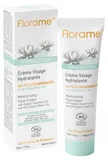 Florame Hydration Moisturizing Face Cream Organic | Current | ≈ $20.52 | |
 The Organic Pharmacy Moisturise Double Rose Rejuvenating Face Cream | 83% | - | |
 Triumph & Disaster Gameface Moisturiser Tube | 83% | ≈ $44.95 | |
 Medipharma Cosmetics Haut in Balance Pigment/Age Spot Reducing Treatment Cream | 83% | $27.50 | |
MG217 Salicylic Acid Formula Cream | 83% | $10.99 | |
Nuhanciam Anti-Imperfection Face Cream | 83% | $20.00 |
Key Actives
Used for skin exfoliation. It has an anti-inflammatory and anti-bacterial effect, helps to unclog pores, prevent blemishes and speed up healing of the existing ones. Sometimes referred to as a BHA (beta-hydroxy acid)
Pure form of vitamin E. Can help moisturise and protect the skin from free radicals. Often used to help stabilise other ingredients or the formula itself
An emollient that helps soften the skin
An oil that is naturally part of skin sebum that helps to soften its upper layer, reduce water loss and neutralize free radicals. It might be comedogenic. Avoid applying large concentrations (or pure oil) before sun exposure as oxidized squalene can clog pores and lead to skin irritation. Today squalene is mostly derived from vegetable oils or synthetized by yeast
One of the best moisturizing ingredients. Naturally present in skin. It attracts water to the upper layer of the skin working as a humectant
Softens the upper layer of skin and helps restore the healthy skin barrier. Has shown to help calm down inflammation in skin. It is a stable oil, meaning that it retains its properties even when exposed to air.
Helps soften the upper layer of the skin
Naturally present in skin and helps to attract water to its upper layer
A great emollient due to its high linoleic acid content. One of the most effective plant oils in helping skin hydration and repairing skin barrier function
Helps attract water to the upper layer of the skin and is claimed to provide a longer-lasting hydration because of its ability to create a water-binding film on the surface of the skin
A phytosterol that can support skin's barrier function and help the skin stay hydrated
Potential irritants
A citrus plant essential oil (in a less concentrated format). Used as a fragrance and can be irritating
Used to add a nice rose smell to the product. Might help attract water to the upper layer of the skin and have some anti-oxidant effect. Can be irritating
Used for skin exfoliation. It has an anti-inflammatory and anti-bacterial effect, helps to unclog pores, prevent blemishes and speed up healing of the existing ones. Sometimes referred to as a BHA (beta-hydroxy acid)
An essentil oil from orange peel. Potential allergen and can be irritating
A plant oil with a high content of volatile compounds that can irritate the skin and lead to allergic reactions. Can lead to photosensitivity
An essential oil that can be very irritating. Has some anti-bacterial properties
An essential oil. Can be irritating. Can become an allergen with oxidation
An essential oil that is likely to be irritating and can cause photosensitivity
An essential oil that is used as a fragrance and can be irritating. It might have some anti-oxidant effect in skin
An aromatic blend of unspecified and possibly irritating ingredients
A preservative. Can be used to mask unpleasant smell. Can be irritating
A common frangrance that can easily irritate skin, especially if exposed to air, light or heat
Traditionally used to treat sunburns, dermatitis and inflammation, but evidence for its effectiveness is lacking. The extract can contain humectants that help attract water into the skin
An emollient that softens skin and creates a nice product texture
Softens the upper layer of skin and helps restore the healthy skin barrier. Has shown to help calm down inflammation in skin. It is a stable oil, meaning that it retains its properties even when exposed to air.
Used to thicken the product's consistency
Helps water and oil in the product mix well together and improves product texture
Can work as an exfoliant but is typically used to adjust the product pH
Comedogenic ingredients
A non-drying alcohol. Works as an emollient. Helps water and oil mix together and creates a nice product texture
Used to thicken the product's consistency
An oil that is naturally part of skin sebum that helps to soften its upper layer, reduce water loss and neutralize free radicals. It might be comedogenic. Avoid applying large concentrations (or pure oil) before sun exposure as oxidized squalene can clog pores and lead to skin irritation. Today squalene is mostly derived from vegetable oils or synthetized by yeast
All ingredients
Traditionally used to treat sunburns, dermatitis and inflammation, but evidence for its effectiveness is lacking. The extract can contain humectants that help attract water into the skin
A citrus plant essential oil (in a less concentrated format). Used as a fragrance and can be irritating
Used to add a nice rose smell to the product. Might help attract water to the upper layer of the skin and have some anti-oxidant effect. Can be irritating
An emollient that softens skin and creates a nice product texture
One of the best moisturizing ingredients. Naturally present in skin. It attracts water to the upper layer of the skin working as a humectant
Softens the upper layer of skin and helps restore the healthy skin barrier. Has shown to help calm down inflammation in skin. It is a stable oil, meaning that it retains its properties even when exposed to air.
A non-drying alcohol. Works as an emollient. Helps water and oil mix together and creates a nice product texture
Used to thicken the product's consistency
An emollient that softens the skin and forms a protective layer on its surface. Helps water and oil mix together
Helps water and oil in the product mix well together and improves product texture
Naturally present in skin and helps to attract water to its upper layer
Used for skin exfoliation. It has an anti-inflammatory and anti-bacterial effect, helps to unclog pores, prevent blemishes and speed up healing of the existing ones. Sometimes referred to as a BHA (beta-hydroxy acid)
A great emollient due to its high linoleic acid content. One of the most effective plant oils in helping skin hydration and repairing skin barrier function
Helps attract water to the upper layer of the skin and is claimed to provide a longer-lasting hydration because of its ability to create a water-binding film on the surface of the skin
Pure form of vitamin E. Can help moisturise and protect the skin from free radicals. Often used to help stabilise other ingredients or the formula itself
An essentil oil from orange peel. Potential allergen and can be irritating
A plant oil with a high content of volatile compounds that can irritate the skin and lead to allergic reactions. Can lead to photosensitivity
An emollient that can also help water and oil mix together, as well as prevent bacteria growth in products
A phytosterol that can support skin's barrier function and help the skin stay hydrated
An essential oil that can be very irritating. Has some anti-bacterial properties
An essential oil. Can be irritating. Can become an allergen with oxidation
An oil that is naturally part of skin sebum that helps to soften its upper layer, reduce water loss and neutralize free radicals. It might be comedogenic. Avoid applying large concentrations (or pure oil) before sun exposure as oxidized squalene can clog pores and lead to skin irritation. Today squalene is mostly derived from vegetable oils or synthetized by yeast
An essential oil that is likely to be irritating and can cause photosensitivity
An essential oil that is used as a fragrance and can be irritating. It might have some anti-oxidant effect in skin
An aromatic blend of unspecified and possibly irritating ingredients
A preservative. Can be used to mask unpleasant smell. Can be irritating
Can work as an exfoliant but is typically used to adjust the product pH
A common frangrance that can easily irritate skin, especially if exposed to air, light or heat
Ingredient list view
Aloe barbadensis leaf juice, Citrus aurantium amara flower water, Rosa damascena flower water, Coco-caprylate, Glycerin, Water, Simmondsia chinensis seed oil, Cetearyl alcohol, Prunus amygdalus dulcis seed, Zea mays starch, Prunus armeniaca kernel oil, Glyceryl stearate, Cetearyl glucoside, Sodium pca, Xanthan gum, Salicylic acid, Helianthus annuus seed oil, Biosaccharide gum-1, Citrus limon peel oil, Tocopherol, Citrus aurantium dulcis peel oil, Citrus aurantium bergamia fruit oil, Hydrolyzed beta-glucan, Glyceryl caprylate, Sodium levulinate, Sodium anisate, Nymphaea alba flower extract, Beta-sitosterol, Eucalyptus globulus leaf oil, Coriandrum sativum seed oil, Pelargonium graveolens flower oil, Mentha viridis leaf oil, Squalene, Crithmum maritimum oil, Elettaria cardamomum seed oil, Artemisia dracunculus oil, Carum carvi seed oil, Citrus aurantium amara leaf/twig oil, Zingiber officinale root oil, Anthemis nobilis flower oil, Parfum, Benzyl alcohol, Sodium benzoate, Sorbic acid, Dehydroacetic acid, Potassium sorbate, Citric acid, Sodium hydroxide, Limonene, Linalool, Geraniol, Citronellol, Citral
- Annex I: Clinical evidence regarding sensitisation to individual fragrance chemicals and to natural extracts
- Glycerol and the skin: holistic approach to its origin and functions
- Salicylic acid as a peeling agent: a comprehensive review
- Beta Hydroxy Acids
- A review of toxicity from topical salicylic acid preparations
- Glycolic Acid Peels Versus Salicylic–Mandelic Acid Peels in Active Acne Vulgaris and Post‐Acne Scarring and Hyperpigmentation: A Comparative Study
- Effect of Olive and Sunflower Seed Oil on the Adult Skin Barrier: Implications for Neonatal Skin Care
- Topically Applied Sunflower Seed Oil Prevents Invasive Bacterial Infections in Preterm Infants in Egypt
- Effect of topically applied lipids on surfactant-irritated skin
- Impact of topical oils on the skin barrier: possible implications for neonatal health in developing countries
- Vitamin E in dermatology
- Vitamin E and Skin Health
- Safety Assessment of Citrus-Derived Peel Oils as Used in Cosmetics
- Oxidized citrus oil (R-limonene): A frequent skin sensitizer in Europe
- Air oxidation increases skin irritation from fragrance terpenes
- Safety Assessment of Phytosterols as Used in Cosmetics
- The Ameliorative Effect of β-sitosterol on DNCB-induced Atopic Dermatitis in Mice
- Fragrance Compound Geraniol Forms Contact Allergens on Air Exposure. Identification and Quantification of Oxidation Products and Effect on Skin Sensitization
- Squalene and its potential clinical uses
- Biological and Pharmacological Activities of Squalene and Related Compounds: Potential Uses in Cosmetic Dermatology
- Enhanced comedo formation in rabbit ear skin by squalene and oleic acid peroxides
- Zingiber officinale Rosc. essential oil, a review on its composition and bioactivity
- Safety Assessment of Anthemis nobilis– Derived Ingredients as Used in Cosmetics
- 4 Final Report on the Safety Assessment of Sodium Dehydroacetate and Dehydroacetic Acid