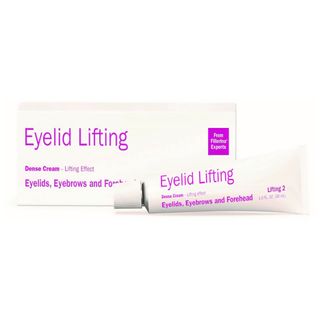
Fillerina Labo Eyelid Lifting Cream - Grade 2
Works for
1 of 1 advertised claim delivered
Anti-aging4 ingredients credited for this claimModerate support
“Labo Eyelid Lifting Cream - Grade 2”
This product contains palmitoyl tripeptide-38, retinyl palmitate, tripeptide-10 citrulline. These ingredients might be able to help reduce and prevent fine lines and wrinkles, improve skin elasticity and firmness, but there is not enough evidence that it actually works.
MoisturizingNot advertised by the brand · 22 ingredients credited for this claimStrong support
This product can help improve hydration of the skin with the two types of ingredients.
The first type is called “humectants”:
these ingredients help attract water.
When humectants are on the surface of the skin, they “pull in” the moisture from the outside environment, or from
within deeper layers of the skin. The following ingredients in this product do the job:
alanine, glycerin.
This product also contains ingredients called “occlusives”. They help reduce the speed with which our skin loses moisture to the outside environment. These ingredients also help soften the upper layer of the skin, so it feels less tight and nicer to the touch. The following ingredients in this product do the job: cera alba, dimethicone.
The following ingredients in this product are especially good for supporting the skin barrier and helping with the hydration level: palmitoyl tripeptide-38, tripeptide-10 citrulline
Evens skin toneNot advertised by the brand · 3 ingredients credited for this claimModerate support
The following ingredient (ingredients) in this product might be helpful, but there is no evidence to confirm that it actually works: alanine, albizia julibrissin bark extract, retinyl palmitate.
Can it cause trouble?
Irritancy1 strong irritant: Retinyl palmitateMedium risk
Comedogenic2 ingredients rated 2 or more on the 0–5 pore-clogging scale2 flagged
User reviews
Be the first — your take helps the next person decide.
Ingredients
Filter by role to see what each ingredient is doing.
Water~45–55%
Sodium hyaluronate~6.6–8.1%
- Irritation risk
- Low
One of the best moisturizing ingredients. Attracts water into the upper layer of the skin
More about Sodium hyaluronateGlycerin~4.1–5.1%
- Irritation risk
- Low
One of the best moisturizing ingredients. Naturally present in skin. It attracts water to the upper layer of the skin working as a humectant
More about GlycerinCaprylyl glycol~3.1–3.8%
- Irritation risk
- Medium
Helps preserve products and creates a nice product texture
More about Caprylyl glycolPullulan~2.3–2.8%
- Irritation risk
- High
Creates a thin drying film on the skin resulting in a short-term tightening effect
More about PullulanDimethylaminoethanol tartrate~1.9–2.3%
- Irritation risk
- Low
Carbomer~1.6–1.9%
- Irritation risk
- Low
Helps create a thicker or gel-like product texture. It is not a surfactant but can be used in gentle cleansing formulations
More about CarbomerAlbizia julibrissin bark extract~1.4–1.7%
- Irritation risk
- High
A plant extract that might help to neutralize free radicals in skin. Is claimed to help reduce hyperpigmentation but evidence is missing
More about Albizia julibrissin bark extract1,2-hexanediol~0.7–1%
Hydrogenated lecithin~0.9–1.1%
- Irritation risk
- Low
Helps to retain moisture by creating a protective barrier on the skin. Rich in fatty acids. Improves product texture and helps with the penetration of other ingredients.
More about Hydrogenated lecithinAlanine~0.65–1%
- Irritation risk
- Low
An amino-acid that helps to attract water to the upper layer of the skin and might help to lighten the skin, but solid evidence is lacking
More about AlanineGlycine~0.55–0.8%
- Irritation risk
- Low
Helps to attract water to the upper layer of the skin and can help restore the skin barrier function
More about GlycinePentylene glycol~0.55–0.85%
- Irritation risk
- Medium
Used to preserve products, dissolve other ingredients and create a nice product texture
More about Pentylene glycolTripeptide-10 citrulline~0.45–0.7%
- Irritation risk
- Low
A type of peptide. Peptides are excellent moisturizers and might be able support collagen production reducing fine lines and wrinkles
More about Tripeptide-10 citrullineDarutoside~0.45–0.65%
- Irritation risk
- Low
Proline~0.45–0.65%
Decylene glycol~0.4–0.6%
- Irritation risk
- Low
Used to creat a nice product texture and support penetration of other ingredients
More about Decylene glycolHydroxypropyl cyclodextrin~0.45–0.65%
- Irritation risk
- Medium
Used to stabilize product formulations and help soften the upper layer of the skin
More about Hydroxypropyl cyclodextrinLecithin~0.4–0.6%
- Irritation risk
- Low
Used mostly for creating emulsions - helping oil and water mix together. Helps soften the upper layer of the skin
More about LecithinPalmitoyl tripeptide-38~0.3–0.55%
- Irritation risk
- Low
A type of peptide. Peptides are excellent moisturizers and might be able support collagen production reducing fine lines and wrinkles
More about Palmitoyl tripeptide-38Phenoxyethanol~0.3–0.55%
- Irritation risk
- Low
A preservative. It helps prevent bacterial growth in cosmetic products
More about PhenoxyethanolSodium benzoate~0.25–0.5%
Sodium hydroxide~0.25–0.5%
Trimethylsiloxysilicate~0.3–0.5%
- Irritation risk
- Low
A type of silicone that helps create a nice product consistency and support the delivery of other ingredients
More about TrimethylsiloxysilicatePolypropylsilsesquioxane~0.3–0.55%
- Irritation risk
- Low
Triethanolamine~0.3–0.55%
- Irritation risk
- Medium
Used to adjust pH of the product and can help improve the product's smell
More about TriethanolamineDisodium edta~0.3–0.55%
Tropolone~0.3–0.5%
- Irritation risk
- Low
Water~0.3–0.55%
Cetearyl alcohol~0.35–0.6%
- Irritation risk
- Low
- Comedogenicity
- 2/5
A non-drying alcohol. Works as an emollient. Helps water and oil mix together and creates a nice product texture
More about Cetearyl alcoholGlycerin~0.3–0.6%
- Irritation risk
- Low
One of the best moisturizing ingredients. Naturally present in skin. It attracts water to the upper layer of the skin working as a humectant
More about GlycerinCaprylic/capric triglyceride~0.35–0.65%
- Irritation risk
- Medium
A good mix of fatty acids that forms a protective layer on the skin. Improves the shelf life of products. Derived from coconut and glycerin
More about Caprylic/capric triglycerideCera alba~0.45–0.65%
- Irritation risk
- Medium
Forms a protective barrier that holds water and keeps dry skin hydrated. Keeps an emulsion from separating into its oil and liquid components, and increases the thickness of a product. Can be an allergen
More about Cera albaEthylhexyl palmitate~0.3–0.6%
- Irritation risk
- Low
- Comedogenicity
- 3/5
An emollient that helps soften the skin and create a nice product texture
More about Ethylhexyl palmitateGlyceryl stearate~0.35–0.65%
- Irritation risk
- Low
An emollient that softens the skin and forms a protective layer on its surface. Helps water and oil mix together
More about Glyceryl stearateIsoamyl cocoate~0.3–0.55%
- Irritation risk
- Medium
Helps oil and water mix together and works as a cleansing agent
More about Isoamyl cocoatePeg-20 stearate~0.3–0.55%
Stearic acid~0.45–0.7%
- Irritation risk
- Low
Helps oil and water mix together and works as an emollient
More about Stearic acidPullulan~0.3–0.55%
- Irritation risk
- High
Creates a thin drying film on the skin resulting in a short-term tightening effect
More about PullulanPolyacrylate crosspolymer-11~0.3–0.55%
Dimethylaminoethanol tartrate~0.3–0.6%
- Irritation risk
- Low
Alanine~0.3–0.5%
- Irritation risk
- Low
An amino-acid that helps to attract water to the upper layer of the skin and might help to lighten the skin, but solid evidence is lacking
More about AlanineGlycine~0.3–0.5%
- Irritation risk
- Low
Helps to attract water to the upper layer of the skin and can help restore the skin barrier function
More about GlycineTocopheryl acetate~0.3–0.55%
- Irritation risk
- Medium
A more stable but less bio-available form of vitamin E compared to Tocopherol. Might help moisturize and protect the skin from free radicals, but mostly used in low concentrations to stabilize other ingredients.
More about Tocopheryl acetateCaprylyl glycol~0.3–0.6%
- Irritation risk
- Medium
Helps preserve products and creates a nice product texture
More about Caprylyl glycolTitanium dioxide~0.45–0.65%
- Irritation risk
- Low
Works as a UV filter when used in high concentrations. It is photostable and is effective mostly against the UVB light, with some protection in the UVA range. In small concentrations, used for its ability to improve the color of cosmetic products. Is usually well tolerated by the skin
More about Titanium dioxideRetinyl palmitate~0.3–0.5%
- Irritation risk
- High
Three steps removed from the active form of vitamin A - retinoic acid. To have an effect in the skin, it first needs to be converted twice to become the retinoic acid. This means it is less potent than retinol, but could also be less irritating. Once converted to the retinoic acid in the skin, it helps against all signs of aging, improves skin cell turnover and helps fight blemishes and clogged pores. However, in many cosmetic formulations, it is used in a concentration that is too low to have the full effect
More about Retinyl palmitateDimethicone~0.35–0.65%
- Irritation risk
- Low
A silicone that helps to reduce water loss from the surface of the skin. Can temporarily "fill in" lines and wrinkles, absorb oil, and create a nice product finish
More about DimethiconeAdipic acid/neopentyl glycol crosspolymer~0.3–0.6%
- Irritation risk
- Low
Helps optically blurr skin imperfections such as fine lines and pores
More about Adipic acid/neopentyl glycol crosspolymerPalmitoyl tripeptide-38~0.3–0.5%
- Irritation risk
- Low
A type of peptide. Peptides are excellent moisturizers and might be able support collagen production reducing fine lines and wrinkles
More about Palmitoyl tripeptide-38Helianthus annuus seed oil~0.3–0.6%
- Irritation risk
- Low
A great emollient due to its high linoleic acid content. One of the most effective plant oils in helping skin hydration and repairing skin barrier function
More about Helianthus annuus seed oilDarutoside~0.3–0.5%
- Irritation risk
- Low
Albizia julibrissin bark extract~0.3–0.5%
- Irritation risk
- High
A plant extract that might help to neutralize free radicals in skin. Is claimed to help reduce hyperpigmentation but evidence is missing
More about Albizia julibrissin bark extractPentylene glycol~0.35–0.6%
- Irritation risk
- Medium
Used to preserve products, dissolve other ingredients and create a nice product texture
More about Pentylene glycolTripeptide-10 citrulline~0.3–0.5%
- Irritation risk
- Low
A type of peptide. Peptides are excellent moisturizers and might be able support collagen production reducing fine lines and wrinkles
More about Tripeptide-10 citrullineProline~0.3–0.55%
Lecithin~0.3–0.6%
- Irritation risk
- Low
Used mostly for creating emulsions - helping oil and water mix together. Helps soften the upper layer of the skin
More about LecithinSorbitol~0.3–0.55%
- Irritation risk
- Low
Helps attract water to the upper layer of the skin and improves the product texture
More about SorbitolDicaprylyl ether~0.3–0.6%
- Irritation risk
- Low
Helps soften the upper layer of the skin while creating a non-greasy feel on the skin. Helps to dissolve other ingredients
More about Dicaprylyl etherTrimethylsiloxysilicate~0.3–0.55%
- Irritation risk
- Low
A type of silicone that helps create a nice product consistency and support the delivery of other ingredients
More about TrimethylsiloxysilicateHydroxypropyl cyclodextrin~0.3–0.6%
- Irritation risk
- Medium
Used to stabilize product formulations and help soften the upper layer of the skin
More about Hydroxypropyl cyclodextrinDecylene glycol~0.25–0.5%
- Irritation risk
- Low
Used to creat a nice product texture and support penetration of other ingredients
More about Decylene glycolPolypropylsilsesquioxane~0.3–0.55%
- Irritation risk
- Low
Sodium ascorbyl phosphate~0.25–0.5%
- Irritation risk
- Medium
A stable derivative of vitamin C. It is oil-soluble which means it is more likely to penetrate the skin compared to the pure form of vitamin C (which is water-soluble), but it is less bio-available and is way less effective in stimulating collagen and reducing wrinkles compared to the pure form of vitamin C (L-ascorbic acid) and its other derivatives (for example, magnesium ascorbyl phosphate). At the same time, this vitamin C derivative has been shown in studies to be effective in reducing acne, blemishes and clogged pores. It is less irritating then the pure form of vitamin C
More about Sodium ascorbyl phosphateVp/va copolymer~0.25–0.5%
- Irritation risk
- Low
Used to stabilize product formulation and create a nice product consistency
More about Vp/va copolymerAmodimethicone~0.25–0.45%
Hydroxypropyl methylcellulose~0.2–0.4%
- Irritation risk
- Medium
Used to create a thicker product consistency and stabilize the formulation
More about Hydroxypropyl methylcellulosePhenoxyethanol~0.2–0.35%
- Irritation risk
- Low
A preservative. It helps prevent bacterial growth in cosmetic products
More about PhenoxyethanolXanthan gum~0.2–0.35%
- Irritation risk
- Low
Used to create a thicker product consistency
More about Xanthan gumCarbomer~0.15–0.25%
- Irritation risk
- Low
Helps create a thicker or gel-like product texture. It is not a surfactant but can be used in gentle cleansing formulations
More about CarbomerChlorphenesin~0.1–0.15%
Disodium edta~0.15–0.25%
Glyceryl caprylate~0.15–0.3%
- Irritation risk
- Low
An emollient that can also help water and oil mix together, as well as prevent bacteria growth in products
More about Glyceryl caprylateTriethanolamine~0.1–0.15%
- Irritation risk
- Medium
Used to adjust pH of the product and can help improve the product's smell
More about TriethanolamineIngredient list view
Water, Sodium hyaluronate, Glycerin, Caprylyl glycol, Pullulan, Dimethylaminoethanol tartrate, Carbomer, Albizia julibrissin bark extract, 1,2-hexanediol, Hydrogenated lecithin, Alanine, Glycine, Pentylene glycol, Tripeptide-10 citrulline, Darutoside, Proline, Decylene glycol, Hydroxypropyl cyclodextrin, Lecithin, Palmitoyl tripeptide-38, Phenoxyethanol, Sodium benzoate, Sodium hydroxide, Trimethylsiloxysilicate, Polypropylsilsesquioxane, Triethanolamine, Disodium edta, Tropolone, Water, Cetearyl alcohol, Glycerin, Caprylic/capric triglyceride, Cera alba, Ethylhexyl palmitate, Glyceryl stearate, Isoamyl cocoate, Peg-20 stearate, Stearic acid, Pullulan, Polyacrylate crosspolymer-11, Dimethylaminoethanol tartrate, Alanine, Glycine, Tocopheryl acetate, Caprylyl glycol, Titanium dioxide, Retinyl palmitate, Dimethicone, Adipic acid/neopentyl glycol crosspolymer, Palmitoyl tripeptide-38, Helianthus annuus seed oil, Darutoside, Albizia julibrissin bark extract, Pentylene glycol, Tripeptide-10 citrulline, Proline, Lecithin, Sorbitol, Dicaprylyl ether, Trimethylsiloxysilicate, Hydroxypropyl cyclodextrin, Decylene glycol, Polypropylsilsesquioxane, Sodium ascorbyl phosphate, Vp/va copolymer, Amodimethicone, Hydroxypropyl methylcellulose, Phenoxyethanol, Xanthan gum, Carbomer, Chlorphenesin, Disodium edta, Glyceryl caprylate, Triethanolamine
Compare prices
Retailers ranked by price — lowest first.
Affiliate links · prices updated regularly · As an Amazon Associate, WIMJ earns from qualifying purchases.
Product summary
"Fillerina - Labo Eyelid Lifting Cream - Grade 2" is effective for: Moisturizing
This product could be helpful for: Anti-aging, but its actives are not the most effective or are not well-studied.
Ingredient callouts
- this product includes a form of Retinoids (vitamin A) - retinyl palmitate 0.30% - 0.50%, but this type of vitamin A is not very effective. It could in theory help with fine lines and wrinkles, but the effect is most likely minimal.
- Peptides (tripeptide-10 citrulline 0.30% - 0.50%, palmitoyl tripeptide-38 0.30% - 0.50%, tripeptide-10 citrulline 0.45% - 0.70% and palmitoyl tripeptide-38 0.30% - 0.55%). Peptides are a very big group of ingredients. They all consist of a different combination of aminoacids. Our skin produces Peptides naturally. Some of them work as natural antibiotics, promote wound-healing and production of collagen. The scientists are still studying how effective the topical application of Peptides is, but it is very likely that theynare helpful. Peptides might be able to support skin barrier restoration and even have an anti-aging benefit. At the very least, they certainly help attract water to the skin and support the hydration in this way.
- Humectants (glycerin 0.30% - 0.60%, glycine 0.55% - 0.80%, glycerin 4.10% - 5.10%, alanine 0.30% - 0.50%, sodium hyaluronate 6.60% - 8.10%, glycine 0.30% - 0.50% and alanine 0.65% - 1.00%). These ingredients help attract water to the upper layer of the skin and improve the skin hydration.
Price
The product retails from 79.00$ up to 195.00$ in the United States and from 94.80CA$ up to 106.80CA$ in Canada.
For a detailed price comparison: click here.
Sources cited in this review
Every concentration estimate and effectiveness label is anchored to one of these 22 studies and safety reviews.
- 1Hyaluronic acid: A key molecule in skin agingncbi.nlm.nih.gov
- 2
- 3
- 4Phytopharmacological properties of Albizia species: A reviewresearchgate.net
- 5
- 6

Affiliate links · As an Amazon Associate, WIMJ earns from qualifying purchases.