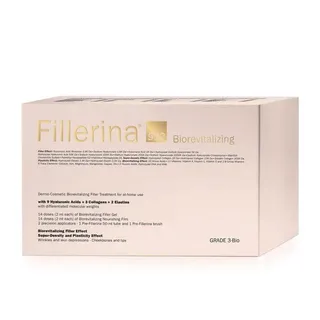
Fillerina 932 Biorevitalizing Filler Treatment Grade 3
Works for
CleansingCarbomer, Cocamidopropyl betaine + 16 moreCleanses gently
“Pre-Fillerina Skin Preparatory Cleanser is SLES-free and soap-free.”
This product works by removing dirt and oil from the surface of the skin. It uses a combination of mild cleansing agents (carbomer, cetearyl alcohol, cocamidopropyl betaine, glyceryl caprylate, glyceryl linoleate, glyceryl stearate, glyceryl stearate se, hydrogenated lecithin, laureth-7, palmitic acid, sodium oleate, steareth-2, steareth-21, sucrose laurate, tea-lauryl sulfate, xanthan gum) and should be able to cleanse the skin gently. Still keep in mind that any cleansing can disrupt the skin barrier, and most people do not need to cleanse their skin more than once per day.
Even though this formulation is mild, the following cleansing agents could trigger an irritation or allergy for some people: cocamidopropyl betaine, tea-lauryl sulfate
ExfoliationSide benefit · Glycolic acid, Retinyl palmitate + 3 moreWorks well
This product can help exfoliate the skin. In other words, it helps break down the bonds between dead cells on the surface of the skin and speed up the skin turnover. Skin often appears softer and brighter after exfoliation, but overdoing it can result in disrupted skin barrier. The following ingredient is doing the exfoliating job in this product: glycolic acid.
Can it cause trouble?
Irritancy14 strong irritants: Retinyl palmitate, Benzophenone-3 + 12 more — patch-test recommendedHigh risk
Comedogenic4 ingredients rated 2 or more on the 0–5 pore-clogging scale4 flagged

User reviews
Be the first — your take helps the next person decide.
Ingredients
Filter by role to see what each ingredient is doing.
Water~40–60%
Glycerin~4.2–6.3%
- Irritation risk
- Low
One of the best moisturizing ingredients. Naturally present in skin. It attracts water to the upper layer of the skin working as a humectant
More about GlycerinHydrolyzed glycosaminoglycans~3.4–5.2%
- Irritation risk
- Low
Long sugars that help attract water to the upper layer of the skin
More about Hydrolyzed glycosaminoglycansSodium hyaluronate~2.6–4%
- Irritation risk
- Low
One of the best moisturizing ingredients. Attracts water into the upper layer of the skin
More about Sodium hyaluronateCarbomer~2–3%
- Irritation risk
- Low
Helps create a thicker or gel-like product texture. It is not a surfactant but can be used in gentle cleansing formulations
More about CarbomerCaprylyl glycol~1.7–2.6%
- Irritation risk
- Medium
Helps preserve products and creates a nice product texture
More about Caprylyl glycol1,2-hexanediol~0.5–1.2%
Propylene glycol~1.2–1.8%
- Irritation risk
- High
Helps oil and water mix together and can enhance the penetration of other ingredients into the skin. It can be irritating
More about Propylene glycolPentylene glycol~1.1–1.6%
- Irritation risk
- Medium
Used to preserve products, dissolve other ingredients and create a nice product texture
More about Pentylene glycolSodium pca~0.6–1.4%
- Irritation risk
- Low
Naturally present in skin and helps to attract water to its upper layer
More about Sodium pcaButylene glycol~0.5–1.1%
- Irritation risk
- Low
Used to create a nice product texture and help delivery of other ingredients. Might be somewhat helpful in attracting water to the upper layer of the skin
More about Butylene glycolSodium lactate~0.4–0.9%
- Irritation risk
- Medium
Helps attract water to the upper layer of the skin. Is often used to adjust the pH level of the product
More about Sodium lactateSodium hyaluronate crosspolymer~0.35–0.8%
- Irritation risk
- Medium
Attracts water into the upper layer of the skin
More about Sodium hyaluronate crosspolymerArginine~0.3–0.7%
- Irritation risk
- Low
An amino acid that is naturally present in skin and helps keep it hydrated. When used together with AHAs, it can reduce their irritating effect on the skin
More about ArginineHydrolyzed collagen~0.3–0.75%
- Irritation risk
- Low
A typically plant-derived compound that is supposed mimic human collagen. Cannot penetrate the skin barrier so is not particularly useful in skincare products beyond attracting water to the upper layer of the skin
More about Hydrolyzed collagenAspartic acid~0.2–0.75%
- Irritation risk
- Low
An amino-acid that helps increase skin hydration and might help to slightly improve skin firmness, potentially reducing lines and wrinkles
More about Aspartic acidHydrolyzed hyaluronic acid~0.2–0.7%
- Irritation risk
- Low
One of the best moisturizing ingredients. Attracts water into the upper layer of the skin. A version of it is naturally present in skin
More about Hydrolyzed hyaluronic acidPca~0.15–0.7%
- Irritation risk
- Low
Naturally present in skin and helps to attract water to its upper layer
More about PcaHyaluronic acid~0.15–0.6%
- Irritation risk
- Low
One of the best moisturizing ingredients. Attracts water into the upper layer of the skin. Naturally present in skin. Typically has large molecule size unless advertised otherwise on the product label. Helps support skin's barrier function and may help to reduce inflammation
More about Hyaluronic acidPhenoxyethanol~0.15–0.6%
- Irritation risk
- Low
A preservative. It helps prevent bacterial growth in cosmetic products
More about PhenoxyethanolTropolone~0.15–0.55%
- Irritation risk
- Low
Hydroxypropyl cyclodextrin~0.15–0.65%
- Irritation risk
- Medium
Used to stabilize product formulations and help soften the upper layer of the skin
More about Hydroxypropyl cyclodextrinSodium chondroitin sulfate~0.1–0.45%
- Irritation risk
- Low
Is naturally present in skin. Helps to attract water to its upper layer
More about Sodium chondroitin sulfateHydrolyzed dna~0.1–0.5%
- Irritation risk
- Low
Hydrolyzed rna~0.1–0.5%
- Irritation risk
- Low
Glycine~0.1–0.45%
- Irritation risk
- Low
Helps to attract water to the upper layer of the skin and can help restore the skin barrier function
More about GlycineHydrolyzed sodium hyaluronate~0.1–0.45%
- Irritation risk
- Low
Attracts water into the upper layer of the skin
More about Hydrolyzed sodium hyaluronateAlanine~0.1–0.45%
- Irritation risk
- Low
An amino-acid that helps to attract water to the upper layer of the skin and might help to lighten the skin, but solid evidence is lacking
More about AlanineDecylene glycol~0.1–0.45%
- Irritation risk
- Low
Used to creat a nice product texture and support penetration of other ingredients
More about Decylene glycolSerine~0.1–0.45%
- Irritation risk
- Low
An amino-acid that helps to attract water to the upper layer of the skin. In combination with other amino-acids, might help to reduce fine lines and wrinkles
More about SerineValine~0.1–0.45%
- Irritation risk
- Low
Isoleucine~0.1–0.45%
- Irritation risk
- Low
An amino acid that can help attract water to the upper layer of the skin and support skin's barrier function
More about IsoleucineProline~0.15–0.5%
Threonine~0.1–0.5%
- Irritation risk
- Low
An amino-acid that helps to attract water to the upper layer of the skin. In combination with other amino-acids, might help to reduce fine lines and wrinkles
More about ThreonineHistidine~0.1–0.45%
Phenylalanine~0.1–0.5%
- Irritation risk
- Low
Soluble collagen~0.15–0.5%
- Irritation risk
- Low
A typically plant-derived compound that is supposed mimic human collagen. Cannot penetrate the skin barrier so is not particularly useful in skincare products beyond attracting water to the upper layer of the skin
More about Soluble collagenGlyceryl caprylate~0.15–0.6%
- Irritation risk
- Low
An emollient that can also help water and oil mix together, as well as prevent bacteria growth in products
More about Glyceryl caprylatePalmitoyl tripeptide-38~0.1–0.45%
- Irritation risk
- Low
A type of peptide. Peptides are excellent moisturizers and might be able support collagen production reducing fine lines and wrinkles
More about Palmitoyl tripeptide-38Calcium chloride~0.15–0.5%
- Irritation risk
- Medium
Helps create a thicker product consistency. Might be irritating
More about Calcium chlorideCupric chloride~0.1–0.45%
- Irritation risk
- Low
Ferric chloride~0.15–0.5%
- Irritation risk
- Low
Magnesium chloride~0.15–0.5%
Manganese chloride~0.1–0.45%
- Irritation risk
- Low
Zinc chloride~0.1–0.45%
- Irritation risk
- Low
Phenylpropanol~0.1–0.45%
- Irritation risk
- High
Helps mask the smell of other ingredients and helps preserve the product formulation
More about PhenylpropanolPalmitoyl hexapeptide-52~0.1–0.45%
- Irritation risk
- Low
A type of peptide. Peptides are excellent moisturizers and might be able support collagen production reducing fine lines and wrinkles
More about Palmitoyl hexapeptide-52Hydrolyzed elastin~0.15–0.55%
- Irritation risk
- Low
Glycolic acid~0.15–0.5%
- Irritation risk
- High
An alpha-hydroxy acid (AHA) that helps to remove the dead skin cells on the surface of the skin reveling a more even, smoother complexation. It is also able to stimulate collagen production with long-term use. Could help to reduce pore congestion. It can be irritating to the skin. Apply sunscreen daily if using products with glycolic acid
More about Glycolic acidPolyvinyl alcohol~0.15–0.55%
Acetyl hexapeptide-37~0.1–0.45%
- Irritation risk
- Low
A type of peptide. Peptides are excellent moisturizers and might be able support collagen production reducing fine lines and wrinkles
More about Acetyl hexapeptide-37Palmitoyl heptapeptide-18~0.1–0.45%
Acetyl cysteine~0.1–0.45%
- Irritation risk
- Low
Leuconostoc/radish root ferment filtrate~0.15–0.5%
- Irritation risk
- Medium
A preservative that comes from radishes fermented by a bacteria. New research suggests that the preservation properties in the ingredient come from an ammonium salt that is not present naturally in radish root but used in its cultivation. Is problematic because the exact amount of the preservative agents is difficult to determine
More about Leuconostoc/radish root ferment filtrateBiotin/folic acid/cyanocobalamin/niacinamide/pantothenic acid/pyridoxine/riboflavin/thiamine/yeast polypeptides~0.1–0.45%
Glutamic acid~0.1–0.5%
- Irritation risk
- Low
An amino-acid that helps attract water to the upper layer of the skin
More about Glutamic acidGlutamine~0.1–0.45%
- Irritation risk
- Low
Leucine~0.1–0.45%
- Irritation risk
- Low
Lysine hcl~0.1–0.45%
Sh-oligopeptide-1~0.1–0.45%
- Irritation risk
- Low
A type of peptide. Peptides are excellent moisturizers and might be able support collagen production reducing fine lines and wrinkles
More about Sh-oligopeptide-1Methionine~0.1–0.45%
- Irritation risk
- Low
Taurine~0.1–0.5%
- Irritation risk
- Medium
Could be helpful in reducing inflammation in skin, evening out the skin tone and neutralizing free radicals, but more research is needed to confirm its effectiveness
More about TaurineTryptophan~0.1–0.5%
- Irritation risk
- Low
Tyrosine~0.1–0.45%
Sorbitol~0.1–0.5%
- Irritation risk
- Low
Helps attract water to the upper layer of the skin and improves the product texture
More about SorbitolSh-polypeptide-1~0.1–0.45%
- Irritation risk
- Low
A lab-made copy of human basic fibroblast growth factor (bFGF), a protein that tells skin cells to multiply. It speeds up wound healing as a prescription drug, but it is too large to pass through intact skin easily, and there is no good evidence it reduces wrinkles in skincare.
More about Sh-polypeptide-1Glycine soja oil~0.15–0.5%
- Irritation risk
- Medium
- Comedogenicity
- 2/5
A good emollient that helps soften the skin and helps repair its barrier function. It can clog pores if used in high concentrations.
More about Glycine soja oilSodium oleate~0.45–1.05%
- Irritation risk
- Medium
Helps oil and water mix together and create a thicker product consistency
More about Sodium oleateHydrogenated lecithin~0.15–0.55%
- Irritation risk
- Low
Helps to retain moisture by creating a protective barrier on the skin. Rich in fatty acids. Improves product texture and helps with the penetration of other ingredients.
More about Hydrogenated lecithinSh-polypeptide-5~0.1–0.45%
- Irritation risk
- Low
Tocopheryl acetate~0.15–0.55%
- Irritation risk
- Medium
A more stable but less bio-available form of vitamin E compared to Tocopherol. Might help moisturize and protect the skin from free radicals, but mostly used in low concentrations to stabilize other ingredients.
More about Tocopheryl acetateRetinyl palmitate~0.1–0.45%
- Irritation risk
- High
Three steps removed from the active form of vitamin A - retinoic acid. To have an effect in the skin, it first needs to be converted twice to become the retinoic acid. This means it is less potent than retinol, but could also be less irritating. Once converted to the retinoic acid in the skin, it helps against all signs of aging, improves skin cell turnover and helps fight blemishes and clogged pores. However, in many cosmetic formulations, it is used in a concentration that is too low to have the full effect
More about Retinyl palmitateGlyceryl linoleate~0.15–0.6%
- Irritation risk
- Medium
Helps oil and water mix together
More about Glyceryl linoleateGlyceryl linolenate~0.15–0.6%
- Irritation risk
- Low
Helps soften the upper layer of the skin
More about Glyceryl linolenateSorbic acid~0.1–0.5%
Sodium chloride~0.15–0.55%
- Irritation risk
- Low
Used to stabilize mixtures of oil and water, and create thicker, gel-like product textures
More about Sodium chlorideXanthan gum~0.15–0.5%
- Irritation risk
- Low
Used to create a thicker product consistency
More about Xanthan gumDisodium edta~0.1–0.5%
Sodium hydroxide~0.1–0.5%
Ethylhexylglycerin~0.15–0.5%
Sodium benzoate~0.1–0.5%
Sodium ascorbyl phosphate~0.15–0.5%
- Irritation risk
- Medium
A stable derivative of vitamin C. It is oil-soluble which means it is more likely to penetrate the skin compared to the pure form of vitamin C (which is water-soluble), but it is less bio-available and is way less effective in stimulating collagen and reducing wrinkles compared to the pure form of vitamin C (L-ascorbic acid) and its other derivatives (for example, magnesium ascorbyl phosphate). At the same time, this vitamin C derivative has been shown in studies to be effective in reducing acne, blemishes and clogged pores. It is less irritating then the pure form of vitamin C
More about Sodium ascorbyl phosphateLactic acid~0.1–0.45%
- Irritation risk
- Medium
An exfoliating and moisturizing alpha-hydroxy acid (AHA). Typically causes less irritation than other AHAs, for example, glycolic acid. At high concentrations (about 15%), lactic acid can help reduce lines and wrinkles. Recent studies show that lactic acid can support the "good" bacteria living on skin's surface (healthy skin microbiome)
More about Lactic acidLecithin~0.15–0.6%
- Irritation risk
- Low
Used mostly for creating emulsions - helping oil and water mix together. Helps soften the upper layer of the skin
More about LecithinWater~0.1–0.5%
Cyclopentasiloxane~0.15–0.6%
- Irritation risk
- Low
A silicone that helps improve the product texture and spreadability. Can absorb oil creating a short-term mattifying effect on the skin
More about CyclopentasiloxaneGlycerin~0.15–0.55%
- Irritation risk
- Low
One of the best moisturizing ingredients. Naturally present in skin. It attracts water to the upper layer of the skin working as a humectant
More about GlycerinHdi/trimethylol hexyllactone crosspolymer~0.15–0.5%
- Irritation risk
- Low
Used to create a silky product texture and add volume to products
More about Hdi/trimethylol hexyllactone crosspolymerPolysilicone-11~0.15–0.55%
- Irritation risk
- Low
A silicone that forms a light film on the skin surface helping to bind water and temporarily absorb oils creating a matt and powdery feel
More about Polysilicone-11C30-45 alkyl cetearyl dimethicone crosspolymer~0.15–0.6%
- Irritation risk
- Low
Helps to create a nice silky product texture
More about C30-45 alkyl cetearyl dimethicone crosspolymerDimethicone~0.15–0.65%
- Irritation risk
- Low
A silicone that helps to reduce water loss from the surface of the skin. Can temporarily "fill in" lines and wrinkles, absorb oil, and create a nice product finish
More about DimethiconeSteareth-2~0.15–0.55%
Xylitol~0.1–0.45%
- Irritation risk
- Low
Helps attract water to the upper layer of the skin and repair the skin barrier function
More about XylitolButylene glycol~0.1–0.5%
- Irritation risk
- Low
Used to create a nice product texture and help delivery of other ingredients. Might be somewhat helpful in attracting water to the upper layer of the skin
More about Butylene glycolSteareth-21~0.15–0.65%
Limnanthes alba seed oil~0.15–0.6%
- Irritation risk
- Low
This oil's cmposition is closest to rapeseed oil. It is a very stable oil and serves as an emoillient
More about Limnanthes alba seed oilPhenoxyethanol~0.15–0.5%
- Irritation risk
- Low
A preservative. It helps prevent bacterial growth in cosmetic products
More about PhenoxyethanolHydrogenated lecithin~0.15–0.55%
- Irritation risk
- Low
Helps to retain moisture by creating a protective barrier on the skin. Rich in fatty acids. Improves product texture and helps with the penetration of other ingredients.
More about Hydrogenated lecithinBoron nitride~0.1–0.5%
- Irritation risk
- Low
Helps to absord oil and evenly disperse other ingredients (for example, pigment) in product formulation
More about Boron nitrideSodium hyaluronate~0.1–0.5%
- Irritation risk
- Low
One of the best moisturizing ingredients. Attracts water into the upper layer of the skin
More about Sodium hyaluronateAmmonium acryloyldimethyltaurate/vp copolymer~0.15–0.5%
- Irritation risk
- Low
Increases thickness of a product. Texture enhancer for oil-in-water emulsions
More about Ammonium acryloyldimethyltaurate/vp copolymerTocopheryl acetate~0.15–0.55%
- Irritation risk
- Medium
A more stable but less bio-available form of vitamin E compared to Tocopherol. Might help moisturize and protect the skin from free radicals, but mostly used in low concentrations to stabilize other ingredients.
More about Tocopheryl acetateStearic acid~0.2–0.75%
- Irritation risk
- Low
Helps oil and water mix together and works as an emollient
More about Stearic acidPalmitic acid~0.15–0.6%
- Irritation risk
- Low
An emollient that is naturally present in skin and helps soften it
More about Palmitic acidBenzophenone-3~0.3–0.75%
- Irritation risk
- High
Same as oxybenzone. Protects in the UVB and short UVA range. In small concentrations, used to stabilize product formulation. Can be irritating. Is shown to be harmful to coral reefs - consider avoiding bathing in coral reef areas when wearing a product with this ingredient. It can penetrate the skin and get absorbed into bloodstream faster than other popular filters available in the US. The study that produced this finding did not address any potential health effects of the absorption
More about Benzophenone-3Diazolidinyl urea~0.1–0.5%
- Irritation risk
- High
A preservative. Works by releasing formaldehyde. Can be irritating
More about Diazolidinyl ureaParfum~0.1–0.45%
- Irritation risk
- High
An aromatic blend of unspecified and possibly irritating ingredients
More about ParfumLecithin~0.15–0.6%
- Irritation risk
- Low
Used mostly for creating emulsions - helping oil and water mix together. Helps soften the upper layer of the skin
More about LecithinBenzophenone-4~0.3–0.75%
- Irritation risk
- High
Sulisobenzone. A UV filter. Is typically used to improve the product stability under exposure to UV light. It is effective against both UVA and UVB rays. It can be used is larger concentrations as a sun protection ingredient for the skin, but can be irritating
More about Benzophenone-4Allantoin~0.1–0.45%
- Irritation risk
- Low
Helps calm down inflammation in skin and can help reduce itching. Helps to repair the skin barrier and keep skin hydrated
More about AllantoinPseudoalteromonas ferment extract~0.1–0.5%
- Irritation risk
- Low
Xanthan gum~0.15–0.5%
- Irritation risk
- Low
Used to create a thicker product consistency
More about Xanthan gumButyrospermum parkii butter~0.15–0.6%
- Irritation risk
- Low
- Comedogenicity
- 3/5
A great moisturising ingredient that softens the skin and reduces water loss from its upper layer. It also can be helpful in protecting skin from free radicals
More about Butyrospermum parkii butterSilica~0.2–0.7%
Limonene~0.1–0.45%
- Irritation risk
- High
A common frangrance that can easily irritate skin, especially if exposed to air, light or heat
More about LimoneneLinalool~0.1–0.45%
Sorbitol~0.1–0.5%
- Irritation risk
- Low
Helps attract water to the upper layer of the skin and improves the product texture
More about SorbitolHydrolyzed dna~0.1–0.45%
- Irritation risk
- Low
Hydrolyzed rna~0.1–0.45%
- Irritation risk
- Low
Hexyl cinnamal~0.1–0.45%
Acetyl cysteine~0.1–0.45%
- Irritation risk
- Low
Glutamic acid~0.1–0.5%
- Irritation risk
- Low
An amino-acid that helps attract water to the upper layer of the skin
More about Glutamic acidGlutamine~0.1–0.45%
- Irritation risk
- Low
Leucine~0.1–0.45%
- Irritation risk
- Low
Lysine hcl~0.1–0.45%
Methionine~0.1–0.45%
- Irritation risk
- Low
Taurine~0.1–0.5%
- Irritation risk
- Medium
Could be helpful in reducing inflammation in skin, evening out the skin tone and neutralizing free radicals, but more research is needed to confirm its effectiveness
More about TaurineTryptophan~0.1–0.5%
- Irritation risk
- Low
Tyrosine~0.1–0.45%
Butylphenyl methylpropional~0.1–0.45%
- Irritation risk
- High
A fragrance. Can trigger allergic reactions and be irritating
More about Butylphenyl methylpropionalGeraniol~0.1–0.45%
Citronellol~0.1–0.45%
Caprylyl glycol~0.15–0.55%
- Irritation risk
- Medium
Helps preserve products and creates a nice product texture
More about Caprylyl glycolGlyceryl linoleate~0.15–0.6%
- Irritation risk
- Medium
Helps oil and water mix together
More about Glyceryl linoleateGlyceryl linolenate~0.15–0.6%
- Irritation risk
- Low
Helps soften the upper layer of the skin
More about Glyceryl linolenateRetinyl palmitate~0.1–0.45%
- Irritation risk
- High
Three steps removed from the active form of vitamin A - retinoic acid. To have an effect in the skin, it first needs to be converted twice to become the retinoic acid. This means it is less potent than retinol, but could also be less irritating. Once converted to the retinoic acid in the skin, it helps against all signs of aging, improves skin cell turnover and helps fight blemishes and clogged pores. However, in many cosmetic formulations, it is used in a concentration that is too low to have the full effect
More about Retinyl palmitateSodium ascorbyl phosphate~0.15–0.5%
- Irritation risk
- Medium
A stable derivative of vitamin C. It is oil-soluble which means it is more likely to penetrate the skin compared to the pure form of vitamin C (which is water-soluble), but it is less bio-available and is way less effective in stimulating collagen and reducing wrinkles compared to the pure form of vitamin C (L-ascorbic acid) and its other derivatives (for example, magnesium ascorbyl phosphate). At the same time, this vitamin C derivative has been shown in studies to be effective in reducing acne, blemishes and clogged pores. It is less irritating then the pure form of vitamin C
More about Sodium ascorbyl phosphateArginine~0.1–0.45%
- Irritation risk
- Low
An amino acid that is naturally present in skin and helps keep it hydrated. When used together with AHAs, it can reduce their irritating effect on the skin
More about ArginineSalicylic acid~0.1–0.45%
- Irritation risk
- High
Used for skin exfoliation. It has an anti-inflammatory and anti-bacterial effect, helps to unclog pores, prevent blemishes and speed up healing of the existing ones. Sometimes referred to as a BHA (beta-hydroxy acid)
More about Salicylic acidCoumarin~0.1–0.45%
Citral~0.1–0.45%
Biotin/folic acid/cyanocobalamin/niacinamide/pantothenic acid/pyridoxine/riboflavin/thiamine/yeast polypeptides~0.1–0.45%
Glyceryl caprylate~0.15–0.6%
- Irritation risk
- Low
An emollient that can also help water and oil mix together, as well as prevent bacteria growth in products
More about Glyceryl caprylateAcetyl hexapeptide-30~0.1–0.45%
- Irritation risk
- Low
A type of peptide. Peptides are excellent moisturizers and might be able support collagen production reducing fine lines and wrinkles
More about Acetyl hexapeptide-30Sodium lactate~0.1–0.5%
- Irritation risk
- Medium
Helps attract water to the upper layer of the skin. Is often used to adjust the pH level of the product
More about Sodium lactateAspartic acid~0.1–0.45%
- Irritation risk
- Low
An amino-acid that helps increase skin hydration and might help to slightly improve skin firmness, potentially reducing lines and wrinkles
More about Aspartic acidGlycine~0.1–0.45%
- Irritation risk
- Low
Helps to attract water to the upper layer of the skin and can help restore the skin barrier function
More about GlycineAlanine~0.1–0.45%
- Irritation risk
- Low
An amino-acid that helps to attract water to the upper layer of the skin and might help to lighten the skin, but solid evidence is lacking
More about AlanineSerine~0.1–0.45%
- Irritation risk
- Low
An amino-acid that helps to attract water to the upper layer of the skin. In combination with other amino-acids, might help to reduce fine lines and wrinkles
More about SerineValine~0.1–0.45%
- Irritation risk
- Low
Isoleucine~0.1–0.45%
- Irritation risk
- Low
An amino acid that can help attract water to the upper layer of the skin and support skin's barrier function
More about IsoleucineProline~0.15–0.5%
Threonine~0.1–0.5%
- Irritation risk
- Low
An amino-acid that helps to attract water to the upper layer of the skin. In combination with other amino-acids, might help to reduce fine lines and wrinkles
More about ThreonineHistidine~0.1–0.45%
Phenylalanine~0.1–0.5%
- Irritation risk
- Low
Calcium chloride~0.15–0.5%
- Irritation risk
- Medium
Helps create a thicker product consistency. Might be irritating
More about Calcium chlorideCupric chloride~0.1–0.45%
- Irritation risk
- Low
Sodium pca~0.1–0.5%
- Irritation risk
- Low
Naturally present in skin and helps to attract water to its upper layer
More about Sodium pcaFerric chloride~0.15–0.5%
- Irritation risk
- Low
Magnesium chloride~0.15–0.5%
Zinc chloride~0.1–0.45%
- Irritation risk
- Low
Pentylene glycol~0.15–0.6%
- Irritation risk
- Medium
Used to preserve products, dissolve other ingredients and create a nice product texture
More about Pentylene glycolPropylene glycol~0.1–0.45%
- Irritation risk
- High
Helps oil and water mix together and can enhance the penetration of other ingredients into the skin. It can be irritating
More about Propylene glycolPca~0.1–0.5%
- Irritation risk
- Low
Naturally present in skin and helps to attract water to its upper layer
More about PcaManganese chloride~0.1–0.45%
- Irritation risk
- Low
Bht~0.1–0.5%
Alcohol~0.15–0.5%
- Irritation risk
- High
Can be drying and contribute to skin irritation. Used in formulars to dissolve other ingredients, create a thinner product consistency or for its antibacterial properties
More about AlcoholSodium hydroxide~0.1–0.5%
Sodium chloride~0.15–0.55%
- Irritation risk
- Low
Used to stabilize mixtures of oil and water, and create thicker, gel-like product textures
More about Sodium chlorideDisodium edta~0.1–0.5%
Water~0.1–0.5%
Glycerin~0.15–0.55%
- Irritation risk
- Low
One of the best moisturizing ingredients. Naturally present in skin. It attracts water to the upper layer of the skin working as a humectant
More about GlycerinGlyceryl stearate se~0.15–0.55%
- Irritation risk
- Low
- Comedogenicity
- 2/5
Used to stabilize the product formulations and works as an emollient
More about Glyceryl stearate seCetearyl alcohol~0.15–0.6%
- Irritation risk
- Low
- Comedogenicity
- 2/5
A non-drying alcohol. Works as an emollient. Helps water and oil mix together and creates a nice product texture
More about Cetearyl alcoholCocamidopropyl betaine~0.55–1.3%
- Irritation risk
- High
Helps water and oil mix together. Used as a cleansing ingredient. Could be an allergen
More about Cocamidopropyl betaineTea-lauryl sulfate~0.4–0.9%
Caprylic/capric triglyceride~0.15–0.6%
- Irritation risk
- Medium
A good mix of fatty acids that forms a protective layer on the skin. Improves the shelf life of products. Derived from coconut and glycerin
More about Caprylic/capric triglycerideCetearyl isononanoate~0.15–0.5%
- Irritation risk
- Low
An emollient that softens the skin and helps prevent moisture loss.
More about Cetearyl isononanoateGlyceryl stearate~0.15–0.6%
- Irritation risk
- Low
An emollient that softens the skin and forms a protective layer on its surface. Helps water and oil mix together
More about Glyceryl stearateSucrose laurate~0.15–0.6%
- Irritation risk
- Low
Helps oil and water mix together. Can be used as a cleansing agent
More about Sucrose lauratePolyacrylamide~0.15–0.55%
- Irritation risk
- Medium
Used to improve product texture and help oil and water mix together
More about PolyacrylamideTocopheryl acetate~0.15–0.5%
- Irritation risk
- Medium
A more stable but less bio-available form of vitamin E compared to Tocopherol. Might help moisturize and protect the skin from free radicals, but mostly used in low concentrations to stabilize other ingredients.
More about Tocopheryl acetateC13-14 isoparaffin~0.15–0.55%
- Irritation risk
- Low
Helps soften the upper layer of the skin, dissolve other ingredients and create a thicker product consistency
More about C13-14 isoparaffinHyaluronic acid~0.1–0.45%
- Irritation risk
- Low
One of the best moisturizing ingredients. Attracts water into the upper layer of the skin. Naturally present in skin. Typically has large molecule size unless advertised otherwise on the product label. Helps support skin's barrier function and may help to reduce inflammation
More about Hyaluronic acidLaureth-7~0.1–0.45%
Phenoxyethanol~0.1–0.4%
- Irritation risk
- Low
A preservative. It helps prevent bacterial growth in cosmetic products
More about PhenoxyethanolCaprylyl glycol~0.1–0.5%
- Irritation risk
- Medium
Helps preserve products and creates a nice product texture
More about Caprylyl glycolParfum~0.1–0.3%
- Irritation risk
- High
An aromatic blend of unspecified and possibly irritating ingredients
More about ParfumDisodium edta~0.05–0.25%
Tributyl citrate~0.1–0.35%
Tris(tetramethylhydroxypiperidinol) citrate~0.05–0.3%
- Irritation risk
- Low
Sodium benzotriazolyl butylphenol sulfonate~0.05–0.2%
- Irritation risk
- Medium
Helps protect the ingredients in the formulation against UV light
More about Sodium benzotriazolyl butylphenol sulfonateButeth-3~0.05–0.15%
- Irritation risk
- Low
Ingredient list view
Water, Glycerin, Hydrolyzed glycosaminoglycans, Sodium hyaluronate, Carbomer, Caprylyl glycol, 1,2-hexanediol, Propylene glycol, Pentylene glycol, Sodium pca, Butylene glycol, Sodium lactate, Sodium hyaluronate crosspolymer, Arginine, Hydrolyzed collagen, Aspartic acid, Hydrolyzed hyaluronic acid, Pca, Hyaluronic acid, Phenoxyethanol, Tropolone, Hydroxypropyl cyclodextrin, Sodium chondroitin sulfate, Hydrolyzed dna, Hydrolyzed rna, Glycine, Hydrolyzed sodium hyaluronate, Alanine, Decylene glycol, Serine, Valine, Isoleucine, Proline, Threonine, Histidine, Phenylalanine, Soluble collagen, Glyceryl caprylate, Palmitoyl tripeptide-38, Calcium chloride, Cupric chloride, Ferric chloride, Magnesium chloride, Manganese chloride, Zinc chloride, Phenylpropanol, Palmitoyl hexapeptide-52, Hydrolyzed elastin, Glycolic acid, Polyvinyl alcohol, Acetyl hexapeptide-37, Palmitoyl heptapeptide-18, Acetyl cysteine, Leuconostoc/radish root ferment filtrate, Biotin/folic acid/cyanocobalamin/niacinamide/pantothenic acid/pyridoxine/riboflavin/thiamine/yeast polypeptides, Glutamic acid, Glutamine, Leucine, Lysine hcl, Sh-oligopeptide-1, Methionine, Taurine, Tryptophan, Tyrosine, Sorbitol, Sh-polypeptide-1, Glycine soja oil, Sodium oleate, Hydrogenated lecithin, Sh-polypeptide-5, Tocopheryl acetate, Retinyl palmitate, Glyceryl linoleate, Glyceryl linolenate, Sorbic acid, Sodium chloride, Xanthan gum, Disodium edta, Sodium hydroxide, Ethylhexylglycerin, Sodium benzoate, Sodium ascorbyl phosphate, Lactic acid, Lecithin, Water, Cyclopentasiloxane, Glycerin, Hdi/trimethylol hexyllactone crosspolymer, Polysilicone-11, C30-45 alkyl cetearyl dimethicone crosspolymer, Dimethicone, Steareth-2, Xylitol, Butylene glycol, Steareth-21, Limnanthes alba seed oil, Phenoxyethanol, Hydrogenated lecithin, Boron nitride, Sodium hyaluronate, Ammonium acryloyldimethyltaurate/vp copolymer, Tocopheryl acetate, Stearic acid, Palmitic acid, Benzophenone-3, Diazolidinyl urea, Parfum, Lecithin, Benzophenone-4, Allantoin, Pseudoalteromonas ferment extract, Xanthan gum, Butyrospermum parkii butter, Silica, Limonene, Linalool, Sorbitol, Hydrolyzed dna, Hydrolyzed rna, Hexyl cinnamal, Acetyl cysteine, Glutamic acid, Glutamine, Leucine, Lysine hcl, Methionine, Taurine, Tryptophan, Tyrosine, Butylphenyl methylpropional, Geraniol, Citronellol, Caprylyl glycol, Glyceryl linoleate, Glyceryl linolenate, Retinyl palmitate, Sodium ascorbyl phosphate, Arginine, Salicylic acid, Coumarin, Citral, Biotin/folic acid/cyanocobalamin/niacinamide/pantothenic acid/pyridoxine/riboflavin/thiamine/yeast polypeptides, Glyceryl caprylate, Acetyl hexapeptide-30, Sodium lactate, Aspartic acid, Glycine, Alanine, Serine, Valine, Isoleucine, Proline, Threonine, Histidine, Phenylalanine, Calcium chloride, Cupric chloride, Sodium pca, Ferric chloride, Magnesium chloride, Zinc chloride, Pentylene glycol, Propylene glycol, Pca, Manganese chloride, Bht, Alcohol, Sodium hydroxide, Sodium chloride, Disodium edta, Water, Glycerin, Glyceryl stearate se, Cetearyl alcohol, Cocamidopropyl betaine, Tea-lauryl sulfate, Caprylic/capric triglyceride, Cetearyl isononanoate, Glyceryl stearate, Sucrose laurate, Polyacrylamide, Tocopheryl acetate, C13-14 isoparaffin, Hyaluronic acid, Laureth-7, Phenoxyethanol, Caprylyl glycol, Parfum, Disodium edta, Tributyl citrate, Tris(tetramethylhydroxypiperidinol) citrate, Sodium benzotriazolyl butylphenol sulfonate, Buteth-3
Compare prices
Retailers ranked by price — lowest first.
Affiliate links · As an Amazon Associate, WIMJ earns from qualifying purchases.
Worth comparing, line by line.
Match % combines shared ingredients, the first five ingredients, shared actives and hero ingredients, irritancy (lower counts in the alternative's favour), texture and body area. Only products in the same routine step are compared.
| Fillerina932 Biorevitalizing Filler Treatment Grade 3YOUR PRODUCT | YEOUTHVitamin C Facial Cleanser Day/Night Cream | CeraVeGel Moussant Anti-Imperfections | UriageHyseac 3-REGUL Golbal Skincare | |
|---|---|---|---|---|
| Match | — | 57% | 56% | 55% |
| Price | — | $41.90 | — | — |
| Shared key ingredients | — | 10 of 60 | 7 of 60 | 6 of 60 |
| Key difference | — | Sodium Ascorbyl Phosphate | Niacinamide | Lactic Acid |
| Irritancy | High | Medium | Low | Medium |
| Drying alcohol | Contains drying alcohol | — | — | — |
| View product | Shop | Shop | Shop |

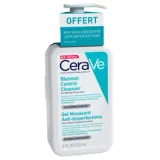

More alternatives: Bioderma Sébium Active Foaming GelNeutrogena Oil-Free Acne Stress Control Power-Cream Wash
Sources cited in this review
Every concentration estimate and effectiveness label is anchored to one of these 53 studies and safety reviews.
- 1
- 2Hyaluronic acid: A key molecule in skin agingncbi.nlm.nih.gov
- 3
- 4
- 5Surfactants and experimental irritant contact dermatitisncbi.nlm.nih.gov
- 6Propylene Glycolpubmed.ncbi.nlm.nih.gov

Affiliate links · As an Amazon Associate, WIMJ earns from qualifying purchases.