Works for:
based on ingredients and %- Moisturizing
- Anti-oxidation
Doesn't work for:
based on ingredients and %- Exfoliation
Can it cause trouble?
- Irritation risk: high
- Comedogenic risk ingredients: 7
Key actives

Product Summary
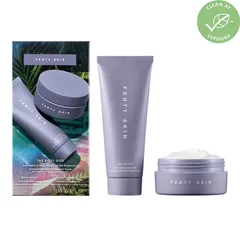
"Fenty Skin - The Body Duo" could be helpful for: Moisturizing, but its actives are not the most effective or are not well-studied.
Ingredient callouts
- Humectants (sucrose 0.25% - 0.45%, sodium hyaluronate 0.25% - 0.45% and glycerin 4.20% - 5.10%). These ingredients help attract water to the upper layer of the skin and improve the skin hydration.
About the brand
According to Cruelty-Free Kitty "Fenty Skin" is cruelty free, but its parent company is not.
Price
The product retails for 280.00HK$ in Hong Kong.
For a detailed price comparison: click here.
Anti-oxidation
This product contains antioxidants (malpighia punicifolia fruit extract) that might be able to help neutralize free radicals in skin to lessen the damage it gets from the UV light (sun). There is not enough evidence to confirm their effectiveness in skin though.
A fruit extract that might help neutralize free radicals. The concentrations typically used in cosmetics are too small to have an effect
A great moisturising ingredient that softens the skin and reduces water loss from its upper layer. It also can be helpful in protecting skin from free radicals
Helps to soften the upper layer of the skin and might have some anti-oxidant effect
Pure form of vitamin E. Can help moisturise and protect the skin from free radicals. Often used to help stabilise other ingredients or the formula itself
A more stable but less bio-available form of vitamin E compared to Tocopherol. Might help moisturize and protect the skin from free radicals, but mostly used in low concentrations to stabilize other ingredients.
Moisturizing
What does the product description say?
Follow up with Butta Drop Whipped Oil Body Cream, a formula loaded with tropical oils, butters, and extracts, so you can revel in long-lasting hydration, a visibly non-sticky gleam, and a clean, fresh fragrance inspired by tropical fruits and flowers.
Source: Sephora Hong Kong
This product can help improve hydration of the skin with the two types of ingredients.
The first type is called “humectants”:
these ingredients help attract water.
When humectants are on the surface of the skin, they “pull in” the moisture from the outside environment, or from
within deeper layers of the skin. The following ingredients in this product do the job:
glycerin, sodium hyaluronate.
This product also contains ingredients called “occlusives”. They help reduce the speed with which our skin loses moisture to the outside environment. These ingredients also help soften the upper layer of the skin, so it feels less tight and nicer to the touch. The following ingredients in this product do the job: butyrospermum parkii butter, caprylic/capric triglyceride.
A good emollient that helps soften the skin and helps repair its barrier function. It can clog pores if used in high concentrations.
Helps soften the upper layer of the skin
A great emollient due to its high linoleic acid content. One of the most effective plant oils in helping skin hydration and repairing skin barrier function
A great moisturising ingredient that softens the skin and reduces water loss from its upper layer. It also can be helpful in protecting skin from free radicals
A good mix of fatty acids that forms a protective layer on the skin. Improves the shelf life of products. Derived from coconut and glycerin
Helps soften the upper layer of the skin and might have some anti-oxidant properties
Can help attract water to the upper layer of the skin. In crystal form, it can work as a gentle exfoliant, gentler than the salt scrub. Helps stabilize the emulsion
Helps to soften the upper layer of the skin and might have some anti-oxidant effect
An emollient. Found to be as effective as a moisturizer for dry skin as mineral oil. Could be comedogenic
One of the best moisturizing ingredients. Attracts water into the upper layer of the skin
A silicone that helps to reduce water loss from the surface of the skin. Can temporarily "fill in" lines and wrinkles, absorb oil, and create a nice product finish
One of the best moisturizing ingredients. Naturally present in skin. It attracts water to the upper layer of the skin working as a humectant
Helps soften the upper layer of the skin and improve the product texture
A non-drying alcohol. Works as an emollient. Helps water and oil mix together and creates a nice product texture
Helps to soften the upper layer of the skin
Helps soften the upper layer of the skin
Helps preserve products and creates a nice product texture
Used to create a nice product texture and help delivery of other ingredients. Might be somewhat helpful in attracting water to the upper layer of the skin
An emollient that helps soften the skin and creates a thicker product texture
Softens the upper layer of skin and helps restore the healthy skin barrier. Has shown to help calm down inflammation in skin. It is a stable oil, meaning that it retains its properties even when exposed to air.
Traditionally used to treat sunburns, dermatitis and inflammation, but evidence for its effectiveness is lacking. The extract can contain humectants that help attract water into the skin
Pure form of vitamin E. Can help moisturise and protect the skin from free radicals. Often used to help stabilise other ingredients or the formula itself
Exfoliation
What does the product description say?
First, exfoliate with the Buff Ryder Exfoliating Body Scrub a gentle formula with a blend of sugar, salt, super-fine sand, and nourishing oils to soften skin, leaving you smooth and polished-looking.
Source: Sephora Hong Kong
This product might help exfoliate the skin with lactobacillus/punica granatum fruit ferment extract, papain, but These ingredients is not the most effective.
An enzyme-based exfoliant
An enzyme extracted from papaya fruit. Can have an exfoliating effect on the skin. Can be irritating
Used to thicken the product formulation and might help to add minerals to the surface of the skin. It is used in scrubs as a physical exfoliant. Can increase sensitivity to other ingredients if left on the skin or used in high concentration
Used to thicken the product formulation and might help to add minerals to the surface of the skin. It is used in scrubs as a physical exfoliant. Can increase sensitivity to other ingredients if left on the skin or used in high concentration
How honest is this product?
| Promise | Can it deliver? |
|---|---|
| Moisturizing | |
| Exfoliation |
Total Promises Fulfilled score: 62/100.
We receive a small commission for purchases made through these links at no cost for you. Thank you for your support! Learn more
Potential irritants
Comedogenic ingredients
User reviews (0)
Averages from community submissions.
No reviews yet for this product.
Be the first to share your experience!
Tried this product?
Help capture what the ingredient list can't—texture, finish, pilling, scent, and more. Answer what you can, skip the rest.
Takes ~30 seconds.
Reviews are shown in aggregate. No personal details.
Key Actives
Pure form of vitamin E. Can help moisturise and protect the skin from free radicals. Often used to help stabilise other ingredients or the formula itself
Pure form of vitamin E. Can help moisturise and protect the skin from free radicals. Often used to help stabilise other ingredients or the formula itself
A great moisturising ingredient that softens the skin and reduces water loss from its upper layer. It also can be helpful in protecting skin from free radicals
A great moisturising ingredient that softens the skin and reduces water loss from its upper layer. It also can be helpful in protecting skin from free radicals
A silicone that helps to reduce water loss from the surface of the skin. Can temporarily "fill in" lines and wrinkles, absorb oil, and create a nice product finish
Helps to soften the upper layer of the skin and might have some anti-oxidant effect
An emollient. Found to be as effective as a moisturizer for dry skin as mineral oil. Could be comedogenic
One of the best moisturizing ingredients. Naturally present in skin. It attracts water to the upper layer of the skin working as a humectant
A good mix of fatty acids that forms a protective layer on the skin. Improves the shelf life of products. Derived from coconut and glycerin
Helps soften the upper layer of the skin and might have some anti-oxidant properties
A fruit extract that might help neutralize free radicals. The concentrations typically used in cosmetics are too small to have an effect
A great emollient due to its high linoleic acid content. One of the most effective plant oils in helping skin hydration and repairing skin barrier function
Softens the upper layer of skin and helps restore the healthy skin barrier. Has shown to help calm down inflammation in skin. It is a stable oil, meaning that it retains its properties even when exposed to air.
One of the best moisturizing ingredients. Attracts water into the upper layer of the skin
A good emollient that helps soften the skin and helps repair its barrier function. It can clog pores if used in high concentrations.
Can help attract water to the upper layer of the skin. In crystal form, it can work as a gentle exfoliant, gentler than the salt scrub. Helps stabilize the emulsion
A good emollient that helps soften the skin and helps repair its barrier function. It can clog pores if used in high concentrations.
Helps soften the upper layer of the skin
A great emollient due to its high linoleic acid content. One of the most effective plant oils in helping skin hydration and repairing skin barrier function
An emollient. Found to be as effective as a moisturizer for dry skin as mineral oil. Could be comedogenic
A great emollient due to its high linoleic acid content. One of the most effective plant oils in helping skin hydration and repairing skin barrier function
A good mix of fatty acids that forms a protective layer on the skin. Improves the shelf life of products. Derived from coconut and glycerin
Potential irritants
An aromatic blend of unspecified and possibly irritating ingredients
A common frangrance that can easily irritate skin, especially if exposed to air, light or heat
An enzyme-based exfoliant
An enzyme extracted from papaya fruit. Can have an exfoliating effect on the skin. Can be irritating
An aromatic blend of unspecified and possibly irritating ingredients
A common frangrance that can easily irritate skin, especially if exposed to air, light or heat
A good mix of fatty acids that forms a protective layer on the skin. Improves the shelf life of products. Derived from coconut and glycerin
An emollient that helps soften the skin and creates a thicker product texture
Softens the upper layer of skin and helps restore the healthy skin barrier. Has shown to help calm down inflammation in skin. It is a stable oil, meaning that it retains its properties even when exposed to air.
Traditionally used to treat sunburns, dermatitis and inflammation, but evidence for its effectiveness is lacking. The extract can contain humectants that help attract water into the skin
A good emollient that helps soften the skin and helps repair its barrier function. It can clog pores if used in high concentrations.
A more stable but less bio-available form of vitamin E compared to Tocopherol. Might help moisturize and protect the skin from free radicals, but mostly used in low concentrations to stabilize other ingredients.
Maintains the texture of skincare products. Allows the product to spread evenly. Helps oil and water mix together
Helps preserve products and creates a nice product texture
A good emollient that helps soften the skin and helps repair its barrier function. It can clog pores if used in high concentrations.
Used to thicken the product formulation and might help to add minerals to the surface of the skin. It is used in scrubs as a physical exfoliant. Can increase sensitivity to other ingredients if left on the skin or used in high concentration
Used to thicken the product formulation and might help to add minerals to the surface of the skin. It is used in scrubs as a physical exfoliant. Can increase sensitivity to other ingredients if left on the skin or used in high concentration
A good mix of fatty acids that forms a protective layer on the skin. Improves the shelf life of products. Derived from coconut and glycerin
Can work as an exfoliant but is typically used to adjust the product pH
Helps preserve products and creates a nice product texture
Comedogenic ingredients
An emollient. Found to be as effective as a moisturizer for dry skin as mineral oil. Could be comedogenic
A non-drying alcohol. Works as an emollient. Helps water and oil mix together and creates a nice product texture
A great moisturising ingredient that softens the skin and reduces water loss from its upper layer. It also can be helpful in protecting skin from free radicals
A good emollient that helps soften the skin and helps repair its barrier function. It can clog pores if used in high concentrations.
A good emollient that helps soften the skin and helps repair its barrier function. It can clog pores if used in high concentrations.
An emollient. Found to be as effective as a moisturizer for dry skin as mineral oil. Could be comedogenic
A great moisturising ingredient that softens the skin and reduces water loss from its upper layer. It also can be helpful in protecting skin from free radicals
All ingredients
An emollient. Found to be as effective as a moisturizer for dry skin as mineral oil. Could be comedogenic
One of the best moisturizing ingredients. Naturally present in skin. It attracts water to the upper layer of the skin working as a humectant
A good mix of fatty acids that forms a protective layer on the skin. Improves the shelf life of products. Derived from coconut and glycerin
Helps soften the upper layer of the skin and might have some anti-oxidant properties
Acts as a solvent for other ingredients. Speeds up the absorption of other ingredients into the skin
A non-drying alcohol. Works as an emollient. Helps water and oil mix together and creates a nice product texture
An emollient that helps soften the skin and creates a thicker product texture
A silicone that helps to reduce water loss from the surface of the skin. Can temporarily "fill in" lines and wrinkles, absorb oil, and create a nice product finish
A great moisturising ingredient that softens the skin and reduces water loss from its upper layer. It also can be helpful in protecting skin from free radicals
Helps to soften the upper layer of the skin and might have some anti-oxidant effect
A fruit extract that might help neutralize free radicals. The concentrations typically used in cosmetics are too small to have an effect
A great emollient due to its high linoleic acid content. One of the most effective plant oils in helping skin hydration and repairing skin barrier function
Softens the upper layer of skin and helps restore the healthy skin barrier. Has shown to help calm down inflammation in skin. It is a stable oil, meaning that it retains its properties even when exposed to air.
Traditionally used to treat sunburns, dermatitis and inflammation, but evidence for its effectiveness is lacking. The extract can contain humectants that help attract water into the skin
One of the best moisturizing ingredients. Attracts water into the upper layer of the skin
A good emollient that helps soften the skin and helps repair its barrier function. It can clog pores if used in high concentrations.
A more stable but less bio-available form of vitamin E compared to Tocopherol. Might help moisturize and protect the skin from free radicals, but mostly used in low concentrations to stabilize other ingredients.
Pure form of vitamin E. Can help moisturise and protect the skin from free radicals. Often used to help stabilise other ingredients or the formula itself
Maintains the texture of skincare products. Allows the product to spread evenly. Helps oil and water mix together
Used to create a nice product texture and help delivery of other ingredients. Might be somewhat helpful in attracting water to the upper layer of the skin
Helps preserve products and creates a nice product texture
A preservative. It helps prevent bacterial growth in cosmetic products
An aromatic blend of unspecified and possibly irritating ingredients
A common frangrance that can easily irritate skin, especially if exposed to air, light or heat
Can help attract water to the upper layer of the skin. In crystal form, it can work as a gentle exfoliant, gentler than the salt scrub. Helps stabilize the emulsion
A good emollient that helps soften the skin and helps repair its barrier function. It can clog pores if used in high concentrations.
A great emollient due to its high linoleic acid content. One of the most effective plant oils in helping skin hydration and repairing skin barrier function
Used to thicken the product formulation and might help to add minerals to the surface of the skin. It is used in scrubs as a physical exfoliant. Can increase sensitivity to other ingredients if left on the skin or used in high concentration
Used to thicken the product formulation and might help to add minerals to the surface of the skin. It is used in scrubs as a physical exfoliant. Can increase sensitivity to other ingredients if left on the skin or used in high concentration
An emollient. Found to be as effective as a moisturizer for dry skin as mineral oil. Could be comedogenic
A great moisturising ingredient that softens the skin and reduces water loss from its upper layer. It also can be helpful in protecting skin from free radicals
A great emollient due to its high linoleic acid content. One of the most effective plant oils in helping skin hydration and repairing skin barrier function
A good mix of fatty acids that forms a protective layer on the skin. Improves the shelf life of products. Derived from coconut and glycerin
Helps soften the upper layer of the skin and improve the product texture
An enzyme-based exfoliant
An enzyme extracted from papaya fruit. Can have an exfoliating effect on the skin. Can be irritating
Pure form of vitamin E. Can help moisturise and protect the skin from free radicals. Often used to help stabilise other ingredients or the formula itself
Can work as an exfoliant but is typically used to adjust the product pH
Milled volcanic rock. Used as an abrasive for physical exfoliation
Helps preserve products and creates a nice product texture
Used to stabilize the product formulation and can help absorb oil
A preservative. It helps prevent bacterial growth in cosmetic products
Used to increase stability of product formulations
An aromatic blend of unspecified and possibly irritating ingredients
A common frangrance that can easily irritate skin, especially if exposed to air, light or heat
Ingredient list view
Water, Cocos nucifera oil, Glycerin, Caprylic/capric triglyceride, Oryza sativa bran oil, Propanediol, Cetearyl alcohol, Cetyl ethylhexanoate, Dimethicone, Butyrospermum parkii butter, Mangifera indica seed butter, Cetearyl olivate, Diisostearyl malate, Polyglyceryl-3 methylglucose distearate, Citrullus lanatus seed oil, Hibiscus sabdariffa seed oil, Adansonia digitata seed oil, Malpighia punicifolia fruit extract, Adansonia digitata fruit extract, Helianthus annuus seed oil, Simmondsia chinensis seed oil, Plumeria acutifolia flower extract, Aloe barbadensis leaf juice, Sodium hyaluronate, Glycine soja oil, Tocopheryl acetate, Tocopherol, Sorbitan olivate, Polysorbate 60, Potassium cetyl phosphate, Acrylates/c10-30 alkyl acrylate crosspolymer, Ethylhexylglycerin, Ethyl hexanediol, Butylene glycol, Caprylyl glycol, Tromethamine, Phenoxyethanol, Parfum, Benzyl salicylate, Hexyl cinnamal, Limonene, Linalool, Sucrose, Glycine soja oil, Helianthus annuus hybrid oil, Helianthus annuus seed oil, Sea salt, Maris sal, Cocos nucifera oil, Butyrospermum parkii butter, Polyglyceryl-3 caprate, Silica, Helianthus annuus seed oil, Caprylic/capric triglyceride, Trihydroxystearin, Styrene/butadiene copolymer, Persea gratissima fruit powder, Lactobacillus/punica granatum fruit ferment extract, Papain, Bromelain, Quartz, Tocopherol, Citric acid, Pumice, Caprylyl glycol, Maltodextrin, Phenoxyethanol, Pentaerythrityl tetra-di-t-butyl hydroxyhydrocinnamate, Parfum, Hydroxycitronellal, Limonene
- Glycerol and the skin: holistic approach to its origin and functions
- Study on the Composition of Rice Bran Oil and Its Higher Free Fatty Acids Value
- Dimethicone as a protective ingredient in topical medications
- Final Report on the Safety Assessment of Dimethicone Copolyol
- Extraction and Characteristics of Seed Kernel Oil from Mango
- Promising features of mango (Mangifera indica L.) kernel oil: a review
- Evaluation of the fatty acid composition of the seeds of Mangifera indica L. and their application
- Acerola, an untapped functional superfruit: a review on latest frontiers
- Effect of Olive and Sunflower Seed Oil on the Adult Skin Barrier: Implications for Neonatal Skin Care
- Topically Applied Sunflower Seed Oil Prevents Invasive Bacterial Infections in Preterm Infants in Egypt
- Effect of topically applied lipids on surfactant-irritated skin
- Impact of topical oils on the skin barrier: possible implications for neonatal health in developing countries
- Hyaluronic acid: A key molecule in skin aging
- Hyaluronan (Hyaluronic Acid): a natural moisturizer for skin care
- Vitamin E in dermatology
- Vitamin E and Skin Health
- Final Report on the Safety Assessment of Ethyl Hexanediol
- Safety Assessment of Tromethamine as Used in Cosmetics
- Safety Assessment of Pentaerythrityl Tetra-Di-t-Butyl Hydroxyhydrocinnamate as Used in Cosmetics