Works for
3 of 3 advertised claims delivered
Moisturizing11 ingredients credited for this claimStrong evidence
“7 light botanical oils including Rosehip, Apricot, Cranberry, Marula, and Argan deeply nourish skin, targeting skin's lipid barrier to restore a feeling of suppleness”
This product can help soften the skin and reduce its moisture loss with emollients and occlusives: helianthus annuus seed oil, argania spinosa kernel oil.
Keep in mind that this product does not contain effective ingredients to attract water to the upper layer of the skin. This is why an additional product with humectants like glycerin or hyaluronic acid can be helpful (apply it before this product for the best results).
The following ingredients in this product are especially good for supporting the skin barrier and helping with the hydration level: linoleic acid
Anti-aging2 ingredients credited for this claimModerate evidence
“Nourish and condition your skin while revealing a more youthful complexion with Exuviance CitraFirm FACE Oil.”
This product contains retinyl palmitate. This ingredient might be able to help reduce and prevent fine lines and wrinkles, improve skin elasticity and firmness, but there is not enough evidence that it actually works.
Anti-oxidation7 ingredients credited for this claimModerate evidence
This product contains antioxidants (vaccinium macrocarpon seed oil) that might be able to help neutralize free radicals in skin to lessen the damage it gets from the UV light (sun). There is not enough evidence to confirm their effectiveness in skin though.
Evens skin toneNot advertised by the brand · 2 ingredients credited for this claimModerate evidence
The following ingredient (ingredients) in this product might be helpful, but there is no evidence to confirm that it actually works: retinyl palmitate.
Can it cause trouble?
Irritancy3 strong irritants: Rosa rubiginosa seed oil, Retinyl palmitate + 1 more — patch-test recommendedHigh risk
ComedogenicClean of flagged comedogenic ingredientsNone flagged


User reviews
Be the first — your take helps the next person decide.
Ingredients
Filter by role to see what each ingredient is doing.
Jojoba esters~22–33%
- Irritation risk
- Medium
An emollient made of jojoba oil. Helps soften the skin and support its barrier function
More about Jojoba estersPrunus armeniaca kernel oil~5.1–7.6%
- Irritation risk
- Medium
An emollient that helps soften the skin
More about Prunus armeniaca kernel oilVitis vinifera seed oil~4.8–7.2%
- Irritation risk
- Medium
A great emollient that can also have anti-oxidant properties
More about Vitis vinifera seed oilEthyl macadamiate~3.8–5.7%
Helianthus annuus seed oil~3.3–4.9%
- Irritation risk
- Low
A great emollient due to its high linoleic acid content. One of the most effective plant oils in helping skin hydration and repairing skin barrier function
More about Helianthus annuus seed oilVaccinium macrocarpon seed oil~2.4–3.6%
- Irritation risk
- Medium
A plant oil that can help neutralize free radicals, soften the upper layer of the skin, and support skin's barrier function
More about Vaccinium macrocarpon seed oilSclerocarya birrea seed oil~1.8–2.7%
- Irritation risk
- Medium
An emollient that helps to soften the skin. It has a high contetn of oleic acid that might weaken the skin barrier. Might have some anti-oxidant properties. It might be somewhat helpful against hyperpigmentation.
More about Sclerocarya birrea seed oilTriethyl citrate~1.1–1.7%
Argania spinosa kernel oil~1.1–1.7%
- Irritation risk
- Medium
An emollient that helps soften the upper layer of the skin. Might have some weak anti-oxidant properties
More about Argania spinosa kernel oilLinoleic acid~0.95–1.45%
- Irritation risk
- Low
An excellent emollient. Helps soften the skin, restore its barrier function, and can help to calm down inflammation. It can be helpful to prevent blemishes and clogged pores
More about Linoleic acidRosa rubiginosa seed oil~0.6–1.35%
- Irritation risk
- High
Plant oil that due to the high content of linoleic acid can support skin's barrier function and reduce moisture loss
More about Rosa rubiginosa seed oilRetinyl palmitate~0.45–1.05%
- Irritation risk
- High
Three steps removed from the active form of vitamin A - retinoic acid. To have an effect in the skin, it first needs to be converted twice to become the retinoic acid. This means it is less potent than retinol, but could also be less irritating. Once converted to the retinoic acid in the skin, it helps against all signs of aging, improves skin cell turnover and helps fight blemishes and clogged pores. However, in many cosmetic formulations, it is used in a concentration that is too low to have the full effect
More about Retinyl palmitateTetrahexyldecyl ascorbate~0.4–0.95%
- Irritation risk
- Medium
Being a lipid soluble form of vitamin C, it is more stable than ascorbic acid, but still degrades quickly and needs to be stabilized in a formulation with another ingredient. It is claimed to penetrate skin better than pure vitamin C and have the the similar benefits, but solid studies of its effectiveness are lacking. Is likely to require a higher concentration in a product than pure vitamin C to be effective. It might be able to help reduce pore clogging.
More about Tetrahexyldecyl ascorbateLinolenic acid~0.45–1.05%
- Irritation risk
- Medium
An emollient that helps soften the skin and calm down inflammation
More about Linolenic acidTocopheryl acetate~0.15–0.65%
- Irritation risk
- Medium
A more stable but less bio-available form of vitamin E compared to Tocopherol. Might help moisturize and protect the skin from free radicals, but mostly used in low concentrations to stabilize other ingredients.
More about Tocopheryl acetatePhenoxyethanol~0.15–0.5%
- Irritation risk
- Low
A preservative. It helps prevent bacterial growth in cosmetic products
More about PhenoxyethanolChlorphenesin~0.1–0.3%
Caprylyl glycol~0.1–0.5%
- Irritation risk
- Medium
Helps preserve products and creates a nice product texture
More about Caprylyl glycolParfum~0.05–0.2%
- Irritation risk
- High
An aromatic blend of unspecified and possibly irritating ingredients
More about ParfumIngredient list view
Jojoba esters, Prunus armeniaca kernel oil, Vitis vinifera seed oil, Ethyl macadamiate, Helianthus annuus seed oil, Vaccinium macrocarpon seed oil, Sclerocarya birrea seed oil, Triethyl citrate, Argania spinosa kernel oil, Linoleic acid, Rosa rubiginosa seed oil, Retinyl palmitate, Tetrahexyldecyl ascorbate, Linolenic acid, Tocopheryl acetate, Phenoxyethanol, Chlorphenesin, Caprylyl glycol, Parfum
Compare prices
Retailers ranked by price — lowest first.


Worth comparing, line by line.
Match % combines shared ingredients, the first five ingredients, shared actives and hero ingredients, irritancy (lower counts in the alternative's favour), texture and body area. Only products in the same routine step are compared.
| ExuvianceCitraFirm Face OilYOUR PRODUCT | Boost LabBio-Nourishing Oil | PacificaVegan Ceramide Facial Oil | |
|---|---|---|---|
| Match | — | 53% | 51% |
| Price | $63.20 | $39.60−$23.60 | $18.00−$45.20 |
| Shared key ingredients | — | 3 of 10 | 2 of 10 |
| Key difference | — | Phytosterols | Phytosphingosine |
| Irritancy | High | Low | Medium |
| Drying alcohol | — | — | — |
| View product | Shop | Shop |

Product summary
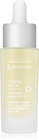
"Exuviance - CitraFirm Face Oil" is a well-rounded moisturizing product. To work well, any moisturizer needs to include a combination of water-binding and emollient ingredients. Exuviance - CitraFirm Face Oil ticks this box. Humectants in this product (sclerocarya birrea seed oil and caprylyl glycol) help to increase the water content in the upper layer of the skin. (These ingredients do so by "capturing" water molecules from the outside air or from within the deeper layers of the skin). Emollients in this formulation (linoleic acid, argania spinosa kernel oil, jojoba esters, linolenic acid and prunus armeniaca kernel oil) help to reduce the moisture loss from the skin. They also soften the skin surface and relieve the feeling of dryness and tightness.
Ingredient callouts
- this moisturizer includes a form of retinoids (vitamin A) - retinyl palmitate 0.45% - 1.05%, but this type of vitamin A is not very effective. It could in theory help with fine lines and wrinkles, but the effect is most likely minimal.
- We love that there is also Linoleic Acid in this moisturizer (0.95% - 1.45%). Linoleic Acid is one of the skin's natural emollients. It supports the skin barrier and can even help reduce clogged pores.
Irritation risk
This formulation includes some common irritants, including ingredients that do not provide a benefit for the skin. We assess the overall irritancy of this moisturizer to be high. For a detailed overview of all potential irritants: click here
You can see the detailed formula review with the breakdown of all actives in the product and the full ingredient list with estimated concentrations in the tables below.
Price
The product retails from 63.20$ up to 79.00$ in the United States, for 62.99£ in the United Kingdom and for 86.40CA$ in Canada.
For a detailed price comparison: click here.
Sources cited in this review
Every concentration estimate and effectiveness label is anchored to one of these 15 studies and safety reviews.
- 1
- 2
- 3Effect of topically applied lipids on surfactant-irritated skinonlinelibrary.wiley.com
- 4
- 5Wound‐healing Properties of the Oils of Vitis vinifera and Vaccinium macrocarpononlinelibrary.wiley.com
- 6

Affiliate links · As an Amazon Associate, WIMJ earns from qualifying purchases.