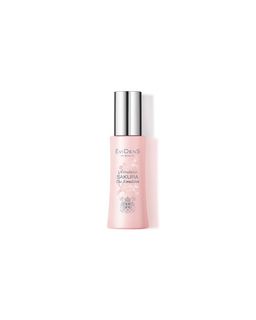
EviDenS de Beauté The Sakura Emulsion

EviDenS de Beauté The Sakura Emulsion

Efficacy50/100IrritancyHigh
Edit

Works for

2 of 3 advertised claims delivered

Moisturizing
Squalane, Triethylhexanoin + 14 more
Good evidence
What the product description says
“It replenishes moisture to normal and oily skin types, delivering a beautiful shine-free finish.”
Source: EviDenS de Beauté

This product can help improve hydration of the skin with the two types of ingredients.

The first type is called “humectants”:
these ingredients help attract water. When humectants are on the surface of the skin, they “pull in” the moisture from the outside environment, or from within deeper layers of the skin. The following ingredients in this product do the job: glycerin, hydrolyzed collagen.

This product also contains ingredients called “occlusives”. They help reduce the speed with which our skin loses moisture to the outside environment. These ingredients also help soften the upper layer of the skin, so it feels less tight and nicer to the touch. The following ingredients in this product do the job: squalane, hydrolyzed collagen.

SqualaneKey active· Emollient, OcclusiveEffect: HighAn oil naturally present in skin. Works as an emollient to soften the skin and form a protective layer on its surface without a greasy feeling.~4.2–5.1%
TriethylhexanoinKey activeEffect: HighHelps soften the upper layer of the skin~0.15–0.25%
TrehaloseKey active· HumectantEffect: HighA sugar that attracts water to the upper layer of the skin~1.5–1.9%
Glycosyl trehaloseKey activeEffect: High~0.2–0.35%
Soluble collagenKey active· HumectantEffect: HighA typically plant-derived compound that is supposed mimic human collagen. Cannot penetrate the skin barrier so is not particularly useful in skincare products beyond attracting water to the upper layer of the skin~0.15–0.3%
Hydrolyzed collagenKey active· Humectant, EmollientEffect: HighA typically plant-derived compound that is supposed mimic human collagen. Cannot penetrate the skin barrier so is not particularly useful in skincare products beyond attracting water to the upper layer of the skin~0.2–0.35%
GlycerinKey active· HumectantEffect: HighOne of the best moisturizing ingredients. Naturally present in skin. It attracts water to the upper layer of the skin working as a humectant~1.9–2.4%
Sodium hyaluronateKey active· HumectantEffect: HighOne of the best moisturizing ingredients. Attracts water into the upper layer of the skin~0.15–0.3%
Hydrogenated starch hydrolysateKey active· HumectantEffect: MediumHelps to attract water to the upper layer of the skin. Can add sweet taste to lip products~0.15–0.3%
AlginEffect: LowUsed to thicken product formulation. Can help attract water to the upper layer of the skin~0.15–0.3%
Glyceryl stearate· EmollientEffect: LowAn emollient that softens the skin and forms a protective layer on its surface. Helps water and oil mix together~0.25–0.45%
Scutellaria baicalensis root extract· HumectantEffect: LowA plant extract that might contain a compound baicalin that could be helpful in neutralizing free radicals and reducing inflammation in skin. The baicalin concentration in skincare products is often too low for an effective action. Can be used for its fragrant properties~0.15–0.25%
Butylene glycol· HumectantEffect: LowUsed to create a nice product texture and help delivery of other ingredients. Might be somewhat helpful in attracting water to the upper layer of the skin~0.5–0.8%
Dipotassium glycyrrhizateUnder-dosedEffect: HighA salt derived from licorice. Works as an emollient to soften the upper layer of the skin and can help calm down inflammation. Might be helpful for skin lightening~0.2–0.4%
TocopherolEffect: Low, below effective dosePure form of vitamin E. Can help moisturise and protect the skin from free radicals. Often used to help stabilise other ingredients or the formula itself~0.15–0.3%
Camellia sinensis leaf extractEffect: Low, below effective doseCan contain potent anti-oxidant compounds (abbreviated ECG, GCG, EGC, and EGCG) that might help protect the skin from free radicals. Can help calm down inflammation and has some anti-bacterial properties. Unfortunately, these antioxidants are unstable and lose their effectiveness very quickly in products. The concentration of the antioxidant compounds in the extract also tends to be low to be effective in topical formulation~0.2–0.35%
Anti-aging
Tocopherol, Camellia sinensis leaf extract + 1 more
Moderate evidence
What the product description says
“Sakura flower extract boosts radiance and helps prevent premature signs of aging, while Ginkgo Biloba, known for its age-old life force, brings anti-free radical, anti-inflammatory and anti-bacterial properties.”
Source: EviDenS de Beauté

This product contains polygonum aviculare extract. This ingredient help neutralize free radicals in skin. By doing so, they might be able to prevent early signs of aging (like fine lines and wrinkles), at least to some extent. These ingredients will not be able to "reverse" signs of aging.

Ascorbic acidUnder-dosedEffect: HighThe most well-researched antioxidant that works in skin. Helps neutralize free radicals supporting collagen production, helping to even out the skin tone and preventing early signs of aging~0.15–0.25%
TocopherolEffect: Low, below effective dosePure form of vitamin E. Can help moisturise and protect the skin from free radicals. Often used to help stabilise other ingredients or the formula itself~0.15–0.3%
Camellia sinensis leaf extractEffect: Low, below effective doseCan contain potent anti-oxidant compounds (abbreviated ECG, GCG, EGC, and EGCG) that might help protect the skin from free radicals. Can help calm down inflammation and has some anti-bacterial properties. Unfortunately, these antioxidants are unstable and lose their effectiveness very quickly in products. The concentration of the antioxidant compounds in the extract also tends to be low to be effective in topical formulation~0.2–0.35%
Evens skin tone
Dipotassium glycyrrhizate, Camellia sinensis leaf extract + 1 more
Weak evidence
What the product description says
“The high performance formula with a smooth lightweight texture protects the skin from pollution and other external stress factors, while eliminating excess sebum to tighten pores, mattify the complexion and even out skin tone.”
Source: EviDenS de Beauté

Effective ingredients missing or their concentration is too low

Ascorbic acidUnder-dosedEffect: HighThe most well-researched antioxidant that works in skin. Helps neutralize free radicals supporting collagen production, helping to even out the skin tone and preventing early signs of aging~0.15–0.25%
Dipotassium glycyrrhizateEffect: Low, below effective doseA salt derived from licorice. Works as an emollient to soften the upper layer of the skin and can help calm down inflammation. Might be helpful for skin lightening~0.2–0.4%
Camellia sinensis leaf extractEffect: Low, below effective doseCan contain potent anti-oxidant compounds (abbreviated ECG, GCG, EGC, and EGCG) that might help protect the skin from free radicals. Can help calm down inflammation and has some anti-bacterial properties. Unfortunately, these antioxidants are unstable and lose their effectiveness very quickly in products. The concentration of the antioxidant compounds in the extract also tends to be low to be effective in topical formulation~0.2–0.35%
Anti-oxidation
Not advertised by the brand · Polygonum aviculare extract, Ginkgo biloba leaf extract + 5 more
Strong evidence

This product contains antioxidants (polygonum aviculare extract) that can help neutralize free radicals in skin. By doing so, they can lessen the damage the skin gets from the UV light (sun).

The following ingredients - ginkgo biloba leaf extract also can have an antioxidant effect, but there is less evidence to confirm their effectiveness in skin.

Polygonum aviculare extractKey activeEffect: HighA plant extract that contains a flavanol Juglanin. It can help neutralize free radicals in skin and reduce inflammation~0.2–0.4%
Ginkgo biloba leaf extractKey activeEffect: MediumA plant extract that might help neutralize free radicals and reduce inflammation in skin. It can be irritating~0.15–0.3%
Scutellaria baicalensis root extractEffect: LowA plant extract that might contain a compound baicalin that could be helpful in neutralizing free radicals and reducing inflammation in skin. The baicalin concentration in skincare products is often too low for an effective action. Can be used for its fragrant properties~0.15–0.25%
TocopherolUnder-dosedEffect: HighPure form of vitamin E. Can help moisturise and protect the skin from free radicals. Often used to help stabilise other ingredients or the formula itself~0.15–0.3%
Ascorbic acidUnder-dosedEffect: HighThe most well-researched antioxidant that works in skin. Helps neutralize free radicals supporting collagen production, helping to even out the skin tone and preventing early signs of aging~0.15–0.25%
Camellia sinensis leaf extractUnder-dosedEffect: MediumCan contain potent anti-oxidant compounds (abbreviated ECG, GCG, EGC, and EGCG) that might help protect the skin from free radicals. Can help calm down inflammation and has some anti-bacterial properties. Unfortunately, these antioxidants are unstable and lose their effectiveness very quickly in products. The concentration of the antioxidant compounds in the extract also tends to be low to be effective in topical formulation~0.2–0.35%
Tocopheryl acetateEffect: Low, below effective doseA more stable but less bio-available form of vitamin E compared to Tocopherol. Might help moisturize and protect the skin from free radicals, but mostly used in low concentrations to stabilize other ingredients.~0.2–0.35%

Can it cause trouble?

Irritancy
7 strong irritants: Alcohol, Benzyl benzoate + 5 more — patch-test recommended
High risk
We flagged 22 ingredients with irritancy potential. Severity depends on your sensitivity threshold; the table lists the worst offenders first.
IngredientFunctionIrritationEst. amount
Ethylhexyl methoxycinnamateOctinoxate. When used in higher concentrations, works as a sunscreen protecting the skin from UVB rays. When used in lower concentration, helps to preserve the product formulation. Is shown to be harmful to coral reefs - consider avoiding bathing in coral reef areas when wearing a product with this ingredient. It can be irritatingHigh~1.3–1.6%est.
AlcoholCan be drying and contribute to skin irritation. Used in formulars to dissolve other ingredients, create a thinner product consistency or for its antibacterial propertiesHigh~0.2–0.4%est.
Ginkgo biloba leaf extractA plant extract that might help neutralize free radicals and reduce inflammation in skin. It can be irritatingHigh~0.15–0.3%est.
Scutellaria baicalensis root extractA plant extract that might contain a compound baicalin that could be helpful in neutralizing free radicals and reducing inflammation in skin. The baicalin concentration in skincare products is often too low for an effective action. Can be used for its fragrant propertiesHigh~0.15–0.25%est.
Ascorbic acidThe most well-researched antioxidant that works in skin. Helps neutralize free radicals supporting collagen production, helping to even out the skin tone and preventing early signs of agingHigh~0.15–0.25%est.
Benzyl benzoateFragrance with sweet balsamic smell. Help to preserve products and dissolve other ingredients. Could trigger allergic reactions and be irritatingHigh~0.15–0.25%est.
Hexyl cinnamalA fragrance with jasmine smell. A likely irritantHigh~0.1–0.2%est.
LinaloolA fragrance. Can be irritatingHigh~0.1–0.25%est.
CitronellolA fragrance. Can be irritatingHigh~0.1–0.2%est.
GeraniolA fragrance. Can be irritatingHigh~0.05–0.1%est.
LimoneneA common frangrance that can easily irritate skin, especially if exposed to air, light or heatHigh~0.05–0.1%est.
1,2-hexanediolA preservativeMedium~1.2–1.4%est.
Behenic acidHelps water and oil mix togetherMedium~1.4–1.7%est.
Potassium hydroxideUsed to adjust the pH level of productsMedium~0.2–0.4%est.
Tetrasodium edtaHelps to stabilize the product formulationMedium~0.2–0.35%est.
TriethylhexanoinHelps soften the upper layer of the skinMedium~0.15–0.25%est.
Polygonum aviculare extractA plant extract that contains a flavanol Juglanin. It can help neutralize free radicals in skin and reduce inflammationMedium~0.2–0.4%est.
Tocopheryl acetateA more stable but less bio-available form of vitamin E compared to Tocopherol. Might help moisturize and protect the skin from free radicals, but mostly used in low concentrations to stabilize other ingredients.Medium~0.2–0.35%est.
Potassium sorbateA preservativeMedium~0.15–0.3%est.
Citric acidCan work as an exfoliant but is typically used to adjust the product pHMedium~0.15–0.3%est.
BhtA preservativeMedium~0.15–0.25%est.
Sodium citrateHelps to control the skin's pH level. Maintains the skin's natural film of amino-lactic acids and oils. Helps to preserve productsMedium~0.15–0.3%est.
Comedogenic
1 ingredient rated 2 or more on the 0–5 pore-clogging scale
1 flagged
These ingredients have a comedogenic rating of 2 or more on a 0–5 scale; the table shows each one's rating. In leave-on products they can clog pores in acne-prone skin.
IngredientFunctionRatingEst. amount
AlginUsed to thicken product formulation. Can help attract water to the upper layer of the skin3/5~0.15–0.3%est.
Edit

User reviews

Would you recommend?
No community reviews yet.

Be the first — your take helps the next person decide.

Write a review · ~30s

Ingredients

Filter by role to see what each ingredient is doing.

Water~45–55%
Formula
Irritation risk
Low

Plain old water

More about Water
Dipropylene glycol~5.2–6.3%
Formula
Irritation risk
Low

Helps to dissolve other ingredients in a formulation. Slows down the rate of product drying

More about Dipropylene glycol
Squalane~4.2–5.1%
Key active
Irritation risk
Low
Works for
Moisturizing

An oil naturally present in skin. Works as an emollient to soften the skin and form a protective layer on its surface without a greasy feeling.

More about Squalane
Silica~3.1–3.8%
Formula
Irritation risk
Low

Used to absorb oil and can temporarily mattify skin

More about Silica
1,2-hexanediol~1.2–1.4%
Irritant · medium
Irritation risk
Medium

A preservative

More about 1,2-hexanediol
Glycerin~1.9–2.4%
Key active
Irritation risk
Low
Works for
Moisturizing

One of the best moisturizing ingredients. Naturally present in skin. It attracts water to the upper layer of the skin working as a humectant

More about Glycerin
Trehalose~1.5–1.9%
Key active
Irritation risk
Low
Works for
Moisturizing

A sugar that attracts water to the upper layer of the skin

More about Trehalose
Behenic acid~1.4–1.7%
Irritant · medium
Irritation risk
Medium
Works for
Cleansing

Helps water and oil mix together

More about Behenic acid
Sorbitan stearate~1.1–1.3%
Formula
Irritation risk
Low
Works for
Cleansing

Helps water and oil mix together

More about Sorbitan stearate
Ethylhexyl methoxycinnamate~1.3–1.6%
Irritant · high
Irritation risk
High
Works for
Sun protection

Octinoxate. When used in higher concentrations, works as a sunscreen protecting the skin from UVB rays. When used in lower concentration, helps to preserve the product formulation. Is shown to be harmful to coral reefs - consider avoiding bathing in coral reef areas when wearing a product with this ingredient. It can be irritating

More about Ethylhexyl methoxycinnamate
Butylene glycol~0.5–0.8%
Formula
Irritation risk
Low
Works for
Moisturizing

Used to create a nice product texture and help delivery of other ingredients. Might be somewhat helpful in attracting water to the upper layer of the skin

More about Butylene glycol
Phenoxyethanol~0.4–0.6%
Formula
Irritation risk
Low

A preservative. It helps prevent bacterial growth in cosmetic products

More about Phenoxyethanol
Peg-45 stearate~0.25–0.5%
Formula
Irritation risk
Low
Works for
Cleansing
More about Peg-45 stearate
Carbomer~0.2–0.4%
Formula
Irritation risk
Low
Works for
Cleansing

Helps create a thicker or gel-like product texture. It is not a surfactant but can be used in gentle cleansing formulations

More about Carbomer
Glyceryl stearate~0.25–0.45%
Formula
Irritation risk
Low
Works for
CleansingMoisturizing

An emollient that softens the skin and forms a protective layer on its surface. Helps water and oil mix together

More about Glyceryl stearate
Potassium hydroxide~0.2–0.4%
Irritant · medium
Irritation risk
Medium

Used to adjust the pH level of products

More about Potassium hydroxide
Parfum/fragrance
Not recognized
Peg-100 stearate~0.3–0.55%
Formula
Irritation risk
Low
Works for
Cleansing

Helps oil and water mix togehter and creates a nice product texture

More about Peg-100 stearate
Dipotassium glycyrrhizate~0.2–0.4%
Under-dosed
Irritation risk
Low
Works for
MoisturizingAnti-inflammatoryEvens skin tone

A salt derived from licorice. Works as an emollient to soften the upper layer of the skin and can help calm down inflammation. Might be helpful for skin lightening

More about Dipotassium glycyrrhizate
Xanthan gum~0.25–0.45%
Formula
Irritation risk
Low
Works for
Cleansing

Used to create a thicker product consistency

More about Xanthan gum
Alcohol~0.2–0.4%
Irritant · high
Irritation risk
High
Works for
Antibacterial

Can be drying and contribute to skin irritation. Used in formulars to dissolve other ingredients, create a thinner product consistency or for its antibacterial properties

More about Alcohol
Ppg-4-ceteth-20~0.25–0.45%
Formula
Irritation risk
Low
Works for
Cleansing
More about Ppg-4-ceteth-20
Tetrasodium edta~0.2–0.35%
Irritant · medium
Irritation risk
Medium

Helps to stabilize the product formulation

More about Tetrasodium edta
Triethylhexanoin~0.15–0.25%
Key activeIrritant · medium
Irritation risk
Medium
Works for
Moisturizing

Helps soften the upper layer of the skin

More about Triethylhexanoin
Glycosyl trehalose~0.2–0.35%
Key active
Irritation risk
Low
Works for
Moisturizing
More about Glycosyl trehalose
Hydrogenated starch hydrolysate~0.15–0.3%
Key active
Irritation risk
Low
Works for
Moisturizing

Helps to attract water to the upper layer of the skin. Can add sweet taste to lip products

More about Hydrogenated starch hydrolysate
Ginkgo biloba leaf extract~0.15–0.3%
Key activeIrritant · high
Irritation risk
High
Works for
Anti-oxidationAnti-blemishAntibacterialAnti-inflammatory

A plant extract that might help neutralize free radicals and reduce inflammation in skin. It can be irritating

More about Ginkgo biloba leaf extract
Polygonum aviculare extract~0.2–0.4%
Key activeIrritant · medium
Irritation risk
Medium
Works for
Anti-oxidationAnti-inflammatory

A plant extract that contains a flavanol Juglanin. It can help neutralize free radicals in skin and reduce inflammation

More about Polygonum aviculare extract
Hydrolyzed elastin~0.2–0.35%
Formula
Hydrolyzed collagen~0.2–0.35%
Key active
Irritation risk
Low
Works for
Moisturizing

A typically plant-derived compound that is supposed mimic human collagen. Cannot penetrate the skin barrier so is not particularly useful in skincare products beyond attracting water to the upper layer of the skin

More about Hydrolyzed collagen
Prunus lannesiana flower extract~0.15–0.3%
Formula
Camellia sinensis leaf extract~0.2–0.35%
Under-dosed
Irritation risk
Low
Works for
Anti-oxidationAntibacterialAnti-agingAnti-blemishMoisturizingEvens skin tone

Can contain potent anti-oxidant compounds (abbreviated ECG, GCG, EGC, and EGCG) that might help protect the skin from free radicals. Can help calm down inflammation and has some anti-bacterial properties. Unfortunately, these antioxidants are unstable and lose their effectiveness very quickly in products. The concentration of the antioxidant compounds in the extract also tends to be low to be effective in topical formulation

More about Camellia sinensis leaf extract
Sodium hyaluronate~0.15–0.3%
Key active
Irritation risk
Low
Works for
Moisturizing

One of the best moisturizing ingredients. Attracts water into the upper layer of the skin

More about Sodium hyaluronate
Tocopheryl acetate~0.2–0.35%
Irritant · medium
Irritation risk
Medium
Works for
Anti-oxidation

A more stable but less bio-available form of vitamin E compared to Tocopherol. Might help moisturize and protect the skin from free radicals, but mostly used in low concentrations to stabilize other ingredients.

More about Tocopheryl acetate
Scutellaria baicalensis root extract~0.15–0.25%
Irritant · high
Irritation risk
High
Works for
Anti-inflammatoryAnti-oxidationMoisturizingReduces irritationAntibacterial

A plant extract that might contain a compound baicalin that could be helpful in neutralizing free radicals and reducing inflammation in skin. The baicalin concentration in skincare products is often too low for an effective action. Can be used for its fragrant properties

More about Scutellaria baicalensis root extract
Potassium sorbate~0.15–0.3%
Irritant · medium
Irritation risk
Medium

A preservative

More about Potassium sorbate
Sodium benzoate~0.15–0.3%
Formula
Irritation risk
Low

A preservative

More about Sodium benzoate
Tocopherol~0.15–0.3%
Under-dosed
Irritation risk
Low
Works for
Anti-oxidationMoisturizingAnti-inflammatoryAnti-aging

Pure form of vitamin E. Can help moisturise and protect the skin from free radicals. Often used to help stabilise other ingredients or the formula itself

More about Tocopherol
Citric acid~0.15–0.3%
Irritant · medium
Irritation risk
Medium

Can work as an exfoliant but is typically used to adjust the product pH

More about Citric acid
Soluble collagen~0.15–0.3%
Key active
Irritation risk
Low
Works for
Moisturizing

A typically plant-derived compound that is supposed mimic human collagen. Cannot penetrate the skin barrier so is not particularly useful in skincare products beyond attracting water to the upper layer of the skin

More about Soluble collagen
Bht~0.15–0.25%
Irritant · medium
Irritation risk
Medium

A preservative

More about Bht
Ascorbic acid~0.15–0.25%
Under-dosedIrritant · high
Irritation risk
High
Works for
Anti-agingEvens skin toneAnti-oxidation

The most well-researched antioxidant that works in skin. Helps neutralize free radicals supporting collagen production, helping to even out the skin tone and preventing early signs of aging

More about Ascorbic acid
Malic acid~0.15–0.25%
Formula
Irritation risk
Low

Helps adjust the product pH

More about Malic acid
Sodium citrate~0.15–0.3%
Irritant · medium
Irritation risk
Medium

Helps to control the skin's pH level. Maintains the skin's natural film of amino-lactic acids and oils. Helps to preserve products

More about Sodium citrate
Ci 17200/red 33
Not recognized
Algin~0.15–0.3%
Comedogenic 3/5
Irritation risk
Low
Comedogenicity
3/5
Works for
Moisturizing

Used to thicken product formulation. Can help attract water to the upper layer of the skin

More about Algin
Benzyl benzoate~0.15–0.25%
Irritant · high
Irritation risk
High

Fragrance with sweet balsamic smell. Help to preserve products and dissolve other ingredients. Could trigger allergic reactions and be irritating

More about Benzyl benzoate
Hexyl cinnamal~0.1–0.2%
Irritant · high
Irritation risk
High

A fragrance with jasmine smell. A likely irritant

More about Hexyl cinnamal
Linalool~0.1–0.25%
Irritant · high
Irritation risk
High

A fragrance. Can be irritating

More about Linalool
Citronellol~0.1–0.2%
Irritant · high
Irritation risk
High

A fragrance. Can be irritating

More about Citronellol
Geraniol~0.05–0.1%
Irritant · high
Irritation risk
High

A fragrance. Can be irritating

More about Geraniol
Limonene~0.05–0.1%
Irritant · high
Irritation risk
High

A common frangrance that can easily irritate skin, especially if exposed to air, light or heat

More about Limonene
Ingredient list view

Water, Dipropylene glycol, Squalane, Silica, 1,2-hexanediol, Glycerin, Trehalose, Behenic acid, Sorbitan stearate, Ethylhexyl methoxycinnamate, Butylene glycol, Phenoxyethanol, Peg-45 stearate, Carbomer, Glyceryl stearate, Potassium hydroxide, Unknown, Peg-100 stearate, Dipotassium glycyrrhizate, Xanthan gum, Alcohol, Ppg-4-ceteth-20, Tetrasodium edta, Triethylhexanoin, Glycosyl trehalose, Hydrogenated starch hydrolysate, Ginkgo biloba leaf extract, Polygonum aviculare extract, Hydrolyzed elastin, Hydrolyzed collagen, Prunus lannesiana flower extract, Camellia sinensis leaf extract, Sodium hyaluronate, Tocopheryl acetate, Scutellaria baicalensis root extract, Potassium sorbate, Sodium benzoate, Tocopherol, Citric acid, Soluble collagen, Bht, Ascorbic acid, Malic acid, Sodium citrate, Unknown, Algin, Benzyl benzoate, Hexyl cinnamal, Linalool, Citronellol, Geraniol, Limonene

Compare prices

Retailers ranked by price — lowest first.

EviDenS de Beauté
Price unavailable
Check

Affiliate links · prices updated regularly

Worth comparing, line by line.

Match % combines shared ingredients, the first five ingredients, shared actives and hero ingredients, irritancy (lower counts in the alternative's favour), texture and body area. Only products in the same routine step are compared.

Side-by-side comparison of this product against its closest alternatives
EviDenS de BeautéThe Sakura EmulsionYOUR PRODUCTBeauty PieJapanfusion™ Step M3 Urban Air Purifying Moisturiser
Match—50%
Price——
Shared key ingredients—4 of 13
Key difference—Cera Alba
Irritancy High High
Drying alcohol Contains drying alcohol —
View product Shop
Cheaper alternatives? Browse formulas in the same category.
We compare ingredient profiles across our catalog — pick the closest match for your budget.
Open dupe finder

Sources cited in this review

Every concentration estimate and effectiveness label is anchored to one of these 18 studies and safety reviews.

  1. 1
  2. 2
  3. 3
  4. 4
  5. 5
  6. 6
EviDenS de Beauté The Sakura Emulsion
EviDenS de BeautéThe Sakura Emulsion

Affiliate links · As an Amazon Associate, WIMJ earns from qualifying purchases.

As an Amazon Associate, WIMJ earns from qualifying purchases.