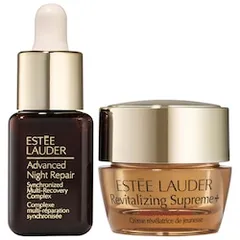
Works for:
based on ingredients and %- Moisturizing
- Anti-aging
- Anti-oxidation
Can it cause trouble?
- Irritation risk: high
- Comedogenic risk ingredients: 7
Key actives
Product Summary
"Estée Lauder - Radiance Recharge Repair Serum + Moisturizer" is effective for: Moisturizing
This product could be helpful for: Anti-aging, but its actives are not the most effective or are not well-studied.
Ingredient callouts
- Peptides (acetyl hexapeptide-8 0.01% - 0.05% and tripeptide-32 0.20% - 0.80%). There are many different kind of Peptides and they are naturally present in our skin. They all are a combination of aminoacids. Some of them work as natural antibiotics, promote wound-healing and production of collagen. The science is still not settled on how effective Peptides are in skincare, but it is very likely that they have a benefit. They might help restore the skin barrier and fight the signs of aging. At the very least, Peptides work as humectants: they attract water to the upper layer of the skin and improve its hydration.
- Humectants (sucrose 0.05% - 0.20%, acetyl hexapeptide-8 0.01% - 0.05%, sodium hyaluronate 0.01% - 0.05%, glycerin 0.05% - 0.10%, glycerin 0.05% - 0.10%, lactobacillus ferment 0.10% - 0.35%, faex 0.10% - 0.40% and sodium hyaluronate 0.15% - 0.65%). These ingredients help attract water to the upper layer of the skin and improve the skin hydration.
Works for
Moisturizing
What does the product description say?
Radiance Recharge Repair Serum + Moisturizer
Source: From product name
This product can help improve hydration of the skin with the two types of ingredients.
The first type is called “humectants”:
these ingredients help attract water.
When humectants are on the surface of the skin, they “pull in” the moisture from the outside environment, or from
within deeper layers of the skin. The following ingredients in this product do the job:
faex, glycerin.
This product also contains ingredients called “occlusives”. They help reduce the speed with which our skin loses moisture to the outside environment. These ingredients also help soften the upper layer of the skin, so it feels less tight and nicer to the touch. The following ingredients in this product do the job: dimethicone, peg-10 dimethicone.
The following ingredients in this product are especially good for supporting the skin barrier and helping with the hydration level: acetyl hexapeptide-8, tripeptide-32
A type of peptide. Peptides are excellent moisturizers and might be able support collagen production reducing fine lines and wrinkles
One of the best moisturizing ingredients. Naturally present in skin. It attracts water to the upper layer of the skin working as a humectant
A silicone that works to soften the upper layer of the skin and reduce its water loss
An algae extract that can help attract water to the upper layer of the skin and have some anti-oxidant properties
A type of peptide. Peptides are excellent moisturizers and might be able support collagen production reducing fine lines and wrinkles
Yeast extract. Helps to attract water to the upper layer of the skin
Consists of remains of dead yeast bacteria cells. Helps to hydrate the skin and reduce irritation. Might has some anti-oxidant effect
Helps to hydrate the skin by improving its barrier funciton
One of the best moisturizing ingredients. Attracts water into the upper layer of the skin
A silicone that helps to reduce water loss from the surface of the skin. Can temporarily "fill in" lines and wrinkles, absorb oil, and create a nice product finish
A fermentation product created by bacteria Lactobacillus. The fermented product has anti-bacterial properties and might be helpful in calming down inflammation, but studies are lacking. Helps attract water to the upper layer of the skin. Can be used as a preservative
Can help attract water to the upper layer of the skin. In crystal form, it can work as a gentle exfoliant, gentler than the salt scrub. Helps stabilize the emulsion
Derived from brown algae. Helps attract water to the upper layer of the skin
Helps soften the upper layer of the skin and might have some antioxidant effect
Might help to attract water to the upper layer of the skin
Helps attract water to the upper layer of the skin and soften it
Helps dissolve other ingredients and attract water to the upper layer of the skin
Helps to dissolve other ingredients and attract water to the upper layer of the skin
Helps create a nice product texture and soften the upper layer of the skin.
Used to create a nice product consistency
Used to preserve products, dissolve other ingredients and create a nice product texture
A silicone that forms a light film on the skin surface helping to bind water and temporarily absorb oils creating a matt and powdery feel
An emollient that helps soften the upper layer of the skin
A protein derived from milk. In skincare products, might help to soften the upper layer of the skin
A type of silicone that helps soften the upper layer of the skin and create a nice product texture
Used to create a nice product texture and help delivery of other ingredients. Might be somewhat helpful in attracting water to the upper layer of the skin
Helps preserve products and creates a nice product texture
Improves the texture of the product and helps soften the skin. Helps oil and water mix together and can be used as a cleansing agent
Is used to dissolve other ingredients and create nice product texture
Plant extract that helps the skin to attract water and make it more smooth for touch. Also shows promise of anti-aging properties, but research is not extensive yet
Naturally present in skin and helps to attract water to its upper layer
An oil naturally present in skin. Works as an emollient to soften the skin and form a protective layer on its surface without a greasy feeling.
An effective moisturizing ingredient that also has been shown to be effective in evening out the skin tone and reducing hyperpigmentation. It can help somewhat reduce wrinkles in skin
Helps attract water to the upper layer of the skin and might have some anti-oxidant and skin lightening properties. It can help calm down inflammation in skin
Helps attract water to the upper layer of the skin. Is often used to adjust the pH level of the product
A plant extract containing sugars that might help attract water to the upper layer of the skin. Is claimed by the manufacturer to help reduce pore size but evidence is lacking
Plant extract that might have moisturizing properties. Avoid if you suffer from wheat or gluten intolerance
Seaweed extract that helps the skin to attract water and make it more smooth for touch. Also shows promise of anti-aging properties, but good research is lacking at the moment
An emollient that helps soften the skin and can decrease moisture loss. Helps create a nice product texture
Can have some moisturizing properties due to its sugar content
Might be somewhat helpful in reducing hyperpigmentation and neutralizing free radicals but its typical concentration in a product is too low for having an effect
Helps attract water to the upper layer of the skin and improves the product texture
Used mostly for creating emulsions - helping oil and water mix together. Helps soften the upper layer of the skin
Anti-aging
What does the product description say?
Skin Type Normal, Dry, Combination, and Oily Skincare Concerns Fine Lines and Wrinkles, Dryness, and Dullness Highlighted Ingredients , Hyaluronic Acid Moisturizes.
Source: Sephora CA
This product contains acetyl hexapeptide-8, tripeptide-32. These ingredients might be able to help reduce and prevent fine lines and wrinkles, improve skin elasticity and firmness, but there is not enough evidence that it actually works.
A type of peptide. Peptides are excellent moisturizers and might be able support collagen production reducing fine lines and wrinkles
A type of peptide. Peptides are excellent moisturizers and might be able support collagen production reducing fine lines and wrinkles
An effective moisturizing ingredient that also has been shown to be effective in evening out the skin tone and reducing hyperpigmentation. It can help somewhat reduce wrinkles in skin
A more stable but less potent derivative of vitamin C. It can help neautralize free radicals and even out the skin tone if used in high enough concentration (required levels are likely to be much higher than for pure vitamin C, and solid studies are lacking at the moment)
Seaweed extract that helps the skin to attract water and make it more smooth for touch. Also shows promise of anti-aging properties, but good research is lacking at the moment
Is claimed to have anti-aging properties, but research about its effect in topical application is missing
Plant extract that helps the skin to attract water and make it more smooth for touch. Also shows promise of anti-aging properties, but research is not extensive yet
Anti-oxidation
This product contains antioxidants (bifida ferment lysate) that might be able to help neutralize free radicals in skin to lessen the damage it gets from the UV light (sun). There is not enough evidence to confirm their effectiveness in skin though.
Consists of remains of dead yeast bacteria cells. Helps to hydrate the skin and reduce irritation. Might has some anti-oxidant effect
A fermentation product created by bacteria Lactobacillus. The fermented product has anti-bacterial properties and might be helpful in calming down inflammation, but studies are lacking. Helps attract water to the upper layer of the skin. Can be used as a preservative
Helps soften the upper layer of the skin and might have some antioxidant effect
An algae extract that can help attract water to the upper layer of the skin and have some anti-oxidant properties
A plant extract that might have some anti-oxidant properties, but research is missing
A more stable but less potent derivative of vitamin C. It can help neautralize free radicals and even out the skin tone if used in high enough concentration (required levels are likely to be much higher than for pure vitamin C, and solid studies are lacking at the moment)
Helps attract water to the upper layer of the skin and might have some anti-oxidant and skin lightening properties. It can help calm down inflammation in skin
A more stable but less bio-available form of vitamin E compared to Tocopherol. Might help moisturize and protect the skin from free radicals, but mostly used in low concentrations to stabilize other ingredients.
An active component of chamomile plant that historically has been used to calm down irritated skin. A recent study shows that bisabolol indeed can have some anti-inflammatory effect on skin, even though conclusive data is lacking. Bisabolol has a sweet floral scent and can be added to products for its aromatic properties
Might be helpful in neutralizing free radicals. Can have a dehydration effect that might somewhat decrease the look of puffy eyes
Might be somewhat helpful in reducing hyperpigmentation and neutralizing free radicals but its typical concentration in a product is too low for having an effect
A plant extract that might have some anti-oxidant properties. Avoid if you are sensitive to gluten
A plant extract that can contain an antioxidant compound
Seaweed extract that helps the skin to attract water and make it more smooth for touch. Also shows promise of anti-aging properties, but good research is lacking at the moment
Might contain compounds called dormins that in theory could help lighten skin and reduce hyperpigmentation, but solid research is lacking
Can have some moisturizing properties due to its sugar content
A plant extract containing sugars that might help attract water to the upper layer of the skin. Is claimed by the manufacturer to help reduce pore size but evidence is lacking
Plant extract that might have moisturizing properties. Avoid if you suffer from wheat or gluten intolerance
How honest is this product?
| Promise | Can it deliver? |
|---|---|
| Moisturizing | |
| Anti-aging |
Total Promises Fulfilled score: 87/100.
Potential irritants
Comedogenic ingredients
User reviews (0)
Averages from community submissions.
No reviews yet for this product.
Be the first to share your experience!
Tried this product?
Help capture what the ingredient list can't—texture, finish, pilling, scent, and more. Answer what you can, skip the rest.
Takes ~30 seconds.
Reviews are shown in aggregate. No personal details.
Key Actives
Helps attract water to the upper layer of the skin and might have some anti-oxidant and skin lightening properties. It can help calm down inflammation in skin
Helps attract water to the upper layer of the skin and might have some anti-oxidant and skin lightening properties. It can help calm down inflammation in skin
A fermentation product created by bacteria Lactobacillus. The fermented product has anti-bacterial properties and might be helpful in calming down inflammation, but studies are lacking. Helps attract water to the upper layer of the skin. Can be used as a preservative
Consists of remains of dead yeast bacteria cells. Helps to hydrate the skin and reduce irritation. Might has some anti-oxidant effect
Helps to hydrate the skin by improving its barrier funciton
A type of peptide. Peptides are excellent moisturizers and might be able support collagen production reducing fine lines and wrinkles
Might be helpful in neutralizing free radicals. Can have a dehydration effect that might somewhat decrease the look of puffy eyes
A silicone that helps to reduce water loss from the surface of the skin. Can temporarily "fill in" lines and wrinkles, absorb oil, and create a nice product finish
A type of peptide. Peptides are excellent moisturizers and might be able support collagen production reducing fine lines and wrinkles
Plant extract that helps the skin to attract water and make it more smooth for touch. Also shows promise of anti-aging properties, but research is not extensive yet
An algae extract that can help attract water to the upper layer of the skin and have some anti-oxidant properties
Might be helpful in neutralizing free radicals. Can have a dehydration effect that might somewhat decrease the look of puffy eyes
A silicone that forms a light film on the skin surface helping to bind water and temporarily absorb oils creating a matt and powdery feel
One of the best moisturizing ingredients. Attracts water into the upper layer of the skin
Yeast extract. Helps to attract water to the upper layer of the skin
An oil naturally present in skin. Works as an emollient to soften the skin and form a protective layer on its surface without a greasy feeling.
One of the best moisturizing ingredients. Naturally present in skin. It attracts water to the upper layer of the skin working as a humectant
One of the best moisturizing ingredients. Naturally present in skin. It attracts water to the upper layer of the skin working as a humectant
A silicone that works to soften the upper layer of the skin and reduce its water loss
One of the best moisturizing ingredients. Attracts water into the upper layer of the skin
An oil naturally present in skin. Works as an emollient to soften the skin and form a protective layer on its surface without a greasy feeling.
Helps attract water to the upper layer of the skin. Is often used to adjust the pH level of the product
Can help attract water to the upper layer of the skin. In crystal form, it can work as a gentle exfoliant, gentler than the salt scrub. Helps stabilize the emulsion
Naturally present in skin and helps to attract water to its upper layer
Potential irritants
A plant extract that one one hand, can contain compounds that can help calm down skin irritation, but, on the other hand, its other compounds (especially fragrant ones) can themselves be irritating
An algae extract that can help attract water to the upper layer of the skin and have some anti-oxidant properties
An aromatic blend of unspecified and possibly irritating ingredients
Might be helpful in neutralizing free radicals. Can have a dehydration effect that might somewhat decrease the look of puffy eyes
Helps preserve products and creates a nice product texture
A more stable but less bio-available form of vitamin E compared to Tocopherol. Might help moisturize and protect the skin from free radicals, but mostly used in low concentrations to stabilize other ingredients.
Used to adjust pH of the product and can help improve the product's smell
Helps soften the upper layer of the skin and might have some antioxidant effect
Might contain compounds called dormins that in theory could help lighten skin and reduce hyperpigmentation, but solid research is lacking
Can have some moisturizing properties due to its sugar content
Might be somewhat helpful in reducing hyperpigmentation and neutralizing free radicals but its typical concentration in a product is too low for having an effect
A plant extract containing sugars that might help attract water to the upper layer of the skin. Is claimed by the manufacturer to help reduce pore size but evidence is lacking
A plant extract that can contain an antioxidant compound
A plant extract that can contain an anti-inflammatory compound
A plant extract that might have some anti-oxidant properties. Avoid if you are sensitive to gluten
Helps attract water to the upper layer of the skin. Is often used to adjust the pH level of the product
Plant extract that might have moisturizing properties. Avoid if you suffer from wheat or gluten intolerance
A more stable but less potent derivative of vitamin C. It can help neautralize free radicals and even out the skin tone if used in high enough concentration (required levels are likely to be much higher than for pure vitamin C, and solid studies are lacking at the moment)
Used to preserve products, dissolve other ingredients and create a nice product texture
Can work as an exfoliant but is typically used to adjust the product pH
Helps to control the skin's pH level. Maintains the skin's natural film of amino-lactic acids and oils. Helps to preserve products
Comedogenic ingredients
Derived from brown algae. Helps attract water to the upper layer of the skin
Seaweed extract that helps the skin to attract water and make it more smooth for touch. Also shows promise of anti-aging properties, but good research is lacking at the moment
Plant extract that helps the skin to attract water and make it more smooth for touch. Also shows promise of anti-aging properties, but research is not extensive yet
Might help to attract water to the upper layer of the skin
Plant extract that might have moisturizing properties. Avoid if you suffer from wheat or gluten intolerance
All ingredients
Consists of remains of dead yeast bacteria cells. Helps to hydrate the skin and reduce irritation. Might has some anti-oxidant effect
Acts as a solvent for other ingredients. Speeds up the absorption of other ingredients into the skin
A type of silicone that helps soften the upper layer of the skin and create a nice product texture
Helps attract water to the upper layer of the skin and soften it
Helps create a nice product texture and soften the upper layer of the skin.
Used to create a nice product texture and help delivery of other ingredients. Might be somewhat helpful in attracting water to the upper layer of the skin
A type of peptide. Peptides are excellent moisturizers and might be able support collagen production reducing fine lines and wrinkles
One of the best moisturizing ingredients. Attracts water into the upper layer of the skin
Helps attract water to the upper layer of the skin and might have some anti-oxidant and skin lightening properties. It can help calm down inflammation in skin
Helps attract water to the upper layer of the skin and might have some anti-oxidant and skin lightening properties. It can help calm down inflammation in skin
A fermentation product created by bacteria Lactobacillus. The fermented product has anti-bacterial properties and might be helpful in calming down inflammation, but studies are lacking. Helps attract water to the upper layer of the skin. Can be used as a preservative
A plant extract that might have some anti-oxidant properties, but research is missing
A plant extract that one one hand, can contain compounds that can help calm down skin irritation, but, on the other hand, its other compounds (especially fragrant ones) can themselves be irritating
Derived from brown algae. Helps attract water to the upper layer of the skin
Might be helpful in neutralizing free radicals. Can have a dehydration effect that might somewhat decrease the look of puffy eyes
Used mostly for creating emulsions - helping oil and water mix together. Helps soften the upper layer of the skin
Is claimed to have anti-aging properties, but research about its effect in topical application is missing
An active component of chamomile plant that historically has been used to calm down irritated skin. A recent study shows that bisabolol indeed can have some anti-inflammatory effect on skin, even though conclusive data is lacking. Bisabolol has a sweet floral scent and can be added to products for its aromatic properties
An oil naturally present in skin. Works as an emollient to soften the skin and form a protective layer on its surface without a greasy feeling.
One of the best moisturizing ingredients. Naturally present in skin. It attracts water to the upper layer of the skin working as a humectant
Helps preserve products and creates a nice product texture
Helps to retain moisture by creating a protective barrier on the skin. Rich in fatty acids. Improves product texture and helps with the penetration of other ingredients.
A more stable but less bio-available form of vitamin E compared to Tocopherol. Might help moisturize and protect the skin from free radicals, but mostly used in low concentrations to stabilize other ingredients.
Helps create a thicker or gel-like product texture. It is not a surfactant but can be used in gentle cleansing formulations
Used to adjust pH of the product and can help improve the product's smell
A preservative. It helps prevent bacterial growth in cosmetic products
A silicone that helps to reduce water loss from the surface of the skin. Can temporarily "fill in" lines and wrinkles, absorb oil, and create a nice product finish
One of the best moisturizing ingredients. Naturally present in skin. It attracts water to the upper layer of the skin working as a humectant
Improves the texture of the product and helps soften the skin. Helps oil and water mix together and can be used as a cleansing agent
Used to create a nice product texture and help delivery of other ingredients. Might be somewhat helpful in attracting water to the upper layer of the skin
A type of silicone that helps soften the upper layer of the skin and create a nice product texture
A silicone that works to soften the upper layer of the skin and reduce its water loss
A type of clay that is used to thicken the product consistency
Helps soften the upper layer of the skin and might have some antioxidant effect
One of the best moisturizing ingredients. Attracts water into the upper layer of the skin
A type of peptide. Peptides are excellent moisturizers and might be able support collagen production reducing fine lines and wrinkles
Seaweed extract that helps the skin to attract water and make it more smooth for touch. Also shows promise of anti-aging properties, but good research is lacking at the moment
A protein derived from milk. In skincare products, might help to soften the upper layer of the skin
An effective moisturizing ingredient that also has been shown to be effective in evening out the skin tone and reducing hyperpigmentation. It can help somewhat reduce wrinkles in skin
A more stable but less bio-available form of vitamin E compared to Tocopherol. Might help moisturize and protect the skin from free radicals, but mostly used in low concentrations to stabilize other ingredients.
Might contain compounds called dormins that in theory could help lighten skin and reduce hyperpigmentation, but solid research is lacking
An oil naturally present in skin. Works as an emollient to soften the skin and form a protective layer on its surface without a greasy feeling.
Plant extract that helps the skin to attract water and make it more smooth for touch. Also shows promise of anti-aging properties, but research is not extensive yet
Might help to attract water to the upper layer of the skin
Can have some moisturizing properties due to its sugar content
Might be somewhat helpful in reducing hyperpigmentation and neutralizing free radicals but its typical concentration in a product is too low for having an effect
A plant extract containing sugars that might help attract water to the upper layer of the skin. Is claimed by the manufacturer to help reduce pore size but evidence is lacking
A plant extract that can contain an antioxidant compound
An algae extract that can help attract water to the upper layer of the skin and have some anti-oxidant properties
A plant extract that can contain an anti-inflammatory compound
Might be helpful in neutralizing free radicals. Can have a dehydration effect that might somewhat decrease the look of puffy eyes
A plant extract that might have some anti-oxidant properties. Avoid if you are sensitive to gluten
Helps attract water to the upper layer of the skin. Is often used to adjust the pH level of the product
Plant extract that might have moisturizing properties. Avoid if you suffer from wheat or gluten intolerance
Helps attract water to the upper layer of the skin and improves the product texture
An emollient that helps soften the upper layer of the skin
Can help attract water to the upper layer of the skin. In crystal form, it can work as a gentle exfoliant, gentler than the salt scrub. Helps stabilize the emulsion
Naturally present in skin and helps to attract water to its upper layer
A more stable but less potent derivative of vitamin C. It can help neautralize free radicals and even out the skin tone if used in high enough concentration (required levels are likely to be much higher than for pure vitamin C, and solid studies are lacking at the moment)
Used to preserve products, dissolve other ingredients and create a nice product texture
Helps preserve products and creates a nice product texture
Is used to dissolve other ingredients and create nice product texture
A silicone that forms a light film on the skin surface helping to bind water and temporarily absorb oils creating a matt and powdery feel
Helps dissolve other ingredients and attract water to the upper layer of the skin
Helps to dissolve other ingredients and attract water to the upper layer of the skin
An emollient that helps soften the skin and can decrease moisture loss. Helps create a nice product texture
Can work as an exfoliant but is typically used to adjust the product pH
An aromatic blend of unspecified and possibly irritating ingredients
Helps to control the skin's pH level. Maintains the skin's natural film of amino-lactic acids and oils. Helps to preserve products
A preservative. It helps prevent bacterial growth in cosmetic products
An umbrella term for the following three colorants: CI 77491, CI 77492, CI 77499. They might be able to offer some protection against visible light, but the degree of the protection is not clear
Ingredient list view
Water, Bifida ferment lysate, Peg-8, Propanediol, Bis-peg-18 methyl ether dimethyl silane, Methyl gluceth-20, Glycereth-26, Peg-75, Butylene glycol, Adansonia digitata seed extract, Tripeptide-32, Sodium hyaluronate, Yeast extract, Faex, Yeast extract, Lactobacillus ferment, Cola acuminata seed extract, Anthemis nobilis flower extract, Hydrolyzed algin, Pantethine, Caffeine, Lecithin, Sodium rna, Bisabolol, Squalane, Glycerin, Oleth-3 phosphate, Caprylyl glycol, Oleth-3, Oleth-5, Choleth-24, Hydrogenated lecithin, Jojoba wax peg-120 esters, Ceteth-24, Tocopheryl acetate, Carbomer, Triethanolamine, Tetrasodium edta, Bht, Xanthan gum, Potassium sorbate, Disodium edta, Phenoxyethanol, Ci 14700, Ci 19140, Water, Dimethicone, Glycerin, Isohexadecane, Butylene glycol, Bis-peg-18 methyl ether dimethyl silane, Peg-10 dimethicone, Disteardimonium hectorite, Moringa oleifera seed extract, Hibiscus sinensis flower extract, Sodium hyaluronate, Acetyl hexapeptide-8, Laminaria digitata extract, Whey protein, Unknown, Tuna extract, Acetyl glucosamine, Tocopheryl acetate, Narcissus tazetta bulb extract, Squalane, Algae extract, Hypnea musciformis extract, Pyrus malus fruit extract, Cucumis sativus fruit extract, Lens esculenta fruit extract, Citrullus lanatus fruit extract, Silybum marianum seed extract, Gelidiella acerosa extract, Helianthus annuus seed extract, Sigesbeckia orientalis extract, Caffeine, Hordeum vulgare extract, Sodium lactate, Triticum vulgare germ extract, Sorbitol, Propylene glycol dicaprate, Sucrose, Sodium pca, Aminopropyl ascorbyl phosphate, Pentylene glycol, Caprylyl glycol, Propylene carbonate, Polyethylene, Polysilicone-11, Peg-32, Peg-6, Disodium edta, Isoceteth-20, Isododecane, Citric acid, Parfum, Bht, Sodium citrate, Potassium sorbate, Sodium dehydroacetate, Sodium benzoate, Phenoxyethanol, Iron oxides, Ci 77491
- Bifidobacterium longumlysate, a new ingredient forreactive skin
- Use of Probiotics for Dermal Applications
- Safety Assessment of Glycerin Ethoxylates as Used in Cosmetics
- Safety Evaluation of Polyethylene Glycol (PEG) Compounds for Cosmetic Use
- Hyaluronic acid: A key molecule in skin aging
- Hyaluronan (Hyaluronic Acid): a natural moisturizer for skin care
- The natural yeast extract isolated by ethanol precipitation inhibits melanin synthesis by modulating tyrosinase activity and downregulating melanosome transfer
- Evaluation of dermatological effects of cosmetic formulations containing Saccharomyces cerevisiae extract and vitamins
- The effect of probiotics on immune regulation, acne, and photoaging
- Comparison of clinical and histological effects between lactobacillus-fermented Chamaecyparis obtusa and tea tree oil for the treatment of acne: an eight-week double-blind randomized controlled split-face study
- Anticholinesterase and Antioxidative Properties of Aqueous Extract of Cola acuminata Seed In Vitro
- Safety Assessment of Plant Polysaccharide Gums as Used in Cosmetics
- Topical use of dexpanthenol in skin disorders
- α-(-)-Bisabolol Reduces Pro-Inflammatory Cytokine Production and Ameliorates Skin Inflammation
- Glycerol and the skin: holistic approach to its origin and functions
- Sensitization to oleth-3-phosphate and oleth-5 in a hair wax
- Final Report on the Safety Assessment of Oleth-2, -3, -4, -5, -6, -7, -8, -9, -10, -11, -12, -15, -16, -20, -23, -25, -30, -40, -44, and -501
- Final Report on the Safety Assessment of Choleth-24
- Safety assessment of alkyl PEG ethers as used in cosmetics
- Analysis of Dyes in Cosmetics: Challenges and Recent Developments
- Dimethicone as a protective ingredient in topical medications
- Final Report on the Safety Assessment of Dimethicone Copolyol
- Moringa oleifera Seeds and Oil: Characteristics and Uses for Human Health
- TOPICAL COMPOSITIONS CONTAINING WHEY PROTEINS
- The effect of N-acetyl-glucosamine on stratum corneum desquamation and water content in human skin
- Glucosamine: an ingredient with skin and other benefits
- Genomic expression changes induced by topical N-acetyl glucosamine in skin equivalent cultures in vitro
- Incorporation of D-(^H)glucosamine into normal and psoriatic epidermal glycoconjugates
- Reduction in the appearance of facial hyperpigmentation by topical N-acetyl glucosamine
- Analyzing Lycopene Content in Fruits
- Marine Bioactive Compounds and Their Health Benefits: A Review
- Antioxidant Capacity and Lipophilic Content of Seaweeds Collected from the Qingdao Coastline
- Purified Pland Extracts
- Celiac Disease & Skin Care Products
- Preventive and Therapeutic Role of Functional Ingredients of Barley Grass for Chronic Diseases in Human Beings
- Wheat in skin care
- An exemplary claim substantiation for the firming / filling activity of a synthetic tripeptide
- Safety Assessment of Alkyl PEG/PPG Ethers as Used in Cosmetics
- 4 Final Report on the Safety Assessment of Sodium Dehydroacetate and Dehydroacetic Acid