Works for
1 of 3 advertised claims delivered
Moisturizing32 ingredients credited for this claimGood support
“The sumptuous formula creates a weightless veil across your visage, drenching it in moisture for long-lasting, touchable softness.”
This product can help improve hydration of the skin with the two types of ingredients.
The first type is called “humectants”:
these ingredients help attract water.
When humectants are on the surface of the skin, they “pull in” the moisture from the outside environment, or from
within deeper layers of the skin. The following ingredients in this product do the job:
anhydroxylitol, glycerin.
This product also contains ingredients called “occlusives”. They help reduce the speed with which our skin loses moisture to the outside environment. These ingredients also help soften the upper layer of the skin, so it feels less tight and nicer to the touch. The following ingredients in this product do the job: helianthus annuus seed oil, plukenetia volubilis seed oil.
Anti-aging7 ingredients credited for this claimWeak support
“A boost of Navarra Asparagus Plant works to minimise the visible signs of ageing, offering a plumper, firmer appearance, while Yeast Bioferment supports the look of radiance and luminosity.”
Effective ingredients missing or their concentration is too low.
Evens skin tone4 ingredients credited for this claimWeak support
“A luxurious cocktail of nutrients assists with encouraging the look of a more balanced skin-tone, while South African Resurrection Plant promotes the illusion of a lit-from-within, youthful glow.”
Effective ingredients missing or their concentration is too low
Can it cause trouble?
Irritancy14 strong irritants: Limonene, Citrus aurantium dulcis peel oil + 12 more — patch-test recommendedHigh risk
Comedogenic3 ingredients rated 2 or more on the 0–5 pore-clogging scale3 flagged
User reviews
Be the first — your take helps the next person decide.
Ingredients
Filter by role to see what each ingredient is doing.
Water~45–55%
Coconut alkanes~6–7.4%
- Irritation risk
- Medium
- Comedogenicity
- 2/5
An emollient that helps soften the skin
More about Coconut alkanesPolyglyceryl-6 distearate~3.9–4.8%
- Irritation risk
- Medium
Helps oil and water mix together while softening the upper layer of the skin
More about Polyglyceryl-6 distearateHelianthus annuus seed oil unsaponifiables~3.1–3.8%
- Irritation risk
- Low
A great emollient due to its high linoleic acid content. One of the most effective plant oils in helping skin hydration and repairing skin barrier function
More about Helianthus annuus seed oil unsaponifiablesPolyglyceryl-2 stearate~2.2–2.7%
- Irritation risk
- Medium
Helps water and oil mix together
More about Polyglyceryl-2 stearateCetyl stearate~1.9–2.3%
- Irritation risk
- Low
Xylitylglucoside~1.6–1.9%
- Irritation risk
- Low
Helps attract water to the upper layer of the skin and repair the skin barrier function
More about XylitylglucosidePectin~1.3–1.6%
- Irritation risk
- Low
Inulin~1.1–1.3%
- Irritation risk
- Low
Helps attract water to the upper layer of the skin. Is claimed to support the growth of "good" bacteria in skin (as a "prebiotic"), but the research is lacking
More about InulinCoco-caprylate/caprate~0.9–1.1%
- Irritation risk
- Low
Helps to soften the upper layer of the skin without creating a greasy texture
More about Coco-caprylate/capratePlukenetia volubilis seed oil~0.65–1%
- Irritation risk
- Low
A plant oil that works as a good moisturizer by softening the upper layer of the skin. Might be helpful in reducing inflammation in skin and reducing blemishes due to the large content of linoleic acid
More about Plukenetia volubilis seed oilPropanediol~0.5–0.8%
- Irritation risk
- Low
Acts as a solvent for other ingredients. Speeds up the absorption of other ingredients into the skin
More about PropanediolEthylhexyl palmitate~0.5–0.75%
- Irritation risk
- Low
- Comedogenicity
- 3/5
An emollient that helps soften the skin and create a nice product texture
More about Ethylhexyl palmitateCaprylic/capric triglyceride~0.45–0.7%
- Irritation risk
- Medium
A good mix of fatty acids that forms a protective layer on the skin. Improves the shelf life of products. Derived from coconut and glycerin
More about Caprylic/capric triglycerideGlyceryl stearate~0.4–0.65%
- Irritation risk
- Low
An emollient that softens the skin and forms a protective layer on its surface. Helps water and oil mix together
More about Glyceryl stearateAnhydroxylitol~0.3–0.6%
- Irritation risk
- Low
Helps attract water to the upper layer of the skin and repair the skin barrir function
More about AnhydroxylitolCetyl alcohol~0.4–0.65%
- Irritation risk
- Low
A non-drying alcohol that works to soften the skin and stabilize product formulations helping oil and water mix together
More about Cetyl alcoholPhenoxyethanol~0.3–0.55%
- Irritation risk
- Low
A preservative. It helps prevent bacterial growth in cosmetic products
More about PhenoxyethanolStearyl alcohol~0.3–0.55%
- Irritation risk
- Low
An emollient that helps soften the skin
More about Stearyl alcoholGlycerin~0.25–0.5%
- Irritation risk
- Low
One of the best moisturizing ingredients. Naturally present in skin. It attracts water to the upper layer of the skin working as a humectant
More about GlycerinIsostearyl isostearate~0.25–0.45%
- Irritation risk
- Medium
- Comedogenicity
- 3/5
Helps soften the upper layer of the skin and improve the product texture. It can be comedogenic
More about Isostearyl isostearatePotassium cetyl phosphate~0.25–0.45%
- Irritation risk
- Medium
Helps oil and water mix together
More about Potassium cetyl phosphateJojoba esters~0.25–0.45%
- Irritation risk
- Medium
An emollient made of jojoba oil. Helps soften the skin and support its barrier function
More about Jojoba estersHelianthus annuus seed oil~0.25–0.4%
- Irritation risk
- Low
A great emollient due to its high linoleic acid content. One of the most effective plant oils in helping skin hydration and repairing skin barrier function
More about Helianthus annuus seed oilLimonene~0.2–0.35%
- Irritation risk
- High
A common frangrance that can easily irritate skin, especially if exposed to air, light or heat
More about LimoneneCitrus aurantium dulcis peel oil~0.2–0.35%
- Irritation risk
- High
An essentil oil from orange peel. Potential allergen and can be irritating
More about Citrus aurantium dulcis peel oilSclerotium gum~0.2–0.35%
- Irritation risk
- Low
Used to create gel-like formulas and stabilize emulsions
More about Sclerotium gumXylitol~0.2–0.35%
- Irritation risk
- Low
Helps attract water to the upper layer of the skin and repair the skin barrier function
More about XylitolAlpha-glucan oligosaccharide~0.3–0.55%
- Irritation risk
- Low
Helps attract water to the upper layer of the skin
More about Alpha-glucan oligosaccharidePolyglyceryl-3 beeswax~0.25–0.5%
- Irritation risk
- Medium
Helps water and oil mix together. Could be an allergen (beeswax)
More about Polyglyceryl-3 beeswaxBenzoic acid~0.25–0.45%
Citrus aurantium amara flower oil~0.2–0.4%
- Irritation risk
- High
Used as a fragrance. Can be irritating
More about Citrus aurantium amara flower oilCitrus aurantium bergamia fruit oil~0.2–0.4%
- Irritation risk
- High
A plant oil with a high content of volatile compounds that can irritate the skin and lead to allergic reactions. Can lead to photosensitivity
More about Citrus aurantium bergamia fruit oilCitrus nobilis peel oil~0.2–0.4%
- Irritation risk
- High
A plant oil with high content of volatile compounds that, especially when exposed to air, can cause allergic reactions and irritate the skin
More about Citrus nobilis peel oilParfum~0.2–0.4%
- Irritation risk
- High
An aromatic blend of unspecified and possibly irritating ingredients
More about ParfumSodium hydroxide~0.25–0.45%
Dehydroacetic acid~0.25–0.45%
Glucose~0.25–0.45%
- Irritation risk
- Low
Helps attract water to the upper layer of the skin. Could be helpful in restoring the skin barrier function
More about GlucoseAlaria esculenta extract~0.25–0.45%
- Irritation risk
- Low
Works as a humectant helping to attract water to the upper layer of the skin and might be effective as an anti-oxidant.
More about Alaria esculenta extractLonicera caprifolium flower extract~0.2–0.4%
- Irritation risk
- High
A plant extract that might help neutralize free radicals in skin. Can contain volalite oils and be irritating
More about Lonicera caprifolium flower extractLinalool~0.2–0.4%
Rosmarinus officinalis leaf extract~0.2–0.4%
- Irritation risk
- High
Can be helpful in reducing inflammation in skin, including inflamed acne. It can be irritating
More about Rosmarinus officinalis leaf extractAsparagus officinalis stem extract~0.25–0.45%
- Irritation risk
- Low
Myrothamnus flabellifolia leaf/stem extract~0.25–0.45%
- Irritation risk
- Low
Ethylhexylglycerin~0.25–0.45%
Silica dimethyl silylate~0.3–0.5%
Lonicera japonica flower extract~0.25–0.45%
- Irritation risk
- High
A plant extract that might help neutralize free radicals in skin. Can contain volalite oils and be irritating
More about Lonicera japonica flower extractSorbitol~0.25–0.45%
- Irritation risk
- Low
Helps attract water to the upper layer of the skin and improves the product texture
More about SorbitolHydrolyzed yeast protein~0.25–0.45%
- Irritation risk
- Low
Stearic acid~0.4–0.6%
- Irritation risk
- Low
Helps oil and water mix together and works as an emollient
More about Stearic acidSodium benzoate~0.25–0.45%
Butylene glycol~0.25–0.45%
- Irritation risk
- Low
Used to create a nice product texture and help delivery of other ingredients. Might be somewhat helpful in attracting water to the upper layer of the skin
More about Butylene glycolLactic acid~0.25–0.45%
- Irritation risk
- Medium
An exfoliating and moisturizing alpha-hydroxy acid (AHA). Typically causes less irritation than other AHAs, for example, glycolic acid. At high concentrations (about 15%), lactic acid can help reduce lines and wrinkles. Recent studies show that lactic acid can support the "good" bacteria living on skin's surface (healthy skin microbiome)
More about Lactic acidLecithin~0.3–0.5%
- Irritation risk
- Low
Used mostly for creating emulsions - helping oil and water mix together. Helps soften the upper layer of the skin
More about LecithinCaprylyl glycol~0.25–0.5%
- Irritation risk
- Medium
Helps preserve products and creates a nice product texture
More about Caprylyl glycolAscorbic acid~0.25–0.45%
- Irritation risk
- High
The most well-researched antioxidant that works in skin. Helps neutralize free radicals supporting collagen production, helping to even out the skin tone and preventing early signs of aging
More about Ascorbic acidCalcium gluconate~0.25–0.5%
- Irritation risk
- Low
Helps attract water to the upper layer of the skin and helps to improve appearance of the product
More about Calcium gluconateCitric acid~0.25–0.45%
- Irritation risk
- Medium
Can work as an exfoliant but is typically used to adjust the product pH
More about Citric acidGluconolactone~0.25–0.4%
- Irritation risk
- Medium
A polyhydroxy acid (PHA) that helps shed the dead cells from the skin surface revealing smoother skin. Is believed to be genter than AHAs. It helps attract water to the upper layer of the skin and can stimulate production of skin's own hyaluronic acid resulting in improved hydration levels. It has been shown to be helpful against acne and clogged pores if used consistently (e.g over a period of 12 weeks) in high enough concentration. It can help reduce fine lines and wrinkles and improve skin tone with long-term application. Can help neutralize free radicals
More about GluconolactonePotassium sorbate~0.25–0.45%
Geraniol~0.2–0.4%
Jasminum officinale flower extract~0.2–0.4%
Rosa damascena flower oil~0.25–0.45%
- Irritation risk
- High
Used as a fragrance. Can be irritating
More about Rosa damascena flower oilCitronellol~0.2–0.4%
Sodium hyaluronate~0.25–0.45%
- Irritation risk
- Low
One of the best moisturizing ingredients. Attracts water into the upper layer of the skin
More about Sodium hyaluronateXanthan gum~0.25–0.45%
- Irritation risk
- Low
Used to create a thicker product consistency
More about Xanthan gumTocopheryl acetate~0.25–0.45%
- Irritation risk
- Medium
A more stable but less bio-available form of vitamin E compared to Tocopherol. Might help moisturize and protect the skin from free radicals, but mostly used in low concentrations to stabilize other ingredients.
More about Tocopheryl acetateCitral~0.2–0.4%
Hexylene glycol~0.2–0.4%
- Irritation risk
- Medium
Helps create a more spreadable product texture
More about Hexylene glycolTocopherol~0.2–0.4%
- Irritation risk
- Low
Pure form of vitamin E. Can help moisturise and protect the skin from free radicals. Often used to help stabilise other ingredients or the formula itself
More about TocopherolGlyceryl linoleate~0.25–0.5%
- Irritation risk
- Medium
Helps oil and water mix together
More about Glyceryl linoleateGlyceryl linolenate~0.25–0.45%
- Irritation risk
- Low
Helps soften the upper layer of the skin
More about Glyceryl linolenateDisodium edta~0.2–0.35%
Sodium ascorbyl phosphate~0.15–0.3%
- Irritation risk
- Medium
A stable derivative of vitamin C. It is oil-soluble which means it is more likely to penetrate the skin compared to the pure form of vitamin C (which is water-soluble), but it is less bio-available and is way less effective in stimulating collagen and reducing wrinkles compared to the pure form of vitamin C (L-ascorbic acid) and its other derivatives (for example, magnesium ascorbyl phosphate). At the same time, this vitamin C derivative has been shown in studies to be effective in reducing acne, blemishes and clogged pores. It is less irritating then the pure form of vitamin C
More about Sodium ascorbyl phosphateRetinyl palmitate~0.15–0.25%
- Irritation risk
- High
Three steps removed from the active form of vitamin A - retinoic acid. To have an effect in the skin, it first needs to be converted twice to become the retinoic acid. This means it is less potent than retinol, but could also be less irritating. Once converted to the retinoic acid in the skin, it helps against all signs of aging, improves skin cell turnover and helps fight blemishes and clogged pores. However, in many cosmetic formulations, it is used in a concentration that is too low to have the full effect
More about Retinyl palmitateGlyceryl caprylate~0.2–0.35%
- Irritation risk
- Low
An emollient that can also help water and oil mix together, as well as prevent bacteria growth in products
More about Glyceryl caprylateOleic acid~0.2–0.35%
- Irritation risk
- Medium
Helps soften the upper layer of the skin. At the same time, it can weaken the skin's barrier enhancing penetration of other ingredients and increasing the risk of skin dryness
More about Oleic acidIron oxides~0.1–0.15%
- Irritation risk
- Low
An umbrella term for the following three colorants: CI 77491, CI 77492, CI 77499. They might be able to offer some protection against visible light, but the degree of the protection is not clear
More about Iron oxidesIngredient list view
Water, Coconut alkanes, Polyglyceryl-6 distearate, Helianthus annuus seed oil unsaponifiables, Polyglyceryl-2 stearate, Cetyl stearate, Xylitylglucoside, Pectin, Inulin, Coco-caprylate/caprate, Plukenetia volubilis seed oil, Propanediol, Ethylhexyl palmitate, Caprylic/capric triglyceride, Glyceryl stearate, Anhydroxylitol, Cetyl alcohol, Phenoxyethanol, Stearyl alcohol, Glycerin, Isostearyl isostearate, Potassium cetyl phosphate, Jojoba esters, Helianthus annuus seed oil, Limonene, Citrus aurantium dulcis peel oil, Sclerotium gum, Xylitol, Alpha-glucan oligosaccharide, Polyglyceryl-3 beeswax, Benzoic acid, Citrus aurantium amara flower oil, Citrus aurantium bergamia fruit oil, Citrus nobilis peel oil, Parfum, Sodium hydroxide, Dehydroacetic acid, Glucose, Alaria esculenta extract, Lonicera caprifolium flower extract, Linalool, Rosmarinus officinalis leaf extract, Asparagus officinalis stem extract, Myrothamnus flabellifolia leaf/stem extract, Ethylhexylglycerin, Silica dimethyl silylate, Lonicera japonica flower extract, Sorbitol, Hydrolyzed yeast protein, Stearic acid, Sodium benzoate, Butylene glycol, Lactic acid, Lecithin, Caprylyl glycol, Ascorbic acid, Calcium gluconate, Citric acid, Gluconolactone, Potassium sorbate, Geraniol, Jasminum officinale flower extract, Rosa damascena flower oil, Citronellol, Sodium hyaluronate, Xanthan gum, Tocopheryl acetate, Citral, Hexylene glycol, Tocopherol, Glyceryl linoleate, Glyceryl linolenate, Disodium edta, Sodium ascorbyl phosphate, Retinyl palmitate, Glyceryl caprylate, Oleic acid, Iron oxides
Compare prices
Retailers ranked by price — lowest first.


.png)
Product summary
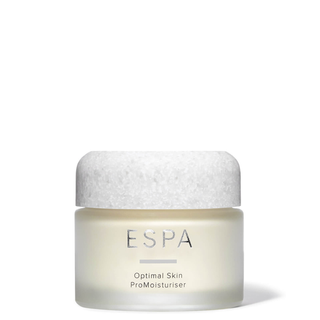
"ESPA - Optimal Skin ProMoisturiser" could be helpful for: Moisturizing, but its actives are not the most effective or are not well-studied.
Ingredient callouts
- This product also contains Vitamin C (Ascorbic Acid). It can be an effective active for anti-aging and evening out the skin tone, but in this product it is used for stabilizing other ingredients in the formulation. In this concentration (0.25% - 0.45%) it cannot have a noticeable benefit for the skin.
- This product includes a form of Retinoids (vitamin A) - retinyl palmitate 0.15% - 0.25%, but this type of vitamin A is not very effective. It could in theory help with fine lines and wrinkles, but the effect is most likely minimal.
- Humectants (xylitylglucoside 1.60% - 1.90%, sodium hyaluronate 0.25% - 0.45%, glycerin 0.25% - 0.50% and anhydroxylitol 0.30% - 0.60%). These ingredients help attract water to the upper layer of the skin and improve the skin hydration.
Price
The product retails from 37.95£ up to 50.00£ in the United Kingdom, for 91.00A$ in Australia and for 80.00$ in the United States.
For a detailed price comparison: click here.
Sources cited in this review
Every concentration estimate and effectiveness label is anchored to one of these 48 studies and safety reviews.
- 1
- 2
- 3Safety Assessment of Alkyl Esters as Used in Cosmeticscir-safety.org
- 4
- 5
- 6

Affiliate links · As an Amazon Associate, WIMJ earns from qualifying purchases.