Works for
1 of 1 advertised claim delivered
Moisturizing12 ingredients credited for this claimGood evidence
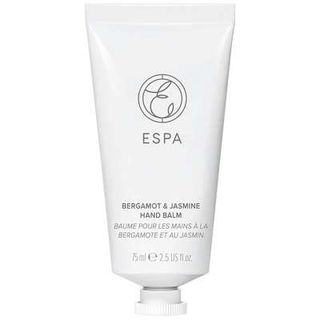
“ESPA, Handcare A deeply nourishing balm, ideal for hard-working hands.”
This product can help improve hydration of the skin with the two types of ingredients.
The first type is called “humectants”:
these ingredients help attract water.
When humectants are on the surface of the skin, they “pull in” the moisture from the outside environment, or from
within deeper layers of the skin. The following ingredients in this product do the job:
glycerin.
This product also contains ingredients called “occlusives”. They help reduce the speed with which our skin loses moisture to the outside environment. These ingredients also help soften the upper layer of the skin, so it feels less tight and nicer to the touch. The following ingredients in this product do the job: butyrospermum parkii butter, caprylic/capric triglyceride.
Can it cause trouble?
Irritancy16 strong irritants: Limonene, Citrus aurantium dulcis peel oil expressed + 14 more — patch-test recommendedHigh risk
Comedogenic4 ingredients rated 2 or more on the 0–5 pore-clogging scale4 flagged
User reviews
Be the first — your take helps the next person decide.
Ingredients
Filter by role to see what each ingredient is doing.
Water~45–55%
Glycerin~4.4–5.4%
- Irritation risk
- Low
One of the best moisturizing ingredients. Naturally present in skin. It attracts water to the upper layer of the skin working as a humectant
More about GlycerinCaprylic/capric triglyceride~4.3–5.2%
- Irritation risk
- Medium
A good mix of fatty acids that forms a protective layer on the skin. Improves the shelf life of products. Derived from coconut and glycerin
More about Caprylic/capric triglycerideCetearyl alcohol~2.5–3.1%
- Irritation risk
- Low
- Comedogenicity
- 2/5
A non-drying alcohol. Works as an emollient. Helps water and oil mix together and creates a nice product texture
More about Cetearyl alcoholGlyceryl stearate citrate~2.3–2.9%
- Irritation risk
- Low
Helps oil and water mix together while softening the upper layer of the skin
More about Glyceryl stearate citrateButyrospermum parkii butter~2–2.5%
- Irritation risk
- Low
- Comedogenicity
- 3/5
A great moisturising ingredient that softens the skin and reduces water loss from its upper layer. It also can be helpful in protecting skin from free radicals
More about Butyrospermum parkii butterPrunus amygdalus dulcis oil~1.7–2.1%
- Irritation risk
- Low
An emollient that softens the skin
More about Prunus amygdalus dulcis oilRosa canina fruit oil~1.5–1.9%
- Irritation risk
- Medium
A great emollient. Contains vitamin E (tocopherol) which may give it some anti-oxidant properties. Can contain volatile compounds and can be irritating
More about Rosa canina fruit oilJojoba esters~1.3–1.5%
- Irritation risk
- Medium
An emollient made of jojoba oil. Helps soften the skin and support its barrier function
More about Jojoba estersPhenoxyethanol~0.5–1%
- Irritation risk
- Low
A preservative. It helps prevent bacterial growth in cosmetic products
More about PhenoxyethanolLimonene~0.7–1.05%
- Irritation risk
- High
A common frangrance that can easily irritate skin, especially if exposed to air, light or heat
More about LimoneneTheobroma cacao seed butter~0.6–0.95%
- Irritation risk
- Low
- Comedogenicity
- 3/5
Helps soften the upper layer of the skin and can be helpful in restoring the skin barrier function. Might have some anti-oxidant effect
More about Theobroma cacao seed butterSodium stearoyl glutamate~0.6–0.9%
- Irritation risk
- Medium
Helps oil and water mix together
More about Sodium stearoyl glutamateCitrus aurantium dulcis peel oil expressed~0.5–0.7%
- Irritation risk
- High
Jojoba esters~0.5–0.75%
- Irritation risk
- Medium
An emollient made of jojoba oil. Helps soften the skin and support its barrier function
More about Jojoba estersParfum~0.45–0.65%
- Irritation risk
- High
An aromatic blend of unspecified and possibly irritating ingredients
More about ParfumBenzoic acid~0.25–0.5%
Citrus aurantium bergamia fruit oil~0.35–0.65%
- Irritation risk
- High
A plant oil with a high content of volatile compounds that can irritate the skin and lead to allergic reactions. Can lead to photosensitivity
More about Citrus aurantium bergamia fruit oilCitrus limon peel oil~0.3–0.6%
Tocopherol~0.3–0.6%
- Irritation risk
- Low
Pure form of vitamin E. Can help moisturise and protect the skin from free radicals. Often used to help stabilise other ingredients or the formula itself
More about TocopherolCitrus aurantifolia oil~0.3–0.55%
- Irritation risk
- High
Juniperus mexicana oil~0.3–0.55%
- Irritation risk
- Low
Dehydroacetic acid~0.25–0.5%
Linalool~0.25–0.45%
Abies sibirica oil~0.25–0.45%
- Irritation risk
- Low
Eucalyptus globulus leaf oil~0.25–0.45%
- Irritation risk
- High
An essential oil that can be very irritating. Has some anti-bacterial properties
More about Eucalyptus globulus leaf oilLitsea cubeba fruit oil~0.25–0.45%
- Irritation risk
- High
An essential oil with a lemon-like smell that is extracted from a fruit grown in Asia. Used as a fragrance
More about Litsea cubeba fruit oilMentha arvensis leaf oil~0.25–0.5%
Zingiber officinale root oil~0.2–0.4%
- Irritation risk
- High
An essential oil that is likely to be irritating and can cause photosensitivity
More about Zingiber officinale root oilCitral~0.25–0.45%
Helianthus annuus seed oil~0.3–0.5%
- Irritation risk
- Low
A great emollient due to its high linoleic acid content. One of the most effective plant oils in helping skin hydration and repairing skin barrier function
More about Helianthus annuus seed oilCymbopogon nardus oil~0.25–0.45%
- Irritation risk
- High
Melaleuca alternifolia leaf oil~0.25–0.45%
- Irritation risk
- High
An essential oil that can be irritating. Has some anti-bacterial properties
More about Melaleuca alternifolia leaf oilMyrocarpus fastigiatus oil~0.25–0.45%
- Irritation risk
- Low
Moringa oleifera seed oil~0.25–0.5%
- Irritation risk
- Medium
A plant oil that helps soften the upper layer of the skin. Is unlikely to be helpful in restoring skin barrier function due to the low content of linoleic acid
More about Moringa oleifera seed oilCistus ladaniferus oil~0.25–0.45%
- Irritation risk
- Low
Ferula galbaniflua resin oil~0.15–0.3%
- Irritation risk
- Low
Jasminum officinale flower extract~0.15–0.25%
Lavandula angustifolia flower extract~0.2–0.4%
- Irritation risk
- High
Essential oil that can be irritating
More about Lavandula angustifolia flower extractDipteryx odorata seed extract~0.15–0.3%
- Irritation risk
- Low
Fucus vesiculosus extract~0.2–0.35%
- Irritation risk
- Low
- Comedogenicity
- 3/5
Citric acid~0.05–0.15%
- Irritation risk
- Medium
Can work as an exfoliant but is typically used to adjust the product pH
More about Citric acidSodium hydroxide~0.1–0.2%
Ingredient list view
Water, Glycerin, Caprylic/capric triglyceride, Cetearyl alcohol, Glyceryl stearate citrate, Butyrospermum parkii butter, Prunus amygdalus dulcis oil, Rosa canina fruit oil, Jojoba esters, Phenoxyethanol, Limonene, Theobroma cacao seed butter, Sodium stearoyl glutamate, Citrus aurantium dulcis peel oil expressed, Jojoba esters, Parfum, Benzoic acid, Citrus aurantium bergamia fruit oil, Citrus limon peel oil, Tocopherol, Citrus aurantifolia oil, Juniperus mexicana oil, Dehydroacetic acid, Linalool, Abies sibirica oil, Eucalyptus globulus leaf oil, Litsea cubeba fruit oil, Mentha arvensis leaf oil, Zingiber officinale root oil, Citral, Helianthus annuus seed oil, Cymbopogon nardus oil, Melaleuca alternifolia leaf oil, Myrocarpus fastigiatus oil, Moringa oleifera seed oil, Cistus ladaniferus oil, Ferula galbaniflua resin oil, Jasminum officinale flower extract, Lavandula angustifolia flower extract, Dipteryx odorata seed extract, Fucus vesiculosus extract, Citric acid, Sodium hydroxide
Compare prices
Retailers ranked by price — lowest first.
Sources cited in this review
Every concentration estimate and effectiveness label is anchored to one of these 19 studies and safety reviews.
- 1
- 2
- 3
- 4
- 5
- 6Air oxidation increases skin irritation from fragrance terpenesonlinelibrary.wiley.com

Affiliate links · As an Amazon Associate, WIMJ earns from qualifying purchases.