Works for:
based on ingredients and %- Moisturizing
- Anti-oxidation
Doesn't work for:
based on ingredients and %- Anti-aging
Can it cause trouble?
- Irritation risk: medium
- Comedogenic risk ingredients: 2
Key actives

Product Summary
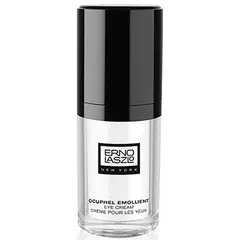
Based on the ingredient list, "Erno Laszlo - Ocuphel Emollient Eye Cream" can work well for skin moisturization. As we expect from a proper moisturizer, the formula includes a combo of effective humectants and emollients. These are the two different types of ingredients that are essential for improving the skin hydration and supporting a healthy skin barrier. Glycerin, sodium hyaluronate, butylene glycol, caprylyl glycol and scutellaria baicalensis root extract in this product (humectants) attract water molecules to the upper layer of the skin (the water comes from the outside air or from the deeper layers of the skin if the air is dry). Emollients in this formulation (petrolatum, borago officinalis seed oil, dimethicone, helianthus annuus seed oil and cetearyl alcohol) help to reduce the moisture loss from the skin. They also soften the skin surface and relieve the feeling of dryness and tightness.
Irritation risk
There are some common irritants in this product, including ingredients that do not have benefits for the skin. We assess the overall irritancy of this moisturizer to be medium. For a detailed overview of all potential irritants: click here
You can see the detailed formula review with the breakdown of all actives in the product and the full ingredient list with estimated concentrations in the tables below.
Price
The product retails from 65.00$ up to 149.24$ in the United States, from 136.50CA$ up to 186.09CA$ in Canada, for 182.83A$ in Australia and from 100.99£ up to 118.00£ in the United Kingdom.
For a detailed price comparison: click here.
Moisturizing
What does the product description say?
Suitable for all skin types, the Erno Laszlo Ocuphel Emollient Eye Cream works to smooth away fine lines and wrinkles whilst hydrating and nourishing the delicate skin around the eyes.
Source: Lookfantastic CA
This product can help improve hydration of the skin with the two types of ingredients.
The first type is called “humectants”:
these ingredients help attract water.
When humectants are on the surface of the skin, they “pull in” the moisture from the outside environment, or from
within deeper layers of the skin. The following ingredients in this product do the job:
glycerin, sodium hyaluronate.
This product also contains ingredients called “occlusives”. They help reduce the speed with which our skin loses moisture to the outside environment. These ingredients also help soften the upper layer of the skin, so it feels less tight and nicer to the touch. The following ingredients in this product do the job: dimethicone, helianthus annuus seed oil.
The following ingredients in this product are especially good for supporting the skin barrier and helping with the hydration level: petrolatum
A silicone that helps to reduce water loss from the surface of the skin. Can temporarily "fill in" lines and wrinkles, absorb oil, and create a nice product finish
A plant oil that is effective in reducing irritation in skin, restore the barrier function and support its hydration
One of the best moisturizing ingredients. Naturally present in skin. It attracts water to the upper layer of the skin working as a humectant
One of the best moisturizing ingredients. Attracts water into the upper layer of the skin
A great emollient due to its high linoleic acid content. One of the most effective plant oils in helping skin hydration and repairing skin barrier function
One of the most effective and the most studied occlusive ingredients that creates a protective layer on top of the skin preventing moisture loss
A silicone that helps improve the product texture and spreadability. Can absorb oil creating a short-term mattifying effect on the skin
A plant extract that helps attract water to the upper layer of the skin. It might be helpful in neutralizing free radicals in skin, but is less potent than the extract from the seeds
Helps to soften the upper layer of the skin without creating a greasy texture
An emollient that helps soften the skin and create a nice product texture
A non-drying alcohol. Works as an emollient. Helps water and oil mix together and creates a nice product texture
Used to create a nice product texture and help delivery of other ingredients. Might be somewhat helpful in attracting water to the upper layer of the skin
Helps preserve products and creates a nice product texture
An emollient that softens the skin and forms a protective layer on its surface. Helps water and oil mix together
Used to improve the product consistency and soften the upper layer of the skin
A plant extract that might contain a compound baicalin that could be helpful in neutralizing free radicals and reducing inflammation in skin. The baicalin concentration in skincare products is often too low for an effective action. Can be used for its fragrant properties
An exfoliating and moisturizing alpha-hydroxy acid (AHA). Typically causes less irritation than other AHAs, for example, glycolic acid. At high concentrations (about 15%), lactic acid can help reduce lines and wrinkles. Recent studies show that lactic acid can support the "good" bacteria living on skin's surface (healthy skin microbiome)
Helps calm down inflammation in skin and can help reduce itching. Helps to repair the skin barrier and keep skin hydrated
Might be somewhat helpful in reducing hyperpigmentation and neutralizing free radicals but its typical concentration in a product is too low for having an effect
Anti-oxidation
This product contains antioxidants (sodium ascorbyl phosphate) that might be able to help neutralize free radicals in skin to lessen the damage it gets from the UV light (sun). There is not enough evidence to confirm their effectiveness in skin though.
A stable derivative of vitamin C. It is oil-soluble which means it is more likely to penetrate the skin compared to the pure form of vitamin C (which is water-soluble), but it is less bio-available and is way less effective in stimulating collagen and reducing wrinkles compared to the pure form of vitamin C (L-ascorbic acid) and its other derivatives (for example, magnesium ascorbyl phosphate). At the same time, this vitamin C derivative has been shown in studies to be effective in reducing acne, blemishes and clogged pores. It is less irritating then the pure form of vitamin C
A plant oil that might help neutralize free radicals and have an anti-bacterial effect
A plant extract that can help lighten the skin and calm down inflammation. Might be helpful in neutralizing free radicals
A plant extract that might contain a compound baicalin that could be helpful in neutralizing free radicals and reducing inflammation in skin. The baicalin concentration in skincare products is often too low for an effective action. Can be used for its fragrant properties
Might be helpful in neutralizing free radicals. Can have a dehydration effect that might somewhat decrease the look of puffy eyes
A plant oil that is effective in reducing irritation in skin, restore the barrier function and support its hydration
A plant extract that helps attract water to the upper layer of the skin. It might be helpful in neutralizing free radicals in skin, but is less potent than the extract from the seeds
Carrot extract. Might have anti-oxidant properties and be used to add orange color
A more stable but less bio-available form of vitamin E compared to Tocopherol. Might help moisturize and protect the skin from free radicals, but mostly used in low concentrations to stabilize other ingredients.
Might be somewhat helpful in reducing hyperpigmentation and neutralizing free radicals but its typical concentration in a product is too low for having an effect
Anti-aging
What does the product description say?
Smooth over the eye area from outer to inner corners, avoiding the lash lines.
Source: Mankind
This product does not contain ingredients that are able to reduce fine lines and wrinkles or help with skin elasticity, but it can improve the look of the skin temporarily through moisturization. Well-moisturized skin might also be able to repair the sun damage better.This ingredient - sodium ascorbyl phosphate - could be helpful for preventing or repairing signs of aging in theory, but there is no evidence that it actually works.
This ingredient sodium ascorbyl phosphate might be able to help neutralize free radicals in skin and help it fight off some of the sun damage.
A stable derivative of vitamin C. It is oil-soluble which means it is more likely to penetrate the skin compared to the pure form of vitamin C (which is water-soluble), but it is less bio-available and is way less effective in stimulating collagen and reducing wrinkles compared to the pure form of vitamin C (L-ascorbic acid) and its other derivatives (for example, magnesium ascorbyl phosphate). At the same time, this vitamin C derivative has been shown in studies to be effective in reducing acne, blemishes and clogged pores. It is less irritating then the pure form of vitamin C
An exfoliating and moisturizing alpha-hydroxy acid (AHA). Typically causes less irritation than other AHAs, for example, glycolic acid. At high concentrations (about 15%), lactic acid can help reduce lines and wrinkles. Recent studies show that lactic acid can support the "good" bacteria living on skin's surface (healthy skin microbiome)
How honest is this product?
| Promise | Can it deliver? |
|---|---|
| Moisturizing | |
| Anti-aging |
Total Promises Fulfilled score: 75/100.
We receive a small commission for purchases made through these links at no cost for you. Thank you for your support! Learn more
Potential irritants
Comedogenic ingredients
User reviews (0)
Averages from community submissions.
No reviews yet for this product.
Be the first to share your experience!
Tried this product?
Help capture what the ingredient list can't—texture, finish, pilling, scent, and more. Answer what you can, skip the rest.
Takes ~30 seconds.
Reviews are shown in aggregate. No personal details.
| Product | Similarity | Price | Irritancy |
|---|---|---|---|
 Erno Laszlo Ocuphel Emollient Eye Cream | Current | ≈ $95.71 | |
 Olay Transforming Eye Cream | 54% | $26.99 |
Key Actives
Helps calm down inflammation in skin and can help reduce itching. Helps to repair the skin barrier and keep skin hydrated
A plant oil that is effective in reducing irritation in skin, restore the barrier function and support its hydration
A silicone that helps improve the product texture and spreadability. Can absorb oil creating a short-term mattifying effect on the skin
A silicone that helps to reduce water loss from the surface of the skin. Can temporarily "fill in" lines and wrinkles, absorb oil, and create a nice product finish
Might be helpful in neutralizing free radicals. Can have a dehydration effect that might somewhat decrease the look of puffy eyes
One of the most effective and the most studied occlusive ingredients that creates a protective layer on top of the skin preventing moisture loss
One of the best moisturizing ingredients. Naturally present in skin. It attracts water to the upper layer of the skin working as a humectant
A great emollient due to its high linoleic acid content. One of the most effective plant oils in helping skin hydration and repairing skin barrier function
One of the best moisturizing ingredients. Attracts water into the upper layer of the skin
Potential irritants
A plant extract that might contain arbutin, a compound that has skin-lightening properties. Might have some anti-oxidant activity. Is unlikely to be effective though in the concentrations typically used in skincare products
A plant extract that might contain a compound baicalin that could be helpful in neutralizing free radicals and reducing inflammation in skin. The baicalin concentration in skincare products is often too low for an effective action. Can be used for its fragrant properties
A plant extract that can help lighten the skin and calm down inflammation. Might be helpful in neutralizing free radicals
Might be somewhat helpful in reducing hyperpigmentation and neutralizing free radicals but its typical concentration in a product is too low for having an effect
A stable derivative of vitamin C. It is oil-soluble which means it is more likely to penetrate the skin compared to the pure form of vitamin C (which is water-soluble), but it is less bio-available and is way less effective in stimulating collagen and reducing wrinkles compared to the pure form of vitamin C (L-ascorbic acid) and its other derivatives (for example, magnesium ascorbyl phosphate). At the same time, this vitamin C derivative has been shown in studies to be effective in reducing acne, blemishes and clogged pores. It is less irritating then the pure form of vitamin C
A more stable but less bio-available form of vitamin E compared to Tocopherol. Might help moisturize and protect the skin from free radicals, but mostly used in low concentrations to stabilize other ingredients.
A plant extract that helps attract water to the upper layer of the skin. It might be helpful in neutralizing free radicals in skin, but is less potent than the extract from the seeds
Helps create a nice, clear product finish on the skin
Might be helpful in neutralizing free radicals. Can have a dehydration effect that might somewhat decrease the look of puffy eyes
An exfoliating and moisturizing alpha-hydroxy acid (AHA). Typically causes less irritation than other AHAs, for example, glycolic acid. At high concentrations (about 15%), lactic acid can help reduce lines and wrinkles. Recent studies show that lactic acid can support the "good" bacteria living on skin's surface (healthy skin microbiome)
Helps preserve products and creates a nice product texture
Used to adjust pH of the product and can help improve the product's smell
Comedogenic ingredients
A non-drying alcohol. Works as an emollient. Helps water and oil mix together and creates a nice product texture
An emollient that helps soften the skin and create a nice product texture
All ingredients
A silicone that helps improve the product texture and spreadability. Can absorb oil creating a short-term mattifying effect on the skin
Helps to soften the upper layer of the skin without creating a greasy texture
One of the most effective and the most studied occlusive ingredients that creates a protective layer on top of the skin preventing moisture loss
A non-drying alcohol. Works as an emollient. Helps water and oil mix together and creates a nice product texture
A plant extract that can help lighten the skin and calm down inflammation. Might be helpful in neutralizing free radicals
A silicone that helps to reduce water loss from the surface of the skin. Can temporarily "fill in" lines and wrinkles, absorb oil, and create a nice product finish
An emollient that softens the skin and forms a protective layer on its surface. Helps water and oil mix together
One of the best moisturizing ingredients. Naturally present in skin. It attracts water to the upper layer of the skin working as a humectant
An emollient that helps soften the skin and create a nice product texture
Helps oil and water mix togehter and creates a nice product texture
Might be somewhat helpful in reducing hyperpigmentation and neutralizing free radicals but its typical concentration in a product is too low for having an effect
A stable derivative of vitamin C. It is oil-soluble which means it is more likely to penetrate the skin compared to the pure form of vitamin C (which is water-soluble), but it is less bio-available and is way less effective in stimulating collagen and reducing wrinkles compared to the pure form of vitamin C (L-ascorbic acid) and its other derivatives (for example, magnesium ascorbyl phosphate). At the same time, this vitamin C derivative has been shown in studies to be effective in reducing acne, blemishes and clogged pores. It is less irritating then the pure form of vitamin C
A more stable but less bio-available form of vitamin E compared to Tocopherol. Might help moisturize and protect the skin from free radicals, but mostly used in low concentrations to stabilize other ingredients.
A plant extract that helps attract water to the upper layer of the skin. It might be helpful in neutralizing free radicals in skin, but is less potent than the extract from the seeds
A plant extract that might contain arbutin, a compound that has skin-lightening properties. Might have some anti-oxidant activity. Is unlikely to be effective though in the concentrations typically used in skincare products
A plant extract that might contain a compound baicalin that could be helpful in neutralizing free radicals and reducing inflammation in skin. The baicalin concentration in skincare products is often too low for an effective action. Can be used for its fragrant properties
Helps create a nice, clear product finish on the skin
A plant oil that might help neutralize free radicals and have an anti-bacterial effect
Used to improve the product consistency and soften the upper layer of the skin
A plant oil that is effective in reducing irritation in skin, restore the barrier function and support its hydration
Carrot extract. Might have anti-oxidant properties and be used to add orange color
A great emollient due to its high linoleic acid content. One of the most effective plant oils in helping skin hydration and repairing skin barrier function
Helps create a thicker or gel-like product texture. It is not a surfactant but can be used in gentle cleansing formulations
Helps calm down inflammation in skin and can help reduce itching. Helps to repair the skin barrier and keep skin hydrated
One of the best moisturizing ingredients. Attracts water into the upper layer of the skin
Might be helpful in neutralizing free radicals. Can have a dehydration effect that might somewhat decrease the look of puffy eyes
Used to create a nice product texture and help delivery of other ingredients. Might be somewhat helpful in attracting water to the upper layer of the skin
An exfoliating and moisturizing alpha-hydroxy acid (AHA). Typically causes less irritation than other AHAs, for example, glycolic acid. At high concentrations (about 15%), lactic acid can help reduce lines and wrinkles. Recent studies show that lactic acid can support the "good" bacteria living on skin's surface (healthy skin microbiome)
Helps preserve products and creates a nice product texture
A preservative. It helps prevent bacterial growth in cosmetic products
Used to thicken product formulations and create gel-like textures
Used to adjust pH of the product and can help improve the product's smell
Ingredient list view
Water, Cyclopentasiloxane, Coco-caprylate/caprate, Petrolatum, Cetearyl alcohol, Glycyrrhiza glabra root extract, Dimethicone, Glyceryl stearate, Glycerin, Ethylhexyl palmitate, Peg-100 stearate, Cucumis sativus fruit extract, Sodium ascorbyl phosphate, Tocopheryl acetate, Saxifraga sarmentosa extract, Vitis vinifera fruit extract, Morus bombycis root extract, Scutellaria baicalensis root extract, Trimethylpentanediol/adipic acid copolymer, Polysorbate 60, Beta-carotene, Daucus carota sativa seed oil, Calophyllum tacamahaca seed oil, Hydrogenated polyisobutene, Borago officinalis seed oil, Daucus carota sativa root extract, Peg-40 castor oil, Helianthus annuus seed oil, Carbomer, Allantoin, Sodium hyaluronate, Caffeine, Butylene glycol, Lactic acid, 1,2-hexanediol, Caprylyl glycol, Potassium sorbate, Phenoxyethanol, Hydroxyethylcellulose, Triethanolamine, Tetrasodium edta
- Safety Assessment of Alkyl Esters as Used in Cosmetics
- Dimethicone as a protective ingredient in topical medications
- Final Report on the Safety Assessment of Dimethicone Copolyol
- Glycerol and the skin: holistic approach to its origin and functions
- Sodium ascorbyl phosphate shows in vitro and in vivo efficacy in the prevention and treatment of acne vulgaris
- Sodium ascorbyl phosphate in topical microemulsions
- Final report of the safety assessment of L-Ascorbic Acid, Calcium Ascorbate, Magnesium Ascorbate, Magnesium Ascorbyl Phosphate, Sodium Ascorbate, and Sodium Ascorbyl Phosphate as used in cosmetics
- Regulation of collagen synthesis in human dermal fibroblasts by the sodium and magnesium salts of ascorbyl-2-phosphate
- Comparison of clinical efficacies of sodium ascorbyl phosphate, retinol and their combination in acne treatment
- Application of l-ascorbic acid and its derivatives (sodium ascorbyl phosphate and magnesium ascorbyl phosphate) in topical cosmetic formulations: stability studies
- Sodium L-ascorbyl-2-phosphate 5% lotion for the treatment of acne vulgaris: a randomized, double-blind, controlled trial
- Safety Assessment of Vitis Vinifera (Grape)-Derived Ingredients as Used in Cosmetics
- Physiological and Whitening Effects of Morus alba Extracts
- Scutellaria baicalensis, the golden herb from the garden of Chinese medicinal plants
- Flavonoids in Treating Psoriasis
- Improvement of skin barrier dysfunction by Scutellaria baicalensis GEOGI extracts through lactic acid fermentation
- Safety Assessment of Scutellaria baicalensis-Derived Ingredients as Used in Cosmetics
- New Claims for Wild Carrot (Daucus carota subsp. carota) Essential Oil
- Final report of the cosmetic ingredient review expert panel on the safety assessment of Polyisobutene and Hydrogenated Polyisobutene as used in cosmetics
- Dermatology News - Commentary: Borage Seed Oil
- Undershirts coated with borage oil alleviate the symptoms of atopic dermatitis in children
- Effect of Olive and Sunflower Seed Oil on the Adult Skin Barrier: Implications for Neonatal Skin Care
- Topically Applied Sunflower Seed Oil Prevents Invasive Bacterial Infections in Preterm Infants in Egypt
- Effect of topically applied lipids on surfactant-irritated skin
- Impact of topical oils on the skin barrier: possible implications for neonatal health in developing countries
- Profile of wound healing process induced by allantoin
- Hyaluronic acid: A key molecule in skin aging
- Hyaluronan (Hyaluronic Acid): a natural moisturizer for skin care
- Epidermal and dermal effects of topical lactic acid
- Dual Effects of Alpha-Hydroxy Acids on the Skin
- The influence of alkane chain length on the skin irritation potential of 1,2-alkanediols