Works for
1 of 2 advertised claims delivered
Moisturizing23 ingredients credited for this claimStrong support
“Restore moisture in dry skin using this hydrating balm.”
This product can help improve hydration of the skin with the two types of ingredients.
The first type is called “humectants”:
these ingredients help attract water.
When humectants are on the surface of the skin, they “pull in” the moisture from the outside environment, or from
within deeper layers of the skin. The following ingredients in this product do the job:
hyaluronic acid, hydrolyzed hyaluronic acid.
This product also contains ingredients called “occlusives”. They help reduce the speed with which our skin loses moisture to the outside environment. These ingredients also help soften the upper layer of the skin, so it feels less tight and nicer to the touch. The following ingredients in this product do the job: butyrospermum parkii butter, cera alba.
The following ingredients in this product are especially good for supporting the skin barrier and helping with the hydration level: ceramide ap, ceramide as, ceramide eop, ceramide np, ceramide ns, phytosphingosine
Anti-aging2 ingredients credited for this claimLimited support
“Helps prevent the appearance of wrinkles and skin cracking due to dryness.”
This product does not contain ingredients that are able to reduce fine lines and wrinkles or help with skin elasticity, but it can improve the look of the skin temporarily through moisturization. Well-moisturized skin might also be able to repair the sun damage better.These ingredients - butyrospermum parkii butter, hyaluronic acid - could be helpful for preventing or repairing signs of aging in theory, but there is no evidence that it actually works.
Can it cause trouble?
Irritancy2 strong irritants: Sorbitan sesquioleate, ParfumMedium risk
Comedogenic2 ingredients rated 2 or more on the 0–5 pore-clogging scale2 flagged
User reviews
Be the first — your take helps the next person decide.
Ingredients
Filter by role to see what each ingredient is doing.
Cyclopentasiloxane~23–34%
- Irritation risk
- Low
A silicone that helps improve the product texture and spreadability. Can absorb oil creating a short-term mattifying effect on the skin
More about CyclopentasiloxaneCetyl ethylhexanoate~4.8–7.1%
- Irritation risk
- Medium
An emollient that helps soften the skin and creates a thicker product texture
More about Cetyl ethylhexanoateCeresin~4.4–6.6%
Polyethylene~3.6–5.4%
Sorbitan sesquioleate~2.4–3.6%
- Irritation risk
- High
Used to help oil and water mix together. Can be irritating
More about Sorbitan sesquioleateCopernicia cerifera cera~2.1–3.1%
- Irritation risk
- Low
Brazilian palm wax. Helps soften the upper layer of the skin
More about Copernicia cerifera ceraCera alba~1.9–2.9%
- Irritation risk
- Medium
Forms a protective barrier that holds water and keeps dry skin hydrated. Keeps an emulsion from separating into its oil and liquid components, and increases the thickness of a product. Can be an allergen
More about Cera albaSorbitan olivate~1.2–1.7%
Parfum~0.9–1.35%
- Irritation risk
- High
An aromatic blend of unspecified and possibly irritating ingredients
More about ParfumButyrospermum parkii butter~0.85–1.25%
- Irritation risk
- Low
- Comedogenicity
- 3/5
A great moisturising ingredient that softens the skin and reduces water loss from its upper layer. It also can be helpful in protecting skin from free radicals
More about Butyrospermum parkii butterWater~0.4–1%
Sodium hyaluronate~0.35–0.8%
- Irritation risk
- Low
One of the best moisturizing ingredients. Attracts water into the upper layer of the skin
More about Sodium hyaluronateHippophae rhamnoides fruit oil~0.2–0.8%
- Irritation risk
- High
A plant oil that might somewhat help to neutralize free radicals. It could be irritating
More about Hippophae rhamnoides fruit oilHydrogenated lecithin~0.2–0.75%
- Irritation risk
- Low
Helps to retain moisture by creating a protective barrier on the skin. Rich in fatty acids. Improves product texture and helps with the penetration of other ingredients.
More about Hydrogenated lecithinCetearyl alcohol~0.3–0.75%
- Irritation risk
- Low
- Comedogenicity
- 2/5
A non-drying alcohol. Works as an emollient. Helps water and oil mix together and creates a nice product texture
More about Cetearyl alcoholButylene glycol~0.15–0.65%
- Irritation risk
- Low
Used to create a nice product texture and help delivery of other ingredients. Might be somewhat helpful in attracting water to the upper layer of the skin
More about Butylene glycolStearic acid~0.35–0.8%
- Irritation risk
- Low
Helps oil and water mix together and works as an emollient
More about Stearic acidHydrolyzed extensin~0.15–0.55%
- Irritation risk
- Low
1,2-hexanediol~0.1–0.45%
Fructan~0.1–0.45%
- Irritation risk
- Low
Ceramide np~0.15–0.55%
- Irritation risk
- Low
A type of lipid similar to ceramides naturally present in skin. Helps to soften the upper layer of the skin and supports the skin barrier function to keep it hydrated. Can help to prevent inflammation in skin
More about Ceramide npCeramide ns~0.15–0.5%
- Irritation risk
- Low
A type of lipid similar to ceramides naturally present in skin. Helps to soften the upper layer of the skin and supports the skin barrier function to keep it hydrated. Can help to prevent inflammation in skin
More about Ceramide nsPhytosphingosine~0.15–0.65%
- Irritation risk
- Low
A type of lipid that is naturally present in skin. It might help in repairing skin barrier function and has anti-bacterial effect
More about PhytosphingosineCholesterol~0.15–0.7%
- Irritation risk
- Low
An emollient that is naturally found in skin
More about CholesterolHydroxypropyltrimonium hyaluronate~0.15–0.7%
- Irritation risk
- Low
Ceramide as~0.15–0.5%
- Irritation risk
- Low
A type of lipid similar to ceramides naturally present in skin. Helps to soften the upper layer of the skin and supports the skin barrier function to keep it hydrated. Can help to prevent inflammation in skin
More about Ceramide asCeramide ap~0.15–0.5%
- Irritation risk
- Low
A type of lipid similar to ceramides naturally present in skin. Helps to soften the upper layer of the skin and supports the skin barrier function to keep it hydrated. Can help to prevent inflammation in skin
More about Ceramide apHydrolyzed hyaluronic acid~0.1–0.45%
- Irritation risk
- Low
One of the best moisturizing ingredients. Attracts water into the upper layer of the skin. A version of it is naturally present in skin
More about Hydrolyzed hyaluronic acidSodium acetylated hyaluronate~0.1–0.4%
- Irritation risk
- Low
A type of hyaluronic acid that works as an excellent moisturizer by attracting water into the upper layer of the skin. Is typically feels less sticky on the skin compared to the usual hyaluronic acid
More about Sodium acetylated hyaluronateHyaluronic acid~0.1–0.35%
- Irritation risk
- Low
One of the best moisturizing ingredients. Attracts water into the upper layer of the skin. Naturally present in skin. Typically has large molecule size unless advertised otherwise on the product label. Helps support skin's barrier function and may help to reduce inflammation
More about Hyaluronic acidHydrolyzed sodium hyaluronate~0.1–0.35%
- Irritation risk
- Low
Attracts water into the upper layer of the skin
More about Hydrolyzed sodium hyaluronateSodium hyaluronate crosspolymer~0.05–0.25%
- Irritation risk
- Medium
Attracts water into the upper layer of the skin
More about Sodium hyaluronate crosspolymerPotassium hyaluronate~0.05–0.3%
- Irritation risk
- Low
Ceramide eop~0.1–0.45%
- Irritation risk
- Low
A type of lipid similar to ceramides naturally present in skin. Helps to soften the upper layer of the skin and supports the skin barrier function to keep it hydrated. Can help to prevent inflammation in skin
More about Ceramide eopIngredient list view
Cyclopentasiloxane, Cetyl ethylhexanoate, Ceresin, Polyethylene, Sorbitan sesquioleate, Copernicia cerifera cera, Cera alba, Sorbitan olivate, Parfum, Butyrospermum parkii butter, Water, Sodium hyaluronate, Hippophae rhamnoides fruit oil, Hydrogenated lecithin, Cetearyl alcohol, Butylene glycol, Stearic acid, Hydrolyzed extensin, 1,2-hexanediol, Fructan, Ceramide np, Ceramide ns, Phytosphingosine, Cholesterol, Hydroxypropyltrimonium hyaluronate, Ceramide as, Ceramide ap, Hydrolyzed hyaluronic acid, Sodium acetylated hyaluronate, Hyaluronic acid, Hydrolyzed sodium hyaluronate, Sodium hyaluronate crosspolymer, Potassium hyaluronate, Ceramide eop
Compare prices
Retailers ranked by price — lowest first.

Affiliate links · prices updated regularly
Product summary
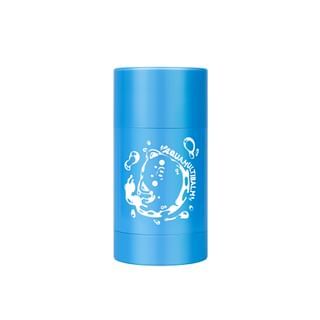
Based on the ingredients included, "Elizavecca - Aqua Multi Balm" works well for moisturizing the skin. As we expect from a proper moisturizer, the formula includes a combo of effective humectants and emollients. These are the two different types of ingredients that are essential for improving the skin hydration and supporting a healthy skin barrier. Humectants in this product (hyaluronic acid, hydrolyzed hyaluronic acid, sodium acetylated hyaluronate, sodium hyaluronate and butylene glycol) help to increase the water content in the upper layer of the skin. (These ingredients do so by "capturing" water molecules from the outside air or from within the deeper layers of the skin). Ceramide eop, ceramide np, ceramide ns, phytosphingosine and cholesterol in this product help decrease the water evoporation from the skin, so that it stays hydrated for longer. These ingredients also soften the skin and take away the feeling of tightness and dryness.
Ingredient callouts
- As a plus, this moisturizer also contains Ceramides (ceramide eop 0.10% - 0.45%, ceramide ap 0.15% - 0.50%, ceramide as 0.15% - 0.50%, phytosphingosine 0.15% - 0.65%, ceramide ns 0.15% - 0.50% and ceramide np 0.15% - 0.55%). Ceramides are a type of lipids that our skin produces itself. They are a building block of the skin's barrier. Ceramides used in skincare are synthetic or extracted from plants. They work well for softening the skin surface and "patch holes" in the skin's barrier.
Irritation risk
This formulation includes some common irritants, including ingredients that do not provide a benefit for the skin. We assess the overall irritancy of this moisturizer to be medium. For a detailed overview of all potential irritants: click here
You can see the detailed formula review with the breakdown of all actives in the product and the full ingredient list with estimated concentrations in the tables below.
Price
The product retails for 7.54$ in the United States.
For a detailed price comparison: click here.
Sources cited in this review
Every concentration estimate and effectiveness label is anchored to one of these 11 studies and safety reviews.
- 1
- 2
- 3Hyaluronic acid: A key molecule in skin agingncbi.nlm.nih.gov
- 4
- 5
- 6

Affiliate links · As an Amazon Associate, WIMJ earns from qualifying purchases.