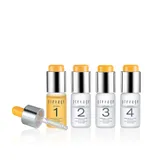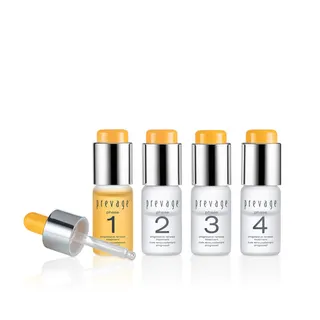
Elizabeth Arden PREVAGE Progressive Renewal Treatment

Elizabeth Arden PREVAGE Progressive Renewal Treatment

Efficacy37/100IrritancyHigh

Works for

Moisturizing
Phospholipids, Phenyl trimethicone + 10 more
Works
What the product description says
“PHAs have larger molecules and offer gentler exfoliation when compared to AHAs, plus PHAs have other benefits like moisturization and skin barrier strengthening.”
Source: Elizabeth Arden UK

This product can help improve hydration of the skin with the two types of ingredients.

The first type is called “humectants”:
these ingredients help attract water. When humectants are on the surface of the skin, they “pull in” the moisture from the outside environment, or from within deeper layers of the skin. The following ingredients in this product do the job: glycerin, propylene glycol.

This product also contains ingredients called “occlusives”. They help reduce the speed with which our skin loses moisture to the outside environment. These ingredients also help soften the upper layer of the skin, so it feels less tight and nicer to the touch. The following ingredients in this product do the job: dimethiconol, phenyl trimethicone.

PhospholipidsKey activeEffect: MediumEmollients that are naturaly present in skin. In addition, they help water and oil mix together in the product~3.8–5.6%
Phenyl trimethiconeKey active· OcclusiveEffect: HighA type of silicone that can decrease loss of moisture from the skin surface. It helps create a nice product texture~0.15–0.5%
Cetyl palmitateKey active· EmollientEffect: MediumAn emollient that helps soften the skin and is used to improve product texture and stability~0.15–0.6%
CyclopentasiloxaneKey active· EmollientEffect: MediumA silicone that helps improve the product texture and spreadability. Can absorb oil creating a short-term mattifying effect on the skin~0.15–0.55%
GlycerinKey active· HumectantEffect: HighOne of the best moisturizing ingredients. Naturally present in skin. It attracts water to the upper layer of the skin working as a humectant~0.1–0.35%
C12-15 alkyl benzoateKey active· EmollientEffect: MediumEnhances the product texture and makes it more spreadable. Helps reduce water loss from the outer layer of skin. Extands the shelf life by preventing bacteria growth~0.1–0.4%
DimethiconolKey active· Emollient, OcclusiveEffect: HighA silicone that makes products more spreadable and keeps skin smooth. Helps to add gloss to skin and may visually fill in fine lines/wrinkles for short time~0.05–0.3%
Hydroxydecyl ubiquinoneKey activeEffect: HighAn analogue of coenzyme Q10 that has a lower molecular weight, which can improve its ability to penetrate the skin. It helps neutralize free radicals in skin, improves skin hydration and might be helpful agains fine lines and wrinkles. It can be an allergen~0.05–0.2%
Propylene glycol· HumectantEffect: LowHelps oil and water mix together and can enhance the penetration of other ingredients into the skin. It can be irritating~0.1–0.35%
Pentylene glycol· EmollientEffect: LowUsed to preserve products, dissolve other ingredients and create a nice product texture~0.05–0.15%
Lactic acidUnder-dosedAn exfoliating and moisturizing alpha-hydroxy acid (AHA). Typically causes less irritation than other AHAs, for example, glycolic acid. At high concentrations (about 15%), lactic acid can help reduce lines and wrinkles. Recent studies show that lactic acid can support the "good" bacteria living on skin's surface (healthy skin microbiome)~0.01–0.1%
GluconolactoneUnder-dosedA polyhydroxy acid (PHA) that helps shed the dead cells from the skin surface revealing smoother skin. Is believed to be genter than AHAs. It helps attract water to the upper layer of the skin and can stimulate production of skin's own hyaluronic acid resulting in improved hydration levels. It has been shown to be helpful against acne and clogged pores if used consistently (e.g over a period of 12 weeks) in high enough concentration. It can help reduce fine lines and wrinkles and improve skin tone with long-term application. Can help neutralize free radicals~0.01–0.05%
Anti-aging
Hydroxydecyl ubiquinone, Gluconolactone + 1 more
May help
What the product description says
“After four weeks, wrinkles and pores will be reduced, the skin tone will be balanced and the complexion will be infused with a youthful radiance.”
Source: Lookfantastic

This product contains hydroxydecyl ubiquinone. There is some human evidence that this ingredient helps reduce and prevent fine lines and wrinkles and improve skin elasticity and firmness, though it is smaller or less consistent than the evidence for the best anti-aging ingredients.

Hydroxydecyl ubiquinoneKey activeEffect: MediumAn analogue of coenzyme Q10 that has a lower molecular weight, which can improve its ability to penetrate the skin. It helps neutralize free radicals in skin, improves skin hydration and might be helpful agains fine lines and wrinkles. It can be an allergen~0.05–0.2%
GluconolactoneUnder-dosedA polyhydroxy acid (PHA) that helps shed the dead cells from the skin surface revealing smoother skin. Is believed to be genter than AHAs. It helps attract water to the upper layer of the skin and can stimulate production of skin's own hyaluronic acid resulting in improved hydration levels. It has been shown to be helpful against acne and clogged pores if used consistently (e.g over a period of 12 weeks) in high enough concentration. It can help reduce fine lines and wrinkles and improve skin tone with long-term application. Can help neutralize free radicals~0.01–0.05%
Lactic acidUnder-dosedAn exfoliating and moisturizing alpha-hydroxy acid (AHA). Typically causes less irritation than other AHAs, for example, glycolic acid. At high concentrations (about 15%), lactic acid can help reduce lines and wrinkles. Recent studies show that lactic acid can support the "good" bacteria living on skin's surface (healthy skin microbiome)~0.01–0.1%
Evens skin tone
Lactic acid ~0.01–0.1%, below the ~2% it needs + 1 more
Under-dosed
What the product description says
“After four weeks, wrinkles and pores will be reduced, the skin tone will be balanced and the complexion will be infused with a youthful radiance.”
Source: Lookfantastic

Effective ingredients missing or their concentration is too low

Lactic acidUnder-dosedAn exfoliating and moisturizing alpha-hydroxy acid (AHA). Typically causes less irritation than other AHAs, for example, glycolic acid. At high concentrations (about 15%), lactic acid can help reduce lines and wrinkles. Recent studies show that lactic acid can support the "good" bacteria living on skin's surface (healthy skin microbiome)~0.01–0.1%
GluconolactoneUnder-dosedA polyhydroxy acid (PHA) that helps shed the dead cells from the skin surface revealing smoother skin. Is believed to be genter than AHAs. It helps attract water to the upper layer of the skin and can stimulate production of skin's own hyaluronic acid resulting in improved hydration levels. It has been shown to be helpful against acne and clogged pores if used consistently (e.g over a period of 12 weeks) in high enough concentration. It can help reduce fine lines and wrinkles and improve skin tone with long-term application. Can help neutralize free radicals~0.01–0.05%
Exfoliation
Lactic acid ~0.01–0.1%, below the ~2% it needs + 1 more
Under-dosed
What the product description says
“The treatment utilises skin-resurfacing AHAs as well as next-generation Polyhydroxy Acid (PHA) to gently exfoliate and buff away dead cells to reveal the newer, younger skin underneath.”
Source: Lookfantastic

This product does not contain effective exfoliating ingredients. It might be able to deliver physical exfoliation, that is scrub off some of the dead cells on the surface of the skin. We do not recommend physical exfoliation, because it is not uniform (some bits of skin can get exfoliated too much while others not at all). It can also traumatize the skin and aggrevate acne and other skin conditions.

Lactic acidUnder-dosedAn exfoliating and moisturizing alpha-hydroxy acid (AHA). Typically causes less irritation than other AHAs, for example, glycolic acid. At high concentrations (about 15%), lactic acid can help reduce lines and wrinkles. Recent studies show that lactic acid can support the "good" bacteria living on skin's surface (healthy skin microbiome)~0.01–0.1%
GluconolactoneUnder-dosedA polyhydroxy acid (PHA) that helps shed the dead cells from the skin surface revealing smoother skin. Is believed to be genter than AHAs. It helps attract water to the upper layer of the skin and can stimulate production of skin's own hyaluronic acid resulting in improved hydration levels. It has been shown to be helpful against acne and clogged pores if used consistently (e.g over a period of 12 weeks) in high enough concentration. It can help reduce fine lines and wrinkles and improve skin tone with long-term application. Can help neutralize free radicals~0.01–0.05%
Anti-oxidation
Side benefit · Hydroxydecyl ubiquinone, Gluconolactone
Works well

This product contains antioxidants (hydroxydecyl ubiquinone) that can help neutralize free radicals in skin. By doing so, they can lessen the damage the skin gets from the UV light (sun).

Hydroxydecyl ubiquinoneKey activeEffect: HighAn analogue of coenzyme Q10 that has a lower molecular weight, which can improve its ability to penetrate the skin. It helps neutralize free radicals in skin, improves skin hydration and might be helpful agains fine lines and wrinkles. It can be an allergen~0.05–0.2%
GluconolactoneUnder-dosedA polyhydroxy acid (PHA) that helps shed the dead cells from the skin surface revealing smoother skin. Is believed to be genter than AHAs. It helps attract water to the upper layer of the skin and can stimulate production of skin's own hyaluronic acid resulting in improved hydration levels. It has been shown to be helpful against acne and clogged pores if used consistently (e.g over a period of 12 weeks) in high enough concentration. It can help reduce fine lines and wrinkles and improve skin tone with long-term application. Can help neutralize free radicals~0.01–0.05%

Can it cause trouble?

Irritancy
4 strong irritants: Benzyl cinnamate, Geraniol + 2 more — patch-test recommended
High risk
We flagged 18 ingredients with irritancy potential. Severity depends on your sensitivity threshold; the table lists the worst offenders first.
IngredientFunctionIrritationEst. amount
Sodium laureth sulfateWorks as a foaming cleansing agentHigh~3.8–5.8%est.
Benzyl cinnamateFragrance. Can be irritatingHigh~2.2–3.3%est.
GeraniolA fragrance. Can be irritatingHigh~1.5–2.3%est.
HydroxycitronellalA fragrance. A likely allergen and can be irritatingHigh~1.1–1.6%est.
Ci 19140A yellow dyeHigh~0.15–0.7%est.
ParfumAn aromatic blend of unspecified and possibly irritating ingredientsHigh~0.1–0.35%est.
Propylene glycolHelps oil and water mix together and can enhance the penetration of other ingredients into the skin. It can be irritatingHigh~0.1–0.35%est.
Potassium sorbateA preservativeMedium~0.3–0.6%est.
Ci 14700A colorantMedium~0.35–0.8%est.
Hydroxydecyl ubiquinoneAn analogue of coenzyme Q10 that has a lower molecular weight, which can improve its ability to penetrate the skin. It helps neutralize free radicals in skin, improves skin hydration and might be helpful agains fine lines and wrinkles. It can be an allergenMedium~0.05–0.2%est.
Disodium edtaStabilizes the product formulationMedium~0.05–0.15%est.
Ammonium acryloyldimethyltaurate/beheneth-25 methacrylate crosspolymerUsed to stabilize product formulationsMedium~0.01–0.05%est.
Potassium hydroxideUsed to adjust the pH level of productsMedium~0.01–0.1%est.
Pentylene glycolUsed to preserve products, dissolve other ingredients and create a nice product textureMedium~0.05–0.15%est.
GluconolactoneA polyhydroxy acid (PHA) that helps shed the dead cells from the skin surface revealing smoother skin. Is believed to be genter than AHAs. It helps attract water to the upper layer of the skin and can stimulate production of skin's own hyaluronic acid resulting in improved hydration levels. It has been shown to be helpful against acne and clogged pores if used consistently (e.g over a period of 12 weeks) in high enough concentration. It can help reduce fine lines and wrinkles and improve skin tone with long-term application. Can help neutralize free radicalsMedium~0.01–0.05%est.
Ppg-26-buteth-26Helps oil and water mix togetherMedium~0.01–0.05%est.
Peg-40 hydrogenated castor oilHelps oil and water mix togetherMedium~0.01–0.05%est.
Lactic acidAn exfoliating and moisturizing alpha-hydroxy acid (AHA). Typically causes less irritation than other AHAs, for example, glycolic acid. At high concentrations (about 15%), lactic acid can help reduce lines and wrinkles. Recent studies show that lactic acid can support the "good" bacteria living on skin's surface (healthy skin microbiome)Medium~0.01–0.1%est.
Comedogenic
1 ingredient rated 2 or more on the 0–5 pore-clogging scale
1 flagged
These ingredients have a comedogenic rating of 2 or more on a 0–5 scale; the table shows each one's rating. In leave-on products they can clog pores in acne-prone skin.
IngredientFunctionRatingEst. amount
Sodium laureth sulfateWorks as a foaming cleansing agent2/5~3.8–5.8%est.
Did this help you decide?

User reviews

Would you recommend?
No community reviews yet.

Be the first — your take helps the next person decide.

Ingredients

Filter by role to see what each ingredient is doing.

Peg-100 stearate~22–34%
Formula
Irritation risk
Low
Works for
Cleansing

Helps oil and water mix togehter and creates a nice product texture

More about Peg-100 stearate
Phospholipids~3.8–5.6%
Key active
Irritation risk
Low
Works for
Moisturizing

Emollients that are naturaly present in skin. In addition, they help water and oil mix together in the product

More about Phospholipids
Sodium laureth sulfate~3.8–5.8%
Comedogenic 2/5Irritant · high
Irritation risk
High
Comedogenicity
2/5
Works for
Cleansing

Works as a foaming cleansing agent

More about Sodium laureth sulfate
Xanthan gum~2.8–4.2%
Formula
Irritation risk
Low
Works for
Cleansing

Used to create a thicker product consistency

More about Xanthan gum
Benzyl cinnamate~2.2–3.3%
Irritant · high
Irritation risk
High

Fragrance. Can be irritating

More about Benzyl cinnamate
Geraniol~1.5–2.3%
Irritant · high
Irritation risk
High

A fragrance. Can be irritating

More about Geraniol
Hydroxycitronellal~1.1–1.6%
Irritant · high
Irritation risk
High

A fragrance. A likely allergen and can be irritating

More about Hydroxycitronellal
Phenoxyethanol~0.4–0.9%
Formula
Irritation risk
Low

A preservative. It helps prevent bacterial growth in cosmetic products

More about Phenoxyethanol
Potassium sorbate~0.3–0.6%
Irritant · medium
Irritation risk
Medium

A preservative

More about Potassium sorbate
Sodium benzoate~0.25–0.5%
Formula
Irritation risk
Low

A preservative

More about Sodium benzoate
Ci 14700~0.35–0.8%
Irritant · medium
Irritation risk
Medium

A colorant

More about Ci 14700
Ci 19140~0.15–0.7%
Irritant · high
Irritation risk
High

A yellow dye

More about Ci 19140
Water~0.15–0.55%
Formula
Irritation risk
Low

Plain old water

More about Water
Phenyl trimethicone~0.15–0.5%
Key active
Irritation risk
Low
Works for
Moisturizing

A type of silicone that can decrease loss of moisture from the skin surface. It helps create a nice product texture

More about Phenyl trimethicone
Cetyl palmitate~0.15–0.6%
Key active
Irritation risk
Low
Works for
Moisturizing

An emollient that helps soften the skin and is used to improve product texture and stability

More about Cetyl palmitate
Cyclopentasiloxane~0.15–0.55%
Key active
Irritation risk
Low
Works for
MoisturizingMattifying

A silicone that helps improve the product texture and spreadability. Can absorb oil creating a short-term mattifying effect on the skin

More about Cyclopentasiloxane
Parfum~0.1–0.35%
Irritant · high
Irritation risk
High

An aromatic blend of unspecified and possibly irritating ingredients

More about Parfum
Propylene glycol~0.1–0.35%
Irritant · high
Irritation risk
High
Works for
Moisturizing

Helps oil and water mix together and can enhance the penetration of other ingredients into the skin. It can be irritating

More about Propylene glycol
Glycerin~0.1–0.35%
Key active
Irritation risk
Low
Works for
Moisturizing

One of the best moisturizing ingredients. Naturally present in skin. It attracts water to the upper layer of the skin working as a humectant

More about Glycerin
C12-15 alkyl benzoate~0.1–0.4%
Key active
Irritation risk
Low
Works for
Moisturizing

Enhances the product texture and makes it more spreadable. Helps reduce water loss from the outer layer of skin. Extands the shelf life by preventing bacteria growth

More about C12-15 alkyl benzoate
Hydroxydecyl ubiquinone~0.05–0.2%
Key activeIrritant · medium
Irritation risk
Medium
Works for
Anti-oxidationMoisturizingAnti-aging

An analogue of coenzyme Q10 that has a lower molecular weight, which can improve its ability to penetrate the skin. It helps neutralize free radicals in skin, improves skin hydration and might be helpful agains fine lines and wrinkles. It can be an allergen

More about Hydroxydecyl ubiquinone
Carbomer~0.1–0.3%
Formula
Irritation risk
Low
Works for
Cleansing

Helps create a thicker or gel-like product texture. It is not a surfactant but can be used in gentle cleansing formulations

More about Carbomer
Dimethiconol~0.05–0.3%
Key active
Irritation risk
Low
Works for
Moisturizing

A silicone that makes products more spreadable and keeps skin smooth. Helps to add gloss to skin and may visually fill in fine lines/wrinkles for short time

More about Dimethiconol
Disodium edta~0.05–0.15%
Irritant · medium
Irritation risk
Medium

Stabilizes the product formulation

More about Disodium edta
Ammonium acryloyldimethyltaurate/beheneth-25 methacrylate crosspolymer~0.01–0.05%
Irritant · medium
Irritation risk
Medium

Used to stabilize product formulations

More about Ammonium acryloyldimethyltaurate/beheneth-25 methacrylate crosspolymer
Disodium edta~0.01–0.1%
Irritant · medium
Irritation risk
Medium

Stabilizes the product formulation

More about Disodium edta
Disodium phosphate~0.05–0.1%
Formula
Irritation risk
Low

Helps adjust the product pH and stabilize the formulation

More about Disodium phosphate
Potassium hydroxide~0.01–0.1%
Irritant · medium
Irritation risk
Medium

Used to adjust the pH level of products

More about Potassium hydroxide
Sodium phosphate~0.01–0.1%
Formula
Irritation risk
Low

Helps stabilize the product formulation

More about Sodium phosphate
Phenoxyethanol~0.01–0.05%
Formula
Irritation risk
Low

A preservative. It helps prevent bacterial growth in cosmetic products

More about Phenoxyethanol
Water~0.01–0.05%
Formula
Irritation risk
Low

Plain old water

More about Water
Pentylene glycol~0.05–0.15%
Irritant · medium
Irritation risk
Medium
Works for
Moisturizing

Used to preserve products, dissolve other ingredients and create a nice product texture

More about Pentylene glycol
Gluconolactone~0.01–0.05%
Under-dosedIrritant · medium
Irritation risk
Medium
Works for
MoisturizingAnti-agingEvens skin toneExfoliationAnti-blemishAnti-oxidation

A polyhydroxy acid (PHA) that helps shed the dead cells from the skin surface revealing smoother skin. Is believed to be genter than AHAs. It helps attract water to the upper layer of the skin and can stimulate production of skin's own hyaluronic acid resulting in improved hydration levels. It has been shown to be helpful against acne and clogged pores if used consistently (e.g over a period of 12 weeks) in high enough concentration. It can help reduce fine lines and wrinkles and improve skin tone with long-term application. Can help neutralize free radicals

More about Gluconolactone
Ppg-26-buteth-26~0.01–0.05%
Irritant · medium
Irritation risk
Medium

Helps oil and water mix together

More about Ppg-26-buteth-26
Peg-40 hydrogenated castor oil~0.01–0.05%
Irritant · medium
Irritation risk
Medium
Works for
Cleansing

Helps oil and water mix together

More about Peg-40 hydrogenated castor oil
Lactic acid~0.01–0.1%
Under-dosedIrritant · medium
Irritation risk
Medium
Works for
ExfoliationEvens skin toneMoisturizingAnti-aging

An exfoliating and moisturizing alpha-hydroxy acid (AHA). Typically causes less irritation than other AHAs, for example, glycolic acid. At high concentrations (about 15%), lactic acid can help reduce lines and wrinkles. Recent studies show that lactic acid can support the "good" bacteria living on skin's surface (healthy skin microbiome)

More about Lactic acid
Ingredient list view

Peg-100 stearate, Phospholipids, Sodium laureth sulfate, Xanthan gum, Benzyl cinnamate, Geraniol, Hydroxycitronellal, Phenoxyethanol, Potassium sorbate, Sodium benzoate, Ci 14700, Ci 19140, Water, Phenyl trimethicone, Cetyl palmitate, Cyclopentasiloxane, Parfum, Propylene glycol, Glycerin, C12-15 alkyl benzoate, Hydroxydecyl ubiquinone, Carbomer, Dimethiconol, Disodium edta, Ammonium acryloyldimethyltaurate/beheneth-25 methacrylate crosspolymer, Disodium edta, Disodium phosphate, Potassium hydroxide, Sodium phosphate, Phenoxyethanol, Water, Pentylene glycol, Gluconolactone, Ppg-26-buteth-26, Peg-40 hydrogenated castor oil, Lactic acid

Compare prices

Retailers ranked by price — lowest first.

Amazon US
Price unavailable Out of stock
Check

Affiliate links · As an Amazon Associate, WIMJ earns from qualifying purchases.

Worth comparing, line by line.

Match % combines shared ingredients, the first five ingredients, shared actives and hero ingredients, irritancy (lower counts in the alternative's favour), texture and body area. Only products in the same routine step are compared.

Side-by-side comparison of this product against its closest alternatives
Elizabeth ArdenPREVAGE Progressive Renewal TreatmentYOUR PRODUCTSkinny TanCoconut Water Tanning SerumAdorn CosmeticsNatural Radiance Vitamin C Day SerumBeauty RxMaximum 15% Exfoliating Cream
Match—32%31%30%
Price—$32.80—$75.00
Shared key ingredients—1 of 51 of 52 of 5
Key difference—GluconolactoneHyaluronic AcidSalicylic Acid
Irritancy High Medium Medium Low
Drying alcohol— Contains drying alcohol ——
View product Shop Shop Shop

More alternatives: BHAWA Young Lavender Shower GelFor Radiance & Glow Cellular Resurfacing Exfoliator

Cheaper alternatives? See how this stacks up against similar formulas.
We compare ingredient profiles across our catalog — pick the closest match for your budget.
Open dupe finder

Sources cited in this review

Every concentration estimate and effectiveness label is anchored to one of these 24 studies and safety reviews.

  1. 1
  2. 2
  3. 3
  4. 4
    Propylene Glycolpubmed.ncbi.nlm.nih.gov
  5. 5
  6. 6
Elizabeth Arden PREVAGE Progressive Renewal Treatment
Elizabeth ArdenPREVAGE Progressive Renewal Treatment

Affiliate links · As an Amazon Associate, WIMJ earns from qualifying purchases.

As an Amazon Associate, WIMJ earns from qualifying purchases.