Works for
Evens skin toneNo ingredient credited for this claimNot delivered
Effective ingredients missing or their concentration is too low
MoisturizingSide benefit · Decyl oleate, Glycerin + 6 moreWorks
This product contains good ingredients to attract water to the upper layer of the skin. These ingredients are called "humectants": glycerin, butylene glycol.
When humectants are on the surface of the skin, they “pull in” the moisture from the outside environment, or from within deeper layers of the skin. If the air is dry, humectants can speed up the moisture loss from the skin. This is why it is a good idea to use another product on top of this one to help "seal in" the moisture (look for ingredients like dimethicone, squalane, oils and butters).
Can it cause trouble?
Irritancy13 flagged ingredientsLow risk
Comedogenic1 ingredient rated 2 or more on the 0–5 pore-clogging scale1 flagged
User reviews
Be the first — your take helps the next person decide.
Ingredients
Filter by role to see what each ingredient is doing.
Water~45–55%
Decyl oleate~5.6–6.9%
- Irritation risk
- Low
- Comedogenicity
- 2/5
Helps soften the upper layer of the skin
More about Decyl oleateOctocrylene~4.5–5.5%
- Irritation risk
- Medium
A weak sunscreen that protects against the sun rays that cause sunburn (UVB) and is somewhat effective against the UVA rays. It is quite stable and can help stabilize other, more vulnerable, sunscreen ingredients like Avobenzone. It is an organic, or so called "chemical" sunscreen
More about OctocryleneEthylhexyl salicylate~3.6–4.4%
- Irritation risk
- Low
Octisalate. A UV filter. It offers some protection against the sun rays that cause sunburn (UVB), but does not protect against the most aging sun rays (UVA). It loses its effectiveness quickly when exposed to sunlight. It is an organic, or so called "chemical" sunscreen
More about Ethylhexyl salicylateButyl methoxydibenzoylmethane~3.1–3.8%
- Irritation risk
- Medium
Avobenzone. An organic, or so-called "chemical" UV filter. Protects against both UVA and UVB rays. Needs to be combined with other filters in a formulation to be stable.
More about Butyl methoxydibenzoylmethanePhenylbenzimidazole sulfonic acid~2.6–3.1%
- Irritation risk
- Medium
Ensulizole. A UV filter that is effective against UVB rays. Does not protect against UVA light. It is photostable and can be used to help stabilize other sunscreen ingredients. It is water-soluble meaning that it can help create lighter sunscreen formulations
More about Phenylbenzimidazole sulfonic acidGlycerin~1.7–2.1%
- Irritation risk
- Low
One of the best moisturizing ingredients. Naturally present in skin. It attracts water to the upper layer of the skin working as a humectant
More about GlycerinVp/eicosene copolymer~1.5–1.8%
- Irritation risk
- Medium
Used to improve the product adherence to the skin, for example, to pro-long the protective effect of sunscreens. Can be irritating to very sensitive skin
More about Vp/eicosene copolymerHomosalate~1.7–2.1%
- Irritation risk
- Medium
A weak sunscreen that offers some protection against the sun rays that cause sunburn (UVB), but does not offer meaningful protection against protect against the most aging sun rays (UVA). It loses its effectiveness quickly when exposed to sunlight. It is an organic, or so called "chemical" sunscreen. When used in low concentrations, helps to stabilize the product formulation
More about HomosalateCeteth-2~0.95–1.15%
Ceteareth-25~0.75–1.1%
Hydrolyzed grape skin~0.6–0.95%
- Irritation risk
- Low
Aloe barbadensis leaf juice powder~0.45–0.7%
- Irritation risk
- Medium
Traditionally used to treat sunburns, dermatitis and inflammation, but evidence for its effectiveness is lacking. The extract can contain humectants that help attract water into the skin
More about Aloe barbadensis leaf juice powderSaccharomyces/xylinum/black tea ferment~0.4–0.6%
- Irritation risk
- Low
A fermented sweet black tea. There is no studies on particular benefits of this ingredient in skin. It can help attract water to the upper layer of the skin, and might have some anti-oxidant effect. It is used in skincare for mostly marketing purposes because of the popularity of kombucha drinks
More about Saccharomyces/xylinum/black tea fermentAcetyl hexapeptide-51 amide~0.35–0.65%
- Irritation risk
- Low
Tocopheryl acetate~0.35–0.65%
- Irritation risk
- Medium
A more stable but less bio-available form of vitamin E compared to Tocopherol. Might help moisturize and protect the skin from free radicals, but mostly used in low concentrations to stabilize other ingredients.
More about Tocopheryl acetateGlyceryl stearate~0.4–0.65%
- Irritation risk
- Low
An emollient that softens the skin and forms a protective layer on its surface. Helps water and oil mix together
More about Glyceryl stearateGlyceryl caprylate~0.35–0.65%
- Irritation risk
- Low
An emollient that can also help water and oil mix together, as well as prevent bacteria growth in products
More about Glyceryl caprylateMyristyl alcohol~0.25–0.5%
- Irritation risk
- High
Helps to stabilize the product formulation while softening the upper layer of the skin. Can be irritating
More about Myristyl alcoholLauryl alcohol~0.25–0.5%
Ethylhexylglycerin~0.2–0.4%
Phenoxyethanol~0.2–0.35%
- Irritation risk
- Low
A preservative. It helps prevent bacterial growth in cosmetic products
More about PhenoxyethanolDisodium edta~0.15–0.3%
Butylene glycol~0.15–0.3%
- Irritation risk
- Low
Used to create a nice product texture and help delivery of other ingredients. Might be somewhat helpful in attracting water to the upper layer of the skin
More about Butylene glycolSodium hydroxide~0.15–0.25%
Citric acid~0.1–0.2%
- Irritation risk
- Medium
Can work as an exfoliant but is typically used to adjust the product pH
More about Citric acidSodium benzoate~0.1–0.2%
Potassium sorbate~0.1–0.2%
Ingredient list view
Water, Decyl oleate, Octocrylene, Ethylhexyl salicylate, Butyl methoxydibenzoylmethane, Phenylbenzimidazole sulfonic acid, Glycerin, Vp/eicosene copolymer, Homosalate, Ceteth-2, Ceteareth-25, Hydrolyzed grape skin, Aloe barbadensis leaf juice powder, Saccharomyces/xylinum/black tea ferment, Acetyl hexapeptide-51 amide, Tocopheryl acetate, Glyceryl stearate, Glyceryl caprylate, Myristyl alcohol, Lauryl alcohol, Ethylhexylglycerin, Phenoxyethanol, Disodium edta, Butylene glycol, Sodium hydroxide, Citric acid, Sodium benzoate, Potassium sorbate
Compare prices
Retailers ranked by price — lowest first.
Worth comparing, line by line.
Match % combines shared ingredients, the first five ingredients, shared actives and hero ingredients, irritancy (lower counts in the alternative's favour), texture and body area. Only products in the same routine step are compared.
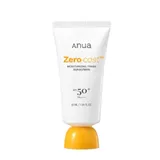
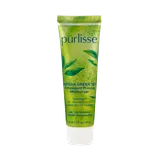
| ElixirNova drops spfYOUR PRODUCT | AnuaZero-Cast Moisturizing Finish Sunscreen | Estée LauderDaywear Anti-Oxidant 72H-Hydration Sorbet Creme | PurlisseMatcha Green Tea Antioxidant Priming Moisturizer | |
|---|---|---|---|---|
| Match | — | 18% | 16% | 15% |
| Price | — | $14.22 | $50.81 | $20.00 |
| Shared key ingredients | — | 4 of 6 | 4 of 6 | 4 of 6 |
| Key difference | — | Niacinamide | Linoleic Acid | Aphanizomenon Flos-Aquae Extract |
| Irritancy | Low | Low | Medium | Medium |
| SPF | — | — | SPF 15 | — |
| Drying alcohol | — | — | Contains drying alcohol | — |
| View product | Shop | Shop | Shop |


More alternatives: CeraVe Oil Control Moisturising Gel-CreamBalea Beauty Expert Vitamin C Serum-Creme LSF 30
Product summary
"Elixir - Nova drops spf" could be helpful for: Moisturizing, but its actives are not the most effective or are not well-studied.
Ingredient callouts
- Humectants (glycerin 1.70% - 2.10%). These ingredients help attract water to the upper layer of the skin and improve the skin hydration.
Sources cited in this review
Every concentration estimate and effectiveness label is anchored to one of these 7 studies and safety reviews.
- 1
- 2
- 3
- 4
- 5Cosmetic allergy from myristyl alcoholncbi.nlm.nih.gov
- 6

Affiliate links · As an Amazon Associate, WIMJ earns from qualifying purchases.