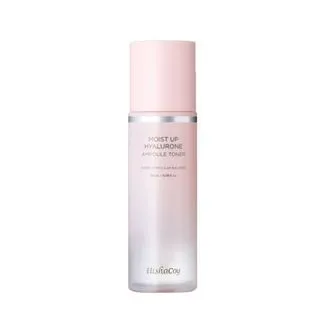
Elishacoy Moist Up Hyalurone Ampoule Toner

Elishacoy Moist Up Hyalurone Ampoule Toner

Efficacy100/100IrritancyHigh

Works for

Moisturizing
Panthenol, Glycerin + 19 more
Works well
What the product description says
“This ampoule toner moisturizes and nourishes skin with Hyaluronic Acid, Marin Collagen and Elishacoy's patent ingredient Youth Water™.”
Source: Yesstyle

This product can help improve hydration of the skin with the two types of ingredients.

The first type is called “humectants”:
these ingredients help attract water. When humectants are on the surface of the skin, they “pull in” the moisture from the outside environment, or from within deeper layers of the skin. The following ingredients in this product do the job: cyclomethicone, glycerin.

This product also contains ingredients called “occlusives”. They help reduce the speed with which our skin loses moisture to the outside environment. These ingredients also help soften the upper layer of the skin, so it feels less tight and nicer to the touch. The following ingredients in this product do the job: dimethicone, beta-sitosterol.

The following ingredients in this product are especially good for supporting the skin barrier and helping with the hydration level: panthenol

PanthenolHero· HumectantEffect: HighHelps attract water to the upper layer of the skin and can help improve skin barrier function~0.25–0.5%
GlycerinKey active· HumectantEffect: HighOne of the best moisturizing ingredients. Naturally present in skin. It attracts water to the upper layer of the skin working as a humectant~4.8–5.9%
TrehaloseKey active· HumectantEffect: HighA sugar that attracts water to the upper layer of the skin~1.9–2.3%
Honey extractKey active· HumectantEffect: MediumHelps attract water to the upper layer of the skin~0.95–1.2%
DimethiconeKey active· Emollient, OcclusiveEffect: HighA silicone that helps to reduce water loss from the surface of the skin. Can temporarily "fill in" lines and wrinkles, absorb oil, and create a nice product finish~0.35–0.6%
Centella asiatica extractKey activeEffect: HighA plant extract that has been shown to be able to reduce inflammation in skin, support restoration of skin barrier function, as well as support collagen production. Contains active compounds called centelloids: asiaticoside, madecasosside, asiatic acid and madecassic acid. Might be helpful in preventing stretch marks. It can be itself be irritating though.~0.3–0.6%
CholesterolKey active· EmollientEffect: HighAn emollient that is naturally found in skin~0.3–0.6%
CyclomethiconeKey active· Humectant, EmollientEffect: HighA type of silicone that leaves a nice silky finish on the skin and can help soften its upper layer~0.3–0.55%
Laminaria japonica extractKey activeEffect: HighSeaweed extract that might help to attract water to the upper layer of the skin and have some anti-oxidant properties~0.3–0.55%
Beta-sitosterolKey active· EmollientEffect: HighA phytosterol that can support skin's barrier function and help the skin stay hydrated~0.3–0.55%
Glyceryl linolenateKey active· EmollientEffect: MediumHelps soften the upper layer of the skin~0.3–0.55%
Macadamia ternifolia seed oilKey active· EmollientEffect: MediumPlant oil from nuts that helps soften the upper layer of the skin. Contains a high concentration of oleic acid that can weaken skin's barrier function and increase water-loss while enhancing penetration of other ingredients~0.3–0.55%
Sodium hyaluronateKey active· HumectantEffect: HighOne of the best moisturizing ingredients. Attracts water into the upper layer of the skin~0.25–0.5%
UbiquinoneKey activeEffect: HighCoenzyme Q10. It helps neutralize free radicals in skin, improves skin hydration and might be helpful agains fine lines and wrinkles. It can be an allergen~0.25–0.5%
Hydrolyzed collagenKey active· Humectant, EmollientEffect: HighA typically plant-derived compound that is supposed mimic human collagen. Cannot penetrate the skin barrier so is not particularly useful in skincare products beyond attracting water to the upper layer of the skin~0.15–0.25%
Butylene glycol· HumectantEffect: LowUsed to create a nice product texture and help delivery of other ingredients. Might be somewhat helpful in attracting water to the upper layer of the skin~3–3.7%
Caprylyl glycol· Humectant, EmollientEffect: LowHelps preserve products and creates a nice product texture~0.75–1.1%
Camellia sinensis leaf extractEffect: LowCan contain potent anti-oxidant compounds (abbreviated ECG, GCG, EGC, and EGCG) that might help protect the skin from free radicals. Can help calm down inflammation and has some anti-bacterial properties. Unfortunately, these antioxidants are unstable and lose their effectiveness very quickly in products. The concentration of the antioxidant compounds in the extract also tends to be low to be effective in topical formulation~0.3–0.5%
Propylene glycol· HumectantEffect: LowHelps oil and water mix together and can enhance the penetration of other ingredients into the skin. It can be irritating~0.25–0.45%
BiotinEffect: LowMight have some moisturising properties. Is not effective when applied topically beyond some moisturizing effect~0.1–0.15%
NiacinamideUnder-dosedIs proven to be effective in reducing blemishes, evening out skin tone and helping to improve lines and wrinkles. It helps the skin to repair sun damage, calm down inflammation and keep maintain good levels of moisture. The concentration of about 2% is effective for supporting the skin barrier and evening out the skin tone. Concentration of 4-6% is better for helping with acne and balancing the sebum production~0.25–0.45%
Anti-oxidation
Side benefit · Camellia sinensis leaf extract, Centella asiatica extract + 4 more
Works well

This product contains antioxidants (ubiquinone) that can help neutralize free radicals in skin. By doing so, they can lessen the damage the skin gets from the UV light (sun).

The following ingredients - camellia sinensis leaf extract, centella asiatica extract also can have an antioxidant effect, but there is less evidence to confirm their effectiveness in skin.

Camellia sinensis leaf extractKey activeEffect: MediumCan contain potent anti-oxidant compounds (abbreviated ECG, GCG, EGC, and EGCG) that might help protect the skin from free radicals. Can help calm down inflammation and has some anti-bacterial properties. Unfortunately, these antioxidants are unstable and lose their effectiveness very quickly in products. The concentration of the antioxidant compounds in the extract also tends to be low to be effective in topical formulation~0.3–0.5%
Centella asiatica extractKey activeEffect: MediumA plant extract that has been shown to be able to reduce inflammation in skin, support restoration of skin barrier function, as well as support collagen production. Contains active compounds called centelloids: asiaticoside, madecasosside, asiatic acid and madecassic acid. Might be helpful in preventing stretch marks. It can be itself be irritating though.~0.3–0.6%
UbiquinoneKey activeEffect: HighCoenzyme Q10. It helps neutralize free radicals in skin, improves skin hydration and might be helpful agains fine lines and wrinkles. It can be an allergen~0.25–0.5%
Malpighia glabra fruit extractEffect: LowA plant extract that might help neutralize free radicals in skin, but research on its effectiveness is lacking~0.25–0.5%
Tocopheryl acetateEffect: Low, below effective doseA more stable but less bio-available form of vitamin E compared to Tocopherol. Might help moisturize and protect the skin from free radicals, but mostly used in low concentrations to stabilize other ingredients.~0.3–0.55%
Sodium ascorbyl phosphateUnder-dosedA stable derivative of vitamin C. It is oil-soluble which means it is more likely to penetrate the skin compared to the pure form of vitamin C (which is water-soluble), but it is less bio-available and is way less effective in stimulating collagen and reducing wrinkles compared to the pure form of vitamin C (L-ascorbic acid) and its other derivatives (for example, magnesium ascorbyl phosphate). At the same time, this vitamin C derivative has been shown in studies to be effective in reducing acne, blemishes and clogged pores. It is less irritating then the pure form of vitamin C~0.2–0.4%
Anti-aging
Side benefit · Centella asiatica extract, Camellia sinensis leaf extract + 4 more
May help

This product contains centella asiatica extract. There is some human evidence that this ingredient helps reduce and prevent fine lines and wrinkles and improve skin elasticity and firmness, though it is smaller or less consistent than the evidence for the best anti-aging ingredients.

Centella asiatica extractKey activeEffect: MediumA plant extract that has been shown to be able to reduce inflammation in skin, support restoration of skin barrier function, as well as support collagen production. Contains active compounds called centelloids: asiaticoside, madecasosside, asiatic acid and madecassic acid. Might be helpful in preventing stretch marks. It can be itself be irritating though.~0.3–0.6%
Camellia sinensis leaf extractEffect: LowCan contain potent anti-oxidant compounds (abbreviated ECG, GCG, EGC, and EGCG) that might help protect the skin from free radicals. Can help calm down inflammation and has some anti-bacterial properties. Unfortunately, these antioxidants are unstable and lose their effectiveness very quickly in products. The concentration of the antioxidant compounds in the extract also tends to be low to be effective in topical formulation~0.3–0.5%
UbiquinoneEffect: LowCoenzyme Q10. It helps neutralize free radicals in skin, improves skin hydration and might be helpful agains fine lines and wrinkles. It can be an allergen~0.25–0.5%
Sodium ascorbyl phosphateEffect: Low, below effective doseA stable derivative of vitamin C. It is oil-soluble which means it is more likely to penetrate the skin compared to the pure form of vitamin C (which is water-soluble), but it is less bio-available and is way less effective in stimulating collagen and reducing wrinkles compared to the pure form of vitamin C (L-ascorbic acid) and its other derivatives (for example, magnesium ascorbyl phosphate). At the same time, this vitamin C derivative has been shown in studies to be effective in reducing acne, blemishes and clogged pores. It is less irritating then the pure form of vitamin C~0.2–0.4%
NiacinamideUnder-dosedIs proven to be effective in reducing blemishes, evening out skin tone and helping to improve lines and wrinkles. It helps the skin to repair sun damage, calm down inflammation and keep maintain good levels of moisture. The concentration of about 2% is effective for supporting the skin barrier and evening out the skin tone. Concentration of 4-6% is better for helping with acne and balancing the sebum production~0.25–0.45%
Retinyl palmitateUnder-dosedThree steps removed from the active form of vitamin A - retinoic acid. To have an effect in the skin, it first needs to be converted twice to become the retinoic acid. This means it is less potent than retinol, but could also be less irritating. Once converted to the retinoic acid in the skin, it helps against all signs of aging, improves skin cell turnover and helps fight blemishes and clogged pores. However, in many cosmetic formulations, it is used in a concentration that is too low to have the full effect~0.2–0.35%

Can it cause trouble?

Irritancy
7 strong irritants: Alcohol denat., Lavandula angustifolia flower water + 5 more — patch-test recommended
High risk
We flagged 27 ingredients with irritancy potential. Severity depends on your sensitivity threshold; the table lists the worst offenders first.
IngredientFunctionIrritationEst. amount
Alcohol denat.Produces temporary toning effect. Can help dissolve other ingredients or preserve productsHigh~4.2–5.1%est.
Hamamelis virginiana leaf extractA plant extract that can help calm down inflammation in skin. Can, however, itself be irritatingHigh~0.35–0.65%est.
AlcoholCan be drying and contribute to skin irritation. Used in formulars to dissolve other ingredients, create a thinner product consistency or for its antibacterial propertiesHigh~0.35–0.6%est.
ParfumAn aromatic blend of unspecified and possibly irritating ingredientsHigh~0.25–0.45%est.
Propylene glycolHelps oil and water mix together and can enhance the penetration of other ingredients into the skin. It can be irritatingHigh~0.25–0.45%est.
Retinyl palmitateThree steps removed from the active form of vitamin A - retinoic acid. To have an effect in the skin, it first needs to be converted twice to become the retinoic acid. This means it is less potent than retinol, but could also be less irritating. Once converted to the retinoic acid in the skin, it helps against all signs of aging, improves skin cell turnover and helps fight blemishes and clogged pores. However, in many cosmetic formulations, it is used in a concentration that is too low to have the full effectHigh~0.2–0.35%est.
Citrus aurantium dulcis fruit water—High~0.15–0.25%est.
Peg-60 hydrogenated castor oilHelps oil and water mix togetherMedium~1.7–2%est.
ChlorphenesinA preservativeMedium~0.16–0.32%est.
Honey extractHelps attract water to the upper layer of the skinMedium~0.95–1.2%est.
Caprylyl glycolHelps preserve products and creates a nice product textureMedium~0.75–1.1%est.
EthylhexylglycerinA preservativeMedium~0.6–0.9%est.
Disodium edtaStabilizes the product formulationMedium~0.25–0.5%est.
Centella asiatica extractA plant extract that has been shown to be able to reduce inflammation in skin, support restoration of skin barrier function, as well as support collagen production. Contains active compounds called centelloids: asiaticoside, madecasosside, asiatic acid and madecassic acid. Might be helpful in preventing stretch marks. It can be itself be irritating though.Medium~0.3–0.6%est.
Tocopheryl acetateA more stable but less bio-available form of vitamin E compared to Tocopherol. Might help moisturize and protect the skin from free radicals, but mostly used in low concentrations to stabilize other ingredients.Medium~0.3–0.55%est.
Macadamia ternifolia seed oilPlant oil from nuts that helps soften the upper layer of the skin. Contains a high concentration of oleic acid that can weaken skin's barrier function and increase water-loss while enhancing penetration of other ingredientsMedium~0.3–0.55%est.
Ceteth-24Helps oil and water mix togetherMedium~0.45–0.65%est.
Choleth-24Helps oil and water mix togetherMedium~0.3–0.55%est.
Malpighia glabra fruit extractA plant extract that might help neutralize free radicals in skin, but research on its effectiveness is lackingMedium~0.25–0.5%est.
Glyceryl linoleateHelps oil and water mix togetherMedium~0.3–0.6%est.
Glyceryl arachidonateHelps water and oil mix togetherMedium~0.3–0.6%est.
Citric acidCan work as an exfoliant but is typically used to adjust the product pHMedium~0.25–0.45%est.
1,2-hexanediolA preservativeMedium~0.2–0.4%est.
Sodium ascorbyl phosphateA stable derivative of vitamin C. It is oil-soluble which means it is more likely to penetrate the skin compared to the pure form of vitamin C (which is water-soluble), but it is less bio-available and is way less effective in stimulating collagen and reducing wrinkles compared to the pure form of vitamin C (L-ascorbic acid) and its other derivatives (for example, magnesium ascorbyl phosphate). At the same time, this vitamin C derivative has been shown in studies to be effective in reducing acne, blemishes and clogged pores. It is less irritating then the pure form of vitamin CMedium~0.2–0.4%est.
Potassium cetyl phosphateHelps oil and water mix togetherMedium~0.2–0.35%est.
Potassium sorbateA preservativeMedium~0.15–0.25%est.
Comedogenic
1 ingredient rated 2 or more on the 0–5 pore-clogging scale
1 flagged
These ingredients have a comedogenic rating of 2 or more on a 0–5 scale; the table shows each one's rating. In leave-on products they can clog pores in acne-prone skin.
IngredientFunctionRatingEst. amount
Laminaria japonica extractSeaweed extract that might help to attract water to the upper layer of the skin and have some anti-oxidant properties3/5~0.3–0.55%est.
Did this help you decide?

User reviews

Would you recommend?
No community reviews yet.

Be the first — your take helps the next person decide.

Ingredients

Filter by role to see what each ingredient is doing.

Water~45–55%
Formula
Irritation risk
Low

Plain old water

More about Water
Glycerin~4.8–5.9%
Key active
Irritation risk
Low
Works for
Moisturizing

One of the best moisturizing ingredients. Naturally present in skin. It attracts water to the upper layer of the skin working as a humectant

More about Glycerin
Alcohol denat.~4.2–5.1%
Irritant · high
Irritation risk
High

Produces temporary toning effect. Can help dissolve other ingredients or preserve products

More about Alcohol denat.
Butylene glycol~3–3.7%
Formula
Irritation risk
Low
Works for
Moisturizing

Used to create a nice product texture and help delivery of other ingredients. Might be somewhat helpful in attracting water to the upper layer of the skin

More about Butylene glycol
Glycereth-26~2.3–2.8%
Formula
Irritation risk
Low

Helps create a thicker product consistency

More about Glycereth-26
Trehalose~1.9–2.3%
Key active
Irritation risk
Low
Works for
Moisturizing

A sugar that attracts water to the upper layer of the skin

More about Trehalose
Peg-60 hydrogenated castor oil~1.7–2%
Irritant · medium
Irritation risk
Medium
Works for
Cleansing

Helps oil and water mix together

More about Peg-60 hydrogenated castor oil
Phenoxyethanol~0.5–1%
Formula
Irritation risk
Low

A preservative. It helps prevent bacterial growth in cosmetic products

More about Phenoxyethanol
Chlorphenesin~0.16–0.32%
Irritant · medium
Irritation risk
Medium

A preservative

More about Chlorphenesin
Honey extract~0.95–1.2%
Key activeIrritant · medium
Irritation risk
Medium
Works for
Moisturizing

Helps attract water to the upper layer of the skin

More about Honey extract
Caprylyl glycol~0.75–1.1%
Irritant · medium
Irritation risk
Medium
Works for
Moisturizing

Helps preserve products and creates a nice product texture

More about Caprylyl glycol
Ethylhexylglycerin~0.6–0.9%
Irritant · medium
Irritation risk
Medium

A preservative

More about Ethylhexylglycerin
Cellulose gum~0.55–0.85%
Formula
Irritation risk
Low

Used to create thicker product consistency and stabilize emulsions

More about Cellulose gum
Lavandula angustifolia flower water~0.5–0.75%
Irritant · high
Anthemis nobilis flower water~0.45–0.7%
Formula
Pearl extract~0.45–0.7%
Formula
Irritation risk
Low
More about Pearl extract
Betula platyphylla japonica juice~0.45–0.65%
Formula
Hamamelis virginiana leaf extract~0.35–0.65%
Irritant · high
Irritation risk
High
Works for
Anti-inflammatory

A plant extract that can help calm down inflammation in skin. Can, however, itself be irritating

More about Hamamelis virginiana leaf extract
Alcohol~0.35–0.6%
Irritant · high
Irritation risk
High
Works for
Antibacterial

Can be drying and contribute to skin irritation. Used in formulars to dissolve other ingredients, create a thinner product consistency or for its antibacterial properties

More about Alcohol
Tussilago farfara flower extract~0.35–0.65%
Formula
Asparagus cochinchinensis extract~0.3–0.55%
Formula
Laminaria japonica extract~0.3–0.55%
Key activeComedogenic 3/5
Irritation risk
Low
Comedogenicity
3/5
Works for
Moisturizing

Seaweed extract that might help to attract water to the upper layer of the skin and have some anti-oxidant properties

More about Laminaria japonica extract
Disodium edta~0.25–0.5%
Irritant · medium
Irritation risk
Medium

Stabilizes the product formulation

More about Disodium edta
Morus alba root extract~0.25–0.5%
Formula
Parfum~0.25–0.45%
Irritant · high
Irritation risk
High

An aromatic blend of unspecified and possibly irritating ingredients

More about Parfum
Dimethicone~0.35–0.6%
Key active
Irritation risk
Low
Works for
MoisturizingMattifying

A silicone that helps to reduce water loss from the surface of the skin. Can temporarily "fill in" lines and wrinkles, absorb oil, and create a nice product finish

More about Dimethicone
Cyclomethicone~0.3–0.55%
Key active
Irritation risk
Low
Works for
Moisturizing

A type of silicone that leaves a nice silky finish on the skin and can help soften its upper layer

More about Cyclomethicone
Centella asiatica extract~0.3–0.6%
Key activeIrritant · medium
Irritation risk
Medium
Works for
Reduces irritationAnti-inflammatoryReduces rednessMoisturizingAnti-agingAnti-oxidationAnti-blemish

A plant extract that has been shown to be able to reduce inflammation in skin, support restoration of skin barrier function, as well as support collagen production. Contains active compounds called centelloids: asiaticoside, madecasosside, asiatic acid and madecassic acid. Might be helpful in preventing stretch marks. It can be itself be irritating though.

More about Centella asiatica extract
Tocopheryl acetate~0.3–0.55%
Irritant · medium
Irritation risk
Medium
Works for
Anti-oxidation

A more stable but less bio-available form of vitamin E compared to Tocopherol. Might help moisturize and protect the skin from free radicals, but mostly used in low concentrations to stabilize other ingredients.

More about Tocopheryl acetate
Macadamia ternifolia seed oil~0.3–0.55%
Key activeIrritant · medium
Irritation risk
Medium
Works for
Moisturizing

Plant oil from nuts that helps soften the upper layer of the skin. Contains a high concentration of oleic acid that can weaken skin's barrier function and increase water-loss while enhancing penetration of other ingredients

More about Macadamia ternifolia seed oil
Magnolia kobus bark extract~0.25–0.5%
Formula
Beta-sitosterol~0.3–0.55%
Key active
Irritation risk
Low
Works for
Moisturizing

A phytosterol that can support skin's barrier function and help the skin stay hydrated

More about Beta-sitosterol
Cholesterol~0.3–0.6%
Key active
Irritation risk
Low
Works for
MoisturizingCleansing

An emollient that is naturally found in skin

More about Cholesterol
Ceteth-24~0.45–0.65%
Irritant · medium
Irritation risk
Medium
Works for
Cleansing

Helps oil and water mix together

More about Ceteth-24
Choleth-24~0.3–0.55%
Irritant · medium
Irritation risk
Medium
Works for
Cleansing

Helps oil and water mix together

More about Choleth-24
Glyceryl linolenate~0.3–0.55%
Key active
Irritation risk
Low
Works for
Moisturizing

Helps soften the upper layer of the skin

More about Glyceryl linolenate
Malpighia glabra fruit extract~0.25–0.5%
Irritant · medium
Irritation risk
Medium
Works for
Anti-oxidation

A plant extract that might help neutralize free radicals in skin, but research on its effectiveness is lacking

More about Malpighia glabra fruit extract
Glyceryl linoleate~0.3–0.6%
Irritant · medium
Irritation risk
Medium
Works for
Cleansing

Helps oil and water mix together

More about Glyceryl linoleate
Sodium hyaluronate~0.25–0.5%
Key active
Irritation risk
Low
Works for
Moisturizing

One of the best moisturizing ingredients. Attracts water into the upper layer of the skin

More about Sodium hyaluronate
Glyceryl arachidonate~0.3–0.6%
Irritant · medium
Irritation risk
Medium
Works for
Cleansing

Helps water and oil mix together

More about Glyceryl arachidonate
Panthenol~0.25–0.5%
Hero · Moisturizing
Irritation risk
Low
Works for
MoisturizingReduces rednessReduces irritation

Helps attract water to the upper layer of the skin and can help improve skin barrier function

More about Panthenol
Propylene glycol~0.25–0.45%
Irritant · high
Irritation risk
High
Works for
Moisturizing

Helps oil and water mix together and can enhance the penetration of other ingredients into the skin. It can be irritating

More about Propylene glycol
Camellia sinensis leaf extract~0.3–0.5%
Key active
Irritation risk
Low
Works for
Anti-oxidationAntibacterialAnti-agingAnti-blemishEvens skin toneMoisturizing

Can contain potent anti-oxidant compounds (abbreviated ECG, GCG, EGC, and EGCG) that might help protect the skin from free radicals. Can help calm down inflammation and has some anti-bacterial properties. Unfortunately, these antioxidants are unstable and lose their effectiveness very quickly in products. The concentration of the antioxidant compounds in the extract also tends to be low to be effective in topical formulation

More about Camellia sinensis leaf extract
Maltodextrin~0.25–0.5%
Formula
Irritation risk
Low
Works for
Mattifying

Used to stabilize the product formulation and can help absorb oil

More about Maltodextrin
Ubiquinone~0.25–0.5%
Key active
Irritation risk
Low
Works for
Anti-oxidationMoisturizingAnti-aging

Coenzyme Q10. It helps neutralize free radicals in skin, improves skin hydration and might be helpful agains fine lines and wrinkles. It can be an allergen

More about Ubiquinone
Niacinamide~0.25–0.45%
Under-dosed
Irritation risk
Low
Works for
Anti-agingEvens skin toneMoisturizingAnti-blemishReduces irritationAnti-inflammatoryReduces rednessAntibacterial

Is proven to be effective in reducing blemishes, evening out skin tone and helping to improve lines and wrinkles. It helps the skin to repair sun damage, calm down inflammation and keep maintain good levels of moisture. The concentration of about 2% is effective for supporting the skin barrier and evening out the skin tone. Concentration of 4-6% is better for helping with acne and balancing the sebum production

More about Niacinamide
Citric acid~0.25–0.45%
Irritant · medium
Irritation risk
Medium

Can work as an exfoliant but is typically used to adjust the product pH

More about Citric acid
1,2-hexanediol~0.2–0.4%
Irritant · medium
Irritation risk
Medium

A preservative

More about 1,2-hexanediol
Retinyl palmitate~0.2–0.35%
Under-dosedIrritant · high
Irritation risk
High
Works for
Evens skin toneAnti-blemishAnti-agingExfoliation

Three steps removed from the active form of vitamin A - retinoic acid. To have an effect in the skin, it first needs to be converted twice to become the retinoic acid. This means it is less potent than retinol, but could also be less irritating. Once converted to the retinoic acid in the skin, it helps against all signs of aging, improves skin cell turnover and helps fight blemishes and clogged pores. However, in many cosmetic formulations, it is used in a concentration that is too low to have the full effect

More about Retinyl palmitate
Sodium ascorbyl phosphate~0.2–0.4%
Under-dosedIrritant · medium
Irritation risk
Medium
Works for
Anti-blemishAnti-oxidationAnti-aging

A stable derivative of vitamin C. It is oil-soluble which means it is more likely to penetrate the skin compared to the pure form of vitamin C (which is water-soluble), but it is less bio-available and is way less effective in stimulating collagen and reducing wrinkles compared to the pure form of vitamin C (L-ascorbic acid) and its other derivatives (for example, magnesium ascorbyl phosphate). At the same time, this vitamin C derivative has been shown in studies to be effective in reducing acne, blemishes and clogged pores. It is less irritating then the pure form of vitamin C

More about Sodium ascorbyl phosphate
Potassium cetyl phosphate~0.2–0.35%
Irritant · medium
Irritation risk
Medium
Works for
Cleansing

Helps oil and water mix together

More about Potassium cetyl phosphate
Potassium sorbate~0.15–0.25%
Irritant · medium
Irritation risk
Medium

A preservative

More about Potassium sorbate
Sodium benzoate~0.15–0.3%
Formula
Irritation risk
Low

A preservative

More about Sodium benzoate
Citrus aurantium dulcis fruit water~0.15–0.25%
Irritant · high
Hydrolyzed collagen~0.15–0.25%
Key active
Irritation risk
Low
Works for
Moisturizing

A typically plant-derived compound that is supposed mimic human collagen. Cannot penetrate the skin barrier so is not particularly useful in skincare products beyond attracting water to the upper layer of the skin

More about Hydrolyzed collagen
Biotin~0.1–0.15%
Formula
Irritation risk
Low
Works for
Moisturizing

Might have some moisturising properties. Is not effective when applied topically beyond some moisturizing effect

More about Biotin
Ingredient list view

Water, Glycerin, Alcohol denat., Butylene glycol, Glycereth-26, Trehalose, Peg-60 hydrogenated castor oil, Phenoxyethanol, Chlorphenesin, Honey extract, Caprylyl glycol, Ethylhexylglycerin, Cellulose gum, Lavandula angustifolia flower water, Anthemis nobilis flower water, Pearl extract, Betula platyphylla japonica juice, Hamamelis virginiana leaf extract, Alcohol, Tussilago farfara flower extract, Asparagus cochinchinensis extract, Laminaria japonica extract, Disodium edta, Morus alba root extract, Parfum, Dimethicone, Cyclomethicone, Centella asiatica extract, Tocopheryl acetate, Macadamia ternifolia seed oil, Magnolia kobus bark extract, Beta-sitosterol, Cholesterol, Ceteth-24, Choleth-24, Glyceryl linolenate, Malpighia glabra fruit extract, Glyceryl linoleate, Sodium hyaluronate, Glyceryl arachidonate, Panthenol, Propylene glycol, Camellia sinensis leaf extract, Maltodextrin, Ubiquinone, Niacinamide, Citric acid, 1,2-hexanediol, Retinyl palmitate, Sodium ascorbyl phosphate, Potassium cetyl phosphate, Potassium sorbate, Sodium benzoate, Citrus aurantium dulcis fruit water, Hydrolyzed collagen, Biotin

Compare prices

Retailers ranked by price — lowest first.

Yesstyle
$15.60 Out of stock
Check
Amazon US
Price unavailable Out of stock
Check

Affiliate links · As an Amazon Associate, WIMJ earns from qualifying purchases.

Worth comparing, line by line.

Match % combines shared ingredients, the first five ingredients, shared actives and hero ingredients, irritancy (lower counts in the alternative's favour), texture and body area. Only products in the same routine step are compared.

Side-by-side comparison of this product against its closest alternatives
ElishacoyMoist Up Hyalurone Ampoule TonerYOUR PRODUCTPYUNKANG YULBlack Tea Deep Infusion TonerD'RANAqua Wonder Moisture TonerIt'S SKINPrestige Eclogemme Tonique Black D'escargot
Match—94%91%91%
Price—$14.66$31.68$33.84
Shared key ingredients—8 of 159 of 157 of 15
Key difference—MadecassosideCopper Tripeptide-1Adenosine
Irritancy High Medium Medium Medium
Drying alcohol Contains drying alcohol — Contains drying alcohol Contains drying alcohol
View product Shop Shop Shop

More alternatives: APLB Glutathione Niacinamide Facial TonerTOSOWOONG Ceramide Toner

Cheaper alternatives? See how this stacks up against similar formulas.
We compare ingredient profiles across our catalog — pick the closest match for your budget.
Open dupe finder

Product summary

"Elishacoy - Moist Up Hyalurone Ampoule Toner" could be helpful for: Anti-aging and Moisturizing, but its actives are not the most effective or are not well-studied.

Ingredient callouts

  • this product includes a form of Retinoids (vitamin A) - retinyl palmitate 0.20% - 0.35%, but this type of vitamin A is not very effective. It could in theory help with fine lines and wrinkles, but the effect is most likely minimal.
  • Humectants (hydrolyzed collagen 0.15% - 0.25%, sodium hyaluronate 0.25% - 0.50%, cyclomethicone 0.30% - 0.55%, trehalose 1.90% - 2.30% and glycerin 4.80% - 5.90%). These ingredients help attract water to the upper layer of the skin and improve the skin hydration.

Price

The product retails for 40.00CA$ in Canada and from 15.60$ up to 20.00$ in the United States.

For a detailed price comparison: click here.

Sources cited in this review

Every concentration estimate and effectiveness label is anchored to one of these 34 studies and safety reviews.

  1. 1
  2. 2
  3. 3
  4. 4
  5. 5
  6. 6
Elishacoy Moist Up Hyalurone Ampoule Toner
ElishacoyMoist Up Hyalurone Ampoule Toner

Affiliate links · As an Amazon Associate, WIMJ earns from qualifying purchases.

As an Amazon Associate, WIMJ earns from qualifying purchases.