Works for
1 of 1 advertised claim delivered
Moisturizing19 ingredients credited for this claimGood support
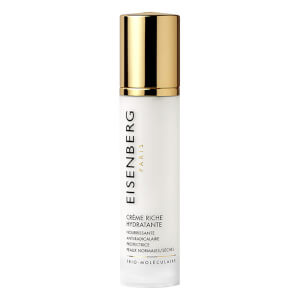
“Blending Evening Primrose and Macadamia Nut Oils with Vitamins A and E, the fast-absorbing formula delivers long-lasting moisture, whilst nourishing and softening skin to prepare for makeup application.”
This product can help improve hydration of the skin with the two types of ingredients.
The first type is called “humectants”:
these ingredients help attract water.
When humectants are on the surface of the skin, they “pull in” the moisture from the outside environment, or from
within deeper layers of the skin. The following ingredients in this product do the job:
biosaccharide gum-1, glycerin.
This product also contains ingredients called “occlusives”. They help reduce the speed with which our skin loses moisture to the outside environment. These ingredients also help soften the upper layer of the skin, so it feels less tight and nicer to the touch. The following ingredients in this product do the job: vitis vinifera seed oil, cetyl alcohol.
Can it cause trouble?
Irritancy3 strong irritants: Limonene, Citrus aurantium dulcis peel oil + 1 more — patch-test recommendedHigh risk
Comedogenic1 ingredient rated 2 or more on the 0–5 pore-clogging scale1 flagged
User reviews
Be the first — your take helps the next person decide.
Ingredients
Filter by role to see what each ingredient is doing.
Water~45–55%
Butylene glycol~5.9–7.2%
- Irritation risk
- Low
Used to create a nice product texture and help delivery of other ingredients. Might be somewhat helpful in attracting water to the upper layer of the skin
More about Butylene glycolCyclopentasiloxane~4.3–5.3%
- Irritation risk
- Low
A silicone that helps improve the product texture and spreadability. Can absorb oil creating a short-term mattifying effect on the skin
More about CyclopentasiloxaneGlyceryl stearate~2.8–3.4%
- Irritation risk
- Low
An emollient that softens the skin and forms a protective layer on its surface. Helps water and oil mix together
More about Glyceryl stearateCoco-caprylate/caprate~2.3–2.8%
- Irritation risk
- Low
Helps to soften the upper layer of the skin without creating a greasy texture
More about Coco-caprylate/caprateGlycerin~1.9–2.4%
- Irritation risk
- Low
One of the best moisturizing ingredients. Naturally present in skin. It attracts water to the upper layer of the skin working as a humectant
More about GlycerinCetyl alcohol~1.6–1.9%
- Irritation risk
- Low
A non-drying alcohol that works to soften the skin and stabilize product formulations helping oil and water mix together
More about Cetyl alcoholPhenoxyethanol~0.5–1%
- Irritation risk
- Low
A preservative. It helps prevent bacterial growth in cosmetic products
More about PhenoxyethanolPotassium cetyl phosphate~1.1–1.3%
- Irritation risk
- Medium
Helps oil and water mix together
More about Potassium cetyl phosphatePeg-8~0.75–1.1%
- Irritation risk
- Medium
Used to create a nice product consistency
More about Peg-8Peg-40 stearate~0.6–0.9%
Saccharide isomerate~0.5–0.75%
- Irritation risk
- Low
Helps attract water to the upper layer of the skin
More about Saccharide isomerateVitis vinifera seed oil~0.45–0.7%
- Irritation risk
- Medium
A great emollient that can also have anti-oxidant properties
More about Vitis vinifera seed oilC12-20 acid peg-8 ester~0.4–0.6%
- Irritation risk
- Medium
Helps oil and water mix together
More about C12-20 acid peg-8 esterEthylhexylglycerin~0.35–0.65%
Carbomer~0.35–0.6%
- Irritation risk
- Low
Helps create a thicker or gel-like product texture. It is not a surfactant but can be used in gentle cleansing formulations
More about CarbomerPolyacrylamide~0.4–0.6%
- Irritation risk
- Medium
Used to improve product texture and help oil and water mix together
More about PolyacrylamideCaprylyl glycol~0.3–0.6%
- Irritation risk
- Medium
Helps preserve products and creates a nice product texture
More about Caprylyl glycolBisabolol~0.25–0.45%
- Irritation risk
- Low
An active component of chamomile plant that historically has been used to calm down irritated skin. A recent study shows that bisabolol indeed can have some anti-inflammatory effect on skin, even though conclusive data is lacking. Bisabolol has a sweet floral scent and can be added to products for its aromatic properties
More about BisabololDisodium edta~0.25–0.5%
C13-14 isoparaffin~0.3–0.55%
- Irritation risk
- Low
Helps soften the upper layer of the skin, dissolve other ingredients and create a thicker product consistency
More about C13-14 isoparaffinFagus sylvatica bud extract~0.25–0.45%
- Irritation risk
- Low
Propylene glycol~0.2–0.4%
- Irritation risk
- High
Helps oil and water mix together and can enhance the penetration of other ingredients into the skin. It can be irritating
More about Propylene glycolChondrus crispus powder~0.3–0.55%
- Irritation risk
- Low
- Comedogenicity
- 3/5
A powder from red algae extract that helps attract water to the upper layer of the skin and create a nicer product consistency
More about Chondrus crispus powderSodium hydroxide~0.25–0.45%
Sodium hyaluronate~0.25–0.45%
- Irritation risk
- Low
One of the best moisturizing ingredients. Attracts water into the upper layer of the skin
More about Sodium hyaluronateLaureth-7~0.25–0.45%
Limonene~0.2–0.4%
- Irritation risk
- High
A common frangrance that can easily irritate skin, especially if exposed to air, light or heat
More about LimoneneSodium polyacrylate~0.25–0.5%
- Irritation risk
- Low
Used to create a gel-like product texture, as well as to stabilize emulsions
More about Sodium polyacrylateSambucus nigra flower extract~0.2–0.35%
- Irritation risk
- High
A plant extract that might help neutralize free radicals in skin
More about Sambucus nigra flower extractBacillus ferment~0.2–0.4%
- Irritation risk
- Low
A product of bacterial fermentation. Can help attract water to the upper layer of the skin
More about Bacillus fermentCitrus aurantium dulcis peel oil~0.2–0.4%
- Irritation risk
- High
An essentil oil from orange peel. Potential allergen and can be irritating
More about Citrus aurantium dulcis peel oilCitrus limon peel oil~0.2–0.4%
Benzyl alcohol~0.2–0.35%
- Irritation risk
- High
A preservative. Can be used to mask unpleasant smell. Can be irritating
More about Benzyl alcoholPentadecalactone~0.2–0.4%
- Irritation risk
- Low
Citric acid~0.2–0.4%
- Irritation risk
- Medium
Can work as an exfoliant but is typically used to adjust the product pH
More about Citric acidChlorhexidine digluconate~0.15–0.3%
Sodium citrate~0.25–0.45%
- Irritation risk
- Medium
Helps to control the skin's pH level. Maintains the skin's natural film of amino-lactic acids and oils. Helps to preserve products
More about Sodium citrateTocopherol~0.25–0.45%
- Irritation risk
- Low
Pure form of vitamin E. Can help moisturise and protect the skin from free radicals. Often used to help stabilise other ingredients or the formula itself
More about TocopherolBiosaccharide gum-1~0.2–0.4%
- Irritation risk
- Low
Helps attract water to the upper layer of the skin and is claimed to provide a longer-lasting hydration because of its ability to create a water-binding film on the surface of the skin
More about Biosaccharide gum-1Lactose~0.2–0.4%
- Irritation risk
- Low
Helps attract water to the upper layer of the skin
More about LactoseAscorbyl palmitate~0.2–0.35%
- Irritation risk
- Medium
Being a lipid soluble form of vitamin C, it is more stable and can penetrate the skin better than L-Ascorbic acid. It is effective in protecting the skin from free radicals, as well as evening the skin tone, but is less effective in stimulating collagen production compared to L-Ascorbic acid.
More about Ascorbyl palmitatePotassium sorbate~0.15–0.3%
Lactis proteinum~0.15–0.3%
- Irritation risk
- Low
Sodium benzoate~0.15–0.3%
Benzoic acid~0.15–0.3%
Ascorbic acid~0.1–0.2%
- Irritation risk
- High
The most well-researched antioxidant that works in skin. Helps neutralize free radicals supporting collagen production, helping to even out the skin tone and preventing early signs of aging
More about Ascorbic acidLactic acid~0.1–0.2%
- Irritation risk
- Medium
An exfoliating and moisturizing alpha-hydroxy acid (AHA). Typically causes less irritation than other AHAs, for example, glycolic acid. At high concentrations (about 15%), lactic acid can help reduce lines and wrinkles. Recent studies show that lactic acid can support the "good" bacteria living on skin's surface (healthy skin microbiome)
More about Lactic acidIngredient list view
Water, Butylene glycol, Cyclopentasiloxane, Glyceryl stearate, Coco-caprylate/caprate, Glycerin, Cetyl alcohol, Phenoxyethanol, Potassium cetyl phosphate, Peg-8, Peg-40 stearate, Saccharide isomerate, Vitis vinifera seed oil, C12-20 acid peg-8 ester, Ethylhexylglycerin, Carbomer, Polyacrylamide, Caprylyl glycol, Bisabolol, Disodium edta, C13-14 isoparaffin, Fagus sylvatica bud extract, Propylene glycol, Chondrus crispus powder, Sodium hydroxide, Sodium hyaluronate, Laureth-7, Limonene, Sodium polyacrylate, Sambucus nigra flower extract, Bacillus ferment, Citrus aurantium dulcis peel oil, Citrus limon peel oil, Benzyl alcohol, Pentadecalactone, Citric acid, Chlorhexidine digluconate, Sodium citrate, Tocopherol, Biosaccharide gum-1, Lactose, Ascorbyl palmitate, Potassium sorbate, Lactis proteinum, Sodium benzoate, Benzoic acid, Ascorbic acid, Lactic acid
Compare prices
Retailers ranked by price — lowest first.
Affiliate links · prices updated regularly · As an Amazon Associate, WIMJ earns from qualifying purchases.
Sources cited in this review
Every concentration estimate and effectiveness label is anchored to one of these 15 studies and safety reviews.
- 1Safety Assessment of Alkyl Esters as Used in Cosmeticscir-safety.org
- 2
- 3
- 4Safety Assessment of Isoparaffins as Used in Cosmeticsjournals.sagepub.com
- 5Surfactants and experimental irritant contact dermatitisncbi.nlm.nih.gov
- 6Propylene Glycolpubmed.ncbi.nlm.nih.gov

Affiliate links · As an Amazon Associate, WIMJ earns from qualifying purchases.