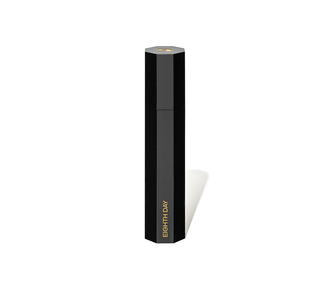
Eighth Day 2.0 The Reparative Moisturizer
Works for
2 of 2 advertised claims delivered
MoisturizingSh-polypeptide-11, Sh-polypeptide-9 + 32 moreStrong evidence
“The Reparative Moisturizer”
This product can help improve hydration of the skin with the two types of ingredients.
The first type is called “humectants”:
these ingredients help attract water.
When humectants are on the surface of the skin, they “pull in” the moisture from the outside environment, or from
within deeper layers of the skin. The following ingredients in this product do the job:
alanine, arginine.
This product also contains ingredients called “occlusives”. They help reduce the speed with which our skin loses moisture to the outside environment. These ingredients also help soften the upper layer of the skin, so it feels less tight and nicer to the touch. The following ingredients in this product do the job: arginine, butyrospermum parkii butter.
The following ingredients in this product are especially good for supporting the skin barrier and helping with the hydration level: acetyl hexapeptide-8, palmitoyl tetrapeptide-7, palmitoyl tripeptide-5, sh-oligopeptide-1, sh-oligopeptide-2, sh-polypeptide-1, sh-polypeptide-11, sh-polypeptide-9
Evens skin toneFerulic acid, Alanine + 3 moreModerate evidence
“Antioxidant-rich ferulic acid visibly brightens, evens tone and reduces inflammation.”
The following ingredient (ingredients) in this product might be helpful, but there is no evidence to confirm that it actually works: alanine, ferulic acid, resveratrol.
Anti-oxidationNot advertised by the brand · Resveratrol, Ferulic acid + 5 moreStrong evidence
This product contains antioxidants (ferulic acid, resveratrol) that can help neutralize free radicals in skin. By doing so, they can lessen the damage the skin gets from the UV light (sun).
Anti-agingNot advertised by the brand · Sh-oligopeptide-1, Sh-oligopeptide-2 + 14 moreModerate evidence
This product contains acetyl hexapeptide-8, ferulic acid, palmitoyl tetrapeptide-7, palmitoyl tripeptide-5, resveratrol, serine, sh-oligopeptide-1, sh-oligopeptide-2, sh-polypeptide-1, sh-polypeptide-11, sh-polypeptide-9, threonine. These ingredients might be able to help reduce and prevent fine lines and wrinkles, improve skin elasticity and firmness, but there is not enough evidence that it actually works.
Can it cause trouble?
Irritancy6 strong irritants: Retinyl palmitate, Rosmarinus officinalis leaf extract + 4 more — patch-test recommendedHigh risk
Comedogenic4 ingredients rated 2 or more on the 0–5 pore-clogging scale4 flagged
User reviews
Be the first — your take helps the next person decide.
Ingredients
Filter by role to see what each ingredient is doing.
Water~45–55%
Ethylhexyl palmitate~4.9–6%
- Irritation risk
- Low
- Comedogenicity
- 3/5
An emollient that helps soften the skin and create a nice product texture
More about Ethylhexyl palmitateButyrospermum parkii butter~4.3–5.3%
- Irritation risk
- Low
- Comedogenicity
- 3/5
A great moisturising ingredient that softens the skin and reduces water loss from its upper layer. It also can be helpful in protecting skin from free radicals
More about Butyrospermum parkii butterCocos nucifera oil~3.3–4%
- Irritation risk
- Low
- Comedogenicity
- 3/5
An emollient. Found to be as effective as a moisturizer for dry skin as mineral oil. Could be comedogenic
More about Cocos nucifera oilCetearyl olivate~2.4–2.9%
Sorbitan oleate~2–2.4%
- Irritation risk
- Medium
- Comedogenicity
- 2/5
Helps oil and water mix together
More about Sorbitan oleateStearyl alcohol~1.8–2.1%
- Irritation risk
- Low
An emollient that helps soften the skin
More about Stearyl alcoholPropanediol~1.4–1.8%
- Irritation risk
- Low
Acts as a solvent for other ingredients. Speeds up the absorption of other ingredients into the skin
More about PropanediolGlyceryl stearate~1.2–1.5%
- Irritation risk
- Low
An emollient that softens the skin and forms a protective layer on its surface. Helps water and oil mix together
More about Glyceryl stearateAloe barbadensis leaf juice~0.95–1.15%
- Irritation risk
- Medium
Traditionally used to treat sunburns, dermatitis and inflammation, but evidence for its effectiveness is lacking. The extract can contain humectants that help attract water into the skin
More about Aloe barbadensis leaf juiceCaprylhydroxamic acid~0.65–1%
Caprylyl glycol~0.65–0.95%
- Irritation risk
- Medium
Helps preserve products and creates a nice product texture
More about Caprylyl glycolGlycerin~0.55–0.85%
- Irritation risk
- Low
One of the best moisturizing ingredients. Naturally present in skin. It attracts water to the upper layer of the skin working as a humectant
More about GlycerinSh-oligopeptide-2~0.45–0.7%
- Irritation risk
- Low
A type of peptide. Peptides are excellent moisturizers and might be able support collagen production reducing fine lines and wrinkles
More about Sh-oligopeptide-2Sh-polypeptide-1~0.45–0.65%
- Irritation risk
- Low
A type of peptide. Peptides are excellent moisturizers and might be able support collagen production reducing fine lines and wrinkles
More about Sh-polypeptide-1Sh-polypeptide-9~0.45–0.65%
- Irritation risk
- Low
A type of peptide. Peptides are excellent moisturizers and might be able support collagen production reducing fine lines and wrinkles
More about Sh-polypeptide-9Sh-polypeptide-11~0.45–0.65%
- Irritation risk
- Low
A type of peptide. Peptides are excellent moisturizers and might be able support collagen production reducing fine lines and wrinkles
More about Sh-polypeptide-11Acetyl hexapeptide-8~0.4–0.6%
- Irritation risk
- Low
A type of peptide. Peptides are excellent moisturizers and might be able support collagen production reducing fine lines and wrinkles
More about Acetyl hexapeptide-8Sh-oligopeptide-1~0.35–0.6%
- Irritation risk
- Low
A type of peptide. Peptides are excellent moisturizers and might be able support collagen production reducing fine lines and wrinkles
More about Sh-oligopeptide-1Palmitoyl tripeptide-5~0.3–0.6%
- Irritation risk
- Low
A type of peptide. Peptides are excellent moisturizers and might be able support collagen production reducing fine lines and wrinkles
More about Palmitoyl tripeptide-5Palmitoyl tetrapeptide-7~0.35–0.65%
- Irritation risk
- Low
A type of peptide. Peptides are excellent moisturizers and might be able support collagen production reducing fine lines and wrinkles
More about Palmitoyl tetrapeptide-7Acetyl glutamine~0.3–0.55%
- Irritation risk
- Low
Sodium hyaluronate~0.25–0.5%
- Irritation risk
- Low
One of the best moisturizing ingredients. Attracts water into the upper layer of the skin
More about Sodium hyaluronateLysine hcl~0.25–0.5%
Alanine~0.25–0.5%
- Irritation risk
- Low
An amino-acid that helps to attract water to the upper layer of the skin and might help to lighten the skin, but solid evidence is lacking
More about AlanineHistidine hcl~0.25–0.5%
- Irritation risk
- Low
A salt of an amino-acid that helps attract water to the upper layer of the skin. Might be helpful in restoring the skin barrier function
More about Histidine hclArginine~0.25–0.45%
- Irritation risk
- Low
An amino acid that is naturally present in skin and helps keep it hydrated. When used together with AHAs, it can reduce their irritating effect on the skin
More about ArginineSerine~0.25–0.45%
- Irritation risk
- Low
An amino-acid that helps to attract water to the upper layer of the skin. In combination with other amino-acids, might help to reduce fine lines and wrinkles
More about SerineProline~0.3–0.5%
Glutamic acid~0.25–0.5%
- Irritation risk
- Low
An amino-acid that helps attract water to the upper layer of the skin
More about Glutamic acidThreonine~0.25–0.5%
- Irritation risk
- Low
An amino-acid that helps to attract water to the upper layer of the skin. In combination with other amino-acids, might help to reduce fine lines and wrinkles
More about ThreonineValine~0.25–0.45%
- Irritation risk
- Low
Leucine~0.25–0.5%
- Irritation risk
- Low
Glycine~0.25–0.45%
- Irritation risk
- Low
Helps to attract water to the upper layer of the skin and can help restore the skin barrier function
More about GlycineIsoleucine~0.25–0.5%
- Irritation risk
- Low
An amino acid that can help attract water to the upper layer of the skin and support skin's barrier function
More about IsoleucinePhenylalanine~0.25–0.5%
- Irritation risk
- Low
Taurine~0.25–0.5%
- Irritation risk
- Medium
Could be helpful in reducing inflammation in skin, evening out the skin tone and neutralizing free radicals, but more research is needed to confirm its effectiveness
More about TaurineGlycosphingolipids~0.3–0.55%
- Irritation risk
- Low
A type of lipids naturally present in skin. They can be converted to ceramides in skin
More about GlycosphingolipidsGlycolipids~0.25–0.5%
- Irritation risk
- Low
Hydrolyzed hyaluronic acid~0.25–0.45%
- Irritation risk
- Low
One of the best moisturizing ingredients. Attracts water into the upper layer of the skin. A version of it is naturally present in skin
More about Hydrolyzed hyaluronic acidFerulic acid~0.25–0.5%
- Irritation risk
- Low
A potent anti-oxidant that has been shown to be effective in neutralizing free radicals in skin. There seem to have a synergetic effect of ferulic acid, vitamin E and C, meaning that when the ingredients are used together, they enhance each other's ability protect the skin against free radicals. Ferulic acid also helps to stabilize other ingredients - including vitamins C and E. It can help to even out the skin tone. Ferulic acid is approved for use as a sunscreen ingredient in Japan in concentrations up to 10%
More about Ferulic acidRetinyl palmitate~0.25–0.45%
- Irritation risk
- High
Three steps removed from the active form of vitamin A - retinoic acid. To have an effect in the skin, it first needs to be converted twice to become the retinoic acid. This means it is less potent than retinol, but could also be less irritating. Once converted to the retinoic acid in the skin, it helps against all signs of aging, improves skin cell turnover and helps fight blemishes and clogged pores. However, in many cosmetic formulations, it is used in a concentration that is too low to have the full effect
More about Retinyl palmitateResveratrol~0.3–0.5%
- Irritation risk
- Medium
Helps neutralize free radicals in skin and might help reduce fine lines and wrinkles, as well as even out the skin tone
More about ResveratrolErgothioneine~0.25–0.5%
- Irritation risk
- Low
Can help neutralize free radicals in skin. Preliminary studies show that it can be more effective than coenzyme Q10 but studies on effective concentration for topical applications are lacking
More about ErgothioneineLinum usitatissimum seed oil~0.25–0.45%
Bacillus/folic acid/soybean ferment extract~0.25–0.45%
- Irritation risk
- Low
Tocopherol~0.25–0.5%
- Irritation risk
- Low
Pure form of vitamin E. Can help moisturise and protect the skin from free radicals. Often used to help stabilise other ingredients or the formula itself
More about TocopherolSodium pca~0.25–0.5%
- Irritation risk
- Low
Naturally present in skin and helps to attract water to its upper layer
More about Sodium pca1,2-hexanediol~0.25–0.45%
Polysorbate 20~0.3–0.5%
Ethylhexylglycerin~0.25–0.45%
Allantoin~0.2–0.35%
- Irritation risk
- Low
Helps calm down inflammation in skin and can help reduce itching. Helps to repair the skin barrier and keep skin hydrated
More about AllantoinLecithin~0.3–0.5%
- Irritation risk
- Low
Used mostly for creating emulsions - helping oil and water mix together. Helps soften the upper layer of the skin
More about LecithinButylene glycol~0.2–0.35%
- Irritation risk
- Low
Used to create a nice product texture and help delivery of other ingredients. Might be somewhat helpful in attracting water to the upper layer of the skin
More about Butylene glycolRosmarinus officinalis leaf extract~0.15–0.3%
- Irritation risk
- High
Can be helpful in reducing inflammation in skin, including inflamed acne. It can be irritating
More about Rosmarinus officinalis leaf extractLavandula angustifolia oil~0.15–0.3%
- Irritation risk
- High
An essential oil. Potential allergen and can be irritating. It has some anti-bacterial properties
More about Lavandula angustifolia oilXanthan gum~0.15–0.3%
- Irritation risk
- Low
Used to create a thicker product consistency
More about Xanthan gumGeraniol~0.15–0.3%
Limonene~0.15–0.25%
- Irritation risk
- High
A common frangrance that can easily irritate skin, especially if exposed to air, light or heat
More about LimoneneLinalool~0.1–0.2%
Linalyl acetate~0.1–0.2%
- Irritation risk
- Low
Ingredient list view
Water, Ethylhexyl palmitate, Butyrospermum parkii butter, Cocos nucifera oil, Cetearyl olivate, Sorbitan oleate, Stearyl alcohol, Propanediol, Glyceryl stearate, Aloe barbadensis leaf juice, Caprylhydroxamic acid, Caprylyl glycol, Glycerin, Sh-oligopeptide-2, Sh-polypeptide-1, Sh-polypeptide-9, Sh-polypeptide-11, Acetyl hexapeptide-8, Sh-oligopeptide-1, Palmitoyl tripeptide-5, Palmitoyl tetrapeptide-7, Acetyl glutamine, Sodium hyaluronate, Lysine hcl, Alanine, Histidine hcl, Arginine, Serine, Proline, Glutamic acid, Threonine, Valine, Leucine, Glycine, Isoleucine, Phenylalanine, Taurine, Glycosphingolipids, Glycolipids, Hydrolyzed hyaluronic acid, Ferulic acid, Retinyl palmitate, Resveratrol, Ergothioneine, Linum usitatissimum seed oil, Bacillus/folic acid/soybean ferment extract, Tocopherol, Sodium pca, 1,2-hexanediol, Polysorbate 20, Ethylhexylglycerin, Allantoin, Lecithin, Butylene glycol, Rosmarinus officinalis leaf extract, Lavandula angustifolia oil, Xanthan gum, Geraniol, Limonene, Linalool, Linalyl acetate
Compare prices
Retailers ranked by price — lowest first.

Affiliate links · prices updated regularly
Worth comparing, line by line.
Match % combines shared ingredients, the first five ingredients, shared actives and hero ingredients, irritancy (lower counts in the alternative's favour), texture and body area. Only products in the same routine step are compared.
| Eighth Day 2.0The Reparative MoisturizerYOUR PRODUCT | EighthDayThe Ultra-Rich Intensive Moisturizer | |
|---|---|---|
| Match | — | 61% |
| Price | $180.00 | $290.00+$110.00 |
| Shared key ingredients | — | 24 of 31 |
| Key difference | — | Copper Tripeptide-1 |
| Irritancy | High | Medium |
| Drying alcohol | — | — |
| View product | Shop |

Product summary
Based on the ingredient list, "Eighth Day 2.0 - The Reparative Moisturizer" can work well for skin moisturization. The formulation is based on a combination of good humectants and emollients. Both are needed to increase the skin hydration level. Humectants in this product (alanine, arginine, glutamic acid, glycerin and glycine) help to increase the water content in the upper layer of the skin. (These ingredients do so by "capturing" water molecules from the outside air or from within the deeper layers of the skin). Emollients in this formulation (palmitoyl tetrapeptide-7, glycosphingolipids, arginine, butyrospermum parkii butter and cocos nucifera oil) help to reduce the moisture loss from the skin. They also soften the skin surface and relieve the feeling of dryness and tightness.
Ingredient callouts
- this moisturizer includes a form of Retinoids (vitamin A) - retinyl palmitate 0.25% - 0.45%, but this type of vitamin A is not very effective. It could in theory help with fine lines and wrinkles, but the effect is most likely minimal.
- We like that this moisturizer contains peptides (palmitoyl tetrapeptide-7 0.45% - 0.65%, palmitoyl tripeptide-5 0.40% - 0.60%, sh-polypeptide-9 0.45% - 0.65%, sh-polypeptide-1 0.45% - 0.70% and sh-oligopeptide-2 0.50% - 0.75%). There are many different kind of Peptides and they are naturally present in our skin. They all are a combination of aminoacids. Some of them work as natural antibiotics, promote wound-healing and production of collagen. The science is still not settled on how effective Peptides are in skincare, but it is very likely that they have a benefit. Peptides might help restore the skin barrier and fight the signs of aging. At the very least, Peptides work as humectants: they attract water to the upper layer of the skin and improve its hydration.
Irritation risk
This formulation includes some common irritants, including ingredients that do not provide a benefit for the skin. We assess the overall irritancy of this moisturizer to be high. For a detailed overview of all potential irritants: click here
You can see the detailed formula review with the breakdown of all actives in the product and the full ingredient list with estimated concentrations in the tables below.
Sources cited in this review
Every concentration estimate and effectiveness label is anchored to one of these 33 studies and safety reviews.
- 1Surfactants and experimental irritant contact dermatitisncbi.nlm.nih.gov
- 2
- 3Hyaluronic acid: A key molecule in skin agingncbi.nlm.nih.gov
- 4
- 5
- 6Safety Assessment of α-Amino Acids as Used in Cosmeticsciteseerx.ist.psu.edu

Affiliate links · As an Amazon Associate, WIMJ earns from qualifying purchases.