Works for
MoisturizingCaprylic/capric triglyceride, Glycerin + 14 moreWorks
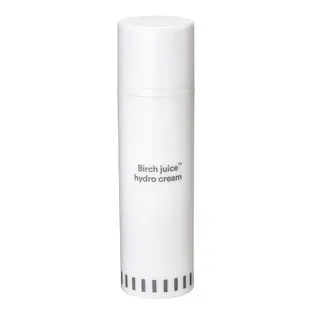
“Birch Juice Hydro Cream”
This product can help improve hydration of the skin with the two types of ingredients.
The first type is called “humectants”:
these ingredients help attract water.
When humectants are on the surface of the skin, they “pull in” the moisture from the outside environment, or from
within deeper layers of the skin. The following ingredients in this product do the job:
betaine, cyclomethicone.
This product also contains ingredients called “occlusives”. They help reduce the speed with which our skin loses moisture to the outside environment. These ingredients also help soften the upper layer of the skin, so it feels less tight and nicer to the touch. The following ingredients in this product do the job: caprylic/capric triglyceride, dimethicone.
Anti-oxidationSide benefit · Sodium ascorbyl phosphate, Pyridoxine + 1 moreMay help
This product contains antioxidants (pyridoxine, sodium ascorbyl phosphate) that might be able to help neutralize free radicals in skin to lessen the damage it gets from the UV light (sun). There is not enough evidence to confirm their effectiveness in skin though.
Anti-agingSide benefit · Folic acid, Sodium ascorbyl phosphateMay help
This product contains folic acid. This ingredient might be able to help reduce and prevent fine lines and wrinkles, improve skin elasticity and firmness, but there is not enough evidence that it actually works.
Can it cause trouble?
Irritancy11 flagged ingredientsLow risk
Comedogenic1 ingredient rated 2 or more on the 0–5 pore-clogging scale1 flagged


User reviews
Be the first — your take helps the next person decide.
Ingredients
Filter by role to see what each ingredient is doing.
Betula platyphylla japonica juice~22–33%
- Irritation risk
- Low
Caprylic/capric triglyceride~5.4–8.1%
- Irritation risk
- Medium
A good mix of fatty acids that forms a protective layer on the skin. Improves the shelf life of products. Derived from coconut and glycerin
More about Caprylic/capric triglycerideGlycerin~4.4–6.6%
- Irritation risk
- Low
One of the best moisturizing ingredients. Naturally present in skin. It attracts water to the upper layer of the skin working as a humectant
More about GlycerinCyclomethicone~3.6–5.3%
- Irritation risk
- Low
A type of silicone that leaves a nice silky finish on the skin and can help soften its upper layer
More about CyclomethiconeDipropylene glycol~2.6–3.9%
- Irritation risk
- Low
Helps to dissolve other ingredients in a formulation. Slows down the rate of product drying
More about Dipropylene glycolBetaine~2–3.1%
- Irritation risk
- Low
Helps attract water to the upper layer of the skin and improves the product texture
More about BetaineCetearyl alcohol~1.7–2.5%
- Irritation risk
- Low
- Comedogenicity
- 2/5
A non-drying alcohol. Works as an emollient. Helps water and oil mix together and creates a nice product texture
More about Cetearyl alcoholDicaprylyl carbonate~1.4–2.1%
- Irritation risk
- Low
Helps products spread more easily and works as an emollient to soften skin
More about Dicaprylyl carbonateDimethicone~1.3–2%
- Irritation risk
- Low
A silicone that helps to reduce water loss from the surface of the skin. Can temporarily "fill in" lines and wrinkles, absorb oil, and create a nice product finish
More about DimethiconeCetyl alcohol~1.1–1.6%
- Irritation risk
- Low
A non-drying alcohol that works to soften the skin and stabilize product formulations helping oil and water mix together
More about Cetyl alcoholGlyceryl stearate~0.85–1.3%
- Irritation risk
- Low
An emollient that softens the skin and forms a protective layer on its surface. Helps water and oil mix together
More about Glyceryl stearateNylon-12~0.8–1.2%
Cetearyl glucoside~0.45–1.1%
- Irritation risk
- Medium
Helps water and oil in the product mix well together and improves product texture
More about Cetearyl glucosideHydroxyethyl acrylate/sodium acryloyldimethyl taurate copolymer~0.4–1%
- Irritation risk
- Medium
A gelling agent that thickens the product consistency and leaves the skin with a velvety finish
More about Hydroxyethyl acrylate/sodium acryloyldimethyl taurate copolymerGlyceryl caprylate~0.45–1.05%
- Irritation risk
- Low
An emollient that can also help water and oil mix together, as well as prevent bacteria growth in products
More about Glyceryl caprylateEthylhexylglycerin~0.4–0.9%
Tocopheryl acetate~0.4–0.9%
- Irritation risk
- Medium
A more stable but less bio-available form of vitamin E compared to Tocopherol. Might help moisturize and protect the skin from free radicals, but mostly used in low concentrations to stabilize other ingredients.
More about Tocopheryl acetateDisodium edta~0.35–0.8%
Carthamus tinctorius oleosomes~0.4–0.9%
- Irritation risk
- Low
Helps soften the upper layer of the skin
More about Carthamus tinctorius oleosomesChamomilla recutita flower extract~0.3–0.75%
- Irritation risk
- High
Plant extract that can have healing and anti-inflammatory properties. It is a potential allergen and can be irritating
More about Chamomilla recutita flower extractPlantago ovata seed extract~0.3–0.7%
- Irritation risk
- Low
Hydrogenated lecithin~0.2–0.75%
- Irritation risk
- Low
Helps to retain moisture by creating a protective barrier on the skin. Rich in fatty acids. Improves product texture and helps with the penetration of other ingredients.
More about Hydrogenated lecithinPolyglyceryl-10 stearate~0.2–0.75%
- Irritation risk
- Medium
Helps water and oil mix together and softens the upper layer of the skin
More about Polyglyceryl-10 stearatePanthenol~0.15–0.65%
- Irritation risk
- Low
Helps attract water to the upper layer of the skin and can help improve skin barrier function
More about PanthenolSodium ascorbyl phosphate~0.15–0.65%
- Irritation risk
- Medium
A stable derivative of vitamin C. It is oil-soluble which means it is more likely to penetrate the skin compared to the pure form of vitamin C (which is water-soluble), but it is less bio-available and is way less effective in stimulating collagen and reducing wrinkles compared to the pure form of vitamin C (L-ascorbic acid) and its other derivatives (for example, magnesium ascorbyl phosphate). At the same time, this vitamin C derivative has been shown in studies to be effective in reducing acne, blemishes and clogged pores. It is less irritating then the pure form of vitamin C
More about Sodium ascorbyl phosphateGlyceryl arachidonate~0.3–0.7%
- Irritation risk
- Medium
Helps water and oil mix together
More about Glyceryl arachidonateGlyceryl linolenate~0.2–0.75%
- Irritation risk
- Low
Helps soften the upper layer of the skin
More about Glyceryl linolenateBiotin~0.15–0.55%
- Irritation risk
- Low
Might have some moisturising properties. Is not effective when applied topically beyond some moisturizing effect
More about BiotinFolic acid~0.1–0.45%
- Irritation risk
- Low
Can help stimulate collagen production in skin. While available studies are promising, more research is needed to confirm the efficacy in skin
More about Folic acidPyridoxine~0.1–0.45%
- Irritation risk
- High
Might help neutralize free radicals in skin, but evidence of effectiveness in skin is lacking. It might be irritating
More about PyridoxineCyanocobalamin~0.1–0.45%
- Irritation risk
- Low
Can support skin barrier function and reduce inflammation in skin
More about CyanocobalaminIngredient list view
Betula platyphylla japonica juice, Caprylic/capric triglyceride, Glycerin, Cyclomethicone, Dipropylene glycol, Betaine, Cetearyl alcohol, Dicaprylyl carbonate, Dimethicone, Cetyl alcohol, Glyceryl stearate, Nylon-12, Cetearyl glucoside, Hydroxyethyl acrylate/sodium acryloyldimethyl taurate copolymer, Glyceryl caprylate, Ethylhexylglycerin, Tocopheryl acetate, Disodium edta, Carthamus tinctorius oleosomes, Chamomilla recutita flower extract, Plantago ovata seed extract, Hydrogenated lecithin, Polyglyceryl-10 stearate, Panthenol, Sodium ascorbyl phosphate, Glyceryl arachidonate, Glyceryl linolenate, Biotin, Folic acid, Pyridoxine, Cyanocobalamin
Compare prices
Retailers ranked by price — lowest first.
Affiliate links · As an Amazon Associate, WIMJ earns from qualifying purchases.
Worth comparing, line by line.
Match % combines shared ingredients, the first five ingredients, shared actives and hero ingredients, irritancy (lower counts in the alternative's favour), texture and body area. Only products in the same routine step are compared.
| E NatureBirch Juice Hydro CreamYOUR PRODUCT | OrjenaResponse synergy barrier cream | COSRXHYALURONIC ACID INTENSIVE CREAM | OARS + ALPSFace + Eye Cream | |
|---|---|---|---|---|
| Match | — | 55% | 53% | 53% |
| Price | — | $25.00 | $14.39 | $2.00 |
| Shared key ingredients | — | 5 of 9 | 5 of 9 | 4 of 9 |
| Key difference | — | Niacinamide | Sunflower Seed Oil | Carthamus Tinctorius Seed Oil |
| Irritancy | Low | Low | Low | Medium |
| Drying alcohol | — | — | — | — |
| View product | Shop | Shop | Shop |


More alternatives: Manyo Our Vegan Heartleaf Cica CreamL300 ULTRA SENSITIVE FACE CREAM RICH
Sources cited in this review
Every concentration estimate and effectiveness label is anchored to one of these 17 studies and safety reviews.
- 1
- 2
- 3Final Report on the Safety Assessment of Dimethicone Copolyoljournals.sagepub.com
- 4
- 5Skin moisturizing effects of panthenol-based formulationspdfs.semanticscholar.org
- 6

Affiliate links · As an Amazon Associate, WIMJ earns from qualifying purchases.