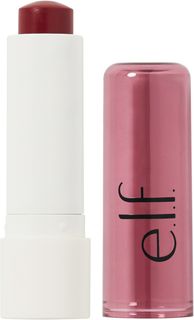
e.l.f. Cosmetics Essential Lip Kiss Balm
Works for
1 of 1 advertised claim delivered
MoisturizingPetrolatum, Cera microcristallina + 7 moreStrong evidence
“Essential Lip Kiss Balm”
This product can help soften the skin and reduce its moisture loss with emollients and occlusives: bis-diglyceryl polyacyladipate-2, cera microcristallina.
Keep in mind that this product does not contain effective ingredients to attract water to the upper layer of the skin. This is why an additional product with humectants like glycerin or hyaluronic acid can be helpful (apply it before this product for the best results).
The following ingredients in this product are especially good for supporting the skin barrier and helping with the hydration level: petrolatum
Anti-agingNot advertised by the brand · Retinyl palmitateModerate evidence
This product contains retinyl palmitate. This ingredient might be able to help reduce and prevent fine lines and wrinkles, improve skin elasticity and firmness, but there is not enough evidence that it actually works.
Can it cause trouble?
Irritancy3 strong irritants: Menthol, Retinyl palmitate + 1 more — patch-test recommendedHigh risk
Comedogenic2 ingredients rated 2 or more on the 0–5 pore-clogging scale2 flagged

User reviews
Be the first — your take helps the next person decide.
Ingredients
Filter by role to see what each ingredient is doing.
Tridecyl trimellitate~26–39%
- Irritation risk
- Medium
Used to create a thicker product consistency and soften the upper layer of the skin
More about Tridecyl trimellitateMacadamia ternifolia seed oil~4.8–7.1%
- Irritation risk
- Medium
Plant oil from nuts that helps soften the upper layer of the skin. Contains a high concentration of oleic acid that can weaken skin's barrier function and increase water-loss while enhancing penetration of other ingredients
More about Macadamia ternifolia seed oilPetrolatum~4.8–7.2%
- Irritation risk
- Low
One of the most effective and the most studied occlusive ingredients that creates a protective layer on top of the skin preventing moisture loss
More about PetrolatumEuphorbia cerifera wax~3.7–5.5%
- Irritation risk
- Low
Microcrystalline wax~2.4–3.7%
Cera microcristallina~2.3–3.5%
- Irritation risk
- Low
Helps to soften the upper layer of the skin, reduce water loss from its surface and create a thicker product consistency
More about Cera microcristallinaOzokerite~1.8–2.7%
Bis-diglyceryl polyacyladipate-2~1.7–2.6%
- Irritation risk
- Low
Helps soften the upper layer of the skin and reduce water loss from its surface
More about Bis-diglyceryl polyacyladipate-2Copernicia cerifera wax~1.6–2.4%
- Irritation risk
- Low
Helps to soften the upper layer of the skin and create a nice product consistency
More about Copernicia cerifera waxVitis vinifera seed oil~1–1.6%
- Irritation risk
- Medium
A great emollient that can also have anti-oxidant properties
More about Vitis vinifera seed oilSimmondsia chinensis seed oil~0.9–1.35%
- Irritation risk
- Medium
Softens the upper layer of skin and helps restore the healthy skin barrier. Has shown to help calm down inflammation in skin. It is a stable oil, meaning that it retains its properties even when exposed to air.
More about Simmondsia chinensis seed oilTocopheryl acetate~0.55–1.25%
- Irritation risk
- Medium
A more stable but less bio-available form of vitamin E compared to Tocopherol. Might help moisturize and protect the skin from free radicals, but mostly used in low concentrations to stabilize other ingredients.
More about Tocopheryl acetateMenthol~0.5–1.1%
- Irritation risk
- High
Retinyl palmitate~0.45–1.05%
- Irritation risk
- High
Three steps removed from the active form of vitamin A - retinoic acid. To have an effect in the skin, it first needs to be converted twice to become the retinoic acid. This means it is less potent than retinol, but could also be less irritating. Once converted to the retinoic acid in the skin, it helps against all signs of aging, improves skin cell turnover and helps fight blemishes and clogged pores. However, in many cosmetic formulations, it is used in a concentration that is too low to have the full effect
More about Retinyl palmitateCalcium sodium borosilicate~0.45–1.05%
Silica~0.6–1.4%
Neotame~0.45–1.05%
- Irritation risk
- Low
Phenoxyethanol~0.4–0.95%
- Irritation risk
- Low
A preservative. It helps prevent bacterial growth in cosmetic products
More about PhenoxyethanolCaprylyl glycol~0.4–0.9%
- Irritation risk
- Medium
Helps preserve products and creates a nice product texture
More about Caprylyl glycolParfum~0.35–0.8%
- Irritation risk
- High
An aromatic blend of unspecified and possibly irritating ingredients
More about ParfumMica~0.4–0.95%
- Irritation risk
- Low
Creates an illusion of smoother and more radiant skin tone. Adds shimmer to the skin by reflecting light
More about MicaTitanium dioxide~0.4–0.95%
- Irritation risk
- Low
Works as a UV filter when used in high concentrations. It is photostable and is effective mostly against the UVB light, with some protection in the UVA range. In small concentrations, used for its ability to improve the color of cosmetic products. Is usually well tolerated by the skin
More about Titanium dioxideCi 77891~0.2–0.75%
- Irritation risk
- Low
Iron oxides~0.2–0.75%
- Irritation risk
- Low
An umbrella term for the following three colorants: CI 77491, CI 77492, CI 77499. They might be able to offer some protection against visible light, but the degree of the protection is not clear
More about Iron oxidesCi 15850~0.15–0.7%
Ci 19140~0.15–0.7%
Ci 16035~0.15–0.6%
Ci 15850~0.1–0.45%
Ci 45410~0.05–0.2%
Ci 77742~0.05–0.2%
Ingredient list view
Tridecyl trimellitate, Macadamia ternifolia seed oil, Petrolatum, Euphorbia cerifera wax, Microcrystalline wax, Cera microcristallina, Ozokerite, Bis-diglyceryl polyacyladipate-2, Copernicia cerifera wax, Vitis vinifera seed oil, Simmondsia chinensis seed oil, Tocopheryl acetate, Menthol, Retinyl palmitate, Calcium sodium borosilicate, Silica, Neotame, Phenoxyethanol, Caprylyl glycol, Parfum, Mica, Titanium dioxide, Ci 77891, Iron oxides, Ci 15850, Ci 19140, Ci 16035, Ci 15850, Ci 45410, Ci 77742
Compare prices
Retailers ranked by price — lowest first.
Worth comparing, line by line.
Match % combines shared ingredients, the first five ingredients, shared actives and hero ingredients, irritancy (lower counts in the alternative's favour), texture and body area. Only products in the same routine step are compared.
| e.l.f. CosmeticsEssential Lip Kiss BalmYOUR PRODUCT | RevolutionWilly Wonka & The Chocolate Factory x Revolution Lip Balm | Too FacedPeaches & Cream Lip Balm | CliniquePep-Start™ Pout Perfecting Balm | |
|---|---|---|---|---|
| Match | — | 53% | 53% | 52% |
| Price | — | $8.01 | $29.00 | — |
| Shared key ingredients | — | 3 of 8 | 3 of 8 | 4 of 8 |
| Key difference | — | Triethylhexanoin | Phytosphingosine | Palmitoyl Tetrapeptide-7 |
| Irritancy | High | Medium | Medium | Medium |
| Drying alcohol | — | — | — | — |
| View product | Shop | Shop | Shop |


Product summary
Judging from the ingredient list, "e. L. F. Cosmetics - Essential Lip Kiss Balm" works well for improving skin hydration To work well, any moisturizer needs to include a combination of water-binding and emollient ingredients. E. L. F. Cosmetics - Essential Lip Kiss Balm ticks this box. Humectants in this product (caprylyl glycol) help to increase the water content in the upper layer of the skin. (These ingredients do so by "capturing" water molecules from the outside air or from within the deeper layers of the skin). Petrolatum, vitis vinifera seed oil, bis-diglyceryl polyacyladipate-2, cera microcristallina and copernicia cerifera wax in this product help decrease the water evoporation from the skin, so that it stays hydrated for longer. These ingredients also soften the skin and take away the feeling of tightness and dryness.
Ingredient callouts
- it includes a form of retinoids (vitamin A) - retinyl palmitate 0.45% - 1.05%, but this type of vitamin A is not very effective. It could in theory help with fine lines and wrinkles, but the effect is most likely minimal.
Irritation risk
There are quite a few common irritants in this product, including ingredients without particular skin benefits. We would not recommend it for sensitive skin. We assess the overall irritancy of this lip sunscreen to be high. For a detailed overview of all potential irritants: click here
You can see the detailed formula review with the breakdown of all actives in the product and the full ingredient list with estimated concentrations in the tables below.
Sources cited in this review
Every concentration estimate and effectiveness label is anchored to one of these 4 studies and safety reviews.
- 1
- 2
- 3
- 4

Affiliate links · As an Amazon Associate, WIMJ earns from qualifying purchases.