Works for
1 of 2 advertised claims delivered
Moisturizing19 ingredients credited for this claimGood support
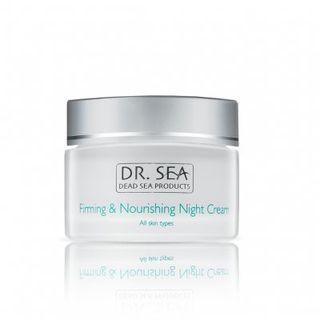
“Firming Nourishing Night Cream”
This product can help improve hydration of the skin with the two types of ingredients.
The first type is called “humectants”:
these ingredients help attract water.
When humectants are on the surface of the skin, they “pull in” the moisture from the outside environment, or from
within deeper layers of the skin. The following ingredients in this product do the job:
glycerin, saccharide isomerate.
This product also contains ingredients called “occlusives”. They help reduce the speed with which our skin loses moisture to the outside environment. These ingredients also help soften the upper layer of the skin, so it feels less tight and nicer to the touch. The following ingredients in this product do the job: cera alba, dimethicone.
Anti-aging3 ingredients credited for this claimWeak support
“prevents wrinkle appearance; .”
Effective ingredients missing or their concentration is too low.
Can it cause trouble?
Irritancy2 strong irritants: Parfum, Retinyl palmitateMedium risk
Comedogenic1 ingredient rated 2 or more on the 0–5 pore-clogging scale1 flagged

User reviews
Be the first — your take helps the next person decide.
Ingredients
Filter by role to see what each ingredient is doing.
Water~45–55%
Cetyl alcohol~5.5–6.7%
- Irritation risk
- Low
A non-drying alcohol that works to soften the skin and stabilize product formulations helping oil and water mix together
More about Cetyl alcoholGlyceryl stearate~3.8–4.6%
- Irritation risk
- Low
An emollient that softens the skin and forms a protective layer on its surface. Helps water and oil mix together
More about Glyceryl stearateElaeis guineensis extract~3.1–3.8%
- Irritation risk
- Low
Helianthus annuus seed oil~2.5–3%
- Irritation risk
- Low
A great emollient due to its high linoleic acid content. One of the most effective plant oils in helping skin hydration and repairing skin barrier function
More about Helianthus annuus seed oilIsopropyl myristate~2–2.5%
- Irritation risk
- Low
- Comedogenicity
- 3/5
An emollient that helps soften the skin. Could be comedogenic
More about Isopropyl myristatePropylene glycol~1.7–2%
- Irritation risk
- High
Helps oil and water mix together and can enhance the penetration of other ingredients into the skin. It can be irritating
More about Propylene glycolPeg-40 stearate~1.5–1.8%
Glycerin~1.3–1.5%
- Irritation risk
- Low
One of the best moisturizing ingredients. Naturally present in skin. It attracts water to the upper layer of the skin working as a humectant
More about GlycerinDimethicone~1–1.3%
- Irritation risk
- Low
A silicone that helps to reduce water loss from the surface of the skin. Can temporarily "fill in" lines and wrinkles, absorb oil, and create a nice product finish
More about DimethiconePhenoxyethanol~0.65–1%
- Irritation risk
- Low
A preservative. It helps prevent bacterial growth in cosmetic products
More about PhenoxyethanolSorbitan stearate~0.6–0.85%
Isononyl isononanoate~0.55–0.8%
- Irritation risk
- Low
Forms a protective film on the surface of the skin to prevent moisture loss. Gives a velvety feel to products while reducing tackiness
More about Isononyl isononanoateCetyl palmitate~0.5–0.75%
- Irritation risk
- Low
An emollient that helps soften the skin and is used to improve product texture and stability
More about Cetyl palmitateParaffin~0.35–0.65%
- Irritation risk
- Low
Prevents water loss from the skin surface and thickens the product consistency
More about ParaffinCaprylyl glycol~0.45–0.7%
- Irritation risk
- Medium
Helps preserve products and creates a nice product texture
More about Caprylyl glycolChlorphenesin~0.16–0.32%
Hydrogenated c12-18 triglycerides~0.4–0.6%
- Irritation risk
- Low
Parfum~0.3–0.55%
- Irritation risk
- High
An aromatic blend of unspecified and possibly irritating ingredients
More about ParfumPolysorbate 60~0.3–0.6%
Allantoin~0.25–0.45%
- Irritation risk
- Low
Helps calm down inflammation in skin and can help reduce itching. Helps to repair the skin barrier and keep skin hydrated
More about AllantoinXanthan gum~0.25–0.5%
- Irritation risk
- Low
Used to create a thicker product consistency
More about Xanthan gumCellulose gum~0.25–0.5%
- Irritation risk
- Low
Used to create thicker product consistency and stabilize emulsions
More about Cellulose gumPanthenol~0.25–0.5%
- Irritation risk
- Low
Helps attract water to the upper layer of the skin and can help improve skin barrier function
More about PanthenolTocopheryl acetate~0.25–0.5%
- Irritation risk
- Medium
A more stable but less bio-available form of vitamin E compared to Tocopherol. Might help moisturize and protect the skin from free radicals, but mostly used in low concentrations to stabilize other ingredients.
More about Tocopheryl acetateHydrogenated polydecene~0.25–0.45%
- Irritation risk
- Low
Helps to soften the upper layer of the skin and create a nice product texture
More about Hydrogenated polydeceneCera alba~0.35–0.6%
- Irritation risk
- Medium
Forms a protective barrier that holds water and keeps dry skin hydrated. Keeps an emulsion from separating into its oil and liquid components, and increases the thickness of a product. Can be an allergen
More about Cera albaStearic acid~0.4–0.6%
- Irritation risk
- Low
Helps oil and water mix together and works as an emollient
More about Stearic acidSodium hyaluronate~0.25–0.45%
- Irritation risk
- Low
One of the best moisturizing ingredients. Attracts water into the upper layer of the skin
More about Sodium hyaluronateDisodium edta~0.2–0.4%
Lactic acid~0.2–0.4%
- Irritation risk
- Medium
An exfoliating and moisturizing alpha-hydroxy acid (AHA). Typically causes less irritation than other AHAs, for example, glycolic acid. At high concentrations (about 15%), lactic acid can help reduce lines and wrinkles. Recent studies show that lactic acid can support the "good" bacteria living on skin's surface (healthy skin microbiome)
More about Lactic acidSaccharide isomerate~0.2–0.4%
- Irritation risk
- Low
Helps attract water to the upper layer of the skin
More about Saccharide isomerateMaris sal~0.2–0.35%
- Irritation risk
- Medium
Used to thicken the product formulation and might help to add minerals to the surface of the skin. It is used in scrubs as a physical exfoliant. Can increase sensitivity to other ingredients if left on the skin or used in high concentration
More about Maris salRetinyl palmitate~0.15–0.3%
- Irritation risk
- High
Three steps removed from the active form of vitamin A - retinoic acid. To have an effect in the skin, it first needs to be converted twice to become the retinoic acid. This means it is less potent than retinol, but could also be less irritating. Once converted to the retinoic acid in the skin, it helps against all signs of aging, improves skin cell turnover and helps fight blemishes and clogged pores. However, in many cosmetic formulations, it is used in a concentration that is too low to have the full effect
More about Retinyl palmitateDunaliella salina extract~0.15–0.25%
- Irritation risk
- Low
A green micro-algae extract that might help neutralize free radicals in skin, but solid evidence is lacking. It helps to soften the upper layer of the skin
More about Dunaliella salina extractAscorbic acid~0.1–0.2%
- Irritation risk
- High
The most well-researched antioxidant that works in skin. Helps neutralize free radicals supporting collagen production, helping to even out the skin tone and preventing early signs of aging
More about Ascorbic acidCitric acid~0.05–0.1%
- Irritation risk
- Medium
Can work as an exfoliant but is typically used to adjust the product pH
More about Citric acidSodium citrate~0.05–0.1%
- Irritation risk
- Medium
Helps to control the skin's pH level. Maintains the skin's natural film of amino-lactic acids and oils. Helps to preserve products
More about Sodium citrateIngredient list view
Water, Cetyl alcohol, Glyceryl stearate, Unknown, Elaeis guineensis extract, Helianthus annuus seed oil, Isopropyl myristate, Propylene glycol, Peg-40 stearate, Glycerin, Dimethicone, Phenoxyethanol, Sorbitan stearate, Isononyl isononanoate, Cetyl palmitate, Paraffin, Caprylyl glycol, Chlorphenesin, Hydrogenated c12-18 triglycerides, Parfum, Polysorbate 60, Allantoin, Xanthan gum, Cellulose gum, Panthenol, Tocopheryl acetate, Hydrogenated polydecene, Cera alba, Stearic acid, Sodium hyaluronate, Disodium edta, Lactic acid, Saccharide isomerate, Maris sal, Retinyl palmitate, Dunaliella salina extract, Ascorbic acid, Citric acid, Sodium citrate
Compare prices
Retailers ranked by price — lowest first.
Worth comparing, line by line.
Match % combines shared ingredients, the first five ingredients, shared actives and hero ingredients, irritancy (lower counts in the alternative's favour), texture and body area. Only products in the same routine step are compared.
| DR SEAFirming Nourishing Night CreamYOUR PRODUCT | CetaphilRedness Relieving Night Moisturizer | MarudermHyaluronic Acid Moisturizer Face & Body Cream | OlayRegenerist Whip Fragrance-Free Moisturizer | |
|---|---|---|---|---|
| Match | — | 60% | 57% | 56% |
| Price | $72.71 | $9.51−$63.20 | $21.99−$50.72 | $23.12−$49.59 |
| Shared key ingredients | — | 6 of 10 | 5 of 10 | 4 of 10 |
| Key difference | — | Niacinamide | Niacinamide | Niacinamide |
| Irritancy | Medium | Low | Low | Low |
| Drying alcohol | — | — | — | — |
| View product | Shop | Shop | Shop |

Sources cited in this review
Every concentration estimate and effectiveness label is anchored to one of these 21 studies and safety reviews.
- 1
- 2
- 3Effect of topically applied lipids on surfactant-irritated skinonlinelibrary.wiley.com
- 4
- 5Surfactants and experimental irritant contact dermatitisncbi.nlm.nih.gov
- 6Propylene Glycolpubmed.ncbi.nlm.nih.gov

Affiliate links · As an Amazon Associate, WIMJ earns from qualifying purchases.