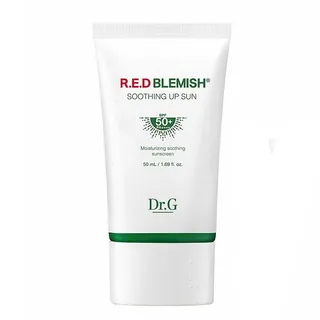
Dr.G R.E.D Blemish Soothing Up Sun

Dr.G R.E.D Blemish Soothing Up Sun

Efficacy100/100IrritancyMedium

Works for

Moisturizing
Niacinamide, Panthenol + 25 more
Works well
What the product description says
“Formulated with 10-CICA ingredients to deliver powerful calming effect and replenish rich hydration for creating a healthy and plumping complexion.”
Source: Lila Beauty

This product can help improve hydration of the skin with the two types of ingredients.

The first type is called “humectants”:
these ingredients help attract water. When humectants are on the surface of the skin, they “pull in” the moisture from the outside environment, or from within deeper layers of the skin. The following ingredients in this product do the job: biosaccharide gum-1, lactobacillus ferment.

This product also contains ingredients called “occlusives”. They help reduce the speed with which our skin loses moisture to the outside environment. These ingredients also help soften the upper layer of the skin, so it feels less tight and nicer to the touch. The following ingredients in this product do the job: helianthus annuus seed oil unsaponifiables, cetearyl alcohol.

The following ingredients in this product are especially good for supporting the skin barrier and helping with the hydration level: madecassoside, niacinamide, panthenol

NiacinamideHeroEffect: HighIs proven to be effective in reducing blemishes, evening out skin tone and helping to improve lines and wrinkles. It helps the skin to repair sun damage, calm down inflammation and keep maintain good levels of moisture. The concentration of about 2% is effective for supporting the skin barrier and evening out the skin tone. Concentration of 4-6% is better for helping with acne and balancing the sebum production~2.1–2.6%
PanthenolHero· HumectantEffect: HighHelps attract water to the upper layer of the skin and can help improve skin barrier function~0.75–1.15%
MadecassosideHeroEffect: HighAn antioxidant that is typically derived from plant Centella Asiatica. It can help neutralize free radicals in skin and support skin barrier function. It could, however, itself be irritating. It is often unstable in formulations~0.25–0.45%
Cetearyl alcoholKey active· EmollientEffect: MediumA non-drying alcohol. Works as an emollient. Helps water and oil mix together and creates a nice product texture~1.2–1.4%
Centella asiatica extractKey activeEffect: HighA plant extract that has been shown to be able to reduce inflammation in skin, support restoration of skin barrier function, as well as support collagen production. Contains active compounds called centelloids: asiaticoside, madecasosside, asiatic acid and madecassic acid. Might be helpful in preventing stretch marks. It can be itself be irritating though.~0.45–0.65%
Helianthus annuus seed oil unsaponifiablesKey active· EmollientEffect: HighA great emollient due to its high linoleic acid content. One of the most effective plant oils in helping skin hydration and repairing skin barrier function~0.4–0.6%
PolymethylsilsesquioxaneKey activeEffect: HighA silicone that improves product texture and helps dissolve other ingredients. Can form a non-greasy film on the skin to prevent moisture loss~0.4–0.6%
Centella asiatica flower/leaf/stem extractKey activeEffect: HighA plant extract that has been shown to be able to reduce inflammation in skin, support restoration of skin barrier function, as well as support collagen production. Contains active compounds called centelloids: asiaticoside, madecasosside, asiatic acid and madecassic acid. Might be helpful in preventing stretch marks. It can be itself be irritating though.~0.35–0.65%
AdenosineKey activeEffect: MediumMight help improve cell turnover and reduce inflammation in skin. One study shows that the ingredients might be able to help reduce dynamic wrinkles (for example, in the corners of the eyes or on the forehead)~0.35–0.65%
Biosaccharide gum-1Key active· HumectantEffect: HighHelps attract water to the upper layer of the skin and is claimed to provide a longer-lasting hydration because of its ability to create a water-binding film on the surface of the skin~0.3–0.55%
Echium plantagineum seed oilKey activeEffect: HighA plant oil that because of its high content of alpha-linolenic acid help support skin barrier function and moisturize the skin~0.3–0.6%
Kappaphycus alvarezii extractKey activeEffect: HighA red algae extract that can help attract water to the upper layer of the skin and might have some antioxidant properties~0.3–0.6%
Saccharomyces fermentKey activeEffect: HighA product of yeast fermentation. Helps attract water to the upper layer of the skin~0.3–0.55%
7-dehydrocholesterolKey activeEffect: HighPro-vitamin D. It is claimed to have anti-inflammatory effect in skin, but there is no research available confirming that this compound converts to vitamin D in skin or has any other benefits apart from softening the upper layer of the skin. This compound is different from the Vitamin D3 analogues used in medicine to treat psoriasis~0.3–0.55%
EctoinKey activeEffect: HighSoftens the upper layer of the skin and can support skin barrier function~0.25–0.45%
AsiaticosideKey activeEffect: HighAn active compound of Centella Asiatica plant extract. In combination with other active compounds of Centella Asiatica extract (madecasosside, asiatic acid and madecassic acid), asiaticoside has been shown to be helpful in wound-healing, restoring skin barrier function and supporting collagen production in skin. It can, however, itself be irritating~0.2–0.4%
Lactobacillus fermentKey active· HumectantEffect: HighA fermentation product created by bacteria Lactobacillus. The fermented product has anti-bacterial properties and might be helpful in calming down inflammation, but studies are lacking. Helps attract water to the upper layer of the skin. Can be used as a preservative~0.2–0.4%
Madecassic acidKey activeEffect: HighAn active compound of Centella Asiatica plant extract. In combination with other active compounds of Centella Asiatica extract (asiaticoside, madecasosside and asiatic acid), madecassic acid has been shown to be helpful in wound-healing, restoring skin barrier function and supporting collagen production in skin. It can, however, itself be irritating~0.15–0.3%
Asiatic acidKey activeEffect: HighAn active compound of Centella Asiatica plant extract. In combination with other active compounds of Centella Asiatica extract (asiaticoside, madecasosside and madecassic acid) asiatic acid has been shown to be helpful in wound-healing, restoring skin barrier function and supporting collagen production in skin. It can, however, itself be irritating~0.15–0.3%
Dibutyl adipate· EmollientEffect: LowHelps soften the upper layer of the skin and create a nice product consistency~6.2–7.5%
Octyldodecanol· EmollientEffect: LowAn emollient that helps to soften the skin and create a pleasant product texture and stabilize the formulation~1.7–2.1%
Pentylene glycol· EmollientEffect: LowUsed to preserve products, dissolve other ingredients and create a nice product texture~0.65–1%
Caprylyl methiconeEffect: LowA type of silicone that helps to soften the upper layer of the skin and create a nice product finish on the skin~0.5–0.75%
Glyceryl stearate· EmollientEffect: LowAn emollient that softens the skin and forms a protective layer on its surface. Helps water and oil mix together~0.45–0.65%
Glyceryl stearate citrate· EmollientEffect: LowHelps oil and water mix together while softening the upper layer of the skin~0.4–0.65%
Butylene glycol· HumectantEffect: LowUsed to create a nice product texture and help delivery of other ingredients. Might be somewhat helpful in attracting water to the upper layer of the skin~0.35–0.6%
TocopherolEffect: Low, below effective dosePure form of vitamin E. Can help moisturise and protect the skin from free radicals. Often used to help stabilise other ingredients or the formula itself~0.3–0.6%
Anti-aging
Side benefit · Niacinamide, Centella asiatica extract + 5 more
Works well

This product can help reduce and prevent fine lines and wrinkles, improve skin elasticity and firmness because it contains adenosine, niacinamide.

These ingredients in the product can also be helpful, even though there is less evidence for their effectiveness: asiaticoside, centella asiatica extract, centella asiatica leaf extract, madecassoside.

Keep in mind that it typically takes at least 6 weeks to notice any results because the changes that are needed to improve fine lines and elasticity happen in the deeper layers of the skin. No topical anti-aging product can “erase” wrinkles or fully reverse signs of aging.

NiacinamideKey activeEffect: HighIs proven to be effective in reducing blemishes, evening out skin tone and helping to improve lines and wrinkles. It helps the skin to repair sun damage, calm down inflammation and keep maintain good levels of moisture. The concentration of about 2% is effective for supporting the skin barrier and evening out the skin tone. Concentration of 4-6% is better for helping with acne and balancing the sebum production~2.1–2.6%
Centella asiatica extractKey activeEffect: MediumA plant extract that has been shown to be able to reduce inflammation in skin, support restoration of skin barrier function, as well as support collagen production. Contains active compounds called centelloids: asiaticoside, madecasosside, asiatic acid and madecassic acid. Might be helpful in preventing stretch marks. It can be itself be irritating though.~0.45–0.65%
AdenosineKey activeEffect: HighMight help improve cell turnover and reduce inflammation in skin. One study shows that the ingredients might be able to help reduce dynamic wrinkles (for example, in the corners of the eyes or on the forehead)~0.35–0.65%
Centella asiatica leaf extractKey activeEffect: MediumA plant extract that has been shown to be able to reduce inflammation in skin, support restoration of skin barrier function, as well as support collagen production. It can be irritating to sensitive skin. Might be helpful in preventing stretch marks. It could, however, itself be irritating.~0.3–0.6%
MadecassosideKey activeEffect: MediumAn antioxidant that is typically derived from plant Centella Asiatica. It can help neutralize free radicals in skin and support skin barrier function. It could, however, itself be irritating. It is often unstable in formulations~0.25–0.45%
AsiaticosideKey activeEffect: MediumAn active compound of Centella Asiatica plant extract. In combination with other active compounds of Centella Asiatica extract (madecasosside, asiatic acid and madecassic acid), asiaticoside has been shown to be helpful in wound-healing, restoring skin barrier function and supporting collagen production in skin. It can, however, itself be irritating~0.2–0.4%
TocopherolEffect: Low, below effective dosePure form of vitamin E. Can help moisturise and protect the skin from free radicals. Often used to help stabilise other ingredients or the formula itself~0.3–0.6%
Anti-oxidation
Side benefit · Centella asiatica extract, Pinus pinaster bark extract + 10 more
Works well

This product contains antioxidants (asiaticoside, madecassoside) that can help neutralize free radicals in skin. By doing so, they can lessen the damage the skin gets from the UV light (sun).

The following ingredients - centella asiatica extract, pinus pinaster bark extract also can have an antioxidant effect, but there is less evidence to confirm their effectiveness in skin.

Centella asiatica extractKey activeEffect: MediumA plant extract that has been shown to be able to reduce inflammation in skin, support restoration of skin barrier function, as well as support collagen production. Contains active compounds called centelloids: asiaticoside, madecasosside, asiatic acid and madecassic acid. Might be helpful in preventing stretch marks. It can be itself be irritating though.~0.45–0.65%
Pinus pinaster bark extractKey activeEffect: MediumA plant extract that might help neutralize free radicals and reduce hyperpigmentation, but evidence of effectiveness of topical application is lacking. It can be an INCI name for the trademarked ingredient Pycnogenol (but could also be a different type of this plant's bark extract)~0.35–0.65%
MadecassosideKey activeEffect: HighAn antioxidant that is typically derived from plant Centella Asiatica. It can help neutralize free radicals in skin and support skin barrier function. It could, however, itself be irritating. It is often unstable in formulations~0.25–0.45%
AsiaticosideKey activeEffect: HighAn active compound of Centella Asiatica plant extract. In combination with other active compounds of Centella Asiatica extract (madecasosside, asiatic acid and madecassic acid), asiaticoside has been shown to be helpful in wound-healing, restoring skin barrier function and supporting collagen production in skin. It can, however, itself be irritating~0.2–0.4%
Buddleja officinalis flower extractEffect: LowA plant flower extract that might help calm down inflammation in skin and neutralize free radicals, but evidence of effectiveness in skin is lacking~0.55–0.8%
Cardiospermum halicacabum flower/leaf/vine extractEffect: LowA plant extract that might have some anti-inflammatory and anti-oxidant properties but evidence is missing~0.5–0.75%
AdenosineEffect: LowMight help improve cell turnover and reduce inflammation in skin. One study shows that the ingredients might be able to help reduce dynamic wrinkles (for example, in the corners of the eyes or on the forehead)~0.35–0.65%
Cynara scolymus leaf extractEffect: LowA plant extract that might have some anti-oxidant properties. It might be irritating~0.35–0.65%
Kappaphycus alvarezii extractEffect: LowA red algae extract that can help attract water to the upper layer of the skin and might have some antioxidant properties~0.3–0.6%
Nasturtium officinale extractEffect: LowUsed as a fragrance. Might have anti-oxidant properties~0.3–0.55%
Lactobacillus fermentEffect: LowA fermentation product created by bacteria Lactobacillus. The fermented product has anti-bacterial properties and might be helpful in calming down inflammation, but studies are lacking. Helps attract water to the upper layer of the skin. Can be used as a preservative~0.2–0.4%
TocopherolUnder-dosedPure form of vitamin E. Can help moisturise and protect the skin from free radicals. Often used to help stabilise other ingredients or the formula itself~0.3–0.6%
Evens skin tone
Side benefit · Niacinamide, Pinus pinaster bark extract + 1 more
Works well

This product can help reduce hypepigmentation and even out the skin tone because it contains the following effective ingredients: niacinamide

The following ingredient (ingredients) in this product might be helpful, but there is no evidence to confirm that it actually can help even out the skin tone: madecassoside, pinus pinaster bark extract.

Keep in mind that you would need to apply any topical skincare targetted at hypigmentation consistently for a couple of months to get a result. No topical skincare product can help get rid of hyperpigmentation (including post-acne marks and age spots) instantly.

NiacinamideKey activeEffect: HighIs proven to be effective in reducing blemishes, evening out skin tone and helping to improve lines and wrinkles. It helps the skin to repair sun damage, calm down inflammation and keep maintain good levels of moisture. The concentration of about 2% is effective for supporting the skin barrier and evening out the skin tone. Concentration of 4-6% is better for helping with acne and balancing the sebum production~2.1–2.6%
Pinus pinaster bark extractEffect: LowA plant extract that might help neutralize free radicals and reduce hyperpigmentation, but evidence of effectiveness of topical application is lacking. It can be an INCI name for the trademarked ingredient Pycnogenol (but could also be a different type of this plant's bark extract)~0.35–0.65%
MadecassosideEffect: LowAn antioxidant that is typically derived from plant Centella Asiatica. It can help neutralize free radicals in skin and support skin barrier function. It could, however, itself be irritating. It is often unstable in formulations~0.25–0.45%
Anti-blemish
Side benefit · Niacinamide, Centella asiatica extract + 1 more
Works well

This product can help reduce breakouts and clogged pores because it contains the following ingredient: niacinamide. This ingredient is used for treating acne and can have a noticeable effect.

NiacinamideHeroEffect: HighIs proven to be effective in reducing blemishes, evening out skin tone and helping to improve lines and wrinkles. It helps the skin to repair sun damage, calm down inflammation and keep maintain good levels of moisture. The concentration of about 2% is effective for supporting the skin barrier and evening out the skin tone. Concentration of 4-6% is better for helping with acne and balancing the sebum production~2.1–2.6%
Centella asiatica extractEffect: LowA plant extract that has been shown to be able to reduce inflammation in skin, support restoration of skin barrier function, as well as support collagen production. Contains active compounds called centelloids: asiaticoside, madecasosside, asiatic acid and madecassic acid. Might be helpful in preventing stretch marks. It can be itself be irritating though.~0.45–0.65%
Centella asiatica leaf extractEffect: LowA plant extract that has been shown to be able to reduce inflammation in skin, support restoration of skin barrier function, as well as support collagen production. It can be irritating to sensitive skin. Might be helpful in preventing stretch marks. It could, however, itself be irritating.~0.3–0.6%

Can it cause trouble?

Irritancy
1 strong irritant: Nasturtium officinale extract
Medium risk
We flagged 25 ingredients with irritancy potential. Severity depends on your sensitivity threshold; the table lists the worst offenders first.
IngredientFunctionIrritationEst. amount
Cardiospermum halicacabum flower/leaf/vine extractA plant extract that might have some anti-inflammatory and anti-oxidant properties but evidence is missingHigh~0.5–0.75%est.
Cynara scolymus leaf extractA plant extract that might have some anti-oxidant properties. It might be irritatingHigh~0.35–0.65%est.
Nasturtium officinale extractUsed as a fragrance. Might have anti-oxidant propertiesHigh~0.3–0.55%est.
Buddleja officinalis flower extractA plant flower extract that might help calm down inflammation in skin and neutralize free radicals, but evidence of effectiveness in skin is lackingHigh~0.55–0.8%est.
Ethylhexyl triazoneUvinul T. A UV filter. Effective against UVB rays. It is photostable. Can increase water resistance properties of the sunscreen. Unfortunately, not approved by the FDA (US) yetMedium~3.9–4.8%est.
Terephthalylidene dicamphor sulfonic acidEcamsule, Mexoryl SX. A UV filter. Is effective mostly against the UVA rays. It is legally marketed in the US with the FDA approval since 2006, even though the ingredient is not on the official FDA list of the approved sunscreen active ingredients. It is photostableMedium~3.4–4.2%est.
1,2-hexanediolA preservativeMedium~0.65–0.95%est.
Pentylene glycolUsed to preserve products, dissolve other ingredients and create a nice product textureMedium~0.65–1%est.
Diethylamino hydroxybenzoyl hexyl benzoateUvinul A Plus. A new generation broad spectrum sunscreen that offers an effective protection especially in the UVA range. It is stable in formulations. Unfortunately, is not approved by the FDA (US) yetMedium~0.75–1.1%est.
Polysilicone-15A UV filter. Effective against UVB rays, but does not protect against the most aging UVA lightMedium~0.7–1.05%est.
Centella asiatica flower/leaf/stem extractA plant extract that has been shown to be able to reduce inflammation in skin, support restoration of skin barrier function, as well as support collagen production. Contains active compounds called centelloids: asiaticoside, madecasosside, asiatic acid and madecassic acid. Might be helpful in preventing stretch marks. It can be itself be irritating though.Medium~0.35–0.65%est.
Centella asiatica leaf extractA plant extract that has been shown to be able to reduce inflammation in skin, support restoration of skin barrier function, as well as support collagen production. It can be irritating to sensitive skin. Might be helpful in preventing stretch marks. It could, however, itself be irritating.Medium~0.3–0.6%est.
Centella asiatica extractA plant extract that has been shown to be able to reduce inflammation in skin, support restoration of skin barrier function, as well as support collagen production. Contains active compounds called centelloids: asiaticoside, madecasosside, asiatic acid and madecassic acid. Might be helpful in preventing stretch marks. It can be itself be irritating though.Medium~0.45–0.65%est.
Pinus pinaster bark extractA plant extract that might help neutralize free radicals and reduce hyperpigmentation, but evidence of effectiveness of topical application is lacking. It can be an INCI name for the trademarked ingredient Pycnogenol (but could also be a different type of this plant's bark extract)Medium~0.35–0.65%est.
Echium plantagineum seed oilA plant oil that because of its high content of alpha-linolenic acid help support skin barrier function and moisturize the skinMedium~0.3–0.6%est.
Bis-ethylhexyloxyphenol methoxyphenyl triazineTinosorb S. One of the most effective broad spectrum sunscreen ingredients. Protects from both UVA and UVB rays. It is photostable. Approved by the US FDA in 2026 (listed as bemotrizinol on US labels).Medium~0.55–0.8%est.
Potassium cetyl phosphateHelps oil and water mix togetherMedium~0.4–0.6%est.
MethylpropanediolHelps dissolve other ingredients in a formulationMedium~0.35–0.6%est.
Acrylates/c10-30 alkyl acrylate crosspolymerMaintains the texture of skincare products. Allows the product to spread evenly. Helps oil and water mix togetherMedium~0.4–0.6%est.
EthylhexylglycerinA preservativeMedium~0.35–0.6%est.
7-dehydrocholesterolPro-vitamin D. It is claimed to have anti-inflammatory effect in skin, but there is no research available confirming that this compound converts to vitamin D in skin or has any other benefits apart from softening the upper layer of the skin. This compound is different from the Vitamin D3 analogues used in medicine to treat psoriasisMedium~0.3–0.55%est.
AsiaticosideAn active compound of Centella Asiatica plant extract. In combination with other active compounds of Centella Asiatica extract (madecasosside, asiatic acid and madecassic acid), asiaticoside has been shown to be helpful in wound-healing, restoring skin barrier function and supporting collagen production in skin. It can, however, itself be irritatingMedium~0.2–0.4%est.
MadecassosideAn antioxidant that is typically derived from plant Centella Asiatica. It can help neutralize free radicals in skin and support skin barrier function. It could, however, itself be irritating. It is often unstable in formulationsMedium~0.25–0.45%est.
Madecassic acidAn active compound of Centella Asiatica plant extract. In combination with other active compounds of Centella Asiatica extract (asiaticoside, madecasosside and asiatic acid), madecassic acid has been shown to be helpful in wound-healing, restoring skin barrier function and supporting collagen production in skin. It can, however, itself be irritatingMedium~0.15–0.3%est.
Asiatic acidAn active compound of Centella Asiatica plant extract. In combination with other active compounds of Centella Asiatica extract (asiaticoside, madecasosside and madecassic acid) asiatic acid has been shown to be helpful in wound-healing, restoring skin barrier function and supporting collagen production in skin. It can, however, itself be irritatingMedium~0.15–0.3%est.
Comedogenic
1 ingredient rated 2 or more on the 0–5 pore-clogging scale
1 flagged
These ingredients have a comedogenic rating of 2 or more on a 0–5 scale; the table shows each one's rating. In leave-on products they can clog pores in acne-prone skin.
IngredientFunctionRatingEst. amount
Cetearyl alcoholA non-drying alcohol. Works as an emollient. Helps water and oil mix together and creates a nice product texture2/5~1.2–1.4%est.
Did this help you decide?

User reviews

Would you recommend?
No community reviews yet.

Be the first — your take helps the next person decide.

Ingredients

Filter by role to see what each ingredient is doing.

Water~45–55%
Formula
Irritation risk
Low

Plain old water

More about Water
Dibutyl adipate~6.2–7.5%
Formula
Irritation risk
Low
Works for
Moisturizing

Helps soften the upper layer of the skin and create a nice product consistency

More about Dibutyl adipate
Propanediol~4.7–5.7%
Formula
Irritation risk
Low

Acts as a solvent for other ingredients. Speeds up the absorption of other ingredients into the skin

More about Propanediol
Ethylhexyl triazone~3.9–4.8%
Irritant · medium
Irritation risk
Medium
Works for
Sun protection

Uvinul T. A UV filter. Effective against UVB rays. It is photostable. Can increase water resistance properties of the sunscreen. Unfortunately, not approved by the FDA (US) yet

More about Ethylhexyl triazone
Terephthalylidene dicamphor sulfonic acid~3.4–4.2%
Irritant · medium
Irritation risk
Medium
Works for
Sun protection

Ecamsule, Mexoryl SX. A UV filter. Is effective mostly against the UVA rays. It is legally marketed in the US with the FDA approval since 2006, even though the ingredient is not on the official FDA list of the approved sunscreen active ingredients. It is photostable

More about Terephthalylidene dicamphor sulfonic acid
Niacinamide~2.1–2.6%
Hero · Moisturizing, Anti-blemish
Irritation risk
Low
Works for
Anti-agingEvens skin toneAnti-blemishMoisturizingReduces irritationAnti-inflammatoryAntibacterialReduces redness

Is proven to be effective in reducing blemishes, evening out skin tone and helping to improve lines and wrinkles. It helps the skin to repair sun damage, calm down inflammation and keep maintain good levels of moisture. The concentration of about 2% is effective for supporting the skin barrier and evening out the skin tone. Concentration of 4-6% is better for helping with acne and balancing the sebum production

More about Niacinamide
Octyldodecanol~1.7–2.1%
Formula
Irritation risk
Low
Works for
Moisturizing

An emollient that helps to soften the skin and create a pleasant product texture and stabilize the formulation

More about Octyldodecanol
Tromethamine~1.6–1.9%
Formula
Irritation risk
Low

Helps adjust pH in products

More about Tromethamine
Polyglyceryl-3 distearate~1.3–1.6%
Formula
Irritation risk
Low
Works for
Cleansing
More about Polyglyceryl-3 distearate
Cetearyl alcohol~1.2–1.4%
Key activeComedogenic 2/5
Irritation risk
Low
Comedogenicity
2/5
Works for
CleansingMoisturizing

A non-drying alcohol. Works as an emollient. Helps water and oil mix together and creates a nice product texture

More about Cetearyl alcohol
Panthenol~0.75–1.15%
Hero · Moisturizing
Irritation risk
Low
Works for
MoisturizingReduces rednessReduces irritation

Helps attract water to the upper layer of the skin and can help improve skin barrier function

More about Panthenol
1,2-hexanediol~0.65–0.95%
Irritant · medium
Irritation risk
Medium

A preservative

More about 1,2-hexanediol
Pentylene glycol~0.65–1%
Irritant · medium
Irritation risk
Medium
Works for
Moisturizing

Used to preserve products, dissolve other ingredients and create a nice product texture

More about Pentylene glycol
Diethylamino hydroxybenzoyl hexyl benzoate~0.75–1.1%
Irritant · medium
Irritation risk
Medium
Works for
Sun protection

Uvinul A Plus. A new generation broad spectrum sunscreen that offers an effective protection especially in the UVA range. It is stable in formulations. Unfortunately, is not approved by the FDA (US) yet

More about Diethylamino hydroxybenzoyl hexyl benzoate
Caprylyl methicone~0.5–0.75%
Formula
Irritation risk
Low
Works for
Moisturizing

A type of silicone that helps to soften the upper layer of the skin and create a nice product finish on the skin

More about Caprylyl methicone
Polysilicone-15~0.7–1.05%
Irritant · medium
Irritation risk
Medium
Works for
Sun protection

A UV filter. Effective against UVB rays, but does not protect against the most aging UVA light

More about Polysilicone-15
Cardiospermum halicacabum flower/leaf/vine extract~0.5–0.75%
Irritant · high
Irritation risk
High
Works for
Anti-inflammatoryAnti-oxidation

A plant extract that might have some anti-inflammatory and anti-oxidant properties but evidence is missing

More about Cardiospermum halicacabum flower/leaf/vine extract
Houttuynia cordata extract~0.45–0.7%
Formula
Morinda citrifolia fruit extract~0.45–0.65%
Formula
Artemisia princeps leaf extract~0.4–0.6%
Formula
Centella asiatica flower/leaf/stem extract~0.35–0.65%
Key activeIrritant · medium
Irritation risk
Medium
Works for
MoisturizingReduces rednessAnti-inflammatoryReduces irritation

A plant extract that has been shown to be able to reduce inflammation in skin, support restoration of skin barrier function, as well as support collagen production. Contains active compounds called centelloids: asiaticoside, madecasosside, asiatic acid and madecassic acid. Might be helpful in preventing stretch marks. It can be itself be irritating though.

More about Centella asiatica flower/leaf/stem extract
Cynara scolymus leaf extract~0.35–0.65%
Irritant · high
Irritation risk
High
Works for
Anti-oxidation

A plant extract that might have some anti-oxidant properties. It might be irritating

More about Cynara scolymus leaf extract
Centella asiatica root extract~0.3–0.6%
Formula
Centella asiatica leaf extract~0.3–0.6%
Key activeIrritant · medium
Irritation risk
Medium
Works for
Anti-inflammatoryReduces irritationReduces rednessAnti-agingAnti-blemish

A plant extract that has been shown to be able to reduce inflammation in skin, support restoration of skin barrier function, as well as support collagen production. It can be irritating to sensitive skin. Might be helpful in preventing stretch marks. It could, however, itself be irritating.

More about Centella asiatica leaf extract
Centella asiatica extract~0.45–0.65%
Key activeIrritant · medium
Irritation risk
Medium
Works for
Reduces irritationAnti-inflammatoryReduces rednessMoisturizingAnti-agingAnti-oxidationAnti-blemish

A plant extract that has been shown to be able to reduce inflammation in skin, support restoration of skin barrier function, as well as support collagen production. Contains active compounds called centelloids: asiaticoside, madecasosside, asiatic acid and madecassic acid. Might be helpful in preventing stretch marks. It can be itself be irritating though.

More about Centella asiatica extract
Prunus persica flower extract~0.3–0.6%
Formula
Nasturtium officinale extract~0.3–0.55%
Irritant · high
Irritation risk
High
Works for
Anti-oxidation

Used as a fragrance. Might have anti-oxidant properties

More about Nasturtium officinale extract
Caesalpinia spinosa fruit extract~0.35–0.6%
Formula
Kappaphycus alvarezii extract~0.3–0.6%
Key active
Irritation risk
Low
Works for
MoisturizingAnti-oxidation

A red algae extract that can help attract water to the upper layer of the skin and might have some antioxidant properties

More about Kappaphycus alvarezii extract
Buddleja officinalis flower extract~0.55–0.8%
Irritant · high
Irritation risk
High
Works for
AntibacterialAnti-inflammatoryAnti-oxidation

A plant flower extract that might help calm down inflammation in skin and neutralize free radicals, but evidence of effectiveness in skin is lacking

More about Buddleja officinalis flower extract
Pinus pinaster bark extract~0.35–0.65%
Key activeIrritant · medium
Irritation risk
Medium
Works for
Anti-oxidationEvens skin tone

A plant extract that might help neutralize free radicals and reduce hyperpigmentation, but evidence of effectiveness of topical application is lacking. It can be an INCI name for the trademarked ingredient Pycnogenol (but could also be a different type of this plant's bark extract)

More about Pinus pinaster bark extract
Echium plantagineum seed oil~0.3–0.6%
Key activeIrritant · medium
Irritation risk
Medium
Works for
MoisturizingAnti-inflammatory

A plant oil that because of its high content of alpha-linolenic acid help support skin barrier function and moisturize the skin

More about Echium plantagineum seed oil
Polymethylsilsesquioxane~0.4–0.6%
Key active
Irritation risk
Low
Works for
Moisturizing

A silicone that improves product texture and helps dissolve other ingredients. Can form a non-greasy film on the skin to prevent moisture loss

More about Polymethylsilsesquioxane
Glyceryl stearate~0.45–0.65%
Formula
Irritation risk
Low
Works for
CleansingMoisturizing

An emollient that softens the skin and forms a protective layer on its surface. Helps water and oil mix together

More about Glyceryl stearate
Bis-ethylhexyloxyphenol methoxyphenyl triazine~0.55–0.8%
Irritant · medium
Irritation risk
Medium
Works for
Sun protection

Tinosorb S. One of the most effective broad spectrum sunscreen ingredients. Protects from both UVA and UVB rays. It is photostable. Approved by the US FDA in 2026 (listed as bemotrizinol on US labels).

More about Bis-ethylhexyloxyphenol methoxyphenyl triazine
Potassium cetyl phosphate~0.4–0.6%
Irritant · medium
Irritation risk
Medium
Works for
Cleansing

Helps oil and water mix together

More about Potassium cetyl phosphate
Methylpropanediol~0.35–0.6%
Irritant · medium
Irritation risk
Medium

Helps dissolve other ingredients in a formulation

More about Methylpropanediol
Carbomer~0.35–0.6%
Formula
Irritation risk
Low
Works for
Cleansing

Helps create a thicker or gel-like product texture. It is not a surfactant but can be used in gentle cleansing formulations

More about Carbomer
Glyceryl stearate citrate~0.4–0.65%
Formula
Irritation risk
Low
Works for
CleansingMoisturizing

Helps oil and water mix together while softening the upper layer of the skin

More about Glyceryl stearate citrate
Acrylates/c10-30 alkyl acrylate crosspolymer~0.4–0.6%
Irritant · medium
Irritation risk
Medium

Maintains the texture of skincare products. Allows the product to spread evenly. Helps oil and water mix together

More about Acrylates/c10-30 alkyl acrylate crosspolymer
Ethylhexylglycerin~0.35–0.6%
Irritant · medium
Irritation risk
Medium

A preservative

More about Ethylhexylglycerin
Ammonium acryloyldimethyltaurate/vp copolymer~0.35–0.6%
Formula
Irritation risk
Low

Increases thickness of a product. Texture enhancer for oil-in-water emulsions

More about Ammonium acryloyldimethyltaurate/vp copolymer
Adenosine~0.35–0.65%
Key active
Irritation risk
Low
Works for
Anti-agingMoisturizingAnti-oxidation

Might help improve cell turnover and reduce inflammation in skin. One study shows that the ingredients might be able to help reduce dynamic wrinkles (for example, in the corners of the eyes or on the forehead)

More about Adenosine
Butylene glycol~0.35–0.6%
Formula
Irritation risk
Low
Works for
Moisturizing

Used to create a nice product texture and help delivery of other ingredients. Might be somewhat helpful in attracting water to the upper layer of the skin

More about Butylene glycol
Helianthus annuus seed oil unsaponifiables~0.4–0.6%
Key active
Irritation risk
Low
Works for
Moisturizing

A great emollient due to its high linoleic acid content. One of the most effective plant oils in helping skin hydration and repairing skin barrier function

More about Helianthus annuus seed oil unsaponifiables
Polyether-1~0.35–0.6%
Formula
Irritation risk
Low
More about Polyether-1
Tocopherol~0.3–0.6%
Under-dosed
Irritation risk
Low
Works for
Anti-oxidationAnti-inflammatoryAnti-agingMoisturizing

Pure form of vitamin E. Can help moisturise and protect the skin from free radicals. Often used to help stabilise other ingredients or the formula itself

More about Tocopherol
Biosaccharide gum-1~0.3–0.55%
Key active
Irritation risk
Low
Works for
Moisturizing

Helps attract water to the upper layer of the skin and is claimed to provide a longer-lasting hydration because of its ability to create a water-binding film on the surface of the skin

More about Biosaccharide gum-1
Saccharomyces ferment~0.3–0.55%
Key active
Irritation risk
Low
Works for
Moisturizing

A product of yeast fermentation. Helps attract water to the upper layer of the skin

More about Saccharomyces ferment
7-dehydrocholesterol~0.3–0.55%
Key activeIrritant · medium
Irritation risk
Medium
Works for
Moisturizing

Pro-vitamin D. It is claimed to have anti-inflammatory effect in skin, but there is no research available confirming that this compound converts to vitamin D in skin or has any other benefits apart from softening the upper layer of the skin. This compound is different from the Vitamin D3 analogues used in medicine to treat psoriasis

More about 7-dehydrocholesterol
Ectoin~0.25–0.45%
Key active
Irritation risk
Low
Works for
Moisturizing

Softens the upper layer of the skin and can support skin barrier function

More about Ectoin
Asiaticoside~0.2–0.4%
Key activeIrritant · medium
Irritation risk
Medium
Works for
MoisturizingAnti-oxidationReduces irritationAnti-aging

An active compound of Centella Asiatica plant extract. In combination with other active compounds of Centella Asiatica extract (madecasosside, asiatic acid and madecassic acid), asiaticoside has been shown to be helpful in wound-healing, restoring skin barrier function and supporting collagen production in skin. It can, however, itself be irritating

More about Asiaticoside
Madecassoside~0.25–0.45%
Hero · MoisturizingIrritant · medium
Irritation risk
Medium
Works for
Anti-oxidationMoisturizingAnti-agingEvens skin tone

An antioxidant that is typically derived from plant Centella Asiatica. It can help neutralize free radicals in skin and support skin barrier function. It could, however, itself be irritating. It is often unstable in formulations

More about Madecassoside
Lactobacillus ferment~0.2–0.4%
Key active
Irritation risk
Low
Works for
MoisturizingAnti-inflammatoryAnti-oxidationReduces irritation

A fermentation product created by bacteria Lactobacillus. The fermented product has anti-bacterial properties and might be helpful in calming down inflammation, but studies are lacking. Helps attract water to the upper layer of the skin. Can be used as a preservative

More about Lactobacillus ferment
Madecassic acid~0.15–0.3%
Key activeIrritant · medium
Irritation risk
Medium
Works for
MoisturizingReduces irritation

An active compound of Centella Asiatica plant extract. In combination with other active compounds of Centella Asiatica extract (asiaticoside, madecasosside and asiatic acid), madecassic acid has been shown to be helpful in wound-healing, restoring skin barrier function and supporting collagen production in skin. It can, however, itself be irritating

More about Madecassic acid
Asiatic acid~0.15–0.3%
Key activeIrritant · medium
Irritation risk
Medium
Works for
MoisturizingReduces irritationAnti-inflammatory

An active compound of Centella Asiatica plant extract. In combination with other active compounds of Centella Asiatica extract (asiaticoside, madecasosside and madecassic acid) asiatic acid has been shown to be helpful in wound-healing, restoring skin barrier function and supporting collagen production in skin. It can, however, itself be irritating

More about Asiatic acid
Ingredient list view

Water, Dibutyl adipate, Propanediol, Ethylhexyl triazone, Terephthalylidene dicamphor sulfonic acid, Niacinamide, Octyldodecanol, Tromethamine, Polyglyceryl-3 distearate, Cetearyl alcohol, Panthenol, 1,2-hexanediol, Pentylene glycol, Diethylamino hydroxybenzoyl hexyl benzoate, Caprylyl methicone, Polysilicone-15, Cardiospermum halicacabum flower/leaf/vine extract, Houttuynia cordata extract, Morinda citrifolia fruit extract, Artemisia princeps leaf extract, Centella asiatica flower/leaf/stem extract, Cynara scolymus leaf extract, Centella asiatica root extract, Centella asiatica leaf extract, Centella asiatica extract, Prunus persica flower extract, Nasturtium officinale extract, Caesalpinia spinosa fruit extract, Kappaphycus alvarezii extract, Buddleja officinalis flower extract, Pinus pinaster bark extract, Echium plantagineum seed oil, Polymethylsilsesquioxane, Glyceryl stearate, Bis-ethylhexyloxyphenol methoxyphenyl triazine, Potassium cetyl phosphate, Methylpropanediol, Carbomer, Glyceryl stearate citrate, Acrylates/c10-30 alkyl acrylate crosspolymer, Ethylhexylglycerin, Ammonium acryloyldimethyltaurate/vp copolymer, Adenosine, Butylene glycol, Helianthus annuus seed oil unsaponifiables, Polyether-1, Tocopherol, Biosaccharide gum-1, Saccharomyces ferment, 7-dehydrocholesterol, Ectoin, Asiaticoside, Madecassoside, Lactobacillus ferment, Madecassic acid, Asiatic acid

Compare prices

Retailers ranked by price — lowest first.

Amazon US
Price unavailable Out of stock
Check

Affiliate links · As an Amazon Associate, WIMJ earns from qualifying purchases.

Worth comparing, line by line.

Match % combines shared ingredients, the first five ingredients, shared actives and hero ingredients, irritancy (lower counts in the alternative's favour), texture and body area. Only products in the same routine step are compared.

Side-by-side comparison of this product against its closest alternatives
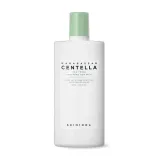
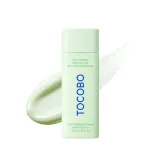
Dr.GR.E.D Blemish Soothing Up SunYOUR PRODUCTSKIN 1004.Madagascar Centella Tea-Trica Soothing Sun MilkTOCOBOCica Calming Sun SerumROUND LAB1025 Dokdo Sunscreen
Match—82%80%79%
Price—$14.89$4.63$17.82
Shared key ingredients—13 of 2615 of 2611 of 26
Key difference—Ceramide NpGlycerinCamellia Sinensis Leaf Extract
Irritancy Medium Medium Medium Medium
Drying alcohol————
View product Shop Shop Shop

More alternatives: SkinLab Hybarrier Fresh Sun LotionS. Nature Aqua 365 UV Sun

Cheaper alternatives? See how this stacks up against similar formulas.
We compare ingredient profiles across our catalog — pick the closest match for your budget.
Open dupe finder

Sources cited in this review

Every concentration estimate and effectiveness label is anchored to one of these 35 studies and safety reviews.

  1. 1
  2. 2
  3. 3
  4. 4
  5. 5
  6. 6
Dr.G R.E.D Blemish Soothing Up Sun
Dr.GR.E.D Blemish Soothing Up Sun

Affiliate links · As an Amazon Associate, WIMJ earns from qualifying purchases.

As an Amazon Associate, WIMJ earns from qualifying purchases.