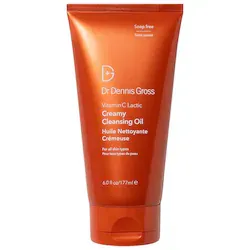
Dr Dennis Gross Vitamin C Lactic Creamy Cleansing Oil
Works for
CleansingCocamidopropyl hydroxysultaine, Isohexadecane + 5 moreCleanses gently
“Vitamin C Lactic Creamy Cleansing Oil”
This product works by removing dirt and oil from the surface of the skin. It uses a combination of mild cleansing agents (cocamidopropyl betaine, cocamidopropyl hydroxysultaine, decyl glucoside, isohexadecane, sorbitan oleate, sorbitan stearate) and should be able to cleanse the skin gently. Still keep in mind that any cleansing can disrupt the skin barrier, and most people do not need to cleanse their skin more than once per day.
Even though this formulation is mild, the following cleansing agents could trigger an irritation or allergy for some people: cocamidopropyl betaine, decyl glucoside
Can it cause trouble?
Irritancy2 strong irritants: Citrus aurantium dulcis peel oil, Citrus unshiu peel extractMedium risk
Comedogenic2 ingredients rated 2 or more on the 0–5 pore-clogging scale2 flagged
User reviews
Be the first — your take helps the next person decide.
Ingredients
Filter by role to see what each ingredient is doing.
Gossypium herbaceum seed oil~22–33%
- Irritation risk
- Low
- Comedogenicity
- 3/5
Cottonseed oil. It is used as an emollient and occlusive in products. It is rich palmitic, oleic acid, and linoleic fatty acids.
More about Gossypium herbaceum seed oilRicinus communis seed oil~5.8–8.7%
- Irritation risk
- Medium
A plant oil that can help soften the skin. It might be helpful in calming down inflammation, but solid research is lacking. Is often used in lip products to create the needed product consistency
More about Ricinus communis seed oilAloe barbadensis leaf juice~4.4–6.6%
- Irritation risk
- Medium
Traditionally used to treat sunburns, dermatitis and inflammation, but evidence for its effectiveness is lacking. The extract can contain humectants that help attract water into the skin
More about Aloe barbadensis leaf juiceWater~3.4–5.1%
Glycerin~2.6–3.9%
- Irritation risk
- Low
One of the best moisturizing ingredients. Naturally present in skin. It attracts water to the upper layer of the skin working as a humectant
More about GlycerinSorbitol~1.8–2.7%
- Irritation risk
- Low
Helps attract water to the upper layer of the skin and improves the product texture
More about SorbitolCocamidopropyl hydroxysultaine~1.7–2.5%
- Irritation risk
- Medium
Used as a cleansing agent. Helps water and oil mix together
More about Cocamidopropyl hydroxysultaineSorbitan oleate~1.2–1.8%
- Irritation risk
- Medium
- Comedogenicity
- 2/5
Helps oil and water mix together
More about Sorbitan oleateIsohexadecane~1.2–1.8%
- Irritation risk
- Low
Improves the texture of the product and helps soften the skin. Helps oil and water mix together and can be used as a cleansing agent
More about IsohexadecaneDecyl glucoside~0.9–1.4%
- Irritation risk
- High
Helps oil and water mix together. Can be irritating
More about Decyl glucosideCocamidopropyl betaine~1.2–1.8%
- Irritation risk
- High
Helps water and oil mix together. Used as a cleansing ingredient. Could be an allergen
More about Cocamidopropyl betaineCitrus aurantium dulcis peel oil~0.45–1.05%
- Irritation risk
- High
An essentil oil from orange peel. Potential allergen and can be irritating
More about Citrus aurantium dulcis peel oilTetrahexyldecyl ascorbate~0.4–0.95%
- Irritation risk
- Medium
Being a lipid soluble form of vitamin C, it is more stable than ascorbic acid, but still degrades quickly and needs to be stabilized in a formulation with another ingredient. It is claimed to penetrate skin better than pure vitamin C and have the the similar benefits, but solid studies of its effectiveness are lacking. Is likely to require a higher concentration in a product than pure vitamin C to be effective. It might be able to help reduce pore clogging.
More about Tetrahexyldecyl ascorbateAscorbic acid~0.4–0.9%
- Irritation risk
- High
The most well-researched antioxidant that works in skin. Helps neutralize free radicals supporting collagen production, helping to even out the skin tone and preventing early signs of aging
More about Ascorbic acidCitrus unshiu peel extract~0.4–0.9%
- Irritation risk
- High
Lactic acid~0.35–0.85%
- Irritation risk
- Medium
An exfoliating and moisturizing alpha-hydroxy acid (AHA). Typically causes less irritation than other AHAs, for example, glycolic acid. At high concentrations (about 15%), lactic acid can help reduce lines and wrinkles. Recent studies show that lactic acid can support the "good" bacteria living on skin's surface (healthy skin microbiome)
More about Lactic acidHippophae rhamnoides fruit oil~0.4–0.9%
- Irritation risk
- High
A plant oil that might somewhat help to neutralize free radicals. It could be irritating
More about Hippophae rhamnoides fruit oilPhyllanthus emblica fruit extract~0.35–0.8%
- Irritation risk
- Medium
A plant extract that might be helpful in neutralizing free radicals and have a skin lightening effect if used in high enough concentrations
More about Phyllanthus emblica fruit extractTerminalia ferdinandiana fruit extract~0.3–0.75%
- Irritation risk
- Medium
A plant extract that might have some anti-oxidant effect in skin, but evidence is lacking
More about Terminalia ferdinandiana fruit extractSqualane~0.4–0.9%
- Irritation risk
- Low
An oil naturally present in skin. Works as an emollient to soften the skin and form a protective layer on its surface without a greasy feeling.
More about SqualaneCamellia seed oil~0.3–0.7%
- Irritation risk
- Low
Oil from tea seeds. Can help neutralize free radicals in skin
More about Camellia seed oilPrunus armeniaca kernel oil~0.35–0.85%
- Irritation risk
- Medium
An emollient that helps soften the skin
More about Prunus armeniaca kernel oilHelianthus annuus seed oil~0.35–0.8%
- Irritation risk
- Low
A great emollient due to its high linoleic acid content. One of the most effective plant oils in helping skin hydration and repairing skin barrier function
More about Helianthus annuus seed oilColloidal oatmeal~0.35–0.85%
- Irritation risk
- Low
Helps to restore skin barrier function, soften the upper layer of the skin and calm down inflammation
More about Colloidal oatmealSphingolipids~0.35–0.8%
- Irritation risk
- Low
Sphingolipids are a group of lipids with a common chemical structure. Some of them are naturally present in skin and can be converted to ceramides
More about SphingolipidsPhospholipids~0.3–0.7%
- Irritation risk
- Low
Emollients that are naturaly present in skin. In addition, they help water and oil mix together in the product
More about PhospholipidsSodium hyaluronate~0.2–0.75%
- Irritation risk
- Low
One of the best moisturizing ingredients. Attracts water into the upper layer of the skin
More about Sodium hyaluronateSodium pca~0.2–0.7%
- Irritation risk
- Low
Naturally present in skin and helps to attract water to its upper layer
More about Sodium pcaLecithin~0.35–0.8%
- Irritation risk
- Low
Used mostly for creating emulsions - helping oil and water mix together. Helps soften the upper layer of the skin
More about LecithinSilica~0.4–0.9%
Sodium starch octenylsuccinate~0.2–0.75%
- Irritation risk
- Low
Sorbitan stearate~0.2–0.75%
Potassium hydroxide~0.15–0.6%
Leuconostoc/radish root ferment filtrate~0.1–0.5%
- Irritation risk
- Medium
A preservative that comes from radishes fermented by a bacteria. New research suggests that the preservation properties in the ingredient come from an ammonium salt that is not present naturally in radish root but used in its cultivation. Is problematic because the exact amount of the preservative agents is difficult to determine
More about Leuconostoc/radish root ferment filtrateSodium metasilicate~0.1–0.35%
- Irritation risk
- Low
Citric acid~0.05–0.3%
- Irritation risk
- Medium
Can work as an exfoliant but is typically used to adjust the product pH
More about Citric acidSodium citrate~0.05–0.3%
- Irritation risk
- Medium
Helps to control the skin's pH level. Maintains the skin's natural film of amino-lactic acids and oils. Helps to preserve products
More about Sodium citrateTetrasodium glutamate diacetate~0.05–0.2%
- Irritation risk
- Low
Helps stabilize the product formulation
More about Tetrasodium glutamate diacetatePhenoxyethanol~0.1–0.35%
- Irritation risk
- Low
A preservative. It helps prevent bacterial growth in cosmetic products
More about PhenoxyethanolPotassium sorbate~0.1–0.3%
Ingredient list view
Gossypium herbaceum seed oil, Ricinus communis seed oil, Aloe barbadensis leaf juice, Water, Glycerin, Sorbitol, Cocamidopropyl hydroxysultaine, Sorbitan oleate, Isohexadecane, Decyl glucoside, Cocamidopropyl betaine, Citrus aurantium dulcis peel oil, Tetrahexyldecyl ascorbate, Ascorbic acid, Citrus unshiu peel extract, Lactic acid, Hippophae rhamnoides fruit oil, Phyllanthus emblica fruit extract, Terminalia ferdinandiana fruit extract, Squalane, Camellia seed oil, Prunus armeniaca kernel oil, Helianthus annuus seed oil, Colloidal oatmeal, Sphingolipids, Phospholipids, Sodium hyaluronate, Sodium pca, Lecithin, Silica, Sodium starch octenylsuccinate, Sorbitan stearate, Potassium hydroxide, Leuconostoc/radish root ferment filtrate, Sodium metasilicate, Citric acid, Sodium citrate, Tetrasodium glutamate diacetate, Phenoxyethanol, Potassium sorbate
Compare prices
Retailers ranked by price — lowest first.

Worth comparing, line by line.
Match % combines shared ingredients, the first five ingredients, shared actives and hero ingredients, irritancy (lower counts in the alternative's favour), texture and body area. Only products in the same routine step are compared.
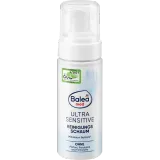
| Dr Dennis GrossVitamin C Lactic Creamy Cleansing OilYOUR PRODUCT | OlivalAmino Gel | Derma EVitamin C Foaming Oil Cleanser | BaleaMed Ultra Sensitive Cleansing Foam | |
|---|---|---|---|---|
| Match | — | 37% | 37% | 36% |
| Price | $40.00 | — | $17.95−$22.05 | $4.69−$35.31 |
| Shared key ingredients | — | 3 of 19 | 10 of 19 | 2 of 19 |
| Key difference | — | Betaine | Vitamin C | Panthenol |
| Irritancy | Medium | Low | Medium | Low |
| Drying alcohol | — | — | — | — |
| View product | Shop | Shop | Shop |
More alternatives: CeraVe Gel Moussant Anti-ImperfectionsTOŁPA authentic face wash gel
Sources cited in this review
Every concentration estimate and effectiveness label is anchored to one of these 22 studies and safety reviews.
- 1
- 2
- 3
- 4
- 5Surfactants and experimental irritant contact dermatitisncbi.nlm.nih.gov
- 6

Affiliate links · As an Amazon Associate, WIMJ earns from qualifying purchases.