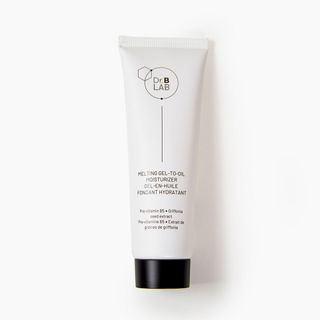
Dr. Brandt MELTING GEL-TO-OIL MOISTURIZER
Works for
2 of 2 advertised claims delivered
MoisturizingCeramide 1, Oligopeptides + 3 moreStrong evidence
“MELTING GEL-TO-OIL MOISTURIZER”
This product can help improve hydration of the skin with the two types of ingredients.
The first type is called “humectants”:
these ingredients help attract water.
When humectants are on the surface of the skin, they “pull in” the moisture from the outside environment, or from
within deeper layers of the skin. The following ingredients in this product do the job:
hyaluronic acid, lactic acid.
This product also contains ingredients called “occlusives”. They help reduce the speed with which our skin loses moisture to the outside environment. These ingredients also help soften the upper layer of the skin, so it feels less tight and nicer to the touch. The following ingredients in this product do the job: ceramide 1.
The following ingredients in this product are especially good for supporting the skin barrier and helping with the hydration level: ceramide 1, oligopeptides
Anti-agingRetinol, Glycolic acid + 4 moreStrong evidence
“Dr. Brandt Skincare provides the best anti aging line of skincare products for flawless and younger looking skin.”
This product can help reduce and prevent fine lines and wrinkles, improve skin elasticity and firmness because it contains retinol, glycolic acid.
These ingredients in the product can also be helpful, even though there is less evidence for their effectiveness: lactic acid, oligopeptides.
Keep in mind that it typically takes at least 6 weeks to notice any results because the changes that are needed to improve fine lines and elasticity happen in the deeper layers of the skin. No topical anti-aging product can “erase” wrinkles or fully reverse signs of aging.
Evens skin toneNot advertised by the brand · Retinol, Glycolic acid + 3 moreStrong evidence
This product can help reduce hypepigmentation and even out the skin tone because it contains the following effective ingredients: retinol.
In addition, this product contains glycolic acid, lactic acid, salicylic acid. This ingredient (ingredients) might help reduce hyperpigmentation, but the effect, if any, is likely to be small.
Keep in mind that you would need to apply any topical skincare targetted at hypigmentation consistently for a couple of months to get a result. No topical skincare product can help get rid of hyperpigmentation (including post-acne marks and age spots) instantly.
Anti-oxidationNot advertised by the brand · RetinolStrong evidence
This product contains antioxidants (retinol) that can help neutralize free radicals in skin. By doing so, they can lessen the damage the skin gets from the UV light (sun).
ExfoliationNot advertised by the brand · Salicylic acid, Retinol + 2 moreStrong evidence
This product can help exfoliate the skin. In other words, it helps break down the bonds between dead cells on the surface of the skin and speed up the skin turnover. Skin often appears softer and brighter after exfoliation, but overdoing it can result in disrupted skin barrier. The following ingredient is doing the exfoliating job in this product: glycolic acid, lactic acid, retinol, salicylic acid.
Anti-blemishNot advertised by the brand · Retinol, Salicylic acid + 2 moreStrong evidence
This product can help reduce breakouts and clogged pores because it contains the following ingredient: retinol, salicylic acid. These ingredients is used for treating acne and can have a noticeable effect.
The following ingredient (ingredients) in this product might be helpful, but there is no evidence to confirm that it actually works: glycolic acid
Can it cause trouble?
Irritancy3 strong irritants: Glycolic acid, Retinol + 1 more — patch-test recommendedHigh risk
ComedogenicClean of flagged comedogenic ingredientsNone flagged

User reviews
Be the first — your take helps the next person decide.
Ingredients
Filter by role to see what each ingredient is doing.
Glycolic acid~23–35%
- Irritation risk
- High
An alpha-hydroxy acid (AHA) that helps to remove the dead skin cells on the surface of the skin reveling a more even, smoother complexation. It is also able to stimulate collagen production with long-term use. Could help to reduce pore congestion. It can be irritating to the skin. Apply sunscreen daily if using products with glycolic acid
More about Glycolic acidLactic acid~8.3–12.5%
- Irritation risk
- Medium
An exfoliating and moisturizing alpha-hydroxy acid (AHA). Typically causes less irritation than other AHAs, for example, glycolic acid. At high concentrations (about 15%), lactic acid can help reduce lines and wrinkles. Recent studies show that lactic acid can support the "good" bacteria living on skin's surface (healthy skin microbiome)
More about Lactic acidHyaluronic acid~5–7.5%
- Irritation risk
- Low
One of the best moisturizing ingredients. Attracts water into the upper layer of the skin. Naturally present in skin. Typically has large molecule size unless advertised otherwise on the product label. Helps support skin's barrier function and may help to reduce inflammation
More about Hyaluronic acidCeramide 1~3.9–5.8%
- Irritation risk
- Low
A type of lipid similar to ceramides naturally present in skin. Helps to soften the upper layer of the skin and supports the skin barrier function to keep it hydrated. Can help to prevent inflammation in skin
More about Ceramide 1Oligopeptides~3–4.5%
Retinol~1.9–2.9%
- Irritation risk
- High
Two steps removed from the active form of vitamin A - retinoic acid. Once converted to the retinoic acid in the skin, retinol is proven to be effective against all signs of aging. It improves skin cell turnover, helps fight blemishes and clogged pores, can regulate excess oil production and even skin tone. It can, however, be quite irritating
More about RetinolSalicylic acid~0.9–1.35%
- Irritation risk
- High
Used for skin exfoliation. It has an anti-inflammatory and anti-bacterial effect, helps to unclog pores, prevent blemishes and speed up healing of the existing ones. Sometimes referred to as a BHA (beta-hydroxy acid)
More about Salicylic acidMelaleuca alternifolia leaf oil~0.85–1.3%
- Irritation risk
- High
An essential oil that can be irritating. Has some anti-bacterial properties
More about Melaleuca alternifolia leaf oilUnspecified form of vitamin c~0.85–1.25%
- Irritation risk
- Low
Niacinamide~0.4–0.95%
- Irritation risk
- Low
Is proven to be effective in reducing blemishes, evening out skin tone and helping to improve lines and wrinkles. It helps the skin to repair sun damage, calm down inflammation and keep maintain good levels of moisture. The concentration of about 2% is effective for supporting the skin barrier and evening out the skin tone. Concentration of 4-6% is better for helping with acne and balancing the sebum production
More about NiacinamideIngredient list view
Glycolic acid, Lactic acid, Hyaluronic acid, Ceramide 1, Oligopeptides, Retinol, Salicylic acid, Melaleuca alternifolia leaf oil, Unspecified form of vitamin c, Niacinamide
Compare prices
Retailers ranked by price — lowest first.
Affiliate links · prices updated regularly · As an Amazon Associate, WIMJ earns from qualifying purchases.
Worth comparing, line by line.
Match % combines shared ingredients, the first five ingredients, shared actives and hero ingredients, irritancy (lower counts in the alternative's favour), texture and body area. Only products in the same routine step are compared.
| Dr. BrandtMELTING GEL-TO-OIL MOISTURIZERYOUR PRODUCT | MedicubeSuper Cica Cream | FilorgaTime-Filler Mat Correction Wrinkle Cream [Pores + Shine] | pH formulaMD AGE Active Recovery | |
|---|---|---|---|---|
| Match | — | 64% | 64% | 59% |
| Price | $59.95 | — | $62.29+$2.34 | — |
| Shared key ingredients | — | 5 of 8 | 5 of 8 | 3 of 8 |
| Key difference | — | Azelaic Acid | Mandelic Acid | Panthenol |
| Irritancy | High | Medium | Medium | Medium |
| Drying alcohol | — | — | — | — |
| View product | Shop | Shop | Shop |


Product summary
"Dr. Brandt - MELTING GEL-TO-OIL MOISTURIZER" has a good moisturizing formula. This moisturizer uses a good combo of humectants and emollients. These both types of ingredients are essentials for improving the skin hydration and keeping the skin barrier healthy. Hyaluronic acid and lactic acid in this product (humectants) attract water molecules to the upper layer of the skin (the water comes from the outside air or from the deeper layers of the skin if the air is dry). Ceramide 1 in this product help decrease the water evoporation from the skin, so that it stays hydrated for longer. These ingredients also soften the skin and take away the feeling of tightness and dryness.
Ingredient callouts
- Exfoliating acids in a high total concentration (lactic acid 23.00% - 34.00%). This is a strong peel. It removes the top layer of the dead skin cells, revealing a "fresher" skin. It can also have an anti-aging effect and stimulate collagen production in a long-run. But we recommend to use this product with caution to avoid over-exfoliation (no more than 1-2x a week). Over-exfoliation can seriously damage your skin barrier and lead to sensitivity and even trigger pigmentation issues.
- This moisturizer contains an effective form of Retinoids (vitamin A): retinol 3.60% - 5.50%. Retinoids are potent multitasking actives. They work to improve and prevent early signs of aging, reduce hyperpigmentation (age spots and post-acne marks), and prevent inflamed blemishes and clogged pores. The downside of Retinoids is that they can be irritating. If you are not already using a Retinoid in your routine, it is best to start slowly and apply the Retinoid product only a few times per week. If your skin tolerates it well, you can gradually increase the frequency to daily. Because of the irritation risk of Retinoids, we recommend to have another, retinoid-free moisturizer in your routine to use on the alternate days or when your skin feels dry.
- Another benefit is that this moisturizer contain ceramides (ceramide 1 4.70% - 7.10%). Ceramides are an important part of our natural skin barrier. The Ceramides used in skincare are synthetic or come from plants. They help soften the skin and can help "fill the gaps" in the skin barrier, keeping the skin hydrated and resilient for longer.
- Salicylic acid (0.85% - 1.30%) in this product will have an exfoliating effect and help smooth the skin. We, however, do not recommend using a moisturizer with Salicylic Acid daily to avoid over-exfoliating.
Irritation risk
There are some common irritants in this product, including ingredients that do not have benefits for the skin. We assess the overall irritancy of this moisturizer to be high. For a detailed overview of all potential irritants: click here
You can see the detailed formula review with the breakdown of all actives in the product and the full ingredient list with estimated concentrations in the tables below.
Price
The product retails from 49.00$ up to 1569000.00$ in the United States.
For a detailed price comparison: click here.
Sources cited in this review
Every concentration estimate and effectiveness label is anchored to one of these 17 studies and safety reviews.
- 1
- 2Glycolic acid peel therapy – a current reviewncbi.nlm.nih.gov
- 3
- 4Epidermal and dermal effects of topical lactic acidncbi.nlm.nih.gov
- 5Dual Effects of Alpha-Hydroxy Acids on the Skinpdfs.semanticscholar.org
- 6Efficacy of a New Topical Nano-hyaluronic Acid in Humansncbi.nlm.nih.gov

Affiliate links · As an Amazon Associate, WIMJ earns from qualifying purchases.