Dermbasics Chemical Free Antioxidant Sunscreen
Works for
MoisturizingPantothenic acid/yeast polypeptide, Dimethicone + 13 moreWorks well
“This antioxidant, moisturizing sunscreen has been specially formulated with micronized Zinc Oxide and an advanced blend of antioxidants to provide the highest level of broad-spectrum UVA & UVB protection in a hydrating base.”
This product can help improve hydration of the skin with the two types of ingredients.
The first type is called “humectants”:
these ingredients help attract water.
When humectants are on the surface of the skin, they “pull in” the moisture from the outside environment, or from
within deeper layers of the skin. The following ingredients in this product do the job:
glycerin, butylene glycol.
This product also contains ingredients called “occlusives”. They help reduce the speed with which our skin loses moisture to the outside environment. These ingredients also help soften the upper layer of the skin, so it feels less tight and nicer to the touch. The following ingredients in this product do the job: cera alba, dimethicone.
The following ingredients in this product are especially good for supporting the skin barrier and helping with the hydration level: pantothenic acid/yeast polypeptide
Anti-agingSide benefit · Pantothenic acid/yeast polypeptide, Ascorbic acidMay help
This product contains pantothenic acid/yeast polypeptide. There is some human evidence that this ingredient helps reduce and prevent fine lines and wrinkles and improve skin elasticity and firmness, though it is smaller or less consistent than the evidence for the best anti-aging ingredients.
Can it cause trouble?
Irritancy1 strong irritant: MethylisothiazolinoneMedium risk
ComedogenicClean of flagged comedogenic ingredientsNone flagged
User reviews
Be the first — your take helps the next person decide.
Ingredients
Filter by role to see what each ingredient is doing.
Zinc oxide14.7%
- Irritation risk
- Low
A broad spectrum sunblock (protects from both UVA and UVB rays). Is suitable for most sensitive skins. In small concentrations, can be used as a colorant
More about Zinc oxideTitanium dioxide3.5%
- Irritation risk
- Low
Works as a UV filter when used in high concentrations. It is photostable and is effective mostly against the UVB light, with some protection in the UVA range. In small concentrations, used for its ability to improve the color of cosmetic products. Is usually well tolerated by the skin
More about Titanium dioxideWater~45–55%
Cetyl dimethicone~4.5–5.5%
- Irritation risk
- Low
A type of silicone. Helps soften the upper layer of the skin and creates a nice, light product texture
More about Cetyl dimethiconeDimethicone~5–6.2%
- Irritation risk
- Low
A silicone that helps to reduce water loss from the surface of the skin. Can temporarily "fill in" lines and wrinkles, absorb oil, and create a nice product finish
More about DimethiconeButyloctyl salicylate~3.7–4.5%
- Irritation risk
- Medium
A synthetic ester of salicylic acid that is used to help disperse pigments and boost effectiveness of sunscreen ingredients. It is able to absorb UV light (working as an organic, or chemical filter), but is not approved as a sunscreen ingredient on its own
More about Butyloctyl salicylateTrimethylsiloxysilicate~3.1–3.8%
- Irritation risk
- Low
A type of silicone that helps create a nice product consistency and support the delivery of other ingredients
More about TrimethylsiloxysilicateStyrene/acrylates copolymer~2.4–3%
- Irritation risk
- Low
Used to create an even product consistency. Can help boost efficiency of sunscreen filters
More about Styrene/acrylates copolymerDimethicone peg-8 laurate~2.2–2.7%
- Irritation risk
- Low
Trisiloxane~1.8–2.2%
Polysorbate 60~1.5–1.9%
Hydrated silica~1.5–1.9%
Avena sativa meal extract~1.1–1.3%
- Irritation risk
- Low
A type of oatmeal extract. Helps restore skin barrier and has antioxidant properties
More about Avena sativa meal extractAscorbic acid~1–1.2%
- Irritation risk
- High
The most well-researched antioxidant that works in skin. Helps neutralize free radicals supporting collagen production, helping to even out the skin tone and preventing early signs of aging
More about Ascorbic acidTocopheryl acetate~1–1.2%
- Irritation risk
- Medium
A more stable but less bio-available form of vitamin E compared to Tocopherol. Might help moisturize and protect the skin from free radicals, but mostly used in low concentrations to stabilize other ingredients.
More about Tocopheryl acetateBisabolol~0.9–1.1%
- Irritation risk
- Low
An active component of chamomile plant that historically has been used to calm down irritated skin. A recent study shows that bisabolol indeed can have some anti-inflammatory effect on skin, even though conclusive data is lacking. Bisabolol has a sweet floral scent and can be added to products for its aromatic properties
More about BisabololPantothenic acid/yeast polypeptide~0.9–1.1%
Isohexadecane~1–1.2%
- Irritation risk
- Low
Improves the texture of the product and helps soften the skin. Helps oil and water mix together and can be used as a cleansing agent
More about IsohexadecaneButylene glycol~0.75–1.15%
- Irritation risk
- Low
Used to create a nice product texture and help delivery of other ingredients. Might be somewhat helpful in attracting water to the upper layer of the skin
More about Butylene glycolGlyceryl stearate~0.8–1.2%
- Irritation risk
- Low
An emollient that softens the skin and forms a protective layer on its surface. Helps water and oil mix together
More about Glyceryl stearatePeg-100 stearate~0.75–1.15%
- Irritation risk
- Low
Helps oil and water mix togehter and creates a nice product texture
More about Peg-100 stearatePolyhydroxystearic acid~0.7–1.05%
- Irritation risk
- Medium
Used to create a thicker product consistency and stabilize the formulation
More about Polyhydroxystearic acidPeg-8~0.65–1%
- Irritation risk
- Medium
Used to create a nice product consistency
More about Peg-8Stearic acid~0.75–1.1%
- Irritation risk
- Low
Helps oil and water mix together and works as an emollient
More about Stearic acidCera alba~0.7–1.1%
- Irritation risk
- Medium
Forms a protective barrier that holds water and keeps dry skin hydrated. Keeps an emulsion from separating into its oil and liquid components, and increases the thickness of a product. Can be an allergen
More about Cera albaBenzyl alcohol~0.55–0.85%
- Irritation risk
- High
A preservative. Can be used to mask unpleasant smell. Can be irritating
More about Benzyl alcoholXanthan gum~0.6–0.9%
- Irritation risk
- Low
Used to create a thicker product consistency
More about Xanthan gumPolymethyl methacrylate~0.55–0.8%
- Irritation risk
- Low
Is used to enhance product texture and can help to optically mask skin imperfections
More about Polymethyl methacrylatePotassium sorbate~0.3–0.6%
Hydroxyethyl acrylate/sodium acryloyldimethyl taurate copolymer~0.5–0.75%
- Irritation risk
- Medium
A gelling agent that thickens the product consistency and leaves the skin with a velvety finish
More about Hydroxyethyl acrylate/sodium acryloyldimethyl taurate copolymerGlycerin~0.55–0.8%
- Irritation risk
- Low
One of the best moisturizing ingredients. Naturally present in skin. It attracts water to the upper layer of the skin working as a humectant
More about GlycerinBht~0.45–0.7%
Methylisothiazolinone~0.00075–0.0015%
Ethylhexylglycerin~0.4–0.6%
Disodium edta~0.35–0.6%
Dipotassium glycyrrhizate~0.3–0.6%
- Irritation risk
- Low
A salt derived from licorice. Works as an emollient to soften the upper layer of the skin and can help calm down inflammation. Might be helpful for skin lightening
More about Dipotassium glycyrrhizatePolyaminopropyl biguanide~0.15–0.3%
- Irritation risk
- High
A preservative. There seem to be an increasing number of cases of allergic reactions to it
More about Polyaminopropyl biguanideAlumina~0.35–0.6%
- Irritation risk
- Low
The same compound that is used safely in dental implants and bone cements. In cosmetics, it is used to improve the consistency of products
More about AluminaMethicone~0.25–0.45%
- Irritation risk
- Low
A type of silicone that helps soften the upper layer of the skin and reduces the water loss from the skin surface
More about MethiconeTriethoxycaprylylsilane~0.2–0.35%
- Irritation risk
- Low
A type of silicone that helps oil and water mix well together. Helps to disperse other ingredients, e.g. pigments, evenly in a formulation
More about TriethoxycaprylylsilaneArachidyl alcohol~0.2–0.35%
- Irritation risk
- Low
Used to soften the upper layer of the skin and create a thicker product consistency
More about Arachidyl alcoholBehenyl alcohol~0.15–0.3%
- Irritation risk
- Low
Non-drying alcohol that helps water and oil mix together. Also serves as an emollient
More about Behenyl alcoholArachidyl glucoside~0.1–0.25%
Ingredient list view
Zinc oxide, Titanium dioxide, Water, Cetyl dimethicone, Dimethicone, Butyloctyl salicylate, Trimethylsiloxysilicate, Styrene/acrylates copolymer, Dimethicone peg-8 laurate, Trisiloxane, Polysorbate 60, Hydrated silica, Avena sativa meal extract, Ascorbic acid, Tocopheryl acetate, Bisabolol, Pantothenic acid/yeast polypeptide, Isohexadecane, Butylene glycol, Glyceryl stearate, Peg-100 stearate, Polyhydroxystearic acid, Peg-8, Stearic acid, Cera alba, Benzyl alcohol, Xanthan gum, Polymethyl methacrylate, Potassium sorbate, Hydroxyethyl acrylate/sodium acryloyldimethyl taurate copolymer, Glycerin, Bht, Methylisothiazolinone, Ethylhexylglycerin, Disodium edta, Dipotassium glycyrrhizate, Polyaminopropyl biguanide, Alumina, Methicone, Triethoxycaprylylsilane, Arachidyl alcohol, Behenyl alcohol, Arachidyl glucoside
Compare prices
Retailers ranked by price — lowest first.
Worth comparing, line by line.
Match % combines shared ingredients, the first five ingredients, shared actives and hero ingredients, irritancy (lower counts in the alternative's favour), texture and body area. Only products in the same routine step are compared.
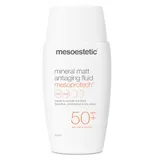
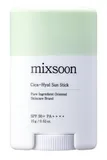
| DermbasicsChemical Free Antioxidant SunscreenYOUR PRODUCT | MesoesteticMesoprotech Mineral Matt Antiaging Fluid | 6.5 gSPF Radiance Powder Medium/Tan | mixsoonCica Hyal Sunstick | |
|---|---|---|---|---|
| Match | — | 29% | 29% | 23% |
| Price | — | $38.65 | $35.00 | $14.89 |
| Shared key ingredients | — | 4 of 13 | 5 of 13 | 3 of 13 |
| Key difference | — | Sunflower Seed Oil | Niacinamide | Madecassoside |
| Irritancy | Medium | Medium | Low | Medium |
| Drying alcohol | — | — | — | — |
| View product | Shop | Shop | Shop |


More alternatives: CLIO Air Glass Sun CushionROVECTIN Aqua Soothing UV Protector
Product summary
"Dermbasics - Chemical Free Antioxidant Sunscreen" is effective for: Moisturizing
This product could be helpful for: Anti-aging, but its actives are not the most effective or are not well-studied.
Ingredient callouts
- This product also contains Vitamin C (Ascorbic Acid). It can be an effective active for anti-aging and evening out the skin tone, but in this product it is used for stabilizing other ingredients in the formulation. In this concentration (1.00% - 1.20%) it cannot have a noticeable benefit for the skin.
- Peptides (pantothenic acid/yeast polypeptide 0.90% - 1.10%). Peptides are a very big group of ingredients. They all consist of a different combination of aminoacids. Our skin produces Peptides naturally. Some of them work as natural antibiotics, promote wound-healing and production of collagen. The scientists are still studying how effective the topical application of Peptides is, but it is very likely that theynare helpful. Peptides might be able to support skin barrier restoration and even have an anti-aging benefit. At the very least, they certainly help attract water to the skin and support the hydration in this way.
- Humectants (glycerin 0.55% - 0.80%). These ingredients help attract water to the upper layer of the skin and improve the skin hydration.
Sources cited in this review
Every concentration estimate and effectiveness label is anchored to one of these 17 studies and safety reviews.
- 1A review of inorganic UV filters zinc oxide and titanium dioxideonlinelibrary.wiley.com
- 2
- 3
- 4
- 5
- 6

Affiliate links · As an Amazon Associate, WIMJ earns from qualifying purchases.