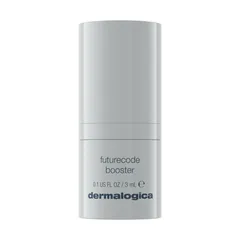
Works for:
based on ingredients and %- Anti-aging
- Moisturizing
- Evens skin tone
- Anti-oxidation
Can it cause trouble?
- Irritation risk: high
- Comedogenic risk ingredients: 2
Key actives
Anti-aging
What does the product description say?
defend against visible skin aging
Source: Dermalogica
This product can help reduce and prevent fine lines and wrinkles, improve skin elasticity and firmness because it contains niacinamide.
These ingredients in the product can also be helpful, even though there is less evidence for their effectiveness: acetyl zingerone.
Keep in mind that it typically takes at least 6 weeks to notice any results because the changes that are needed to improve fine lines and elasticity happen in the deeper layers of the skin. No topical anti-aging product can “erase” wrinkles or fully reverse signs of aging.
Is proven to be effective in reducing blemishes, evening out skin tone and helping to improve lines and wrinkles. It helps the skin to repair sun damage, calm down inflammation and keep maintain good levels of moisture. The concentration of about 2% is effective for supporting the skin barrier and evening out the skin tone. Concentration of 4-6% is better for helping with acne and balancing the sebum production
An active compound sourced from ginger root. It can help neutralize free radicals in skin. It might be able to help reduce fine lines and wrinkles and improve the skin tone. In small concentrations, used as a chelating agent and helps preserve stability of product formulations.
Pure form of vitamin E. Can help moisturise and protect the skin from free radicals. Often used to help stabilise other ingredients or the formula itself
A great moisturising ingredient that softens the skin and reduces water loss from its upper layer. It also can be helpful in protecting skin from free radicals
Anti-blemish
This product can help reduce breakouts and clogged pores because it contains the following ingredient: niacinamide. This ingredient is used for treating acne and can have a noticeable effect.
Is proven to be effective in reducing blemishes, evening out skin tone and helping to improve lines and wrinkles. It helps the skin to repair sun damage, calm down inflammation and keep maintain good levels of moisture. The concentration of about 2% is effective for supporting the skin barrier and evening out the skin tone. Concentration of 4-6% is better for helping with acne and balancing the sebum production
Can be helpful in reducing inflammation in skin, including inflamed acne. It can be irritating
Helps calm down inflammation in skin and can help reduce itching. Helps to repair the skin barrier and keep skin hydrated
Anti-oxidation
This product contains antioxidants (acetyl zingerone) that can help neutralize free radicals in skin. By doing so, they can lessen the damage the skin gets from the UV light (sun).
An active compound sourced from ginger root. It can help neutralize free radicals in skin. It might be able to help reduce fine lines and wrinkles and improve the skin tone. In small concentrations, used as a chelating agent and helps preserve stability of product formulations.
A red algae extract that can help attract water to the upper layer of the skin and might have some antioxidant properties
A plant extract that can contain an irritating essential oil. Might have some anti-oxidant effect, but evidence is lacking
A plant oil that helps soften the upper layer of the skin. It might have anti-oxidant properties. Might help reduce inflammation in skin and help against blemishes
Helps attract water to the upper layer of the skin. Might have some anti-aging, anti-oxidant, and skin lightening properties, but solid evidence is missing
Pure form of vitamin E. Can help moisturise and protect the skin from free radicals. Often used to help stabilise other ingredients or the formula itself
Can be helpful in reducing inflammation in skin, including inflamed acne. It can be irritating
An active component of chamomile plant that historically has been used to calm down irritated skin. A recent study shows that bisabolol indeed can have some anti-inflammatory effect on skin, even though conclusive data is lacking. Bisabolol has a sweet floral scent and can be added to products for its aromatic properties
A great moisturising ingredient that softens the skin and reduces water loss from its upper layer. It also can be helpful in protecting skin from free radicals
Evens skin tone
What does the product description say?
visible discoloration
Source: Dermalogica
This product can help reduce hypepigmentation and even out the skin tone because it contains the following effective ingredients: niacinamide
Keep in mind that you would need to apply any topical skincare targetted at hypigmentation consistently for a couple of months to get a result. No topical skincare product can help get rid of hyperpigmentation (including post-acne marks and age spots) instantly.
Is proven to be effective in reducing blemishes, evening out skin tone and helping to improve lines and wrinkles. It helps the skin to repair sun damage, calm down inflammation and keep maintain good levels of moisture. The concentration of about 2% is effective for supporting the skin barrier and evening out the skin tone. Concentration of 4-6% is better for helping with acne and balancing the sebum production
Helps attract water to the upper layer of the skin. Might have some anti-aging, anti-oxidant, and skin lightening properties, but solid evidence is missing
A salt derived from licorice. Works as an emollient to soften the upper layer of the skin and can help calm down inflammation. Might be helpful for skin lightening
Moisturizing
What does the product description say?
Hyaluronic Acid deliver deep hydration and lasting protection against moisture loss
Source: Dermalogica
This product can help improve hydration of the skin with the two types of ingredients.
The first type is called “humectants”:
these ingredients help attract water.
When humectants are on the surface of the skin, they “pull in” the moisture from the outside environment, or from
within deeper layers of the skin. The following ingredients in this product do the job:
diglycerin, glycerin.
This product also contains ingredients called “occlusives”. They help reduce the speed with which our skin loses moisture to the outside environment. These ingredients also help soften the upper layer of the skin, so it feels less tight and nicer to the touch. The following ingredients in this product do the job: caprylic/capric triglyceride, dimethicone.
The following ingredients in this product are especially good for supporting the skin barrier and helping with the hydration level: niacinamide
Helps attract water to the upper layer of the skin
A red algae extract that can help attract water to the upper layer of the skin and might have some antioxidant properties
A plant oil that helps soften the upper layer of the skin. It might have anti-oxidant properties. Might help reduce inflammation in skin and help against blemishes
One of the best moisturizing ingredients. Naturally present in skin. It attracts water to the upper layer of the skin working as a humectant
A silicone that helps to reduce water loss from the surface of the skin. Can temporarily "fill in" lines and wrinkles, absorb oil, and create a nice product finish
A good mix of fatty acids that forms a protective layer on the skin. Improves the shelf life of products. Derived from coconut and glycerin
Is proven to be effective in reducing blemishes, evening out skin tone and helping to improve lines and wrinkles. It helps the skin to repair sun damage, calm down inflammation and keep maintain good levels of moisture. The concentration of about 2% is effective for supporting the skin barrier and evening out the skin tone. Concentration of 4-6% is better for helping with acne and balancing the sebum production
Helps soften the upper layer of the skin and can help support the skin barrier
Helps attract water to the upper layer of the skin
One of the best moisturizing ingredients. Attracts water into the upper layer of the skin
Helps soften the upper layer of the skin
A non-drying alcohol. Works as an emollient. Helps water and oil mix together and creates a nice product texture
Helps soften the upper layer of the skin
Helps attract water to the upper layer of the skin. Might have some anti-aging, anti-oxidant, and skin lightening properties, but solid evidence is missing
A non-drying alcohol that works to soften the skin and stabilize product formulations helping oil and water mix together
An emollient that softens the skin and forms a protective layer on its surface. Helps water and oil mix together
Used to preserve products, dissolve other ingredients and create a nice product texture
A silicone that forms a light film on the skin surface helping to bind water and temporarily absorb oils creating a matt and powdery feel
Helps preserve products and creates a nice product texture
A great moisturising ingredient that softens the skin and reduces water loss from its upper layer. It also can be helpful in protecting skin from free radicals
A salt derived from licorice. Works as an emollient to soften the upper layer of the skin and can help calm down inflammation. Might be helpful for skin lightening
Helps calm down inflammation in skin and can help reduce itching. Helps to repair the skin barrier and keep skin hydrated
Traditionally used to treat sunburns, dermatitis and inflammation, but evidence for its effectiveness is lacking. The extract can contain humectants that help attract water into the skin
Pure form of vitamin E. Can help moisturise and protect the skin from free radicals. Often used to help stabilise other ingredients or the formula itself
How honest is this product?
| Promise | Can it deliver? |
|---|---|
| Anti-aging | |
| Moisturizing | |
| Evens skin tone |
Total Promises Fulfilled score: 100/100.
Potential irritants
Comedogenic ingredients
User reviews (0)
Averages from community submissions.
No reviews yet for this product.
Be the first to share your experience!
Tried this product?
Help capture what the ingredient list can't—texture, finish, pilling, scent, and more. Answer what you can, skip the rest.
Takes ~30 seconds.
Reviews are shown in aggregate. No personal details.
| Product | Similarity | Price | Irritancy |
|---|---|---|---|
 Dermalogica futurecode booster - travel | Current | - | |
 The Purest Solutions Youth Radiant Renewal Retinol Serum | 91% | ≈ $6.63 | |
 Formula 10.0.6 In The Deep Vitamin A Nourishing Retinol Serum | 89% | - | |
 Helia-D Cell Concept Hydrating Serum For Normal/Combination Skin | 89% | - | |
 Face Reality Skincare glowTone™ Corrective Serum | 89% | $64.00 | |
 Simple Booster Serum 3% Hyaluronic Acid & Vitamin B | 89% | ≈ $6.68 |
Key Actives
Is proven to be effective in reducing blemishes, evening out skin tone and helping to improve lines and wrinkles. It helps the skin to repair sun damage, calm down inflammation and keep maintain good levels of moisture. The concentration of about 2% is effective for supporting the skin barrier and evening out the skin tone. Concentration of 4-6% is better for helping with acne and balancing the sebum production
Helps calm down inflammation in skin and can help reduce itching. Helps to repair the skin barrier and keep skin hydrated
Pure form of vitamin E. Can help moisturise and protect the skin from free radicals. Often used to help stabilise other ingredients or the formula itself
A great moisturising ingredient that softens the skin and reduces water loss from its upper layer. It also can be helpful in protecting skin from free radicals
A plant oil that helps soften the upper layer of the skin. It might have anti-oxidant properties. Might help reduce inflammation in skin and help against blemishes
Can be helpful in reducing inflammation in skin, including inflamed acne. It can be irritating
An active component of chamomile plant that historically has been used to calm down irritated skin. A recent study shows that bisabolol indeed can have some anti-inflammatory effect on skin, even though conclusive data is lacking. Bisabolol has a sweet floral scent and can be added to products for its aromatic properties
A salt derived from licorice. Works as an emollient to soften the upper layer of the skin and can help calm down inflammation. Might be helpful for skin lightening
A silicone that helps to reduce water loss from the surface of the skin. Can temporarily "fill in" lines and wrinkles, absorb oil, and create a nice product finish
A red algae extract that can help attract water to the upper layer of the skin and might have some antioxidant properties
An active compound sourced from ginger root. It can help neutralize free radicals in skin. It might be able to help reduce fine lines and wrinkles and improve the skin tone. In small concentrations, used as a chelating agent and helps preserve stability of product formulations.
A silicone that forms a light film on the skin surface helping to bind water and temporarily absorb oils creating a matt and powdery feel
A good mix of fatty acids that forms a protective layer on the skin. Improves the shelf life of products. Derived from coconut and glycerin
One of the best moisturizing ingredients. Naturally present in skin. It attracts water to the upper layer of the skin working as a humectant
Helps attract water to the upper layer of the skin
Helps soften the upper layer of the skin
Helps soften the upper layer of the skin and can help support the skin barrier
Helps attract water to the upper layer of the skin
Works as a UV filter when used in high concentrations. It is photostable and is effective mostly against the UVB light, with some protection in the UVA range. In small concentrations, used for its ability to improve the color of cosmetic products. Is usually well tolerated by the skin
One of the best moisturizing ingredients. Attracts water into the upper layer of the skin
Potential irritants
Can be helpful in reducing inflammation in skin, including inflamed acne. It can be irritating
An essential oil with a lemon-like smell that is extracted from a fruit grown in Asia. Used as a fragrance
A plant extract that can contain an irritating essential oil. Might have some anti-oxidant effect, but evidence is lacking
A common frangrance that can easily irritate skin, especially if exposed to air, light or heat
A good mix of fatty acids that forms a protective layer on the skin. Improves the shelf life of products. Derived from coconut and glycerin
Traditionally used to treat sunburns, dermatitis and inflammation, but evidence for its effectiveness is lacking. The extract can contain humectants that help attract water into the skin
A preservative that comes from radishes fermented by a bacteria. New research suggests that the preservation properties in the ingredient come from an ammonium salt that is not present naturally in radish root but used in its cultivation. Is problematic because the exact amount of the preservative agents is difficult to determine
A plant oil that helps soften the upper layer of the skin. It might have anti-oxidant properties. Might help reduce inflammation in skin and help against blemishes
Used to preserve products, dissolve other ingredients and create a nice product texture
Help oil and water mix together
An active compound sourced from ginger root. It can help neutralize free radicals in skin. It might be able to help reduce fine lines and wrinkles and improve the skin tone. In small concentrations, used as a chelating agent and helps preserve stability of product formulations.
Helps preserve products and creates a nice product texture
Maintains the texture of skincare products. Allows the product to spread evenly. Helps oil and water mix together
Can work as an exfoliant but is typically used to adjust the product pH
Helps to control the skin's pH level. Maintains the skin's natural film of amino-lactic acids and oils. Helps to preserve products
Comedogenic ingredients
A great moisturising ingredient that softens the skin and reduces water loss from its upper layer. It also can be helpful in protecting skin from free radicals
A non-drying alcohol. Works as an emollient. Helps water and oil mix together and creates a nice product texture
All ingredients
A good mix of fatty acids that forms a protective layer on the skin. Improves the shelf life of products. Derived from coconut and glycerin
A silicone that helps to reduce water loss from the surface of the skin. Can temporarily "fill in" lines and wrinkles, absorb oil, and create a nice product finish
One of the best moisturizing ingredients. Naturally present in skin. It attracts water to the upper layer of the skin working as a humectant
Acts as a solvent for other ingredients. Speeds up the absorption of other ingredients into the skin
Is proven to be effective in reducing blemishes, evening out skin tone and helping to improve lines and wrinkles. It helps the skin to repair sun damage, calm down inflammation and keep maintain good levels of moisture. The concentration of about 2% is effective for supporting the skin barrier and evening out the skin tone. Concentration of 4-6% is better for helping with acne and balancing the sebum production
Used to stabilize the product formulation and can help absorb oil
Helps attract water to the upper layer of the skin. Might have some anti-aging, anti-oxidant, and skin lightening properties, but solid evidence is missing
Used to dissolve other ingredients in a product and can enhance their ability to penetrate the skin
Helps to retain moisture by creating a protective barrier on the skin. Rich in fatty acids. Improves product texture and helps with the penetration of other ingredients.
A great moisturising ingredient that softens the skin and reduces water loss from its upper layer. It also can be helpful in protecting skin from free radicals
Traditionally used to treat sunburns, dermatitis and inflammation, but evidence for its effectiveness is lacking. The extract can contain humectants that help attract water into the skin
A preservative that comes from radishes fermented by a bacteria. New research suggests that the preservation properties in the ingredient come from an ammonium salt that is not present naturally in radish root but used in its cultivation. Is problematic because the exact amount of the preservative agents is difficult to determine
A plant oil that helps soften the upper layer of the skin. It might have anti-oxidant properties. Might help reduce inflammation in skin and help against blemishes
Can be helpful in reducing inflammation in skin, including inflamed acne. It can be irritating
A red algae extract that can help attract water to the upper layer of the skin and might have some antioxidant properties
Helps soften the upper layer of the skin and can help support the skin barrier
An essential oil with a lemon-like smell that is extracted from a fruit grown in Asia. Used as a fragrance
A plant extract that can contain an irritating essential oil. Might have some anti-oxidant effect, but evidence is lacking
Used to preserve products, dissolve other ingredients and create a nice product texture
Help oil and water mix together
An emollient that softens the skin and forms a protective layer on its surface. Helps water and oil mix together
A non-drying alcohol. Works as an emollient. Helps water and oil mix together and creates a nice product texture
An active compound sourced from ginger root. It can help neutralize free radicals in skin. It might be able to help reduce fine lines and wrinkles and improve the skin tone. In small concentrations, used as a chelating agent and helps preserve stability of product formulations.
A silicone that forms a light film on the skin surface helping to bind water and temporarily absorb oils creating a matt and powdery feel
Helps preserve products and creates a nice product texture
Helps calm down inflammation in skin and can help reduce itching. Helps to repair the skin barrier and keep skin hydrated
A non-drying alcohol that works to soften the skin and stabilize product formulations helping oil and water mix together
An active component of chamomile plant that historically has been used to calm down irritated skin. A recent study shows that bisabolol indeed can have some anti-inflammatory effect on skin, even though conclusive data is lacking. Bisabolol has a sweet floral scent and can be added to products for its aromatic properties
Maintains the texture of skincare products. Allows the product to spread evenly. Helps oil and water mix together
Works as a UV filter when used in high concentrations. It is photostable and is effective mostly against the UVB light, with some protection in the UVA range. In small concentrations, used for its ability to improve the color of cosmetic products. Is usually well tolerated by the skin
A salt derived from licorice. Works as an emollient to soften the upper layer of the skin and can help calm down inflammation. Might be helpful for skin lightening
Helps to create a nice product texture and spread the product more easily on the skin
Used to increase stability of product formulations
Pure form of vitamin E. Can help moisturise and protect the skin from free radicals. Often used to help stabilise other ingredients or the formula itself
One of the best moisturizing ingredients. Attracts water into the upper layer of the skin
Can work as an exfoliant but is typically used to adjust the product pH
Helps to control the skin's pH level. Maintains the skin's natural film of amino-lactic acids and oils. Helps to preserve products
A common frangrance that can easily irritate skin, especially if exposed to air, light or heat
Ingredient list view
Water, Caprylic/capric triglyceride, Dimethicone, Glycerin, Propanediol, Niacinamide, Propanediol dicaprylate/caprate, Maltodextrin, Hydrolyzed soy protein, Diglycerin, Dimethyl isosorbide, Hydrogenated lecithin, Acacia senegal gum extract, Crambe abyssinica seed oil, Oryza sativa bran extract, Butyrospermum parkii butter, Aloe barbadensis leaf extract, Leuconostoc/radish root ferment filtrate, Rosa canina seed oil, Citrus aurantium peel oil, Caesalpinia spinosa fruit extract, Helianthus annuus extract, Rosmarinus officinalis leaf extract, Kappaphycus alvarezii extract, Lavandula oil/extract, Helianthus annuus sprout extract, Eugenia caryophyllus oil, Litsea cubeba fruit oil, Zingiber officinale root extract, Pentylene glycol, Polysorbate 80, Candelilla/jojoba/rice bran polyglyceryl-3 esters, Glyceryl stearate, Glycolipids, Potassium cetyl phosphate, Cetearyl alcohol, Sodium stearoyl lactylate, Acetyl zingerone, Peg-40 hydrogenated castor oil, Polysorbate 20, Xanthan gum, Polysilicone-11, Caprylyl glycol, Saccharide isomerate, Allantoin, Cetyl alcohol, Bisabolol, Acrylates/c10-30 alkyl acrylate crosspolymer, Tetrahydroxypropyl ethylenediamine, Titanium dioxide, Dipotassium glycyrrhizate, Glyceryl polyacrylate, Octadecyl di-t-butyl-4-hydroxyhydrocinnamate, Pentaerythrityl tetra-di-t-butyl hydroxyhydrocinnamate, Ethylhexylglycerin, Tetrasodium glutamate diacetate, Triethyl citrate, Sodium benzoate, Teprenone, 1,2-hexanediol, Tocopherol, Sodium hyaluronate, 2,6-dimethyl-7-octen-2-ol, Citric acid, Sodium citrate, Cedryl acetate, Sodium hydroxide, Linalyl acetate, Eugenol, Linalool, Camphor, Limonene, Citral
- Dimethicone as a protective ingredient in topical medications
- Final Report on the Safety Assessment of Dimethicone Copolyol
- Glycerol and the skin: holistic approach to its origin and functions
- Niacinamide - mechanisms of action and its topical use in dermatology
- Gehring, W. (2004). Nicotinic acid/niacinamide and the skin. Journal of Cosmetic Dermatology, 3(2), 88–93. doi:10.1111/j.1473-2130.2004.00115.x
- Extracts from Glycine max (soybean) induce elastin synthesis and inhibit elastase activity
- Dermatological and cosmeceutical benefits of Glycine max (soybean) and its active components
- Safety Assessment of Soy Peptides as Used in Cosmetics
- Activity enhancement of ferulic acid with dimethyl isosorbride in cosmetic compositions
- Nutrient composition of rose (Rosa canina L.) seed and oils
- Characterization of Rosehip (Rosa canina L.) Seed and Seed Oil
- Bioactive ingredients of rose hips (Rosa canina L) with special reference to antioxidative and anti-inflammatory properties: in vitro studies
- Allergic contact dermatitis induced by rosemary leaf extract in a cleansing gel
- Safety Assessment of Rosmarinus officinalis (Rosemary)-Derived Ingredients as Used in Cosmetics
- Rosmarinus officinalis Extract Suppresses Propionibacterium acnes–Induced Inflammatory Responses
- Ethnopharmacological Properties and Medicinal Uses of Litsea cubeba
- Some phytochemical, pharmacological and toxicological properties of ginger (Zingiber officinale Roscoe): A review of recent research
- Randomized double-blind vehicle controlled study of the effects of topical acetyl zingerone on photoaging
- Amended Safety Assessment of PEGylated Oils as Used in Cosmetics
- Profile of wound healing process induced by allantoin
- α-(-)-Bisabolol Reduces Pro-Inflammatory Cytokine Production and Ameliorates Skin Inflammation
- Ameliorating effect of dipotassium glycyrrhizinate on an IL-4- and IL-13-induced atopic dermatitis-like skin-equivalent model
- Final report on the safety assessment of Glycyrrhetinic Acid, Potassium Glycyrrhetinate, Disodium Succinoyl Glycyrrhetinate, Glyceryl Glycyrrhetinate, Glycyrrhetinyl Stearate, Stearyl Glycyrrhetinate, Glycyrrhizic Acid, Ammonium Glycyrrhizate, Dipotassium Glycyrrhizate, Disodium Glycyrrhizate, Trisodium Glycyrrhizate, Methyl Glycyrrhizate, and Potassium Glycyrrhizinate.
- Safety Assessment of Pentaerythrityl Tetra-Di-t-Butyl Hydroxyhydrocinnamate as Used in Cosmetics
- Citric Acid, Inorganic Citrate Salts and Alkyl Citrate Esters As Used in Cosmetics
- The influence of alkane chain length on the skin irritation potential of 1,2-alkanediols
- Vitamin E in dermatology
- Vitamin E and Skin Health
- Hyaluronic acid: A key molecule in skin aging
- Hyaluronan (Hyaluronic Acid): a natural moisturizer for skin care