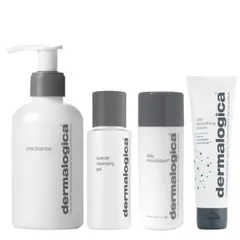
Works for:
based on ingredients and %- Cleansing
Doesn't work for:
based on ingredients and %- Exfoliation
Can it cause trouble?
- Irritation risk: high
- Comedogenic risk ingredients: 2
Key actives


Cleansing
What does the product description say?
Daily Cleansing Routine
Source: From product name
This product works by removing dirt and oil from the surface of the skin. It uses a combination of mild cleansing agents (capryloyl glycine, carbomer, cetearyl alcohol, cetyl alcohol, cocamidopropyl betaine, coco-betaine, disodium laureth sulfosuccinate, disodium lauryl sulfosuccinate, glyceryl stearate, hydrogenated coconut acid, hydrogenated lecithin, hydroxystearic acid, linoleic acid, peg-100 stearate, peg-40 sorbitan peroleate, polysorbate 60, ppg-5-ceteth-20, quillaja saponaria bark extract, sodium cocoyl isethionate, sodium lauroyl glutamate, sodium lauroyl sarcosinate, sodium lauryl sulfoacetate) and should be able to cleanse the skin gently. Still keep in mind that any cleansing can disrupt the skin barrier, and most people do not need to cleanse their skin more than once per day.
Even though this formulation is mild, the following cleansing agents could trigger an irritation or allergy for some people: cocamidopropyl betaine, coco-betaine
Helps oil and water mix together, preserve cosmetic products, and attract water to the upper layer of the skin
Helps create a thicker or gel-like product texture. It is not a surfactant but can be used in gentle cleansing formulations
A non-drying alcohol. Works as an emollient. Helps water and oil mix together and creates a nice product texture
A non-drying alcohol that works to soften the skin and stabilize product formulations helping oil and water mix together
Helps water and oil mix together. Used as a cleansing ingredient. Could be an allergen
Helps oil and water mix together and works as a cleansing agent. Can be allergenic
Used as a cleansing agent. Helps water and oil mix together
An emollient that softens the skin and forms a protective layer on its surface. Helps water and oil mix together
Helps to retain moisture by creating a protective barrier on the skin. Rich in fatty acids. Improves product texture and helps with the penetration of other ingredients.
An excellent emollient. Helps soften the skin, restore its barrier function, and can help to calm down inflammation. It can be helpful to prevent blemishes and clogged pores
Helps oil and water mix togehter and creates a nice product texture
Helps oil and water mix together
A solvent with some emollient properties
Helps water and oil mix together
Helps water and oil mix together. Can be used as a cleansing agent
Used as a cleansing agent. It creates foam
Helps oil and water mix together and works as a cleansing agent
Helps oil and water mix together
Helps oil and water mix together and works as an emollient
Exfoliation
What does the product description say?
The exfoliant uses rice-based powder that activates upon contact with water, releasing Papain, Salicylic Acid and Rice Enzymes to exfoliate skin.
Source: Recreate Yourself
This product might help exfoliate the skin with urea, papain, but These ingredients is not the most effective.
Naturally present in skin (urea makes up about 7% of natural moisturizing factors in skin). Attracts water to the upper layer of the skin. Also has a positive effect on the skin barrier beyond the humectant action. Can enhance penetration of other ingredients. Is an exfoliating ingredient when used in high concentrations
An enzyme extracted from papaya fruit. Can have an exfoliating effect on the skin. Can be irritating
Used for skin exfoliation. It has an anti-inflammatory and anti-bacterial effect, helps to unclog pores, prevent blemishes and speed up healing of the existing ones. Sometimes referred to as a BHA (beta-hydroxy acid)
Helps calm down inflammation in skin and can help reduce itching. Helps to repair the skin barrier and keep skin hydrated
How honest is this product?
| Promise | Can it deliver? |
|---|---|
| Cleansing | |
| Exfoliation |
Total Promises Fulfilled score: 75/100.
Potential irritants
Comedogenic ingredients
User reviews (0)
Averages from community submissions.
No reviews yet for this product.
Be the first to share your experience!
Tried this product?
Help capture what the ingredient list can't—texture, finish, pilling, scent, and more. Answer what you can, skip the rest.
Takes ~30 seconds.
Reviews are shown in aggregate. No personal details.
| Product | Similarity | Price | Irritancy |
|---|---|---|---|
 Dermalogica Daily Cleansing Routine | Current | - | |
One Love Organics Botanical B Cleansing Oil Solid | 63% | - | |
Green People Age Defy+ Purify Cream Cleanser | 60% | $29.00 | |
 VERSO Body Oil Cleanser | 53% | - |
Key Actives
Helps calm down inflammation in skin and can help reduce itching. Helps to repair the skin barrier and keep skin hydrated
Can contain potent anti-oxidant compounds (abbreviated ECG, GCG, EGC, and EGCG) that might help protect the skin from free radicals. Can help calm down inflammation and has some anti-bacterial properties. Unfortunately, these antioxidants are unstable and lose their effectiveness very quickly in products. The concentration of the antioxidant compounds in the extract also tends to be low to be effective in topical formulation
Used for skin exfoliation. It has an anti-inflammatory and anti-bacterial effect, helps to unclog pores, prevent blemishes and speed up healing of the existing ones. Sometimes referred to as a BHA (beta-hydroxy acid)
A plant oil that is effective in reducing irritation in skin, restore the barrier function and support its hydration
Pure form of vitamin E. Can help moisturise and protect the skin from free radicals. Often used to help stabilise other ingredients or the formula itself
Helps to restore skin barrier function, soften the upper layer of the skin and calm down inflammation
A plant extract that might help neutralize free radicals and reduce inflammation in skin. It can be irritating
A plant extract that contains resveratrol and other anti-oxidant compounds that can help neutralize free radicals, reduce inflammation in skin and even out its tone. Can be also used to stabilize the product formulation
Pure form of vitamin E. Can help moisturise and protect the skin from free radicals. Often used to help stabilise other ingredients or the formula itself
Can be helpful in reducing inflammation in skin, including inflamed acne. It can be irritating
An excellent emollient. Helps soften the skin, restore its barrier function, and can help to calm down inflammation. It can be helpful to prevent blemishes and clogged pores
Helps attract water to the upper layer of the skin and can help improve skin barrier function
An emollient that helps soften the skin
An emollient that helps soften the skin and might help calm down inflammation
Helps oil and water mix together, preserve cosmetic products, and attract water to the upper layer of the skin
Helps oil and water mix together and works as an emollient
A silicone that helps to reduce water loss from the surface of the skin. Can temporarily "fill in" lines and wrinkles, absorb oil, and create a nice product finish
A non-drying alcohol. Works as an emollient. Helps water and oil mix together and creates a nice product texture
A plant extract that might help neutralize free radicals in skin
An amino-acid that helps to attract water to the upper layer of the skin. In combination with other amino-acids, might help to reduce fine lines and wrinkles
Naturally present in skin (urea makes up about 7% of natural moisturizing factors in skin). Attracts water to the upper layer of the skin. Also has a positive effect on the skin barrier beyond the humectant action. Can enhance penetration of other ingredients. Is an exfoliating ingredient when used in high concentrations
A non-drying alcohol that works to soften the skin and stabilize product formulations helping oil and water mix together
An emollient that softens the skin and forms a protective layer on its surface. Helps water and oil mix together
A good mix of fatty acids that forms a protective layer on the skin. Improves the shelf life of products. Derived from coconut and glycerin
A great emollient due to its high linoleic acid content. One of the most effective plant oils in helping skin hydration and repairing skin barrier function
Helps soften the upper layer of the skin and might have some anti-oxidant properties
Helps soften the upper layer of the skin
Helps oil and water mix together and works as a cleansing agent
Helps water and oil mix together
One of the best moisturizing ingredients. Naturally present in skin. It attracts water to the upper layer of the skin working as a humectant
Helps water and oil mix together. Used as a cleansing ingredient. Could be an allergen
Helps oil and water mix together and works as a cleansing agent. Can be allergenic
Helps water and oil mix together. Can be used as a cleansing agent
Helps oil and water mix together
A solvent with some emollient properties
Helps water and oil mix together. Can be used as a cleansing agent
Used as a cleansing agent. Helps water and oil mix together
Used as a cleansing agent. It creates foam
Naturally present in skin and helps to attract water to its upper layer
A good mix of fatty acids that forms a protective layer on the skin. Improves the shelf life of products. Derived from coconut and glycerin
Helps soften the upper layer of the skin and reduce water loss from it
One of the best moisturizing ingredients. Naturally present in skin. It attracts water to the upper layer of the skin working as a humectant
One of the best moisturizing ingredients. Attracts water into the upper layer of the skin
Helps attract water to the upper layer of the skin
A sugar that attracts water to the upper layer of the skin
Attracts water into the upper layer of the skin
Lipids that work as an emollient and can be helpful in repairing skin barrier function
Helps to retain moisture by creating a protective barrier on the skin. Rich in fatty acids. Improves product texture and helps with the penetration of other ingredients.
Creates a thin drying film on the skin resulting in a short-term tightening effect
Helps oil and water mix togehter and creates a nice product texture
Helps create a thicker or gel-like product texture. It is not a surfactant but can be used in gentle cleansing formulations
Potential irritants
Used as a fragrance. It can be irritating and cause photosensitivity
A plant oil with high content of volatile compounds that, especially when exposed to air, can cause allergic reactions and irritate the skin
An essential oil. Potential allergen and can be irritating. It has some anti-bacterial properties
Can be helpful in reducing inflammation in skin, including inflamed acne. It can be irritating
Oil of a very fragrant pink rose used as fragrance in cosmetics. Extensive research has shown it has mixed benefits. In the pro column, inhaling this flower’s scent seems to have relaxing properties and the plant’s petals contain skin-soothing and antioxidant compounds that can benefit skin. On the flipside, the numerous chemicals that create this rose’s distinctive fragrance pose a risk of causing skin aggravation.
Plant extract that can be irritating and is a known allergen
A plant oil with high content of volatile compounds that, especially when exposed to air, can cause allergic reactions and irritate the skin
A common frangrance that can easily irritate skin, especially if exposed to air, light or heat
An essential oil. Potential allergen and can be irritating. It has some anti-bacterial properties
A plant extract that is added for its fragrance. Can be irritating
A plant oil with a high content of volatile compounds that can irritate the skin and lead to allergic reactions. Can lead to photosensitivity
Helps water and oil mix together. Used as a cleansing ingredient. Could be an allergen
Helps oil and water mix together and works as a cleansing agent. Can be allergenic
An enzyme extracted from papaya fruit. Can have an exfoliating effect on the skin. Can be irritating
Used for skin exfoliation. It has an anti-inflammatory and anti-bacterial effect, helps to unclog pores, prevent blemishes and speed up healing of the existing ones. Sometimes referred to as a BHA (beta-hydroxy acid)
A plant extract that might help neutralize free radicals and reduce inflammation in skin. It can be irritating
An essential oil that can be irritating. Has some anti-bacterial properties
A common frangrance that can easily irritate skin, especially if exposed to air, light or heat
A plant extract that can be irritating. It can have some anti-bacterial properties, but there are no evidence of a beneficial effect for skin
A plant extract that might help neutralize free radicals in skin
Creates a thin drying film on the skin resulting in a short-term tightening effect
Used as a fragrance for its citrus smell. Can be irritating
Fragrance with sweet balsamic smell. Help to preserve products and dissolve other ingredients. Could trigger allergic reactions and be irritating
A good mix of fatty acids that forms a protective layer on the skin. Improves the shelf life of products. Derived from coconut and glycerin
An emollient that helps soften the skin and creates a thicker product texture
A more stable but less bio-available form of vitamin E compared to Tocopherol. Might help moisturize and protect the skin from free radicals, but mostly used in low concentrations to stabilize other ingredients.
Helps oil and water mix together and works as a cleansing agent
Helps water and oil mix together. Can be used as a cleansing agent
Helps water and oil mix together. Can be used as a cleansing agent
Used as a cleansing agent. Helps water and oil mix together
A plant extract that can help lighten the skin and calm down inflammation. Might be helpful in neutralizing free radicals
Can work as an exfoliant but is typically used to adjust the product pH
A good mix of fatty acids that forms a protective layer on the skin. Improves the shelf life of products. Derived from coconut and glycerin
Traditionally used to treat sunburns, dermatitis and inflammation, but evidence for its effectiveness is lacking. The extract can contain humectants that help attract water into the skin
Might be somewhat helpful in reducing hyperpigmentation and neutralizing free radicals but its typical concentration in a product is too low for having an effect
Being a lipid soluble form of vitamin C, it is more stable and can penetrate the skin better than L-Ascorbic acid. It is effective in protecting the skin from free radicals, as well as evening the skin tone, but is less effective in stimulating collagen production compared to L-Ascorbic acid.
Lipids that work as an emollient and can be helpful in repairing skin barrier function
A more stable but less bio-available form of vitamin E compared to Tocopherol. Might help moisturize and protect the skin from free radicals, but mostly used in low concentrations to stabilize other ingredients.
Helps to control the skin's pH level. Maintains the skin's natural film of amino-lactic acids and oils. Helps to preserve products
Helps preserve products and creates a nice product texture
Can work as an exfoliant but is typically used to adjust the product pH
Comedogenic ingredients
A non-drying alcohol. Works as an emollient. Helps water and oil mix together and creates a nice product texture
Used to thicken product formulation. Can help attract water to the upper layer of the skin
All ingredients
A good mix of fatty acids that forms a protective layer on the skin. Improves the shelf life of products. Derived from coconut and glycerin
A great emollient due to its high linoleic acid content. One of the most effective plant oils in helping skin hydration and repairing skin barrier function
Used as a fragrance. It can be irritating and cause photosensitivity
A plant oil with high content of volatile compounds that, especially when exposed to air, can cause allergic reactions and irritate the skin
A plant oil that is effective in reducing irritation in skin, restore the barrier function and support its hydration
An essential oil. Potential allergen and can be irritating. It has some anti-bacterial properties
Can be helpful in reducing inflammation in skin, including inflamed acne. It can be irritating
Oil of a very fragrant pink rose used as fragrance in cosmetics. Extensive research has shown it has mixed benefits. In the pro column, inhaling this flower’s scent seems to have relaxing properties and the plant’s petals contain skin-soothing and antioxidant compounds that can benefit skin. On the flipside, the numerous chemicals that create this rose’s distinctive fragrance pose a risk of causing skin aggravation.
Plant extract that can be irritating and is a known allergen
A plant oil with high content of volatile compounds that, especially when exposed to air, can cause allergic reactions and irritate the skin
Helps soften the upper layer of the skin and might have some anti-oxidant properties
An emollient that helps soften the skin and might help calm down inflammation
An emollient that helps soften the skin and creates a thicker product texture
Helps products spread more easily and works as an emollient to soften skin
A more stable but less bio-available form of vitamin E compared to Tocopherol. Might help moisturize and protect the skin from free radicals, but mostly used in low concentrations to stabilize other ingredients.
Pure form of vitamin E. Can help moisturise and protect the skin from free radicals. Often used to help stabilise other ingredients or the formula itself
Enhances the product texture and makes it more spreadable. Helps reduce water loss from the outer layer of skin. Extands the shelf life by preventing bacteria growth
A common frangrance that can easily irritate skin, especially if exposed to air, light or heat
Helps oil and water mix together and works as a cleansing agent
An essential oil. Potential allergen and can be irritating. It has some anti-bacterial properties
A plant extract that is added for its fragrance. Can be irritating
A plant oil with a high content of volatile compounds that can irritate the skin and lead to allergic reactions. Can lead to photosensitivity
One of the best moisturizing ingredients. Naturally present in skin. It attracts water to the upper layer of the skin working as a humectant
Helps water and oil mix together. Used as a cleansing ingredient. Could be an allergen
Helps oil and water mix together and works as a cleansing agent. Can be allergenic
Used to thicken product formulations and create gel-like textures
Helps water and oil mix together. Can be used as a cleansing agent
Helps oil and water mix together, preserve cosmetic products, and attract water to the upper layer of the skin
Helps water and oil mix together. Can be used as a cleansing agent
Helps to restore skin barrier function, soften the upper layer of the skin and calm down inflammation
Used as a cleansing agent. Helps water and oil mix together
Helps calm down inflammation in skin and can help reduce itching. Helps to repair the skin barrier and keep skin hydrated
An enzyme extracted from papaya fruit. Can have an exfoliating effect on the skin. Can be irritating
Used for skin exfoliation. It has an anti-inflammatory and anti-bacterial effect, helps to unclog pores, prevent blemishes and speed up healing of the existing ones. Sometimes referred to as a BHA (beta-hydroxy acid)
A plant extract that might help neutralize free radicals and reduce inflammation in skin. It can be irritating
Can contain potent anti-oxidant compounds (abbreviated ECG, GCG, EGC, and EGCG) that might help protect the skin from free radicals. Can help calm down inflammation and has some anti-bacterial properties. Unfortunately, these antioxidants are unstable and lose their effectiveness very quickly in products. The concentration of the antioxidant compounds in the extract also tends to be low to be effective in topical formulation
A plant extract that can help lighten the skin and calm down inflammation. Might be helpful in neutralizing free radicals
Naturally present in skin and helps to attract water to its upper layer
A type of sugar that is used to support delivery of active ingredients and can enhance their penetration into the skin without disrupting the skin's barrier
Used to stabilize the product formulation and can help absorb oil
An essential oil that can be irritating. Has some anti-bacterial properties
A common frangrance that can easily irritate skin, especially if exposed to air, light or heat
Can work as an exfoliant but is typically used to adjust the product pH
A good mix of fatty acids that forms a protective layer on the skin. Improves the shelf life of products. Derived from coconut and glycerin
Helps soften the upper layer of the skin and reduce water loss from it
Used to create a nice product texture and help delivery of other ingredients. Might be somewhat helpful in attracting water to the upper layer of the skin
One of the best moisturizing ingredients. Naturally present in skin. It attracts water to the upper layer of the skin working as a humectant
Traditionally used to treat sunburns, dermatitis and inflammation, but evidence for its effectiveness is lacking. The extract can contain humectants that help attract water into the skin
A silicone that helps to reduce water loss from the surface of the skin. Can temporarily "fill in" lines and wrinkles, absorb oil, and create a nice product finish
A non-drying alcohol. Works as an emollient. Helps water and oil mix together and creates a nice product texture
One of the best moisturizing ingredients. Attracts water into the upper layer of the skin
A plant extract that contains resveratrol and other anti-oxidant compounds that can help neutralize free radicals, reduce inflammation in skin and even out its tone. Can be also used to stabilize the product formulation
Might be somewhat helpful in reducing hyperpigmentation and neutralizing free radicals but its typical concentration in a product is too low for having an effect
A plant extract that can be irritating. It can have some anti-bacterial properties, but there are no evidence of a beneficial effect for skin
A plant extract that might help neutralize free radicals in skin
Being a lipid soluble form of vitamin C, it is more stable and can penetrate the skin better than L-Ascorbic acid. It is effective in protecting the skin from free radicals, as well as evening the skin tone, but is less effective in stimulating collagen production compared to L-Ascorbic acid.
Used to thicken product formulation. Can help attract water to the upper layer of the skin
Attracts water into the upper layer of the skin
An amino-acid that helps to attract water to the upper layer of the skin. In combination with other amino-acids, might help to reduce fine lines and wrinkles
An excellent emollient. Helps soften the skin, restore its barrier function, and can help to calm down inflammation. It can be helpful to prevent blemishes and clogged pores
Emollients that are naturaly present in skin. In addition, they help water and oil mix together in the product
Lipids that work as an emollient and can be helpful in repairing skin barrier function
Naturally present in skin (urea makes up about 7% of natural moisturizing factors in skin). Attracts water to the upper layer of the skin. Also has a positive effect on the skin barrier beyond the humectant action. Can enhance penetration of other ingredients. Is an exfoliating ingredient when used in high concentrations
Helps to retain moisture by creating a protective barrier on the skin. Rich in fatty acids. Improves product texture and helps with the penetration of other ingredients.
Creates a thin drying film on the skin resulting in a short-term tightening effect
Used as a fragrance for its citrus smell. Can be irritating
A more stable but less bio-available form of vitamin E compared to Tocopherol. Might help moisturize and protect the skin from free radicals, but mostly used in low concentrations to stabilize other ingredients.
Helps to create a nice product texture and spread the product more easily on the skin
Helps to control the skin's pH level. Maintains the skin's natural film of amino-lactic acids and oils. Helps to preserve products
Helps adjust the product pH and stabilize the formulation
Helps preserve products and creates a nice product texture
Can work as an exfoliant but is typically used to adjust the product pH
Pure form of vitamin E. Can help moisturise and protect the skin from free radicals. Often used to help stabilise other ingredients or the formula itself
Helps attract water to the upper layer of the skin and can help improve skin barrier function
Helps soften the upper layer of the skin and create a nice product finish
A non-drying alcohol that works to soften the skin and stabilize product formulations helping oil and water mix together
Helps oil and water mix togehter and creates a nice product texture
An emollient that softens the skin and forms a protective layer on its surface. Helps water and oil mix together
Helps create a thicker or gel-like product texture. It is not a surfactant but can be used in gentle cleansing formulations
Fragrance with sweet balsamic smell. Help to preserve products and dissolve other ingredients. Could trigger allergic reactions and be irritating
A preservative. It helps prevent bacterial growth in cosmetic products
Ingredient list view
Caprylic/capric triglyceride, Prunus armeniaca kernel oil, Peg-40 sorbitan peroleate, Helianthus annuus seed oil, Citrus aurantium dulcis oil, Citrus grandis peel oil, Cymbopogon schoenanthus oil, Borago officinalis seed oil, Lavandula angustifolia oil, Rosmarinus officinalis leaf extract, Rosa damascena extract, Lavandula hybrida oil, Citrus nobilis peel oil, Oryza sativa bran oil, Carthamus tinctorius seed oil, Aleurites moluccanus seed oil, Cetyl ethylhexanoate, Dicaprylyl carbonate, Tocopheryl acetate, Tocopherol, C12-15 alkyl benzoate, Citral, Limonene, Linalool, Water, Disodium laureth sulfosuccinate, Sodium lauroyl sarcosinate, Quillaja saponaria bark extract, Lavandula angustifolia oil, Melissa officinalis leaf extract, Citrus limon peel oil, Citrus aurantium bergamia fruit oil, Cymbopogon winterianus herb oil, Glycerin, Cocamidopropyl betaine, Coco-betaine, Hydroxyethylcellulose, Sodium cocoyl isethionate, Capryloyl glycine, Sodium lauryl sulfoacetate, Methylpropanediol, Ethylhexylglycerin, Caprylhydroxamic acid, Ppg-5-ceteth-20, Sodium hydroxide, Disodium edta, Microcrystalline cellulose, Magnesium oxide, Sodium cocoyl isethionate, Colloidal oatmeal, Disodium lauryl sulfosuccinate, Sodium lauroyl glutamate, Oryza sativa bran extract, Oryza sativa starch, Hydrogenated coconut acid, Allantoin, Papain, Salicylic acid, Ginkgo biloba leaf extract, Camellia sinensis leaf extract, Glycyrrhiza glabra root extract, Pca, Populus tremuloides bark extract, Cyclodextrin, Sodium isethionate, Lauryl methacrylate/glycol dimethacrylate crosspolymer, Maltodextrin, Melaleuca alternifolia leaf oil, Citrus paradisi peel oil, Sodium dehydroacetate, Hydrolyzed corn starch hydroxyethyl ether, Water, Limonene, Citric acid, Unknown, Cream, Water, Caprylic/capric triglyceride, Ethylhexyl hydroxystearate, Stearic acid, Butylene glycol, Glycerin, Aloe barbadensis extract, Dimethicone, Peg-8, Cetearyl alcohol, Sodium hyaluronate, Vitis vinifera seed extract, Saccharide isomerate, Cucumis sativus fruit extract, Arnica montana flower extract, Hedera helix extract, Malva sylvestris flower extract, Parietaria officinalis extract, Sambucus nigra flower extract, Ascorbyl palmitate, Trehalose, Algin, Hydrolyzed sodium hyaluronate, Serine, Linoleic acid, Phospholipids, Phytosterols, Cananga odorata flower oil, Urea, Hydrogenated lecithin, Pullulan, Caprylhydroxamic acid, Citrus aurantium amara flower extract, Tocopheryl acetate, Tetrasodium glutamate diacetate, Hexanediol, Unknown, Glycol, Glyceryl polyacrylate, Sodium citrate, Disodium phosphate, Palmitoyl hydroxypropyltrimonium amylopectin/glycerin crosspolymer, Caprylyl glycol, Potassium phosphate, Citric acid, Tocopherol, Methylpropanediol, Polysorbate 60, Panthenol, Polyquaternium-10, Cetyl alcohol, Peg-100 stearate, Glyceryl stearate, Aminomethyl propanol, Carbomer, Ethylhexylglycerin, Sodium hydroxide, Hydroxystearic acid, Bht, Benzyl benzoate, Benzyl salicylate, Linalool, Sodium benzoate, Phenoxyethanol
- Effect of Olive and Sunflower Seed Oil on the Adult Skin Barrier: Implications for Neonatal Skin Care
- Topically Applied Sunflower Seed Oil Prevents Invasive Bacterial Infections in Preterm Infants in Egypt
- Effect of topically applied lipids on surfactant-irritated skin
- Impact of topical oils on the skin barrier: possible implications for neonatal health in developing countries
- Safety Assessment of Citrus-Derived Peel Oils as Used in Cosmetics
- Oxidized citrus oil (R-limonene): A frequent skin sensitizer in Europe
- Air oxidation increases skin irritation from fragrance terpenes
- Dermatology News - Commentary: Borage Seed Oil
- Undershirts coated with borage oil alleviate the symptoms of atopic dermatitis in children
- Allergic contact dermatitis induced by rosemary leaf extract in a cleansing gel
- Safety Assessment of Rosmarinus officinalis (Rosemary)-Derived Ingredients as Used in Cosmetics
- Rosmarinus officinalis Extract Suppresses Propionibacterium acnes–Induced Inflammatory Responses
- Study on the Composition of Rice Bran Oil and Its Higher Free Fatty Acids Value
- Vitamin E in dermatology
- Vitamin E and Skin Health
- Oxidized citrus oil (R-limonene): A frequent skin sensitizer in Europe
- Glycerol and the skin: holistic approach to its origin and functions
- Final Report on the Safety Assessment of Sodium Cocoyl Isethionate
- Mechanism of action and clinical benefits of colloidal oatmeal for dermatologic practice
- Profile of wound healing process induced by allantoin
- Salicylic acid as a peeling agent: a comprehensive review
- Beta Hydroxy Acids
- A review of toxicity from topical salicylic acid preparations
- Glycolic Acid Peels Versus Salicylic–Mandelic Acid Peels in Active Acne Vulgaris and Post‐Acne Scarring and Hyperpigmentation: A Comparative Study
- Safety Assessment of Ginkgo biloba-Derived Ingredients as Used in Cosmetics
- Cosmeceutical Critique: Ginkgo Biloba
- Cyclodextrins: new drug delivery systems in dermatology
- 4 Final Report on the Safety Assessment of Sodium Dehydroacetate and Dehydroacetic Acid
- Amended Safety Assessment of Alkyl Esters as Used in Cosmetics
- Dimethicone as a protective ingredient in topical medications
- Final Report on the Safety Assessment of Dimethicone Copolyol
- Hyaluronic acid: A key molecule in skin aging
- Hyaluronan (Hyaluronic Acid): a natural moisturizer for skin care
- Safety Assessment of Vitis Vinifera (Grape)-Derived Ingredients as Used in Cosmetics
- The Topical Effect of Grape Seed Extract 2% Cream on Surgery Wound Healing
- Review of the Pharmacological Effects of Vitis vinifera (Grape) and its Bioactive Constituents: An Update
- Effects of Topical Arnica Gel on Post-Laser Treatment Bruises
- Effects of microcurrent application alone or in combination with topical Hypericum perforatum L. and Arnica montana L. on surgically induced wound healing in Wistar rats
- The seamy side of natural medicines: contact sensitization to arnica (Arnica montana L.) and marigold (Calendula officinalis L.)
- Accelerated resolution of laser‐induced bruising with topical 20% arnica: a rater‐blinded randomized controlled trial
- The Antiinflammatory and Antiarthritic Properties of Ethanol Extract of Hedera helix
- The antioxidant properties of alcoholic extracts from Sambucus nigra L. (antioxidant properties of extracts)
- Inhibition of Proinflammatory Activities of Major Periodontal Pathogens by Aqueous Extracts From Elder Flower (Sambucus nigra)
- Topical palmitoyl pentapeptide provides improvement in photoaged human facial skin
- The Permeability Barrier in Essential Fatty Acid Deficiency: Evidence for a Direct Role for Linoleic Acid in Barrier Function
- Digital image analysis of the effect of topically applied linoleic acid on acne microcomedones.
- Topical urea in skincare: A review
- Skin moisturizing effects of panthenol-based formulations
- Safety Assessment of Panthenol, Pantothenic Acid, and Derivatives as Used in Cosmetics
- Augmentation of sebaceous lipogenesis by an ethanol extract of Grifola frondosa (Maitake mushroom) in hamsters in vivo and in vitro