Works for
1 of 1 advertised claim delivered
Moisturizing14 ingredients credited for this claimGood support
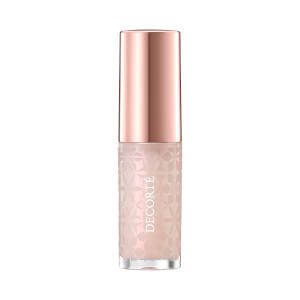
“Whether you’re using alone or alongside your favourite lipstick, the oil enhances your lips for a sumptuously hydrated end result.”
This product can help soften the skin and reduce its moisture loss with emollients and occlusives: dimethicone, methicone.
Keep in mind that this product does not contain effective ingredients to attract water to the upper layer of the skin. This is why an additional product with humectants like glycerin or hyaluronic acid can be helpful (apply it before this product for the best results).
Can it cause trouble?
Irritancy2 strong irritants: Alcohol, ParfumMedium risk
ComedogenicClean of flagged comedogenic ingredientsNone flagged
User reviews
Be the first — your take helps the next person decide.
Ingredients
Filter by role to see what each ingredient is doing.
Tridecyl trimellitate~26–39%
- Irritation risk
- Medium
Used to create a thicker product consistency and soften the upper layer of the skin
More about Tridecyl trimellitateHydrogenated polyisobutene~4.4–6.6%
- Irritation risk
- Low
Used to improve the product consistency and soften the upper layer of the skin
More about Hydrogenated polyisobuteneDiisostearyl malate~4.5–6.7%
- Irritation risk
- Medium
Helps to soften the upper layer of the skin
More about Diisostearyl malateDecyltetradecanol~3.4–5.1%
- Irritation risk
- Low
Dimer dilinoleyl hydrogenated rosinate~2.4–3.6%
- Irritation risk
- Low
Silica dimethyl silylate~2–3%
Dextrin isostearate~1.6–2.3%
- Irritation risk
- Low
Dextrin palmitate~1.3–2%
- Irritation risk
- Medium
Helps water and oil mix together
More about Dextrin palmitateSilica~1.4–2.1%
Jasminum sambac flower extract~0.85–1.3%
- Irritation risk
- Low
Malva sylvestris extract~0.5–1.15%
- Irritation risk
- High
Simmondsia chinensis seed oil~0.5–1.2%
- Irritation risk
- Medium
Softens the upper layer of skin and helps restore the healthy skin barrier. Has shown to help calm down inflammation in skin. It is a stable oil, meaning that it retains its properties even when exposed to air.
More about Simmondsia chinensis seed oilTocopherol~0.4–0.95%
- Irritation risk
- Low
Pure form of vitamin E. Can help moisturise and protect the skin from free radicals. Often used to help stabilise other ingredients or the formula itself
More about TocopherolAlcohol~0.35–0.85%
- Irritation risk
- High
Can be drying and contribute to skin irritation. Used in formulars to dissolve other ingredients, create a thinner product consistency or for its antibacterial properties
More about AlcoholAluminum hydroxide~0.4–0.95%
- Irritation risk
- Low
Is used to add opaque (non-transparent) appearance to formulations. Can be used to coat other ingredients for even dispersion. This is a different ingredient compared to the ones used in antipersperants (aluminium chloride and aluminium chlorohydrate)
More about Aluminum hydroxideBht~0.35–0.75%
Butylene glycol~0.3–0.75%
- Irritation risk
- Low
Used to create a nice product texture and help delivery of other ingredients. Might be somewhat helpful in attracting water to the upper layer of the skin
More about Butylene glycolCalcium carbonate~0.45–1%
Cellulose~0.35–0.75%
- Irritation risk
- Low
Can be used to help absorb oil as well as add volume and imporve texture of products.
More about CelluloseDextrin palmitate/ethylhexanoate~0.2–0.75%
Dimethicone~0.35–0.75%
- Irritation risk
- Low
A silicone that helps to reduce water loss from the surface of the skin. Can temporarily "fill in" lines and wrinkles, absorb oil, and create a nice product finish
More about DimethiconeDiphenylsiloxy phenyl trimethicone~0.15–0.65%
- Irritation risk
- Low
Help improve the product's texture
More about Diphenylsiloxy phenyl trimethiconeDipropylene glycol~0.15–0.55%
- Irritation risk
- Low
Helps to dissolve other ingredients in a formulation. Slows down the rate of product drying
More about Dipropylene glycolEthylene/propylene copolymer~0.35–0.8%
- Irritation risk
- Low
Hydrogen dimethicone~0.15–0.7%
- Irritation risk
- Low
Helps the function of sunscreen and pigment ingredients in the formulation
More about Hydrogen dimethiconeIsopropyl titanium triisostearate~0.3–0.7%
- Irritation risk
- Medium
Helps water and oil mix together
More about Isopropyl titanium triisostearateLecithin~0.2–0.8%
- Irritation risk
- Low
Used mostly for creating emulsions - helping oil and water mix together. Helps soften the upper layer of the skin
More about LecithinMethicone~0.2–0.75%
- Irritation risk
- Low
A type of silicone that helps soften the upper layer of the skin and reduces the water loss from the skin surface
More about MethiconeOctyldodecanol~0.2–0.7%
- Irritation risk
- Low
An emollient that helps to soften the skin and create a pleasant product texture and stabilize the formulation
More about OctyldodecanolPolyglyceryl-2 triisostearate~0.15–0.65%
- Irritation risk
- Low
Helps to soften the upper layer of the skin and create a nice product texture
More about Polyglyceryl-2 triisostearateSqualane~0.2–0.8%
- Irritation risk
- Low
An oil naturally present in skin. Works as an emollient to soften the skin and form a protective layer on its surface without a greasy feeling.
More about SqualaneTriethylhexanoin~0.15–0.55%
- Irritation risk
- Medium
Helps soften the upper layer of the skin
More about TriethylhexanoinWater~0.15–0.55%
Xanthan gum~0.15–0.6%
- Irritation risk
- Low
Used to create a thicker product consistency
More about Xanthan gumPhenoxyethanol~0.15–0.55%
- Irritation risk
- Low
A preservative. It helps prevent bacterial growth in cosmetic products
More about PhenoxyethanolParfum~0.15–0.5%
- Irritation risk
- High
An aromatic blend of unspecified and possibly irritating ingredients
More about ParfumIron oxides~0.15–0.55%
- Irritation risk
- Low
An umbrella term for the following three colorants: CI 77491, CI 77492, CI 77499. They might be able to offer some protection against visible light, but the degree of the protection is not clear
More about Iron oxidesCi 77491~0.15–0.5%
- Irritation risk
- Low
A red colorant made of iron oxide. Typically is not irritating
More about Ci 77491Iron oxides~0.15–0.5%
- Irritation risk
- Low
An umbrella term for the following three colorants: CI 77491, CI 77492, CI 77499. They might be able to offer some protection against visible light, but the degree of the protection is not clear
More about Iron oxidesCi 77499~0.1–0.45%
Mica~0.15–0.6%
- Irritation risk
- Low
Creates an illusion of smoother and more radiant skin tone. Adds shimmer to the skin by reflecting light
More about MicaTitanium dioxide~0.15–0.7%
- Irritation risk
- Low
Works as a UV filter when used in high concentrations. It is photostable and is effective mostly against the UVB light, with some protection in the UVA range. In small concentrations, used for its ability to improve the color of cosmetic products. Is usually well tolerated by the skin
More about Titanium dioxideCi 77891~0.1–0.4%
- Irritation risk
- Low
Ci 15850~0.05–0.25%
Ci 19140~0.05–0.25%
Ingredient list view
Tridecyl trimellitate, Hydrogenated polyisobutene, Diisostearyl malate, Decyltetradecanol, Dimer dilinoleyl hydrogenated rosinate, Silica dimethyl silylate, Dextrin isostearate, Dextrin palmitate, Silica, Jasminum sambac flower extract, Malva sylvestris extract, Simmondsia chinensis seed oil, Tocopherol, Alcohol, Aluminum hydroxide, Bht, Butylene glycol, Calcium carbonate, Cellulose, Dextrin palmitate/ethylhexanoate, Dimethicone, Diphenylsiloxy phenyl trimethicone, Dipropylene glycol, Ethylene/propylene copolymer, Hydrogen dimethicone, Isopropyl titanium triisostearate, Lecithin, Methicone, Octyldodecanol, Polyglyceryl-2 triisostearate, Squalane, Triethylhexanoin, Water, Xanthan gum, Phenoxyethanol, Parfum, Iron oxides, Ci 77491, Iron oxides, Ci 77499, Mica, Titanium dioxide, Ci 77891, Ci 15850, Ci 19140
Compare prices
Retailers ranked by price — lowest first.

Affiliate links · prices updated regularly
Sources cited in this review
Every concentration estimate and effectiveness label is anchored to one of these 10 studies and safety reviews.
- 1
- 2
- 3Vitamin E in dermatologyncbi.nlm.nih.gov
- 4Vitamin E and Skin Healthlpi.oregonstate.edu
- 5
- 6

Affiliate links · As an Amazon Associate, WIMJ earns from qualifying purchases.