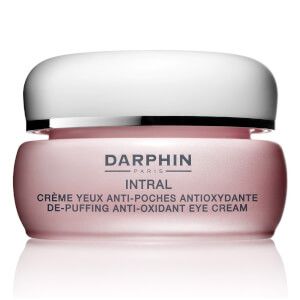
Darphin Intral DePuffing AntiOxidant Eye Cream
Works for
2 of 2 advertised claims delivered
Anti-aging4 ingredients credited for this claimStrong support
“Featuring a blend of soothing ingredients sourced from natural origins, this eye cream can be used as part of a daily skincare routine for a smoother, healthier and more youthful appearance.”
This product can help reduce and prevent fine lines and wrinkles, improve skin elasticity and firmness because it contains acetyl glucosamine.
Keep in mind that it typically takes at least 6 weeks to notice any results because the changes that are needed to improve fine lines and elasticity happen in the deeper layers of the skin. No topical anti-aging product can “erase” wrinkles or fully reverse signs of aging.
Moisturizing23 ingredients credited for this claimStrong support
“With a fast-absorbing gel-like texture, the antioxidant-rich eye cream melts quickly in, releasing soothing moisture while addressing signs of fatigue, including puffiness and dark circles to promote a brighter, more energised-looking eye area.”
This product can help improve hydration of the skin with the two types of ingredients.
The first type is called “humectants”:
these ingredients help attract water.
When humectants are on the surface of the skin, they “pull in” the moisture from the outside environment, or from
within deeper layers of the skin. The following ingredients in this product do the job:
algae extract, artemia extract.
This product also contains ingredients called “occlusives”. They help reduce the speed with which our skin loses moisture to the outside environment. These ingredients also help soften the upper layer of the skin, so it feels less tight and nicer to the touch. The following ingredients in this product do the job: dimethicone, algae extract.
The following ingredients in this product are especially good for supporting the skin barrier and helping with the hydration level: acetyl glucosamine, urea
Evens skin toneNot advertised by the brand · 4 ingredients credited for this claimStrong support
This product can help reduce hypepigmentation and even out the skin tone because it contains the following effective ingredients: acetyl glucosamine
Keep in mind that you would need to apply any topical skincare targetted at hypigmentation consistently for a couple of months to get a result. No topical skincare product can help get rid of hyperpigmentation (including post-acne marks and age spots) instantly.
Anti-oxidationNot advertised by the brand · 12 ingredients credited for this claimStrong support
This product contains antioxidants (ethylbisiminomethylguaiacol manganese chloride) that can help neutralize free radicals in skin. By doing so, they can lessen the damage the skin gets from the UV light (sun).
Can it cause trouble?
Irritancy16 flagged ingredientsMedium risk
Comedogenic2 ingredients rated 2 or more on the 0–5 pore-clogging scale2 flagged
User reviews
Be the first — your take helps the next person decide.
Ingredients
Filter by role to see what each ingredient is doing.
Water~45–55%
Butylene glycol~6–7.3%
- Irritation risk
- Low
Used to create a nice product texture and help delivery of other ingredients. Might be somewhat helpful in attracting water to the upper layer of the skin
More about Butylene glycolDimethicone~4.5–5.6%
- Irritation risk
- Low
A silicone that helps to reduce water loss from the surface of the skin. Can temporarily "fill in" lines and wrinkles, absorb oil, and create a nice product finish
More about DimethiconeTrisiloxane~3.2–4%
Glycerin~2.5–3.1%
- Irritation risk
- Low
One of the best moisturizing ingredients. Naturally present in skin. It attracts water to the upper layer of the skin working as a humectant
More about GlycerinAmmonium acryloyldimethyltaurate/vp copolymer~2–2.5%
- Irritation risk
- Low
Increases thickness of a product. Texture enhancer for oil-in-water emulsions
More about Ammonium acryloyldimethyltaurate/vp copolymerTrehalose~1.6–2%
- Irritation risk
- Low
A sugar that attracts water to the upper layer of the skin
More about TrehaloseSucrose~1.2–1.5%
- Irritation risk
- Low
Can help attract water to the upper layer of the skin. In crystal form, it can work as a gentle exfoliant, gentler than the salt scrub. Helps stabilize the emulsion
More about SucrosePaeonia suffruticosa root extract~1.1–1.3%
Crataegus monogyna flower extract~0.75–1.1%
- Irritation risk
- Low
Thermus thermophillus ferment~0.55–0.85%
- Irritation risk
- Medium
Might be helpful in neutralising free radicals in skin and have some hydration properties
More about Thermus thermophillus fermentCaffeine~0.5–0.75%
- Irritation risk
- Medium
Might be helpful in neutralizing free radicals. Can have a dehydration effect that might somewhat decrease the look of puffy eyes
More about CaffeineAsparagopsis armata extract~0.5–0.75%
- Irritation risk
- Low
Red seaweed extract. Can help attract water to the upper layer of the skin and might have some antioxidant effect
More about Asparagopsis armata extractAscophyllum nodosum extract~0.45–0.65%
- Irritation risk
- Low
Brown seaweed extract. Can help attract water to the upper layer of the skin and might have some antioxidant effect
More about Ascophyllum nodosum extractPalmaria palmata extract~0.4–0.6%
- Irritation risk
- Low
- Comedogenicity
- 3/5
Red algae extract that helps attract water to the upper layer of the skin
More about Palmaria palmata extractArtemia extract~0.4–0.6%
- Irritation risk
- Low
Zooplankton extract that can attract water to the upper level of the skin and might have some anti-oxidant effect
More about Artemia extractAlgae extract~0.5–0.7%
- Irritation risk
- Low
- Comedogenicity
- 3/5
Plant extract that helps the skin to attract water and make it more smooth for touch. Also shows promise of anti-aging properties, but research is not extensive yet
More about Algae extractHydrolyzed rice extract~0.3–0.55%
- Irritation risk
- Low
A plant extract that is claimed to be helpful in moisturizing and lightening the skin, but evidence is missing
More about Hydrolyzed rice extractCucumis sativus fruit extract~0.3–0.55%
- Irritation risk
- Medium
Might be somewhat helpful in reducing hyperpigmentation and neutralizing free radicals but its typical concentration in a product is too low for having an effect
More about Cucumis sativus fruit extractChamomilla recutita extract~0.3–0.5%
- Irritation risk
- High
Plant extract that can have healing and anti-inflammatory properties. It is a potential allergen and can be irritating
More about Chamomilla recutita extractErgothioneine~0.3–0.55%
- Irritation risk
- Low
Can help neutralize free radicals in skin. Preliminary studies show that it can be more effective than coenzyme Q10 but studies on effective concentration for topical applications are lacking
More about ErgothioneineUrea~0.3–0.5%
- Irritation risk
- Low
Naturally present in skin (urea makes up about 7% of natural moisturizing factors in skin). Attracts water to the upper layer of the skin. Also has a positive effect on the skin barrier beyond the humectant action. Can enhance penetration of other ingredients. Is an exfoliating ingredient when used in high concentrations
More about UreaDipotassium glycyrrhizate~0.25–0.5%
- Irritation risk
- Low
A salt derived from licorice. Works as an emollient to soften the upper layer of the skin and can help calm down inflammation. Might be helpful for skin lightening
More about Dipotassium glycyrrhizateGlucose~0.25–0.5%
- Irritation risk
- Low
Helps attract water to the upper layer of the skin. Could be helpful in restoring the skin barrier function
More about GlucoseOleth-10~0.3–0.55%
Tocopheryl acetate~0.3–0.5%
- Irritation risk
- Medium
A more stable but less bio-available form of vitamin E compared to Tocopherol. Might help moisturize and protect the skin from free radicals, but mostly used in low concentrations to stabilize other ingredients.
More about Tocopheryl acetateLauryl peg-9 polydimethylsiloxyethyl dimethicone~0.25–0.5%
- Irritation risk
- Low
A type of silicone that helps to soften upper layer of the skin and create a nice product texture
More about Lauryl peg-9 polydimethylsiloxyethyl dimethiconeSorbitol~0.25–0.5%
- Irritation risk
- Low
Helps attract water to the upper layer of the skin and improves the product texture
More about SorbitolAcetyl glucosamine~0.3–0.55%
- Irritation risk
- Low
An effective moisturizing ingredient that also has been shown to be effective in evening out the skin tone and reducing hyperpigmentation. It can help somewhat reduce wrinkles in skin
More about Acetyl glucosamineEthylbisiminomethylguaiacol manganese chloride~0.25–0.5%
- Irritation risk
- Medium
A potent anti-oxidant that can help neutralize free radicals in skin and protect from harmful effects of sun exposure, even though more studies are needed to confirm its effectiveness in topical applications
More about Ethylbisiminomethylguaiacol manganese chlorideSodium pca~0.25–0.5%
- Irritation risk
- Low
Naturally present in skin and helps to attract water to its upper layer
More about Sodium pcaLauryl pca~0.25–0.5%
- Irritation risk
- Low
Helps attract water to the upper layer of the skin
More about Lauryl pcaSodium hyaluronate~0.25–0.5%
- Irritation risk
- Low
One of the best moisturizing ingredients. Attracts water into the upper layer of the skin
More about Sodium hyaluronateTetrahexyldecyl ascorbate~0.3–0.55%
- Irritation risk
- Medium
Being a lipid soluble form of vitamin C, it is more stable than ascorbic acid, but still degrades quickly and needs to be stabilized in a formulation with another ingredient. It is claimed to penetrate skin better than pure vitamin C and have the the similar benefits, but solid studies of its effectiveness are lacking. Is likely to require a higher concentration in a product than pure vitamin C to be effective. It might be able to help reduce pore clogging.
More about Tetrahexyldecyl ascorbateCitric acid~0.25–0.5%
- Irritation risk
- Medium
Can work as an exfoliant but is typically used to adjust the product pH
More about Citric acidTromethamine~0.25–0.5%
Triacetin~0.3–0.55%
Carbomer~0.25–0.5%
- Irritation risk
- Low
Helps create a thicker or gel-like product texture. It is not a surfactant but can be used in gentle cleansing formulations
More about CarbomerSorbic acid~0.25–0.45%
Polyquaternium-51~0.3–0.5%
- Irritation risk
- Low
An emollient that helps create a nice silky finish on the skin
More about Polyquaternium-51Cyclodextrin~0.25–0.45%
- Irritation risk
- Low
A type of sugar that is used to support delivery of active ingredients and can enhance their penetration into the skin without disrupting the skin's barrier
More about CyclodextrinDisodium edta~0.2–0.35%
Bht~0.15–0.3%
Potassium sorbate~0.2–0.35%
Chlorphenesin~0.15–0.3%
Phenoxyethanol~0.15–0.3%
- Irritation risk
- Low
A preservative. It helps prevent bacterial growth in cosmetic products
More about PhenoxyethanolIngredient list view
Water, Butylene glycol, Dimethicone, Trisiloxane, Glycerin, Ammonium acryloyldimethyltaurate/vp copolymer, Trehalose, Sucrose, Paeonia suffruticosa root extract, Crataegus monogyna flower extract, Thermus thermophillus ferment, Caffeine, Asparagopsis armata extract, Ascophyllum nodosum extract, Palmaria palmata extract, Artemia extract, Algae extract, Hydrolyzed rice extract, Cucumis sativus fruit extract, Chamomilla recutita extract, Ergothioneine, Urea, Dipotassium glycyrrhizate, Glucose, Oleth-10, Tocopheryl acetate, Lauryl peg-9 polydimethylsiloxyethyl dimethicone, Sorbitol, Acetyl glucosamine, Ethylbisiminomethylguaiacol manganese chloride, Sodium pca, Lauryl pca, Sodium hyaluronate, Tetrahexyldecyl ascorbate, Citric acid, Tromethamine, Triacetin, Carbomer, Sorbic acid, Polyquaternium-51, Cyclodextrin, Disodium edta, Bht, Potassium sorbate, Chlorphenesin, Phenoxyethanol
Compare prices
Retailers ranked by price — lowest first.
Affiliate links · prices updated regularly · As an Amazon Associate, WIMJ earns from qualifying purchases.
Worth comparing, line by line.
Match % combines shared ingredients, the first five ingredients, shared actives and hero ingredients, irritancy (lower counts in the alternative's favour), texture and body area. Only products in the same routine step are compared.
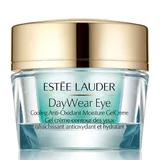
| DarphinIntral DePuffing AntiOxidant Eye CreamYOUR PRODUCT | Estée LauderDayWear Eye Cooling Anti-Oxidant Moisture GelCreme | Lab Series Skincare for MenAge Rescue+ Water-Charged Gel Cream | Lab Series For MenAge Rescue Water-Charged Gel Cream | |
|---|---|---|---|---|
| Match | — | 72% | 50% | 50% |
| Price | $18.40 | $9.99−$8.41 | $55.00+$36.60 | $55.00+$36.60 |
| Shared key ingredients | — | 19 of 19 | 10 of 19 | 10 of 19 |
| Key difference | — | — | Palmitoyl Oligopeptide | Palmitoyl Oligopeptide |
| Irritancy | Medium | Medium | Medium | Medium |
| Drying alcohol | — | — | — | — |
| View product | Shop | Shop | Shop |


Product summary
Judging from the ingredient list, "Darphin - Intral DePuffing AntiOxidant Eye Cream" works well for improving skin hydration As we expect from a proper moisturizer, the formula includes a combo of effective humectants and emollients. These are the two different types of ingredients that are essential for improving the skin hydration and supporting a healthy skin barrier. Acetyl glucosamine, urea, algae extract, artemia extract and glycerin in this product (humectants) attract water molecules to the upper layer of the skin (the water comes from the outside air or from the deeper layers of the skin if the air is dry). Emollients in this formulation (algae extract and dimethicone) help to reduce the moisture loss from the skin. They also soften the skin surface and relieve the feeling of dryness and tightness.
This product contains ingredients that could be beneficial, but their concentrations are too low in this formulation: tetrahexyldecyl ascorbate, dipotassium glycyrrhizate and ergothioneineIrritation risk
There are some common irritants in this product, including ingredients that do not have benefits for the skin. We assess the overall irritancy of this moisturizer to be medium. For a detailed overview of all potential irritants: click here
You can see the detailed formula review with the breakdown of all actives in the product and the full ingredient list with estimated concentrations in the tables below.
Price
The product retails from 30.35£ up to 782.00£ in the United Kingdom, from 38.75$ up to 60.00$ in the United States, from 78.00CA$ up to 96.72CA$ in Canada and for 66.94A$ in Australia.
For a detailed price comparison: click here.
Sources cited in this review
Every concentration estimate and effectiveness label is anchored to one of these 26 studies and safety reviews.
- 1
- 2Final Report on the Safety Assessment of Dimethicone Copolyoljournals.sagepub.com
- 3
- 4
- 5A comparison of the relative antioxidant potency of L‐ergothioneine and idebenoneonlinelibrary.wiley.com
- 6

Affiliate links · As an Amazon Associate, WIMJ earns from qualifying purchases.