Works for
1 of 1 advertised claim delivered
MoisturizingButyrospermum parkii butter, Simmondsia chinensis seed oil + 17 moreGood evidence
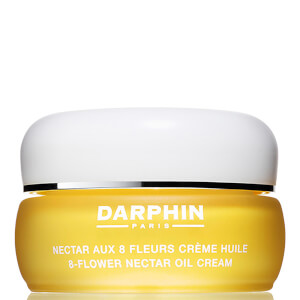
“Enriched with 8-Flower nectar, a blend of aromatic essences derived from 280 petals, the indulgent and fragrant emulsion transforms from a rich cream into a luxurious oil, cocooning the skin in comfort whilst deeply moisturising to inspire a soft, smooth and radiant complexion. . K. N.”
This product can help improve hydration of the skin with the two types of ingredients.
The first type is called “humectants”:
these ingredients help attract water.
When humectants are on the surface of the skin, they “pull in” the moisture from the outside environment, or from
within deeper layers of the skin. The following ingredients in this product do the job:
glycerin.
This product also contains ingredients called “occlusives”. They help reduce the speed with which our skin loses moisture to the outside environment. These ingredients also help soften the upper layer of the skin, so it feels less tight and nicer to the touch. The following ingredients in this product do the job: butyrospermum parkii butter, caprylic/capric triglyceride.
Anti-oxidationNot advertised by the brand · Vaccinium macrocarpon seed oil, Butyrospermum parkii butter + 4 moreModerate evidence
This product contains antioxidants (vaccinium macrocarpon seed oil) that might be able to help neutralize free radicals in skin to lessen the damage it gets from the UV light (sun). There is not enough evidence to confirm their effectiveness in skin though.
Can it cause trouble?
Irritancy17 strong irritants: Citrus aurantium dulcis flower oil, Aniba rosaeodora wood oil + 15 more — patch-test recommendedHigh risk
Comedogenic1 ingredient rated 2 or more on the 0–5 pore-clogging scale1 flagged
User reviews
Be the first — your take helps the next person decide.
Ingredients
Filter by role to see what each ingredient is doing.
Water~45–55%
Butyrospermum parkii butter~5.5–6.7%
- Irritation risk
- Low
- Comedogenicity
- 3/5
A great moisturising ingredient that softens the skin and reduces water loss from its upper layer. It also can be helpful in protecting skin from free radicals
More about Butyrospermum parkii butterSimmondsia chinensis seed oil~4.7–5.7%
- Irritation risk
- Medium
Softens the upper layer of skin and helps restore the healthy skin barrier. Has shown to help calm down inflammation in skin. It is a stable oil, meaning that it retains its properties even when exposed to air.
More about Simmondsia chinensis seed oilCaprylic/capric triglyceride~3.2–3.9%
- Irritation risk
- Medium
A good mix of fatty acids that forms a protective layer on the skin. Improves the shelf life of products. Derived from coconut and glycerin
More about Caprylic/capric triglycerideTribehenin peg-20 esters~2.4–2.9%
- Irritation risk
- Medium
Helps oil and water mix together
More about Tribehenin peg-20 estersHelianthus annuus seed oil~2.1–2.5%
- Irritation risk
- Low
A great emollient due to its high linoleic acid content. One of the most effective plant oils in helping skin hydration and repairing skin barrier function
More about Helianthus annuus seed oilMacadamia ternifolia seed oil~1.7–2%
- Irritation risk
- Medium
Plant oil from nuts that helps soften the upper layer of the skin. Contains a high concentration of oleic acid that can weaken skin's barrier function and increase water-loss while enhancing penetration of other ingredients
More about Macadamia ternifolia seed oilOctyldodecanol~1.4–1.7%
- Irritation risk
- Low
An emollient that helps to soften the skin and create a pleasant product texture and stabilize the formulation
More about OctyldodecanolPersea gratissima oil~1.2–1.5%
- Irritation risk
- Medium
An emollient that helps soften the skin and could be helpful in repairing its barrier function
More about Persea gratissima oilGlycerin~1–1.2%
- Irritation risk
- Low
One of the best moisturizing ingredients. Naturally present in skin. It attracts water to the upper layer of the skin working as a humectant
More about GlycerinPropanediol~0.65–1%
- Irritation risk
- Low
Acts as a solvent for other ingredients. Speeds up the absorption of other ingredients into the skin
More about PropanediolBehenyl alcohol~0.6–0.9%
- Irritation risk
- Low
Non-drying alcohol that helps water and oil mix together. Also serves as an emollient
More about Behenyl alcoholCopernicia cerifera wax~0.55–0.85%
- Irritation risk
- Low
Helps to soften the upper layer of the skin and create a nice product consistency
More about Copernicia cerifera waxCopernicia cerifera cera~0.5–0.75%
- Irritation risk
- Low
Brazilian palm wax. Helps soften the upper layer of the skin
More about Copernicia cerifera ceraCopernicia cerifera wax~0.5–0.8%
- Irritation risk
- Low
Helps to soften the upper layer of the skin and create a nice product consistency
More about Copernicia cerifera waxTapioca starch~0.45–0.65%
Citrus aurantium dulcis flower oil~0.35–0.65%
- Irritation risk
- High
Vaccinium macrocarpon seed oil~0.4–0.6%
- Irritation risk
- Medium
A plant oil that can help neutralize free radicals, soften the upper layer of the skin, and support skin's barrier function
More about Vaccinium macrocarpon seed oilOlea europaea fruit oil~0.3–0.6%
- Irritation risk
- Medium
An emollient that helps soften the skin but is not effective for restoring its barrier function. Might be helpful to calm down inflammation
More about Olea europaea fruit oilAniba rosaeodora wood oil~0.25–0.5%
- Irritation risk
- High
Rosa damascena flower oil~0.3–0.5%
- Irritation risk
- High
Used as a fragrance. Can be irritating
More about Rosa damascena flower oilLavandula angustifolia oil~0.25–0.5%
- Irritation risk
- High
An essential oil. Potential allergen and can be irritating. It has some anti-bacterial properties
More about Lavandula angustifolia oilHelichrysum angustifolium flower oil~0.25–0.45%
- Irritation risk
- Low
Iris pallida root extract~0.25–0.45%
- Irritation risk
- Low
Jasminum officinale flower extract~0.25–0.45%
Rosmarinus officinalis leaf extract~0.25–0.45%
- Irritation risk
- High
Can be helpful in reducing inflammation in skin, including inflamed acne. It can be irritating
More about Rosmarinus officinalis leaf extractPhoenix dactylifera fruit extract~0.3–0.55%
- Irritation risk
- Low
Pogostemon cablin leaf oil~0.25–0.5%
Phytosterols~0.3–0.55%
- Irritation risk
- Medium
Lipids that work as an emollient and can be helpful in repairing skin barrier function
More about PhytosterolsPeg-40 hydrogenated castor oil~0.3–0.55%
- Irritation risk
- Medium
Helps oil and water mix together
More about Peg-40 hydrogenated castor oilCananga odorata flower oil~0.25–0.45%
Vanilla planifolia fruit extract~0.25–0.45%
- Irritation risk
- High
A plant extract used as a fragrance. Can be irritating
More about Vanilla planifolia fruit extractAscorbyl tetraisopalmitate~0.3–0.55%
- Irritation risk
- Medium
A vitamin C derivative. Studies show that is might be effective in reducing hyperpigmentation, but there are no studies confirming that it is effectively converted into the bioavailable form of Vitamin C in skin. It is not clear how this derivative compares in effectiveness to the topical application of bioavailable form of vitamin C (L-ascorbic acid)
More about Ascorbyl tetraisopalmitateOleic/linoleic/linolenic polyglycerides~0.3–0.55%
- Irritation risk
- Low
Helps soften the upper layer of the skin
More about Oleic/linoleic/linolenic polyglyceridesDiethylhexyl syringylidenemalonate~0.25–0.5%
- Irritation risk
- Medium
Used to stabilize the product formulation
More about Diethylhexyl syringylidenemalonateTocopheryl acetate~0.3–0.5%
- Irritation risk
- Medium
A more stable but less bio-available form of vitamin E compared to Tocopherol. Might help moisturize and protect the skin from free radicals, but mostly used in low concentrations to stabilize other ingredients.
More about Tocopheryl acetateBrassica campestris sterols~0.3–0.55%
- Irritation risk
- Low
Help soften the upper layer of the skin
More about Brassica campestris sterolsEthylhexylglycerin~0.25–0.5%
Tocopherol~0.25–0.5%
- Irritation risk
- Low
Pure form of vitamin E. Can help moisturise and protect the skin from free radicals. Often used to help stabilise other ingredients or the formula itself
More about TocopherolPpg-26-buteth-26~0.25–0.5%
Acrylates/c10-30 alkyl acrylate crosspolymer~0.3–0.5%
- Irritation risk
- Medium
Maintains the texture of skincare products. Allows the product to spread evenly. Helps oil and water mix together
More about Acrylates/c10-30 alkyl acrylate crosspolymerButyl methoxydibenzoylmethane~0.45–0.7%
- Irritation risk
- Medium
Avobenzone. An organic, or so-called "chemical" UV filter. Protects against both UVA and UVB rays. Needs to be combined with other filters in a formulation to be stable.
More about Butyl methoxydibenzoylmethaneEthylhexyl salicylate~0.45–0.7%
- Irritation risk
- Low
Octisalate. A UV filter. It offers some protection against the sun rays that cause sunburn (UVB), but does not protect against the most aging sun rays (UVA). It loses its effectiveness quickly when exposed to sunlight. It is an organic, or so called "chemical" sunscreen
More about Ethylhexyl salicylateButene~0.25–0.45%
- Irritation risk
- Low
Glycol~0.25–0.5%
- Irritation risk
- Low
Ethylhexyl methoxycinnamate~0.45–0.7%
- Irritation risk
- High
Octinoxate. When used in higher concentrations, works as a sunscreen protecting the skin from UVB rays. When used in lower concentration, helps to preserve the product formulation. Is shown to be harmful to coral reefs - consider avoiding bathing in coral reef areas when wearing a product with this ingredient. It can be irritating
More about Ethylhexyl methoxycinnamateXanthan gum~0.25–0.5%
- Irritation risk
- Low
Used to create a thicker product consistency
More about Xanthan gumCarbomer~0.25–0.5%
- Irritation risk
- Low
Helps create a thicker or gel-like product texture. It is not a surfactant but can be used in gentle cleansing formulations
More about CarbomerSodium hydroxide~0.3–0.5%
Edta~0.3–0.55%
Parfum~0.25–0.5%
- Irritation risk
- High
An aromatic blend of unspecified and possibly irritating ingredients
More about ParfumPhenoxyethanol~0.3–0.55%
- Irritation risk
- Low
A preservative. It helps prevent bacterial growth in cosmetic products
More about PhenoxyethanolSodium benzoate~0.3–0.5%
Farnesol~0.25–0.45%
Linalool~0.25–0.4%
Benzyl salicylate~0.2–0.4%
Citronellol~0.2–0.35%
Limonene~0.2–0.35%
- Irritation risk
- High
A common frangrance that can easily irritate skin, especially if exposed to air, light or heat
More about LimoneneGeraniol~0.2–0.35%
Benzyl benzoate~0.15–0.3%
- Irritation risk
- High
Fragrance with sweet balsamic smell. Help to preserve products and dissolve other ingredients. Could trigger allergic reactions and be irritating
More about Benzyl benzoateCi 19140~0.15–0.25%
Ci 15985~0.15–0.25%
Ingredient list view
Water, Butyrospermum parkii butter, Simmondsia chinensis seed oil, Caprylic/capric triglyceride, Tribehenin peg-20 esters, Helianthus annuus seed oil, Macadamia ternifolia seed oil, Octyldodecanol, Persea gratissima oil, Glycerin, Propanediol, Behenyl alcohol, Copernicia cerifera wax, Copernicia cerifera cera, Copernicia cerifera wax, Tapioca starch, Citrus aurantium dulcis flower oil, Unknown, Vaccinium macrocarpon seed oil, Olea europaea fruit oil, Aniba rosaeodora wood oil, Rosa damascena flower oil, Lavandula angustifolia oil, Helichrysum angustifolium flower oil, Iris pallida root extract, Jasminum officinale flower extract, Rosmarinus officinalis leaf extract, Phoenix dactylifera fruit extract, Pogostemon cablin leaf oil, Phytosterols, Peg-40 hydrogenated castor oil, Cananga odorata flower oil, Vanilla planifolia fruit extract, Ascorbyl tetraisopalmitate, Oleic/linoleic/linolenic polyglycerides, Diethylhexyl syringylidenemalonate, Tocopheryl acetate, Brassica campestris sterols, Ethylhexylglycerin, Tocopherol, Ppg-26-buteth-26, Acrylates/c10-30 alkyl acrylate crosspolymer, Butyl methoxydibenzoylmethane, Ethylhexyl salicylate, Butene, Glycol, Ethylhexyl methoxycinnamate, Xanthan gum, Carbomer, Sodium hydroxide, Unknown, Edta, Parfum, Phenoxyethanol, Sodium benzoate, Farnesol, Linalool, Benzyl salicylate, Citronellol, Limonene, Geraniol, Benzyl benzoate, Ci 19140, Ci 15985
Compare prices
Retailers ranked by price — lowest first.
Affiliate links · prices updated regularly · As an Amazon Associate, WIMJ earns from qualifying purchases.
Sources cited in this review
Every concentration estimate and effectiveness label is anchored to one of these 22 studies and safety reviews.
- 1
- 2
- 3Effect of topically applied lipids on surfactant-irritated skinonlinelibrary.wiley.com
- 4
- 5
- 6

Affiliate links · As an Amazon Associate, WIMJ earns from qualifying purchases.