Works for:
based on ingredients and %- Moisturizing
Doesn't work for:
based on ingredients and %- Sun protection
Can it cause trouble?
- Irritation risk: high
- Comedogenic risk ingredients: 3
Key actives
Product Summary
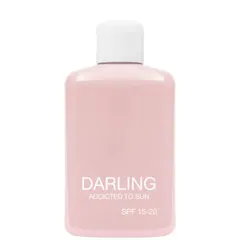
"DARLING - Medium Protection SPF 15-20" offers broad spectrum protection. It means that it protects from both UVA and UVB rays (you can remember UVB as "burning" sunlight - they cause sunburn. You can remember UVA rays as "aging" - they do not lead to sunburn, but they cause photodamage and contribute to early signs of skin aging and hyperpigmentation). On the negative side, the SPF of this product is not high enough. We recommend to use a sunscreen with at least SPF 30 daily.
Because it includes good moisturizing ingredients, it can also work as a hydrating day cream.
Sunscreen filters
This is a "mixed" sunscreen in the sense that it uses both mineral and organic (so-called "chemical") sun filters. The organic filters in the product are: tinosorb s and octinoxate. As for the mineral filters, this sunscreen uses titanium dioxide.
Irritation risk
There are quite a few common irritants in this product, including ingredients without particular skin benefits. We would not recommend it for sensitive skin. We assess the overall irritancy of this product to be high. For a detailed overview of all potential irritants: click here
You can see the detailed formula review with the breakdown of all actives in the product and the full ingredient list with estimated concentrations in the tables below.
Price
The product retails for 158.80$ in the United States and for 29.00£ in the United Kingdom.
For a detailed price comparison: click here.
Moisturizing
What does the product description say?
Elevating your routine from mandatory to luxurious, this hard-working range is jam-packed with good-to-skin actives that help protect and hydrate skin, so youll look your best during and after your days in the sun.
Source: Cultbeauty
This product can help improve hydration of the skin with the two types of ingredients.
The first type is called “humectants”:
these ingredients help attract water.
When humectants are on the surface of the skin, they “pull in” the moisture from the outside environment, or from
within deeper layers of the skin. The following ingredients in this product do the job:
glycerin, hydrolyzed collagen.
This product also contains ingredients called “occlusives”. They help reduce the speed with which our skin loses moisture to the outside environment. These ingredients also help soften the upper layer of the skin, so it feels less tight and nicer to the touch. The following ingredients in this product do the job: dimethicone, helianthus annuus seed oil.
A silicone that helps to reduce water loss from the surface of the skin. Can temporarily "fill in" lines and wrinkles, absorb oil, and create a nice product finish
One of the best moisturizing ingredients. Naturally present in skin. It attracts water to the upper layer of the skin working as a humectant
A good emollient that helps soften the skin and helps repair its barrier function. It can clog pores if used in high concentrations.
A great emollient due to its high linoleic acid content. One of the most effective plant oils in helping skin hydration and repairing skin barrier function
A typically plant-derived compound that is supposed mimic human collagen. Cannot penetrate the skin barrier so is not particularly useful in skincare products beyond attracting water to the upper layer of the skin
Helps soften the upper layer of the skin
A silicone that helps improve the product texture and spreadability. Can absorb oil creating a short-term mattifying effect on the skin
A non-drying alcohol. Works as an emollient. Helps water and oil mix together and creates a nice product texture
Used to stabilize the product formulations and works as an emollient
A silicone that serves as an emollient. Helps create a nice non-greasy feels
Helps oil and water mix together and can enhance the penetration of other ingredients into the skin. It can be irritating
Helps calm down inflammation in skin and can help reduce itching. Helps to repair the skin barrier and keep skin hydrated
Softens the upper layer of skin and helps restore the healthy skin barrier. Has shown to help calm down inflammation in skin. It is a stable oil, meaning that it retains its properties even when exposed to air.
An emollient that helps soften the skin
Sun protection
What does the product description say?
DARLINGs Medium Protection SPF 15-20 offers broad spectrum UVA and UVB protection while also boasting an infusion of hard-working skin care actives that nurture and protect skin.
Source: Cultbeauty
This product offers broad spectrum sun protection, but it is weak. We recommend to use a broad spectrum sunscreen with at least SPF 30.
Tinosorb S. One of the most effective broad spectrum sunscreen ingredients. Protects from both UVA and UVB rays. It is photostable. Unfortunately, not approved by FDA (US) yet.
Octinoxate. When used in higher concentrations, works as a sunscreen protecting the skin from UVB rays. When used in lower concentration, helps to preserve the product formulation. Is shown to be harmful to coral reefs - consider avoiding bathing in coral reef areas when wearing a product with this ingredient. It can be irritating
Works as a UV filter when used in high concentrations. It is photostable and is effective mostly against the UVB light, with some protection in the UVA range. In small concentrations, used for its ability to improve the color of cosmetic products. Is usually well tolerated by the skin
How honest is this product?
| Promise | Can it deliver? |
|---|---|
| Sun protection | |
| Moisturizing |
Total Promises Fulfilled score: 62/100.
We receive a small commission for purchases made through these links at no cost for you. Thank you for your support! Learn more
Affiliate link · supports WIMJ at no cost to you
Potential irritants
Comedogenic ingredients
User reviews (0)
Averages from community submissions.
No reviews yet for this product.
Be the first to share your experience!
Tried this product?
Help capture what the ingredient list can't—texture, finish, pilling, scent, and more. Answer what you can, skip the rest.
Takes ~30 seconds.
Reviews are shown in aggregate. No personal details.
Key Actives
Helps calm down inflammation in skin and can help reduce itching. Helps to repair the skin barrier and keep skin hydrated
A silicone that helps improve the product texture and spreadability. Can absorb oil creating a short-term mattifying effect on the skin
A silicone that helps to reduce water loss from the surface of the skin. Can temporarily "fill in" lines and wrinkles, absorb oil, and create a nice product finish
An emollient that helps soften the skin
Octinoxate. When used in higher concentrations, works as a sunscreen protecting the skin from UVB rays. When used in lower concentration, helps to preserve the product formulation. Is shown to be harmful to coral reefs - consider avoiding bathing in coral reef areas when wearing a product with this ingredient. It can be irritating
A great emollient due to its high linoleic acid content. One of the most effective plant oils in helping skin hydration and repairing skin barrier function
One of the best moisturizing ingredients. Naturally present in skin. It attracts water to the upper layer of the skin working as a humectant
Tinosorb S. One of the most effective broad spectrum sunscreen ingredients. Protects from both UVA and UVB rays. It is photostable. Unfortunately, not approved by FDA (US) yet.
Works as a UV filter when used in high concentrations. It is photostable and is effective mostly against the UVB light, with some protection in the UVA range. In small concentrations, used for its ability to improve the color of cosmetic products. Is usually well tolerated by the skin
Softens the upper layer of skin and helps restore the healthy skin barrier. Has shown to help calm down inflammation in skin. It is a stable oil, meaning that it retains its properties even when exposed to air.
A good emollient that helps soften the skin and helps repair its barrier function. It can clog pores if used in high concentrations.
A typically plant-derived compound that is supposed mimic human collagen. Cannot penetrate the skin barrier so is not particularly useful in skincare products beyond attracting water to the upper layer of the skin
Helps soften the upper layer of the skin
Potential irritants
Octinoxate. When used in higher concentrations, works as a sunscreen protecting the skin from UVB rays. When used in lower concentration, helps to preserve the product formulation. Is shown to be harmful to coral reefs - consider avoiding bathing in coral reef areas when wearing a product with this ingredient. It can be irritating
An aromatic blend of unspecified and possibly irritating ingredients
Helps oil and water mix together and can enhance the penetration of other ingredients into the skin. It can be irritating
Can be drying and contribute to skin irritation. Used in formulars to dissolve other ingredients, create a thinner product consistency or for its antibacterial properties
Tinosorb S. One of the most effective broad spectrum sunscreen ingredients. Protects from both UVA and UVB rays. It is photostable. Unfortunately, not approved by FDA (US) yet.
Softens the upper layer of skin and helps restore the healthy skin barrier. Has shown to help calm down inflammation in skin. It is a stable oil, meaning that it retains its properties even when exposed to air.
A good emollient that helps soften the skin and helps repair its barrier function. It can clog pores if used in high concentrations.
A more stable but less bio-available form of vitamin E compared to Tocopherol. Might help moisturize and protect the skin from free radicals, but mostly used in low concentrations to stabilize other ingredients.
Comedogenic ingredients
Used to stabilize the product formulations and works as an emollient
A non-drying alcohol. Works as an emollient. Helps water and oil mix together and creates a nice product texture
A good emollient that helps soften the skin and helps repair its barrier function. It can clog pores if used in high concentrations.
All ingredients
Octinoxate. When used in higher concentrations, works as a sunscreen protecting the skin from UVB rays. When used in lower concentration, helps to preserve the product formulation. Is shown to be harmful to coral reefs - consider avoiding bathing in coral reef areas when wearing a product with this ingredient. It can be irritating
A great emollient due to its high linoleic acid content. One of the most effective plant oils in helping skin hydration and repairing skin barrier function
Used to stabilize the product formulations and works as an emollient
A silicone that helps improve the product texture and spreadability. Can absorb oil creating a short-term mattifying effect on the skin
Acts as a solvent for other ingredients. Speeds up the absorption of other ingredients into the skin
One of the best moisturizing ingredients. Naturally present in skin. It attracts water to the upper layer of the skin working as a humectant
A non-drying alcohol. Works as an emollient. Helps water and oil mix together and creates a nice product texture
A silicone that serves as an emollient. Helps create a nice non-greasy feels
A preservative. It helps prevent bacterial growth in cosmetic products
A silicone that helps to reduce water loss from the surface of the skin. Can temporarily "fill in" lines and wrinkles, absorb oil, and create a nice product finish
Used to thicken product formulations and create gel-like textures
Tinosorb S. One of the most effective broad spectrum sunscreen ingredients. Protects from both UVA and UVB rays. It is photostable. Unfortunately, not approved by FDA (US) yet.
An aromatic blend of unspecified and possibly irritating ingredients
Works as a UV filter when used in high concentrations. It is photostable and is effective mostly against the UVB light, with some protection in the UVA range. In small concentrations, used for its ability to improve the color of cosmetic products. Is usually well tolerated by the skin
Helps calm down inflammation in skin and can help reduce itching. Helps to repair the skin barrier and keep skin hydrated
An emollient that softens the skin and helps prevent moisture loss.
Softens the upper layer of skin and helps restore the healthy skin barrier. Has shown to help calm down inflammation in skin. It is a stable oil, meaning that it retains its properties even when exposed to air.
Helps oil and water mix together and can enhance the penetration of other ingredients into the skin. It can be irritating
A good emollient that helps soften the skin and helps repair its barrier function. It can clog pores if used in high concentrations.
A typically plant-derived compound that is supposed mimic human collagen. Cannot penetrate the skin barrier so is not particularly useful in skincare products beyond attracting water to the upper layer of the skin
A more stable but less bio-available form of vitamin E compared to Tocopherol. Might help moisturize and protect the skin from free radicals, but mostly used in low concentrations to stabilize other ingredients.
Can be drying and contribute to skin irritation. Used in formulars to dissolve other ingredients, create a thinner product consistency or for its antibacterial properties
Ingredient list view
Water, Ethylhexyl methoxycinnamate, Helianthus annuus seed oil, Glyceryl stearate se, Cyclopentasiloxane, Propanediol, C12-20 acid peg-8 ester, Glycerin, Cetearyl alcohol, Cyclohexasiloxane, Phenoxyethanol, Dimethicone, Polyamide-3, Prunus armeniaca kernel oil, Hydroxyethylcellulose, Bis-ethylhexyloxyphenol methoxyphenyl triazine, Parfum, Dimethicone/vinyltrimethylsiloxysilicate crosspolymer, Titanium dioxide, Tyrosine, Gardenia taitensis flower extract, Ethylhexylglycerin, Allantoin, Cetearyl isononanoate, Simmondsia chinensis seed oil, Propylene glycol, Glycine soja oil, Hydrolyzed collagen, Krameria triandra root extract, Hydrolyzed jojoba esters, Amyl cinnamal, Linalool, Tocopheryl acetate, Benzyl salicylate, Alcohol, Hydroxycitronellal, Tris(tetramethylhydroxypiperidinol) citrate
- Effect of Olive and Sunflower Seed Oil on the Adult Skin Barrier: Implications for Neonatal Skin Care
- Topically Applied Sunflower Seed Oil Prevents Invasive Bacterial Infections in Preterm Infants in Egypt
- Effect of topically applied lipids on surfactant-irritated skin
- Impact of topical oils on the skin barrier: possible implications for neonatal health in developing countries
- Glycerol and the skin: holistic approach to its origin and functions
- Dimethicone as a protective ingredient in topical medications