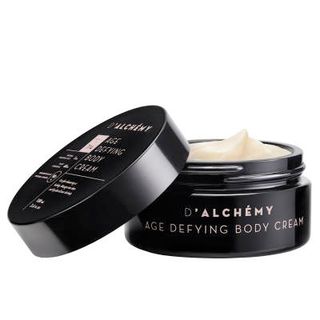
Works for
1 of 3 advertised claims delivered
Moisturizing28 ingredients credited for this claimGood support
“Trehalose – keeps skin cells hydrated and prevents protein denaturation and fatty acid degradation.”
This product can help improve hydration of the skin with the two types of ingredients.
The first type is called “humectants”:
these ingredients help attract water.
When humectants are on the surface of the skin, they “pull in” the moisture from the outside environment, or from
within deeper layers of the skin. The following ingredients in this product do the job:
algae extract, glycerin.
This product also contains ingredients called “occlusives”. They help reduce the speed with which our skin loses moisture to the outside environment. These ingredients also help soften the upper layer of the skin, so it feels less tight and nicer to the touch. The following ingredients in this product do the job: butyrospermum parkii butter, cocos nucifera oil.
Anti-aging4 ingredients credited for this claimLimited support
“Linseed, grapeseed, argan, almond and avocado oils – have moisturising, regenerating, nourishing and anti-ageing properties.”
This product does not contain ingredients that are able to reduce fine lines and wrinkles or help with skin elasticity, but it can improve the look of the skin temporarily through moisturization. Well-moisturized skin might also be able to repair the sun damage better.This ingredient - butyrospermum parkii butter - could be helpful for preventing or repairing signs of aging in theory, but there is no evidence that it actually works.
This ingredient squalene might be able to help neutralize free radicals in skin and help it fight off some of the sun damage.
Evens skin tone2 ingredients credited for this claimWeak support
“Long-term use lightens discolorations and evens out skin tone.”
Effective ingredients missing or their concentration is too low
Anti-oxidationNot advertised by the brand · 13 ingredients credited for this claimModerate support
This product contains antioxidants (squalene) that might be able to help neutralize free radicals in skin to lessen the damage it gets from the UV light (sun). There is not enough evidence to confirm their effectiveness in skin though.
Can it cause trouble?
Irritancy12 strong irritants: Lavandula angustifolia flower water, Hamamelis virginiana leaf water + 10 more — patch-test recommendedHigh risk
Comedogenic7 ingredients rated 2 or more on the 0–5 pore-clogging scale7 flagged


User reviews
Be the first — your take helps the next person decide.
Ingredients
Filter by role to see what each ingredient is doing.
Lavandula angustifolia flower water~25–31%
- Irritation risk
- High
Hamamelis virginiana leaf water~4.5–5.5%
- Irritation risk
- High
Butyrospermum parkii butter~5.5–6.7%
- Irritation risk
- Low
- Comedogenicity
- 3/5
A great moisturising ingredient that softens the skin and reduces water loss from its upper layer. It also can be helpful in protecting skin from free radicals
More about Butyrospermum parkii butterPropanediol~3.9–4.8%
- Irritation risk
- Low
Acts as a solvent for other ingredients. Speeds up the absorption of other ingredients into the skin
More about PropanediolGlyceryl stearate~3.3–4%
- Irritation risk
- Low
An emollient that softens the skin and forms a protective layer on its surface. Helps water and oil mix together
More about Glyceryl stearateDicaprylyl carbonate~2.5–3%
- Irritation risk
- Low
Helps products spread more easily and works as an emollient to soften skin
More about Dicaprylyl carbonateShorea stenoptera seed butter~2–2.4%
- Irritation risk
- Low
Helps soften the upper layer of the skin and can be helpful in restoring the skin barrier function
More about Shorea stenoptera seed butterCetearyl glucoside~1.6–1.9%
- Irritation risk
- Medium
Helps water and oil in the product mix well together and improves product texture
More about Cetearyl glucosideCetearyl alcohol~1.5–1.8%
- Irritation risk
- Low
- Comedogenicity
- 2/5
A non-drying alcohol. Works as an emollient. Helps water and oil mix together and creates a nice product texture
More about Cetearyl alcoholPrunus amygdalus dulcis seed~1.1–1.3%
- Irritation risk
- Low
Helps soften the upper layer of the skin
More about Prunus amygdalus dulcis seedVitis vinifera seed oil~1–1.2%
- Irritation risk
- Medium
A great emollient that can also have anti-oxidant properties
More about Vitis vinifera seed oilOryza sativa starch~0.75–1.15%
- Irritation risk
- Low
Helianthus annuus seed oil~0.7–1.05%
- Irritation risk
- Low
A great emollient due to its high linoleic acid content. One of the most effective plant oils in helping skin hydration and repairing skin barrier function
More about Helianthus annuus seed oilStearic acid~0.75–1.1%
- Irritation risk
- Low
Helps oil and water mix together and works as an emollient
More about Stearic acidWater~0.55–0.85%
Simmondsia chinensis seed oil~0.65–1%
- Irritation risk
- Medium
Softens the upper layer of skin and helps restore the healthy skin barrier. Has shown to help calm down inflammation in skin. It is a stable oil, meaning that it retains its properties even when exposed to air.
More about Simmondsia chinensis seed oilParfum~0.5–0.8%
- Irritation risk
- High
An aromatic blend of unspecified and possibly irritating ingredients
More about ParfumLavandula angustifolia oil~0.55–0.8%
- Irritation risk
- High
An essential oil. Potential allergen and can be irritating. It has some anti-bacterial properties
More about Lavandula angustifolia oilSodium stearoyl glutamate~0.55–0.85%
- Irritation risk
- Medium
Helps oil and water mix together
More about Sodium stearoyl glutamateBenzyl alcohol~0.45–0.65%
- Irritation risk
- High
A preservative. Can be used to mask unpleasant smell. Can be irritating
More about Benzyl alcoholCocos nucifera oil~0.5–0.7%
- Irritation risk
- Low
- Comedogenicity
- 3/5
An emollient. Found to be as effective as a moisturizer for dry skin as mineral oil. Could be comedogenic
More about Cocos nucifera oilLinum usitatissimum seed oil~0.4–0.6%
Persea gratissima oil~0.5–0.75%
- Irritation risk
- Medium
An emollient that helps soften the skin and could be helpful in repairing its barrier function
More about Persea gratissima oilArgania spinosa kernel oil~0.5–0.75%
- Irritation risk
- Medium
An emollient that helps soften the upper layer of the skin. Might have some weak anti-oxidant properties
More about Argania spinosa kernel oilMacadamia ternifolia seed oil~0.5–0.75%
- Irritation risk
- Medium
Plant oil from nuts that helps soften the upper layer of the skin. Contains a high concentration of oleic acid that can weaken skin's barrier function and increase water-loss while enhancing penetration of other ingredients
More about Macadamia ternifolia seed oilOlea europaea fruit oil~0.45–0.7%
- Irritation risk
- Medium
An emollient that helps soften the skin but is not effective for restoring its barrier function. Might be helpful to calm down inflammation
More about Olea europaea fruit oilChondrus crispus powder~0.5–0.75%
- Irritation risk
- Low
- Comedogenicity
- 3/5
A powder from red algae extract that helps attract water to the upper layer of the skin and create a nicer product consistency
More about Chondrus crispus powderXanthan gum~0.45–0.65%
- Irritation risk
- Low
Used to create a thicker product consistency
More about Xanthan gumMauritia flexuosa fruit oil~0.4–0.6%
- Irritation risk
- Medium
Helps soften the upper layer of the skin
More about Mauritia flexuosa fruit oilMalpighia emarginata fruit extract~0.4–0.6%
- Irritation risk
- Low
Paullinia cupana fruit extract~0.4–0.6%
- Irritation risk
- High
Vaccinium macrocarpon fruit extract~0.4–0.65%
- Irritation risk
- High
A berry extract. Might have some anti-oxidant properties
More about Vaccinium macrocarpon fruit extractHippophae rhamnoides fruit extract~0.4–0.6%
- Irritation risk
- Medium
A plant extract that might help neutralize free radicals in skin, but research on its effectiveness is lacking
More about Hippophae rhamnoides fruit extractMyrciaria dubia fruit extract~0.4–0.6%
- Irritation risk
- Medium
A plant extract that might help neutralize free radicals in skin, but research on its effectiveness is lacking
More about Myrciaria dubia fruit extractPyrus malus juice~0.4–0.6%
- Irritation risk
- High
Apple juice. Might help attract water to the skin. Can be irritating
More about Pyrus malus juicePrunus persica juice~0.4–0.6%
- Irritation risk
- Low
Triticum vulgare seed extract~0.4–0.6%
- Irritation risk
- Low
- Comedogenicity
- 2/5
Hordeum vulgare extract~0.5–0.75%
- Irritation risk
- Medium
A plant extract that might have some anti-oxidant properties. Avoid if you are sensitive to gluten
More about Hordeum vulgare extractPanax ginseng root extract~0.5–0.75%
- Irritation risk
- High
A plant extract that might have some anti-inflammatory properties, but solid evidence is lacking. It can be irritating
More about Panax ginseng root extractSilybum marianum seed oil~0.4–0.6%
- Irritation risk
- High
A plant oil that contains essential oils that can be irritating. Can help soften the upper layer of the skin. Might have some anti-oxidant activity but evidence is lacking
More about Silybum marianum seed oilAlgae extract~0.5–0.8%
- Irritation risk
- Low
- Comedogenicity
- 3/5
Plant extract that helps the skin to attract water and make it more smooth for touch. Also shows promise of anti-aging properties, but research is not extensive yet
More about Algae extractSalicylic acid~0.4–0.6%
- Irritation risk
- High
Used for skin exfoliation. It has an anti-inflammatory and anti-bacterial effect, helps to unclog pores, prevent blemishes and speed up healing of the existing ones. Sometimes referred to as a BHA (beta-hydroxy acid)
More about Salicylic acidTocopherol~0.35–0.65%
- Irritation risk
- Low
Pure form of vitamin E. Can help moisturise and protect the skin from free radicals. Often used to help stabilise other ingredients or the formula itself
More about TocopherolSodium phytate~0.4–0.65%
Rosmarinus officinalis leaf extract~0.35–0.65%
- Irritation risk
- High
Can be helpful in reducing inflammation in skin, including inflamed acne. It can be irritating
More about Rosmarinus officinalis leaf extractCitric acid~0.4–0.6%
- Irritation risk
- Medium
Can work as an exfoliant but is typically used to adjust the product pH
More about Citric acidSodium benzoate~0.25–0.5%
Potassium sorbate~0.3–0.6%
Sorbic acid~0.4–0.6%
Gluconolactone~0.4–0.65%
- Irritation risk
- Medium
A polyhydroxy acid (PHA) that helps shed the dead cells from the skin surface revealing smoother skin. Is believed to be genter than AHAs. It helps attract water to the upper layer of the skin and can stimulate production of skin's own hyaluronic acid resulting in improved hydration levels. It has been shown to be helpful against acne and clogged pores if used consistently (e.g over a period of 12 weeks) in high enough concentration. It can help reduce fine lines and wrinkles and improve skin tone with long-term application. Can help neutralize free radicals
More about GluconolactoneGlycerin~0.45–0.65%
- Irritation risk
- Low
One of the best moisturizing ingredients. Naturally present in skin. It attracts water to the upper layer of the skin working as a humectant
More about GlycerinCalcium gluconate~0.45–0.7%
- Irritation risk
- Low
Helps attract water to the upper layer of the skin and helps to improve appearance of the product
More about Calcium gluconateGlyceryl caprylate~0.5–0.75%
- Irritation risk
- Low
An emollient that can also help water and oil mix together, as well as prevent bacteria growth in products
More about Glyceryl caprylateGlyceryl undecylenate~0.5–0.75%
- Irritation risk
- Medium
Helps oil and water mix together and helps preserve the product formulation
More about Glyceryl undecylenateBeta-sitosterol~0.5–0.75%
- Irritation risk
- Low
A phytosterol that can support skin's barrier function and help the skin stay hydrated
More about Beta-sitosterolSqualene~0.45–0.65%
- Irritation risk
- Low
- Comedogenicity
- 2/5
An oil that is naturally part of skin sebum that helps to soften its upper layer, reduce water loss and neutralize free radicals. It might be comedogenic. Avoid applying large concentrations (or pure oil) before sun exposure as oxidized squalene can clog pores and lead to skin irritation. Today squalene is mostly derived from vegetable oils or synthetized by yeast
More about SqualeneSodium hydroxide~0.25–0.5%
Alcohol~0.2–0.4%
- Irritation risk
- High
Can be drying and contribute to skin irritation. Used in formulars to dissolve other ingredients, create a thinner product consistency or for its antibacterial properties
More about AlcoholCinnamal~0.15–0.3%
- Irritation risk
- High
Citral~0.2–0.35%
Geraniol~0.15–0.3%
Limonene~0.15–0.25%
- Irritation risk
- High
A common frangrance that can easily irritate skin, especially if exposed to air, light or heat
More about LimoneneLinalool~0.15–0.25%
Ingredient list view
Lavandula angustifolia flower water, Hamamelis virginiana leaf water, Butyrospermum parkii butter, Propanediol, Glyceryl stearate, Dicaprylyl carbonate, Shorea stenoptera seed butter, Cetearyl glucoside, Cetearyl alcohol, Prunus amygdalus dulcis seed, Vitis vinifera seed oil, Oryza sativa starch, Helianthus annuus seed oil, Stearic acid, Water, Simmondsia chinensis seed oil, Parfum, Lavandula angustifolia oil, Sodium stearoyl glutamate, Benzyl alcohol, Cocos nucifera oil, Linum usitatissimum seed oil, Persea gratissima oil, Argania spinosa kernel oil, Macadamia ternifolia seed oil, Olea europaea fruit oil, Chondrus crispus powder, Xanthan gum, Mauritia flexuosa fruit oil, Malpighia emarginata fruit extract, Paullinia cupana fruit extract, Vaccinium macrocarpon fruit extract, Hippophae rhamnoides fruit extract, Myrciaria dubia fruit extract, Pyrus malus juice, Prunus persica juice, Triticum vulgare seed extract, Hordeum vulgare extract, Panax ginseng root extract, Silybum marianum seed oil, Algae extract, Salicylic acid, Tocopherol, Sodium phytate, Rosmarinus officinalis leaf extract, Citric acid, Sodium benzoate, Potassium sorbate, Sorbic acid, Gluconolactone, Glycerin, Calcium gluconate, Glyceryl caprylate, Glyceryl undecylenate, Beta-sitosterol, Squalene, Sodium hydroxide, Alcohol, Cinnamal, Citral, Geraniol, Limonene, Linalool
Compare prices
Retailers ranked by price — lowest first.
Worth comparing, line by line.
Match % combines shared ingredients, the first five ingredients, shared actives and hero ingredients, irritancy (lower counts in the alternative's favour), texture and body area. Only products in the same routine step are compared.
| D'ALCHÉMYAGE DEFYING BODY CREAMYOUR PRODUCT | Joanna VargasRevitalizing Eye Cream | SVRXERIAL 30 Body Cream | Paula's choiceUltra-Rich Soothing Body Butter | |
|---|---|---|---|---|
| Match | — | 71% | 71% | 70% |
| Price | $63.33 | $75.00+$11.67 | $19.83−$43.50 | $22.00−$41.33 |
| Shared key ingredients | — | 6 of 18 | 4 of 18 | 7 of 18 |
| Key difference | — | Acetyl Tetrapeptide-5 | Mineral Oil | Panthenol |
| Irritancy | High | Medium | Low | Low |
| Drying alcohol | Contains drying alcohol | — | — | — |
| View product | Shop | Shop | Shop |

Sources cited in this review
Every concentration estimate and effectiveness label is anchored to one of these 42 studies and safety reviews.
- 1
- 2
- 3Effect of topically applied lipids on surfactant-irritated skinonlinelibrary.wiley.com
- 4
- 5
- 6

Affiliate links · As an Amazon Associate, WIMJ earns from qualifying purchases.