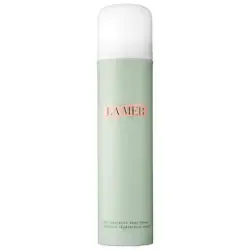
Crème de la Mer The Reparative Body Lotion

Crème de la Mer The Reparative Body Lotion

Efficacy75/100IrritancyHigh
Edit

Works for

2 of 3 advertised claims delivered

Moisturizing
39 ingredients credited for this claim
Strong support
What the product description says
“It is formulated with the Reparative Ferment™ and the legendary Miracle Broth™ with restorative sea-sourced energies, leaving skin visibly plumped with moisture.”
Source: Sephora CA

This product can help improve hydration of the skin with the two types of ingredients.

The first type is called “humectants”:
these ingredients help attract water. When humectants are on the surface of the skin, they “pull in” the moisture from the outside environment, or from within deeper layers of the skin. The following ingredients in this product do the job: algae extract, glycerin.

This product also contains ingredients called “occlusives”. They help reduce the speed with which our skin loses moisture to the outside environment. These ingredients also help soften the upper layer of the skin, so it feels less tight and nicer to the touch. The following ingredients in this product do the job: dimethicone, phenyl trimethicone.

The following ingredients in this product are especially good for supporting the skin barrier and helping with the hydration level: acetyl hexapeptide-8

Laminaria ochroleuca extractKey activeEffect: HighHelps attract water to the upper layer of the skin~0.2–0.35%
Acetyl hexapeptide-8Hero· HumectantEffect: HighA type of peptide. Peptides are excellent moisturizers and might be able support collagen production reducing fine lines and wrinkles~0.2–0.35%
Phenyl trimethiconeKey active· OcclusiveEffect: HighA type of silicone that can decrease loss of moisture from the skin surface. It helps create a nice product texture~0.2–0.4%
Saccharide isomerateKey active· HumectantEffect: HighHelps attract water to the upper layer of the skin~0.2–0.35%
Sesamum indicum seed oilKey active· EmollientEffect: HighA good moisturizing plant oil. Due to the high linoleic acid content, it helps soften the upper layer of the skin, reduce water loss and support skin barrier function~0.5–0.75%
Sodium hyaluronateKey active· HumectantEffect: HighOne of the best moisturizing ingredients. Attracts water into the upper layer of the skin~0.2–0.4%
SucroseKey active· HumectantEffect: HighCan help attract water to the upper layer of the skin. In crystal form, it can work as a gentle exfoliant, gentler than the salt scrub. Helps stabilize the emulsion~0.15–0.3%
Thermus thermophillus fermentKey active· HumectantEffect: HighMight be helpful in neutralising free radicals in skin and have some hydration properties~0.2–0.35%
Yeast extractKey active· HumectantEffect: HighHelps attract water to the upper layer of the skin and might have some anti-oxidant and skin lightening properties. It can help calm down inflammation in skin~2.3–2.8%
Algae extractKey active· Humectant, EmollientEffect: HighPlant extract that helps the skin to attract water and make it more smooth for touch. Also shows promise of anti-aging properties, but research is not extensive yet~0.65–1%
Ascophyllum nodosum extractKey activeEffect: HighBrown seaweed extract. Can help attract water to the upper layer of the skin and might have some antioxidant effect~0.2–0.35%
Asparagopsis armata extractKey activeEffect: HighRed seaweed extract. Can help attract water to the upper layer of the skin and might have some antioxidant effect~0.2–0.35%
DimethiconeKey active· Emollient, OcclusiveEffect: HighA silicone that helps to reduce water loss from the surface of the skin. Can temporarily "fill in" lines and wrinkles, absorb oil, and create a nice product finish~3.1–3.8%
GlycerinKey active· HumectantEffect: HighOne of the best moisturizing ingredients. Naturally present in skin. It attracts water to the upper layer of the skin working as a humectant~5.5–6.7%
Crithmum maritimum extractKey activeEffect: MediumAn algae extract that might have anti-oxidant properties~0.15–0.3%
Hydrogenated vegetable oilKey active· EmollientEffect: MediumAn oil from a mixture of different vegetables. Helps soften the upper layer of the skin~0.25–0.4%
Cetyl alcoholKey active· EmollientEffect: MediumA non-drying alcohol that works to soften the skin and stabilize product formulations helping oil and water mix together~1.2–1.5%
Cetearyl alcoholKey active· EmollientEffect: MediumA non-drying alcohol. Works as an emollient. Helps water and oil mix together and creates a nice product texture~1.9–2.3%
Aspergillus fermentKey activeEffect: MediumAn extract from fungus (mold) that typically appears on rice. It can help attract water to the upper layer of the skin, might help neutralize free radicals and possibly somewhat reduce hyperpigmentation~0.2–0.35%
Medicago sativa seed powderKey activeEffect: MediumMight help soften the upper layer of the skin and help thicken the product formulation. It might have some anti-oxidant effect~0.35–0.65%
Plankton extractKey activeEffect: MediumCan help attract water to the upper layer of the skin~0.2–0.35%
Caprylyl glycol· Humectant, EmollientEffect: LowHelps preserve products and creates a nice product texture~0.2–0.4%
Glyceryl stearate· EmollientEffect: LowAn emollient that softens the skin and forms a protective layer on its surface. Helps water and oil mix together~0.25–0.45%
Hydrogenated polyisobutene· Emollient, OcclusiveEffect: LowUsed to improve the product consistency and soften the upper layer of the skin~4.4–5.4%
Isononyl isononanoate· Emollient, OcclusiveEffect: LowForms a protective film on the surface of the skin to prevent moisture loss. Gives a velvety feel to products while reducing tackiness~1.5–1.8%
Behenyl alcohol· Emollient, OcclusiveEffect: LowNon-drying alcohol that helps water and oil mix together. Also serves as an emollient~0.25–0.45%
Butylene glycol· HumectantEffect: LowUsed to create a nice product texture and help delivery of other ingredients. Might be somewhat helpful in attracting water to the upper layer of the skin~0.75–1.15%
Calcium gluconate· HumectantEffect: LowHelps attract water to the upper layer of the skin and helps to improve appearance of the product~0.3–0.5%
Magnesium gluconateEffect: LowA mineral that might be able to support skin hydration, but convincing research on its effectiveness in topical skincare is lacking~0.2–0.4%
Polysilicone-11Effect: LowA silicone that forms a light film on the skin surface helping to bind water and temporarily absorb oils creating a matt and powdery feel~0.2–0.4%
Sorbitol· HumectantEffect: LowHelps attract water to the upper layer of the skin and improves the product texture~0.2–0.35%
Caprylic/capric triglycerideUnder-dosedEffect: HighA good mix of fatty acids that forms a protective layer on the skin. Improves the shelf life of products. Derived from coconut and glycerin~0.25–0.45%
Copper gluconateUnder-dosedEffect: HighTypically used to stabilize the product formulations. It is a salt of polyhydroxy acid (PHA) and in larger concentrations, can help shed the dead cells from the skin surface revealing smoother skin. It can help attract water to the upper layer of the skin. Might to be helpful against acne and clogged pores. Could be helpful in neutralizing free radicals, but solid research is missing~0.25–0.45%
Zinc gluconateUnder-dosedEffect: HighTypically used to stabilize the product formulations. It is a salt of a polyhydroxy acid (PHA) and in larger concentrations, can help shed the dead cells from the skin surface revealing smoother skin. It can help attract water to the upper layer of the skin. Might to be helpful against acne and clogged pores. Could be helpful in neutralizing free radicals, but solid research is missing. Due to the zinc content, might help calm down inflammation in skin~0.2–0.4%
Avena sativa kernel extractUnder-dosedEffect: HighAn effective moisturizing and skin barrier repair ingredient. Helps calm down inflammation and has some anti-oxidant properties~0.2–0.4%
NiacinUnder-dosedEffect: HighA form of vitamin B3. It is similar in action to niacinamide, but is more likely to cause red flashes in skin as the side effect~0.2–0.35%
Laminaria digitata extractUnder-dosedEffect: MediumSeaweed extract that helps the skin to attract water and make it more smooth for touch. Also shows promise of anti-aging properties, but good research is lacking at the moment~0.2–0.35%
Padina pavonica thallus extractEffect: Low, below effective doseMight help to soften the upper layer of the skin. Is claimed to have anti-oxidant properties, but evidence in missing~0.2–0.35%
LecithinEffect: Low, below effective doseUsed mostly for creating emulsions - helping oil and water mix together. Helps soften the upper layer of the skin~0.25–0.45%
Anti-aging
8 ingredients credited for this claim
Moderate support
What the product description says
“Infused with sea-sourced energy and the Marine Fortifying Ferment, The Reparative Body Lotion reduces the look of lines and wrinkles and visibly evens skin tone—leaving skin looking radiant.”
Source: La mer

This product contains acetyl hexapeptide-8. This ingredient might be able to help reduce and prevent fine lines and wrinkles, improve skin elasticity and firmness, but there is not enough evidence that it actually works.

Acetyl hexapeptide-8Key activeEffect: MediumA type of peptide. Peptides are excellent moisturizers and might be able support collagen production reducing fine lines and wrinkles~0.2–0.35%
Thermus thermophillus fermentEffect: LowMight be helpful in neutralising free radicals in skin and have some hydration properties~0.2–0.35%
Algae extractEffect: LowPlant extract that helps the skin to attract water and make it more smooth for touch. Also shows promise of anti-aging properties, but research is not extensive yet~0.65–1%
Tetrahexyldecyl ascorbateUnder-dosedEffect: HighBeing a lipid soluble form of vitamin C, it is more stable than ascorbic acid, but still degrades quickly and needs to be stabilized in a formulation with another ingredient. It is claimed to penetrate skin better than pure vitamin C and have the the similar benefits, but solid studies of its effectiveness are lacking. Is likely to require a higher concentration in a product than pure vitamin C to be effective. It might be able to help reduce pore clogging.~0.2–0.35%
NiacinUnder-dosedEffect: MediumA form of vitamin B3. It is similar in action to niacinamide, but is more likely to cause red flashes in skin as the side effect~0.2–0.35%
Zinc gluconateEffect: Low, below effective doseTypically used to stabilize the product formulations. It is a salt of a polyhydroxy acid (PHA) and in larger concentrations, can help shed the dead cells from the skin surface revealing smoother skin. It can help attract water to the upper layer of the skin. Might to be helpful against acne and clogged pores. Could be helpful in neutralizing free radicals, but solid research is missing. Due to the zinc content, might help calm down inflammation in skin~0.2–0.4%
Copper gluconateEffect: Low, below effective doseTypically used to stabilize the product formulations. It is a salt of polyhydroxy acid (PHA) and in larger concentrations, can help shed the dead cells from the skin surface revealing smoother skin. It can help attract water to the upper layer of the skin. Might to be helpful against acne and clogged pores. Could be helpful in neutralizing free radicals, but solid research is missing~0.25–0.45%
Laminaria digitata extractEffect: Low, below effective doseSeaweed extract that helps the skin to attract water and make it more smooth for touch. Also shows promise of anti-aging properties, but good research is lacking at the moment~0.2–0.35%
Evens skin tone
6 ingredients credited for this claim
Limited support
What the product description says
“Infused with sea-sourced energy and the Marine Fortifying Ferment, The Reparative Body Lotion reduces the look of lines and wrinkles and visibly evens skin tone—leaving skin looking radiant.”
Source: La mer

This product contains ingredients (yeast extract) that could help reduce hyperpigmentation (for example, post-acne marks or age spots) in theory, but there is not enough evidence that they actually work.

Yeast extractEffect: LowHelps attract water to the upper layer of the skin and might have some anti-oxidant and skin lightening properties. It can help calm down inflammation in skin~2.3–2.8%
Aspergillus fermentEffect: LowAn extract from fungus (mold) that typically appears on rice. It can help attract water to the upper layer of the skin, might help neutralize free radicals and possibly somewhat reduce hyperpigmentation~0.2–0.35%
Tetrahexyldecyl ascorbateUnder-dosedEffect: HighBeing a lipid soluble form of vitamin C, it is more stable than ascorbic acid, but still degrades quickly and needs to be stabilized in a formulation with another ingredient. It is claimed to penetrate skin better than pure vitamin C and have the the similar benefits, but solid studies of its effectiveness are lacking. Is likely to require a higher concentration in a product than pure vitamin C to be effective. It might be able to help reduce pore clogging.~0.2–0.35%
NiacinUnder-dosedEffect: MediumA form of vitamin B3. It is similar in action to niacinamide, but is more likely to cause red flashes in skin as the side effect~0.2–0.35%
Zinc gluconateEffect: Low, below effective doseTypically used to stabilize the product formulations. It is a salt of a polyhydroxy acid (PHA) and in larger concentrations, can help shed the dead cells from the skin surface revealing smoother skin. It can help attract water to the upper layer of the skin. Might to be helpful against acne and clogged pores. Could be helpful in neutralizing free radicals, but solid research is missing. Due to the zinc content, might help calm down inflammation in skin~0.2–0.4%
Copper gluconateEffect: Low, below effective doseTypically used to stabilize the product formulations. It is a salt of polyhydroxy acid (PHA) and in larger concentrations, can help shed the dead cells from the skin surface revealing smoother skin. It can help attract water to the upper layer of the skin. Might to be helpful against acne and clogged pores. Could be helpful in neutralizing free radicals, but solid research is missing~0.25–0.45%
Anti-oxidation
Not advertised by the brand · 15 ingredients credited for this claim
Moderate support

This product contains antioxidants (yeast extract) that might be able to help neutralize free radicals in skin to lessen the damage it gets from the UV light (sun). There is not enough evidence to confirm their effectiveness in skin though.

Yeast extractKey activeEffect: MediumHelps attract water to the upper layer of the skin and might have some anti-oxidant and skin lightening properties. It can help calm down inflammation in skin~2.3–2.8%
CaffeineEffect: LowMight be helpful in neutralizing free radicals. Can have a dehydration effect that might somewhat decrease the look of puffy eyes~0.2–0.35%
Asparagopsis armata extractEffect: LowRed seaweed extract. Can help attract water to the upper layer of the skin and might have some antioxidant effect~0.2–0.35%
Medicago sativa seed powderEffect: LowMight help soften the upper layer of the skin and help thicken the product formulation. It might have some anti-oxidant effect~0.35–0.65%
Thermus thermophillus fermentEffect: LowMight be helpful in neutralising free radicals in skin and have some hydration properties~0.2–0.35%
Ascophyllum nodosum extractEffect: LowBrown seaweed extract. Can help attract water to the upper layer of the skin and might have some antioxidant effect~0.2–0.35%
Aspergillus fermentEffect: LowAn extract from fungus (mold) that typically appears on rice. It can help attract water to the upper layer of the skin, might help neutralize free radicals and possibly somewhat reduce hyperpigmentation~0.2–0.35%
Crithmum maritimum extractEffect: LowAn algae extract that might have anti-oxidant properties~0.15–0.3%
Tetrahexyldecyl ascorbateUnder-dosedEffect: HighBeing a lipid soluble form of vitamin C, it is more stable than ascorbic acid, but still degrades quickly and needs to be stabilized in a formulation with another ingredient. It is claimed to penetrate skin better than pure vitamin C and have the the similar benefits, but solid studies of its effectiveness are lacking. Is likely to require a higher concentration in a product than pure vitamin C to be effective. It might be able to help reduce pore clogging.~0.2–0.35%
Tocopheryl acetateEffect: Low, below effective doseA more stable but less bio-available form of vitamin E compared to Tocopherol. Might help moisturize and protect the skin from free radicals, but mostly used in low concentrations to stabilize other ingredients.~0.2–0.4%
Copper gluconateEffect: Low, below effective doseTypically used to stabilize the product formulations. It is a salt of polyhydroxy acid (PHA) and in larger concentrations, can help shed the dead cells from the skin surface revealing smoother skin. It can help attract water to the upper layer of the skin. Might to be helpful against acne and clogged pores. Could be helpful in neutralizing free radicals, but solid research is missing~0.25–0.45%
Laminaria digitata extractEffect: Low, below effective doseSeaweed extract that helps the skin to attract water and make it more smooth for touch. Also shows promise of anti-aging properties, but good research is lacking at the moment~0.2–0.35%
Zinc gluconateEffect: Low, below effective doseTypically used to stabilize the product formulations. It is a salt of a polyhydroxy acid (PHA) and in larger concentrations, can help shed the dead cells from the skin surface revealing smoother skin. It can help attract water to the upper layer of the skin. Might to be helpful against acne and clogged pores. Could be helpful in neutralizing free radicals, but solid research is missing. Due to the zinc content, might help calm down inflammation in skin~0.2–0.4%
Avena sativa kernel extractEffect: Low, below effective doseAn effective moisturizing and skin barrier repair ingredient. Helps calm down inflammation and has some anti-oxidant properties~0.2–0.4%
Padina pavonica thallus extractEffect: Low, below effective doseMight help to soften the upper layer of the skin. Is claimed to have anti-oxidant properties, but evidence in missing~0.2–0.35%

Can it cause trouble?

Irritancy
7 strong irritants: Eucalyptus globulus leaf oil, Parfum + 5 more — patch-test recommended
High risk
We flagged 26 ingredients with irritancy potential. Severity depends on your sensitivity threshold; the table lists the worst offenders first.
IngredientFunctionIrritationEst. amount
Eucalyptus globulus leaf oilAn essential oil that can be very irritating. Has some anti-bacterial propertiesHigh~0.25–0.45%est.
NiacinA form of vitamin B3. It is similar in action to niacinamide, but is more likely to cause red flashes in skin as the side effectHigh~0.2–0.35%est.
ParfumAn aromatic blend of unspecified and possibly irritating ingredientsHigh~0.15–0.3%est.
LimoneneA common frangrance that can easily irritate skin, especially if exposed to air, light or heatHigh~0.15–0.3%est.
Hexyl cinnamalA fragrance with jasmine smell. A likely irritantHigh~0.15–0.25%est.
LinaloolA fragrance. Can be irritatingHigh~0.15–0.25%est.
CoumarinA fragrance. Is a likely skin allergen and can be irritatingHigh~0.1–0.2%est.
CitronellolA fragrance. Can be irritatingHigh~0.1–0.15%est.
Medicago sativa seed powderMight help soften the upper layer of the skin and help thicken the product formulation. It might have some anti-oxidant effectMedium~0.35–0.65%est.
Copper gluconateTypically used to stabilize the product formulations. It is a salt of polyhydroxy acid (PHA) and in larger concentrations, can help shed the dead cells from the skin surface revealing smoother skin. It can help attract water to the upper layer of the skin. Might to be helpful against acne and clogged pores. Could be helpful in neutralizing free radicals, but solid research is missingMedium~0.25–0.45%est.
Zinc gluconateTypically used to stabilize the product formulations. It is a salt of a polyhydroxy acid (PHA) and in larger concentrations, can help shed the dead cells from the skin surface revealing smoother skin. It can help attract water to the upper layer of the skin. Might to be helpful against acne and clogged pores. Could be helpful in neutralizing free radicals, but solid research is missing. Due to the zinc content, might help calm down inflammation in skinMedium~0.2–0.4%est.
Tocopheryl succinateUsed to preserve the product formulationMedium~0.2–0.4%est.
Sigesbeckia orientalis extractA plant extract that can contain an anti-inflammatory compoundMedium~0.15–0.3%est.
Plankton extractCan help attract water to the upper layer of the skinMedium~0.2–0.35%est.
CaffeineMight be helpful in neutralizing free radicals. Can have a dehydration effect that might somewhat decrease the look of puffy eyesMedium~0.2–0.35%est.
Thermus thermophillus fermentMight be helpful in neutralising free radicals in skin and have some hydration propertiesMedium~0.2–0.35%est.
Ceteth-20Helps water and oil mix togetherMedium~0.3–0.6%est.
Cetearyl glucosideHelps water and oil in the product mix well together and improves product textureMedium~0.2–0.4%est.
Caprylic/capric triglycerideA good mix of fatty acids that forms a protective layer on the skin. Improves the shelf life of products. Derived from coconut and glycerinMedium~0.25–0.45%est.
Tetrahexyldecyl ascorbateBeing a lipid soluble form of vitamin C, it is more stable than ascorbic acid, but still degrades quickly and needs to be stabilized in a formulation with another ingredient. It is claimed to penetrate skin better than pure vitamin C and have the the similar benefits, but solid studies of its effectiveness are lacking. Is likely to require a higher concentration in a product than pure vitamin C to be effective. It might be able to help reduce pore clogging.Medium~0.2–0.35%est.
Caprylyl glycolHelps preserve products and creates a nice product textureMedium~0.2–0.4%est.
Tocopheryl acetateA more stable but less bio-available form of vitamin E compared to Tocopherol. Might help moisturize and protect the skin from free radicals, but mostly used in low concentrations to stabilize other ingredients.Medium~0.2–0.4%est.
Disodium edtaStabilizes the product formulationMedium~0.2–0.35%est.
Citric acidCan work as an exfoliant but is typically used to adjust the product pHMedium~0.1–0.2%est.
Sodium citrateHelps to control the skin's pH level. Maintains the skin's natural film of amino-lactic acids and oils. Helps to preserve productsMedium~0.1–0.2%est.
Potassium sorbateA preservativeMedium~0.1–0.2%est.
Comedogenic
8 ingredients rated 2 or more on the 0–5 pore-clogging scale
8 flagged
These ingredients have a comedogenic rating of 2 or more on a 0–5 scale; the table shows each one's rating. In leave-on products they can clog pores in acne-prone skin.
IngredientFunctionRatingEst. amount
Algae extractPlant extract that helps the skin to attract water and make it more smooth for touch. Also shows promise of anti-aging properties, but research is not extensive yet3/5~0.65–1%est.
Crithmum maritimum extractAn algae extract that might have anti-oxidant properties3/5~0.15–0.3%est.
Laminaria digitata extractSeaweed extract that helps the skin to attract water and make it more smooth for touch. Also shows promise of anti-aging properties, but good research is lacking at the moment3/5~0.2–0.35%est.
Laminaria ochroleuca extractHelps attract water to the upper layer of the skin3/5~0.2–0.35%est.
Plankton extractCan help attract water to the upper layer of the skin3/5~0.2–0.35%est.
Padina pavonica thallus extractMight help to soften the upper layer of the skin. Is claimed to have anti-oxidant properties, but evidence in missing3/5~0.2–0.35%est.
Cetearyl alcoholA non-drying alcohol. Works as an emollient. Helps water and oil mix together and creates a nice product texture2/5~1.9–2.3%est.
Hydrogenated vegetable oilAn oil from a mixture of different vegetables. Helps soften the upper layer of the skin2/5~0.25–0.4%est.
Edit

User reviews

Would you recommend?
No community reviews yet.

Be the first — your take helps the next person decide.

Write a review · ~30s

Ingredients

Filter by role to see what each ingredient is doing.

Water~45–55%
Formula
Irritation risk
Low

Plain old water

More about Water
Glycerin~5.5–6.7%
Key active
Irritation risk
Low
Works for
Moisturizing

One of the best moisturizing ingredients. Naturally present in skin. It attracts water to the upper layer of the skin working as a humectant

More about Glycerin
Hydrogenated polyisobutene~4.4–5.4%
Formula
Irritation risk
Low
Works for
Moisturizing

Used to improve the product consistency and soften the upper layer of the skin

More about Hydrogenated polyisobutene
Dimethicone~3.1–3.8%
Key active
Irritation risk
Low
Works for
MoisturizingMattifying

A silicone that helps to reduce water loss from the surface of the skin. Can temporarily "fill in" lines and wrinkles, absorb oil, and create a nice product finish

More about Dimethicone
Yeast extract~2.3–2.8%
Key active
Irritation risk
Low
Works for
MoisturizingAnti-inflammatoryAnti-oxidationReduces irritationEvens skin tone

Helps attract water to the upper layer of the skin and might have some anti-oxidant and skin lightening properties. It can help calm down inflammation in skin

More about Yeast extract
Cetearyl alcohol~1.9–2.3%
Key activeComedogenic 2/5
Irritation risk
Low
Comedogenicity
2/5
Works for
CleansingMoisturizing

A non-drying alcohol. Works as an emollient. Helps water and oil mix together and creates a nice product texture

More about Cetearyl alcohol
Cetearyl isononanoate~1.6–2%
Formula
Irritation risk
Low

An emollient that softens the skin and helps prevent moisture loss.

More about Cetearyl isononanoate
Isononyl isononanoate~1.5–1.8%
Formula
Irritation risk
Low
Works for
Moisturizing

Forms a protective film on the surface of the skin to prevent moisture loss. Gives a velvety feel to products while reducing tackiness

More about Isononyl isononanoate
Cetyl alcohol~1.2–1.5%
Key active
Irritation risk
Low
Works for
CleansingMoisturizing

A non-drying alcohol that works to soften the skin and stabilize product formulations helping oil and water mix together

More about Cetyl alcohol
Butylene glycol~0.75–1.15%
Formula
Irritation risk
Low
Works for
Moisturizing

Used to create a nice product texture and help delivery of other ingredients. Might be somewhat helpful in attracting water to the upper layer of the skin

More about Butylene glycol
Algae extract~0.65–1%
Key activeComedogenic 3/5
Irritation risk
Low
Comedogenicity
3/5
Works for
MoisturizingAnti-aging

Plant extract that helps the skin to attract water and make it more smooth for touch. Also shows promise of anti-aging properties, but research is not extensive yet

More about Algae extract
Sesamum indicum seed oil~0.5–0.75%
Key active
Irritation risk
Low
Works for
Moisturizing

A good moisturizing plant oil. Due to the high linoleic acid content, it helps soften the upper layer of the skin, reduce water loss and support skin barrier function

More about Sesamum indicum seed oil
Medicago sativa seed powder~0.35–0.65%
Key activeIrritant · medium
Irritation risk
Medium
Works for
MoisturizingAnti-oxidation

Might help soften the upper layer of the skin and help thicken the product formulation. It might have some anti-oxidant effect

More about Medicago sativa seed powder
Helianthus annuus seedcake~0.55–0.85%
Formula
Irritation risk
Low

Used to thicken the product consistency

More about Helianthus annuus seedcake
Prunus amygdalus dulcis seed meal~0.5–0.7%
Formula
Irritation risk
Low

Helps thicken the product texture

More about Prunus amygdalus dulcis seed meal
Eucalyptus globulus leaf oil~0.25–0.45%
Irritant · high
Irritation risk
High
Works for
Antibacterial

An essential oil that can be very irritating. Has some anti-bacterial properties

More about Eucalyptus globulus leaf oil
Sodium gluconate~0.25–0.5%
Formula
Irritation risk
Low

Helps stabilize product formulations

More about Sodium gluconate
Copper gluconate~0.25–0.45%
Under-dosedIrritant · medium
Irritation risk
Medium
Works for
MoisturizingEvens skin toneAnti-blemishExfoliationAnti-oxidationAnti-aging

Typically used to stabilize the product formulations. It is a salt of polyhydroxy acid (PHA) and in larger concentrations, can help shed the dead cells from the skin surface revealing smoother skin. It can help attract water to the upper layer of the skin. Might to be helpful against acne and clogged pores. Could be helpful in neutralizing free radicals, but solid research is missing

More about Copper gluconate
Calcium gluconate~0.3–0.5%
Formula
Irritation risk
Low
Works for
Moisturizing

Helps attract water to the upper layer of the skin and helps to improve appearance of the product

More about Calcium gluconate
Magnesium gluconate~0.2–0.4%
Formula
Irritation risk
Low
Works for
Moisturizing

A mineral that might be able to support skin hydration, but convincing research on its effectiveness in topical skincare is lacking

More about Magnesium gluconate
Zinc gluconate~0.2–0.4%
Under-dosedIrritant · medium
Irritation risk
Medium
Works for
MoisturizingEvens skin toneAnti-oxidationAnti-agingAnti-blemishAnti-inflammatoryExfoliation

Typically used to stabilize the product formulations. It is a salt of a polyhydroxy acid (PHA) and in larger concentrations, can help shed the dead cells from the skin surface revealing smoother skin. It can help attract water to the upper layer of the skin. Might to be helpful against acne and clogged pores. Could be helpful in neutralizing free radicals, but solid research is missing. Due to the zinc content, might help calm down inflammation in skin

More about Zinc gluconate
Tocopheryl succinate~0.2–0.4%
Irritant · medium
Irritation risk
Medium

Used to preserve the product formulation

More about Tocopheryl succinate
Niacin~0.2–0.35%
Under-dosedIrritant · high
Irritation risk
High
Works for
MoisturizingAnti-agingAnti-blemishEvens skin tone

A form of vitamin B3. It is similar in action to niacinamide, but is more likely to cause red flashes in skin as the side effect

More about Niacin
Sesamum indicum seed powder~0.2–0.35%
Formula
Aspergillus ferment~0.2–0.35%
Key active
Irritation risk
Low
Works for
MoisturizingAnti-oxidationEvens skin tone

An extract from fungus (mold) that typically appears on rice. It can help attract water to the upper layer of the skin, might help neutralize free radicals and possibly somewhat reduce hyperpigmentation

More about Aspergillus ferment
Crithmum maritimum extract~0.15–0.3%
Key activeComedogenic 3/5
Irritation risk
Low
Comedogenicity
3/5
Works for
MoisturizingAnti-oxidation

An algae extract that might have anti-oxidant properties

More about Crithmum maritimum extract
Laminaria digitata extract~0.2–0.35%
Under-dosedComedogenic 3/5
Irritation risk
Low
Comedogenicity
3/5
Works for
MoisturizingAnti-oxidationAnti-aging

Seaweed extract that helps the skin to attract water and make it more smooth for touch. Also shows promise of anti-aging properties, but good research is lacking at the moment

More about Laminaria digitata extract
Sigesbeckia orientalis extract~0.15–0.3%
Irritant · medium
Irritation risk
Medium
Works for
Anti-inflammatory

A plant extract that can contain an anti-inflammatory compound

More about Sigesbeckia orientalis extract
Asparagopsis armata extract~0.2–0.35%
Key active
Irritation risk
Low
Works for
MoisturizingAnti-oxidation

Red seaweed extract. Can help attract water to the upper layer of the skin and might have some antioxidant effect

More about Asparagopsis armata extract
Laminaria ochroleuca extract~0.2–0.35%
Key activeComedogenic 3/5
Irritation risk
Low
Comedogenicity
3/5
Works for
Moisturizing

Helps attract water to the upper layer of the skin

More about Laminaria ochroleuca extract
Plankton extract~0.2–0.35%
Key activeComedogenic 3/5Irritant · medium
Irritation risk
Medium
Comedogenicity
3/5
Works for
Moisturizing

Can help attract water to the upper layer of the skin

More about Plankton extract
Sucrose~0.15–0.3%
Key active
Irritation risk
Low
Works for
Moisturizing

Can help attract water to the upper layer of the skin. In crystal form, it can work as a gentle exfoliant, gentler than the salt scrub. Helps stabilize the emulsion

More about Sucrose
Behenyl alcohol~0.25–0.45%
Formula
Irritation risk
Low
Works for
Moisturizing

Non-drying alcohol that helps water and oil mix together. Also serves as an emollient

More about Behenyl alcohol
Caffeine~0.2–0.35%
Irritant · medium
Irritation risk
Medium
Works for
De-puffingAnti-oxidation

Might be helpful in neutralizing free radicals. Can have a dehydration effect that might somewhat decrease the look of puffy eyes

More about Caffeine
Padina pavonica thallus extract~0.2–0.35%
Comedogenic 3/5
Irritation risk
Low
Comedogenicity
3/5
Works for
MoisturizingAnti-oxidation

Might help to soften the upper layer of the skin. Is claimed to have anti-oxidant properties, but evidence in missing

More about Padina pavonica thallus extract
Ascophyllum nodosum extract~0.2–0.35%
Key active
Irritation risk
Low
Works for
MoisturizingAnti-oxidation

Brown seaweed extract. Can help attract water to the upper layer of the skin and might have some antioxidant effect

More about Ascophyllum nodosum extract
Avena sativa kernel extract~0.2–0.4%
Under-dosed
Irritation risk
Low
Works for
Reduces irritationMoisturizingAnti-inflammatoryReduces rednessAnti-oxidation

An effective moisturizing and skin barrier repair ingredient. Helps calm down inflammation and has some anti-oxidant properties

More about Avena sativa kernel extract
Thermus thermophillus ferment~0.2–0.35%
Key activeIrritant · medium
Irritation risk
Medium
Works for
MoisturizingAnti-oxidationAnti-aging

Might be helpful in neutralising free radicals in skin and have some hydration properties

More about Thermus thermophillus ferment
Lecithin~0.25–0.45%
Formula
Irritation risk
Low
Works for
CleansingMoisturizing

Used mostly for creating emulsions - helping oil and water mix together. Helps soften the upper layer of the skin

More about Lecithin
Tourmaline~0.2–0.35%
Formula
Irritation risk
Low
More about Tourmaline
Acetyl hexapeptide-8~0.2–0.35%
Hero · Moisturizing
Irritation risk
Low
Works for
MoisturizingAnti-aging

A type of peptide. Peptides are excellent moisturizers and might be able support collagen production reducing fine lines and wrinkles

More about Acetyl hexapeptide-8
Trisiloxane~0.2–0.35%
Formula
Irritation risk
Low

A type of silicone. Used to improve product texture

More about Trisiloxane
Phenyl trimethicone~0.2–0.4%
Key active
Irritation risk
Low
Works for
Moisturizing

A type of silicone that can decrease loss of moisture from the skin surface. It helps create a nice product texture

More about Phenyl trimethicone
Glyceryl stearate~0.25–0.45%
Formula
Irritation risk
Low
Works for
CleansingMoisturizing

An emollient that softens the skin and forms a protective layer on its surface. Helps water and oil mix together

More about Glyceryl stearate
Peg-100 stearate~0.3–0.55%
Formula
Irritation risk
Low
Works for
Cleansing

Helps oil and water mix togehter and creates a nice product texture

More about Peg-100 stearate
Sorbitol~0.2–0.35%
Formula
Irritation risk
Low
Works for
Moisturizing

Helps attract water to the upper layer of the skin and improves the product texture

More about Sorbitol
Ceteth-20~0.3–0.6%
Irritant · medium
Irritation risk
Medium
Works for
Cleansing

Helps water and oil mix together

More about Ceteth-20
Cetearyl glucoside~0.2–0.4%
Irritant · medium
Irritation risk
Medium
Works for
Cleansing

Helps water and oil in the product mix well together and improves product texture

More about Cetearyl glucoside
Hydrogenated lecithin~0.2–0.4%
Formula
Irritation risk
Low
Works for
Cleansing

Helps to retain moisture by creating a protective barrier on the skin. Rich in fatty acids. Improves product texture and helps with the penetration of other ingredients.

More about Hydrogenated lecithin
Caprylic/capric triglyceride~0.25–0.45%
Under-dosedIrritant · medium
Irritation risk
Medium
Works for
Moisturizing

A good mix of fatty acids that forms a protective layer on the skin. Improves the shelf life of products. Derived from coconut and glycerin

More about Caprylic/capric triglyceride
Polysilicone-11~0.2–0.4%
Formula
Irritation risk
Low
Works for
MattifyingMoisturizing

A silicone that forms a light film on the skin surface helping to bind water and temporarily absorb oils creating a matt and powdery feel

More about Polysilicone-11
Saccharide isomerate~0.2–0.35%
Key active
Irritation risk
Low
Works for
Moisturizing

Helps attract water to the upper layer of the skin

More about Saccharide isomerate
Xanthan gum~0.2–0.35%
Formula
Irritation risk
Low
Works for
Cleansing

Used to create a thicker product consistency

More about Xanthan gum
Tetrahexyldecyl ascorbate~0.2–0.35%
Under-dosedIrritant · medium
Irritation risk
Medium
Works for
Anti-oxidationEvens skin toneAnti-aging

Being a lipid soluble form of vitamin C, it is more stable than ascorbic acid, but still degrades quickly and needs to be stabilized in a formulation with another ingredient. It is claimed to penetrate skin better than pure vitamin C and have the the similar benefits, but solid studies of its effectiveness are lacking. Is likely to require a higher concentration in a product than pure vitamin C to be effective. It might be able to help reduce pore clogging.

More about Tetrahexyldecyl ascorbate
Hydrogenated vegetable oil~0.25–0.4%
Key activeComedogenic 2/5
Irritation risk
Low
Comedogenicity
2/5
Works for
Moisturizing

An oil from a mixture of different vegetables. Helps soften the upper layer of the skin

More about Hydrogenated vegetable oil
Sodium hyaluronate~0.2–0.4%
Key active
Irritation risk
Low
Works for
Moisturizing

One of the best moisturizing ingredients. Attracts water into the upper layer of the skin

More about Sodium hyaluronate
Caprylyl glycol~0.2–0.4%
Irritant · medium
Irritation risk
Medium
Works for
Moisturizing

Helps preserve products and creates a nice product texture

More about Caprylyl glycol
Tocopheryl acetate~0.2–0.4%
Irritant · medium
Irritation risk
Medium
Works for
Anti-oxidation

A more stable but less bio-available form of vitamin E compared to Tocopherol. Might help moisturize and protect the skin from free radicals, but mostly used in low concentrations to stabilize other ingredients.

More about Tocopheryl acetate
Disodium edta~0.2–0.35%
Irritant · medium
Irritation risk
Medium

Stabilizes the product formulation

More about Disodium edta
Parfum~0.15–0.3%
Irritant · high
Irritation risk
High

An aromatic blend of unspecified and possibly irritating ingredients

More about Parfum
Limonene~0.15–0.3%
Irritant · high
Irritation risk
High

A common frangrance that can easily irritate skin, especially if exposed to air, light or heat

More about Limonene
Hexyl cinnamal~0.15–0.25%
Irritant · high
Irritation risk
High

A fragrance with jasmine smell. A likely irritant

More about Hexyl cinnamal
Linalool~0.15–0.25%
Irritant · high
Irritation risk
High

A fragrance. Can be irritating

More about Linalool
Coumarin~0.1–0.2%
Irritant · high
Irritation risk
High

A fragrance. Is a likely skin allergen and can be irritating

More about Coumarin
Citronellol~0.1–0.15%
Irritant · high
Irritation risk
High

A fragrance. Can be irritating

More about Citronellol
Citric acid~0.1–0.2%
Irritant · medium
Irritation risk
Medium

Can work as an exfoliant but is typically used to adjust the product pH

More about Citric acid
Sodium citrate~0.1–0.2%
Irritant · medium
Irritation risk
Medium

Helps to control the skin's pH level. Maintains the skin's natural film of amino-lactic acids and oils. Helps to preserve products

More about Sodium citrate
Potassium sorbate~0.1–0.2%
Irritant · medium
Irritation risk
Medium

A preservative

More about Potassium sorbate
Phenoxyethanol~0.1–0.2%
Formula
Irritation risk
Low

A preservative. It helps prevent bacterial growth in cosmetic products

More about Phenoxyethanol
Ingredient list view

Water, Glycerin, Hydrogenated polyisobutene, Dimethicone, Yeast extract, Cetearyl alcohol, Cetearyl isononanoate, Isononyl isononanoate, Cetyl alcohol, Butylene glycol, Algae extract, Sesamum indicum seed oil, Medicago sativa seed powder, Helianthus annuus seedcake, Prunus amygdalus dulcis seed meal, Eucalyptus globulus leaf oil, Sodium gluconate, Copper gluconate, Calcium gluconate, Magnesium gluconate, Zinc gluconate, Tocopheryl succinate, Niacin, Sesamum indicum seed powder, Aspergillus ferment, Crithmum maritimum extract, Laminaria digitata extract, Sigesbeckia orientalis extract, Asparagopsis armata extract, Laminaria ochroleuca extract, Plankton extract, Sucrose, Behenyl alcohol, Caffeine, Padina pavonica thallus extract, Ascophyllum nodosum extract, Avena sativa kernel extract, Thermus thermophillus ferment, Lecithin, Tourmaline, Acetyl hexapeptide-8, Trisiloxane, Phenyl trimethicone, Glyceryl stearate, Peg-100 stearate, Sorbitol, Ceteth-20, Cetearyl glucoside, Hydrogenated lecithin, Caprylic/capric triglyceride, Polysilicone-11, Saccharide isomerate, Xanthan gum, Tetrahexyldecyl ascorbate, Hydrogenated vegetable oil, Sodium hyaluronate, Caprylyl glycol, Tocopheryl acetate, Disodium edta, Parfum, Limonene, Hexyl cinnamal, Linalool, Coumarin, Citronellol, Citric acid, Sodium citrate, Potassium sorbate, Phenoxyethanol

Compare prices

Retailers ranked by price — lowest first.

Sephora
$170.00
Buy
La mer
$200.00
Buy
Amazon USPrice as of 10/12/2026 12:21 GMT
$210.00
Buy
La mer
Price unavailable
Check
La mer
Price unavailable
Check
La mer
Price unavailable
Check

Affiliate links · prices updated regularly · As an Amazon Associate, WIMJ earns from qualifying purchases.

Worth comparing, line by line.

Match % combines shared ingredients, the first five ingredients, shared actives and hero ingredients, irritancy (lower counts in the alternative's favour), texture and body area. Only products in the same routine step are compared.

Side-by-side comparison of this product against its closest alternatives
Crème de la MerThe Reparative Body LotionYOUR PRODUCTEstée LauderRevitalizing Supreme+ Youth Power Soft Milky Lotion MoisturizerCliniqueiD Dramatically Different Moisturizing Lotion + Active Cartridge Concentrate - Active: Irregular ComplexionAERINWaterlily Sun Body Cream
Match—52%52%51%
Price$152.03$100.00−$52.03$53.90−$98.13$15.00−$137.03
Shared key ingredients—9 of 198 of 199 of 19
Key difference—Acetyl GlucosamineMineral OilAcetyl Glucosamine
Irritancy High Medium High Medium
Drying alcohol————
View product Shop Shop Shop
Cheaper alternatives? See how this stacks up against similar formulas.
We compare ingredient profiles across our catalog — pick the closest match for your budget.
Open dupe finder

Product summary

"Crème de la Mer - The Reparative Body Lotion" has a good moisturizing formula. The formulation is based on a combination of good humectants and emollients. Both are needed to increase the skin hydration level. Acetyl hexapeptide-8, algae extract, faex, glycerin and saccharide isomerate in this product (humectants) attract water molecules to the upper layer of the skin (the water comes from the outside air or from the deeper layers of the skin if the air is dry). Phytosphingosine, algae extract, sesamum indicum seed oil, dimethicone and phenyl trimethicone in this product help decrease the water evoporation from the skin, so that it stays hydrated for longer. These ingredients also soften the skin and take away the feeling of tightness and dryness.

Ingredient callouts

  • Another benefit is that this moisturizer contain ceramides (phytosphingosine 0.40% - 0.65%). Ceramides are an important part of our natural skin barrier. The Ceramides used in skincare are synthetic or come from plants. They help soften the skin and can help "fill the gaps" in the skin barrier, keeping the skin hydrated and resilient for longer.
  • This moisturizer also contains Peptides (acetyl hexapeptide-8 0.50% - 0.75%). Peptides are a very big group of ingredients. They all consist of a different combination of aminoacids. Our skin produces Peptides naturally. Some of them work as natural antibiotics, promote wound-healing and production of collagen. The scientists are still studying how effective the topical application of Peptides is, but it is very likely that they are helpful. Peptides might be able to support skin barrier restoration and even have an anti-aging benefit. At the very least, they certainly help attract water to the skin and support the hydration in this way.
This product contains ingredients that could be beneficial, but their concentrations are too low in this formulation: tetrahexyldecyl ascorbate, caprylic/capric triglyceride, lecithin, oatmeal extract, sigesbeckia orientalis extract, niacin, zinc gluconate and copper gluconate

Irritation risk

There are quite a few common irritants in this product, including ingredients without particular skin benefits. We would not recommend it for sensitive skin. We assess the overall irritancy of this moisturizer to be high. For a detailed overview of all potential irritants: click here

You can see the detailed formula review with the breakdown of all actives in the product and the full ingredient list with estimated concentrations in the tables below.

Price

The product retails from 115.00£ up to 258.00£ in the United Kingdom, for 220.00CA$ in Canada and for 170.00$ in the United States.

For a detailed price comparison: click here.

Sources cited in this review

Every concentration estimate and effectiveness label is anchored to one of these 24 studies and safety reviews.

  1. 1
  2. 2
  3. 3
  4. 4
  5. 5
  6. 6
Crème de la Mer The Reparative Body Lotion
Crème de la MerThe Reparative Body Lotion

Affiliate links · As an Amazon Associate, WIMJ earns from qualifying purchases.

As an Amazon Associate, WIMJ earns from qualifying purchases.