Works for:
based on ingredients and %- Exfoliation
- Cleansing
- Anti-blemish
Can it cause trouble?
- Irritation risk: high
- Comedogenic risk ingredients: 3
Key actives

Works for
Cleansing
What does the product description say?
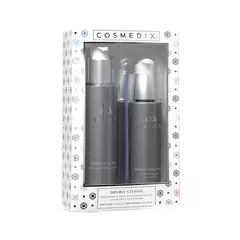
Double Cleanse
Source: From product name
This product works by removing dirt and oil from the surface of the skin. It uses a combination of mild cleansing agents (cocamidopropyl betaine, coco-glucoside, glyceryl oleate, glycol distearate, lauryl glucoside, sodium cocoamphoacetate, sodium cocoyl glutamate, sodium lauryl glucose carboxylate, sorbeth-30 tetraoleate, xanthan gum) and should be able to cleanse the skin gently. Still keep in mind that any cleansing can disrupt the skin barrier, and most people do not need to cleanse their skin more than once per day.
Even though this formulation is mild, the following cleansing agents could trigger an irritation or allergy for some people: cocamidopropyl betaine, coco-glucoside, glyceryl oleate
Used to create a thicker product consistency
Helps oil and water mix together. Can be irritating
Helps water and oil mix together
Helps oil and water mix together
Helps oil and water mix together and works as a cleansing agent. Creates foam
Helps oil and water mix together
Helps water and oil mix together and works as a cleansing agent
Helps water and oil mix together
Helps water and oil mix together. Used as a cleansing ingredient. Could be an allergen
Used as a cleansing agent (surfactant) in cleansers. Helps water and oil mix together in lotions. Can be irritating
Exfoliation
What does the product description say?
Purity Clean Exfoliating Cleanser gently exfoliates dead skin and helps balance, clarify and refresh the appearance of skin for a more radiant-looking complexion.
Source: Cosmedix
This product can help exfoliate the skin. In other words, it helps break down the bonds between dead cells on the surface of the skin and speed up the skin turnover. Skin often appears softer and brighter after exfoliation, but overdoing it can result in disrupted skin barrier. The following ingredient is doing the exfoliating job in this product: gluconic acid.
A polyhydroxy acid (PHA) that helps shed the dead cells from the skin surface revealing smoother skin. Is believed to be genter than AHAs. It helps attract water to the upper layer of the skin and can stimulate production of skin's own hyaluronic acid resulting in imporved hydration levels. It has been shown to be helpful against acne and clogged pores. Might help reduce fine lines and wrinkles and improve skin tone with long-term application. Can help neutralize free radicals
An exfoliating and moisturizing alpha-hydroxy acid (AHA). Typically causes less irritation than other AHAs, for example, glycolic acid. At high concentrations (about 15%), lactic acid can help reduce lines and wrinkles. Recent studies show that lactic acid can support the "good" bacteria living on skin's surface (healthy skin microbiome)
Three steps removed from the active form of vitamin A - retinoic acid. To have an effect in the skin, it first needs to be converted twice to become the retinoic acid. This means it is less potent than retinol, but could also be less irritating. Once converted to the retinoic acid in the skin, it helps against all signs of aging, improves skin cell turnover and helps fight blemishes and clogged pores. However, in many cosmetic formulations, it is used in a concentration that is too low to have the full effect
Anti-blemish
What does the product description say?
Double Cleanse is a Nourishing and Exfoliating Cleansing Duo that includes best-selling Purity Solution Deep Cleansing Oil and Purity Clean Exfoliating Cleanser that work in harmony together to cleanse your skin for a healthier-looking complexion.
Source: Cosmedix
This product might be able to help reduce blemishes and clogged pores because it contains gluconic acid.
A polyhydroxy acid (PHA) that helps shed the dead cells from the skin surface revealing smoother skin. Is believed to be genter than AHAs. It helps attract water to the upper layer of the skin and can stimulate production of skin's own hyaluronic acid resulting in imporved hydration levels. It has been shown to be helpful against acne and clogged pores. Might help reduce fine lines and wrinkles and improve skin tone with long-term application. Can help neutralize free radicals
A plant extract that has anti-bacterial properties. Can be used to preserve the product. Can be irritating
Three steps removed from the active form of vitamin A - retinoic acid. To have an effect in the skin, it first needs to be converted twice to become the retinoic acid. This means it is less potent than retinol, but could also be less irritating. Once converted to the retinoic acid in the skin, it helps against all signs of aging, improves skin cell turnover and helps fight blemishes and clogged pores. However, in many cosmetic formulations, it is used in a concentration that is too low to have the full effect
Traditionally used to treat sunburns, dermatitis and inflammation, but evidence for its effectiveness is lacking. The extract can contain humectants that help attract water into the skin
How honest is this product?
| Promise | Can it deliver? |
|---|---|
| Cleansing | |
| Exfoliation | |
| Anti-blemish |
Total Promises Fulfilled score: 91/100.
We receive a small commission for purchases made through these links at no cost for you. Thank you for your support! Learn more
Potential irritants
Comedogenic ingredients
User reviews (0)
Averages from community submissions.
No reviews yet for this product.
Be the first to share your experience!
Tried this product?
Help capture what the ingredient list can't—texture, finish, pilling, scent, and more. Answer what you can, skip the rest.
Takes ~30 seconds.
Reviews are shown in aggregate. No personal details.
Key Actives
A polyhydroxy acid (PHA) that helps shed the dead cells from the skin surface revealing smoother skin. Is believed to be genter than AHAs. It helps attract water to the upper layer of the skin and can stimulate production of skin's own hyaluronic acid resulting in imporved hydration levels. It has been shown to be helpful against acne and clogged pores. Might help reduce fine lines and wrinkles and improve skin tone with long-term application. Can help neutralize free radicals
Pure form of vitamin E. Can help moisturise and protect the skin from free radicals. Often used to help stabilise other ingredients or the formula itself
Three steps removed from the active form of vitamin A - retinoic acid. To have an effect in the skin, it first needs to be converted twice to become the retinoic acid. This means it is less potent than retinol, but could also be less irritating. Once converted to the retinoic acid in the skin, it helps against all signs of aging, improves skin cell turnover and helps fight blemishes and clogged pores. However, in many cosmetic formulations, it is used in a concentration that is too low to have the full effect
An emollient that helps soften the upper layer of the skin. Might have some weak anti-oxidant properties
An emollient that helps soften the skin and might help calm down inflammation
A plant extract that has anti-bacterial properties. Can be used to preserve the product. Can be irritating
Red algae extract that helps attract water to the upper layer of the skin and might contain antioxidants
A plant extract that has anti-bacterial properties. Can be used to preserve the product. Can be irritating
Red algae extract that helps attract water to the upper layer of the skin and might contain antioxidants
A good mix of fatty acids that forms a protective layer on the skin. Improves the shelf life of products. Derived from coconut and glycerin
Helps water and oil mix together
Helps soften the upper layer of the skin
A good moisturizing plant oil. Due to the high linoleic acid content, it helps soften the upper layer of the skin, reduce water loss and support skin barrier function
A good emollient that helps soften the skin and helps repair its barrier function. It can clog pores if used in high concentrations.
One of the best moisturizing ingredients. Naturally present in skin. It attracts water to the upper layer of the skin working as a humectant
Helps oil and water mix together and works as a cleansing agent. Creates foam
Helps water and oil mix together. Used as a cleansing ingredient. Could be an allergen
Used as a cleansing agent (surfactant) in cleansers. Helps water and oil mix together in lotions. Can be irritating
Helps oil and water mix together. Can be irritating
Helps oil and water mix together
Helps water and oil mix together and works as a cleansing agent
Used to create a thicker product consistency
Potential irritants
Three steps removed from the active form of vitamin A - retinoic acid. To have an effect in the skin, it first needs to be converted twice to become the retinoic acid. This means it is less potent than retinol, but could also be less irritating. Once converted to the retinoic acid in the skin, it helps against all signs of aging, improves skin cell turnover and helps fight blemishes and clogged pores. However, in many cosmetic formulations, it is used in a concentration that is too low to have the full effect
A plant extract that has anti-bacterial properties. Can be used to preserve the product. Can be irritating
A plant extract that might have some anti-oxidant effect
A plant extract that is rich in a fragrance compound eugenol that is a frequent allergen and can be irritating. It might also contain anti-oxidants to help neutralize free radicals
An essentil oil from orange peel. Potential allergen and can be irritating
A common frangrance that can easily irritate skin, especially if exposed to air, light or heat
Helps water and oil mix together. Used as a cleansing ingredient. Could be an allergen
Used as a cleansing agent (surfactant) in cleansers. Helps water and oil mix together in lotions. Can be irritating
An essential oil. Potential allergen and can be irritating. It has some anti-bacterial properties
An essential oil that can be irritating. Has some anti-bacterial properties
A plant extract that might have some anti-oxidant effect
A plant extract that can contain an active compound curcumin, that may have some anti-inflammatory properties when applied to the skin, but solid research is lacking and the typical concentration used in skincare products is too low. Can be an irritant
Used as a fragrance. Canbe irritating
An emollient that helps soften the skin but is not effective for restoring its barrier function. Might be helpful to calm down inflammation
A good mix of fatty acids that forms a protective layer on the skin. Improves the shelf life of products. Derived from coconut and glycerin
A plant oil that helps soften the upper layer of the skin. Is unlikely to be helpful in restoring skin barrier function due to the low content of linoleic acid
An emollient that helps soften the upper layer of the skin. Might have some weak anti-oxidant properties
A good emollient that helps soften the skin and helps repair its barrier function. It can clog pores if used in high concentrations.
A more stable but less bio-available form of vitamin E compared to Tocopherol. Might help moisturize and protect the skin from free radicals, but mostly used in low concentrations to stabilize other ingredients.
A plant extract that might be helpful to neutralize free radicals in skin
A plant extract that might have some anti-oxidant effect helping neutralize free radicals in skin
Eggplant fruit extract. Might have some anti-oxidant effect
Being a lipid soluble form of vitamin C, it is more stable and can penetrate the skin better than L-Ascorbic acid. It is effective in protecting the skin from free radicals, as well as evening the skin tone, but is less effective in stimulating collagen production compared to L-Ascorbic acid.
Helps preserve products and creates a nice product texture
Helps oil and water mix together and works as a cleansing agent. Creates foam
An exfoliating and moisturizing alpha-hydroxy acid (AHA). Typically causes less irritation than other AHAs, for example, glycolic acid. At high concentrations (about 15%), lactic acid can help reduce lines and wrinkles. Recent studies show that lactic acid can support the "good" bacteria living on skin's surface (healthy skin microbiome)
Helps water and oil mix together and works as a cleansing agent
Traditionally used to treat sunburns, dermatitis and inflammation, but evidence for its effectiveness is lacking. The extract can contain humectants that help attract water into the skin
A polyhydroxy acid (PHA) that helps shed the dead cells from the skin surface revealing smoother skin. Is believed to be genter than AHAs. It helps attract water to the upper layer of the skin and can stimulate production of skin's own hyaluronic acid resulting in imporved hydration levels. It has been shown to be helpful against acne and clogged pores. Might help reduce fine lines and wrinkles and improve skin tone with long-term application. Can help neutralize free radicals
Comedogenic ingredients
A good emollient that helps soften the skin and helps repair its barrier function. It can clog pores if used in high concentrations.
Red algae extract that helps attract water to the upper layer of the skin and might contain antioxidants
Red algae extract that helps attract water to the upper layer of the skin and might contain antioxidants
All ingredients
An emollient that helps soften the skin but is not effective for restoring its barrier function. Might be helpful to calm down inflammation
A good mix of fatty acids that forms a protective layer on the skin. Improves the shelf life of products. Derived from coconut and glycerin
Acts as a solvent for other ingredients. Speeds up the absorption of other ingredients into the skin
A plant oil that helps soften the upper layer of the skin. Is unlikely to be helpful in restoring skin barrier function due to the low content of linoleic acid
An emollient that helps soften the upper layer of the skin. Might have some weak anti-oxidant properties
An emollient that helps soften the skin and might help calm down inflammation
A good moisturizing plant oil. Due to the high linoleic acid content, it helps soften the upper layer of the skin, reduce water loss and support skin barrier function
A good emollient that helps soften the skin and helps repair its barrier function. It can clog pores if used in high concentrations.
A more stable but less bio-available form of vitamin E compared to Tocopherol. Might help moisturize and protect the skin from free radicals, but mostly used in low concentrations to stabilize other ingredients.
Pure form of vitamin E. Can help moisturise and protect the skin from free radicals. Often used to help stabilise other ingredients or the formula itself
Three steps removed from the active form of vitamin A - retinoic acid. To have an effect in the skin, it first needs to be converted twice to become the retinoic acid. This means it is less potent than retinol, but could also be less irritating. Once converted to the retinoic acid in the skin, it helps against all signs of aging, improves skin cell turnover and helps fight blemishes and clogged pores. However, in many cosmetic formulations, it is used in a concentration that is too low to have the full effect
A plant extract that has anti-bacterial properties. Can be used to preserve the product. Can be irritating
A plant extract that might be helpful to neutralize free radicals in skin
Red algae extract that helps attract water to the upper layer of the skin and might contain antioxidants
A plant extract that might have some anti-oxidant effect helping neutralize free radicals in skin
Eggplant fruit extract. Might have some anti-oxidant effect
A plant extract that might have some anti-oxidant effect
A plant extract that is rich in a fragrance compound eugenol that is a frequent allergen and can be irritating. It might also contain anti-oxidants to help neutralize free radicals
An essentil oil from orange peel. Potential allergen and can be irritating
Being a lipid soluble form of vitamin C, it is more stable and can penetrate the skin better than L-Ascorbic acid. It is effective in protecting the skin from free radicals, as well as evening the skin tone, but is less effective in stimulating collagen production compared to L-Ascorbic acid.
A common frangrance that can easily irritate skin, especially if exposed to air, light or heat
Helps preserve products and creates a nice product texture
One of the best moisturizing ingredients. Naturally present in skin. It attracts water to the upper layer of the skin working as a humectant
Helps oil and water mix together and works as a cleansing agent. Creates foam
Helps water and oil mix together. Used as a cleansing ingredient. Could be an allergen
An exfoliating and moisturizing alpha-hydroxy acid (AHA). Typically causes less irritation than other AHAs, for example, glycolic acid. At high concentrations (about 15%), lactic acid can help reduce lines and wrinkles. Recent studies show that lactic acid can support the "good" bacteria living on skin's surface (healthy skin microbiome)
Used as a cleansing agent (surfactant) in cleansers. Helps water and oil mix together in lotions. Can be irritating
Helps water and oil mix together and works as a cleansing agent
An essential oil. Potential allergen and can be irritating. It has some anti-bacterial properties
An essential oil that can be irritating. Has some anti-bacterial properties
Traditionally used to treat sunburns, dermatitis and inflammation, but evidence for its effectiveness is lacking. The extract can contain humectants that help attract water into the skin
A plant extract that has anti-bacterial properties. Can be used to preserve the product. Can be irritating
A plant extract that might be helpful to neutralize free radicals in skin
A plant extract that might have some anti-oxidant effect helping neutralize free radicals in skin
Eggplant fruit extract. Might have some anti-oxidant effect
A plant extract that might have some anti-oxidant effect
A plant extract that is rich in a fragrance compound eugenol that is a frequent allergen and can be irritating. It might also contain anti-oxidants to help neutralize free radicals
A plant extract that can contain an active compound curcumin, that may have some anti-inflammatory properties when applied to the skin, but solid research is lacking and the typical concentration used in skincare products is too low. Can be an irritant
Used as a fragrance. Canbe irritating
Red algae extract that helps attract water to the upper layer of the skin and might contain antioxidants
A polyhydroxy acid (PHA) that helps shed the dead cells from the skin surface revealing smoother skin. Is believed to be genter than AHAs. It helps attract water to the upper layer of the skin and can stimulate production of skin's own hyaluronic acid resulting in imporved hydration levels. It has been shown to be helpful against acne and clogged pores. Might help reduce fine lines and wrinkles and improve skin tone with long-term application. Can help neutralize free radicals
A preservative. It helps prevent bacterial growth in cosmetic products
Ingredient list view
Olea europaea fruit oil, Caprylic/capric triglyceride, Sorbeth-30 tetraoleate, Propanediol, Moringa oleifera seed oil, Aleurites moluccanus seed oil, Argania spinosa kernel oil, Carthamus tinctorius seed oil, Sesamum indicum seed oil, Glycine soja oil, Tocopheryl acetate, Tocopherol, Retinyl palmitate, Melia azadirachta leaf extract, Melia azadirachta flower extract, Amber powder, Corallina officinalis extract, Coccinia indica fruit extract, Solanum melongena fruit extract, Curcuma longa leaf extract, Ocimum sanctum leaf extract, Citrus aurantium dulcis peel oil, Ascorbyl palmitate, Limonene, Ethylhexylglycerin, Caprylyl glycol, Caprylhydroxamic acid, Water, Glycerin, Sodium cocoamphoacetate, Lauryl glucoside, Cocamidopropyl betaine, Lactic acid, Glycol distearate, Coco-glucoside, Glyceryl oleate, Sodium cocoyl glutamate, Sodium lauryl glucose carboxylate, Xanthan gum, Lavandula angustifolia oil, Melaleuca alternifolia leaf oil, Mentha piperita oil, Aloe barbadensis leaf juice, Melia azadirachta leaf extract, Melia azadirachta flower extract, Coccinia indica fruit extract, Solanum melongena fruit extract, Aloe barbadensis flower extract, Ocimum sanctum leaf extract, Curcuma longa root extract, Ocimum basilicum flower/leaf extract, Corallina officinalis extract, Riboflavin, Gluconic acid, Phenoxyethanol, Ethylhexylglycerin
- Use of “natural” oils for moisturization: Review of olive, coconut, and sunflower seed oil
- Moringa oleifera seed oil: Composition, nutritional aspects and health attributes
- Moringa oleifera Seeds and Oil: Characteristics and Uses for Human Health
- Natural vegetable fats in the prevention of irritant contact dermatitis
- Protein and oil composition of sesame seeds (Sesamum indicum, L.) grown in the Gizan area of Saudi Arabia
- Triglyceride composition of Sesamum indicum seed oil
- Seed oil content and fatty acid composition in East African sesame (Sesamum indicum L.) accessions evaluated over 3 years
- Vitamin E in dermatology
- Vitamin E and Skin Health
- Melia azedarach
- Preliminary and Pharmacological Profile of Melia azedarach L.: An Overview
- In Vitro antioxidative and anti-inflammatory activities of the ethanol extract of eggplant (Solanum melongena) stalks in macrophage RAW 264.7 cells
- Glycerol and the skin: holistic approach to its origin and functions
- Epidermal and dermal effects of topical lactic acid
- Dual Effects of Alpha-Hydroxy Acids on the Skin
- In Vitro Assessment of Skin Irritation Potential of Surfactant-based Formulations by Using a 3-D Skin Reconstructed Tissue Model and Cytokine Response
- Allergen of the Year—Alkyl Glucoside
- Contact Sensitization to Emulsifying Agents: An Underrated Issue?
- Safety Assessment of Amino Acid Alkyl Amides as Used in Cosmetics
- Irritant and sensitizing potential of eight surfactants commonly used in skin cleansers: an evaluation of 105 patients
- Vaughn, A. R., Branum, A., & Sivamani, R. K. (2016). Effects of Turmeric (Curcuma longa) on Skin Health: A Systematic Review of the Clinical Evidence. Phytotherapy Research, 30(8), 1243–1264. doi:10.1002/ptr.5640
- Alpha-hydroxyacids and carboxylic acids