Works for:
based on ingredients and %- Cleansing
Can it cause trouble?
- Irritation risk: high
- Comedogenic risk ingredients: 2
Key actives


Works for
Cleansing
What does the product description say?
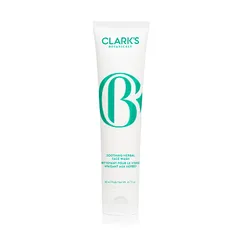
Nourish the skin with Clarks Soothing Herbal Face Wash, a hydrating and creamy facial wash that blends botanical and herbal ingredients to deeply cleanse the skin without stripping it of moisture.
Source: SpaceNK US
This product works by removing dirt and oil from the surface of the skin. It uses a combination of mild cleansing agents (carbomer, cetearyl alcohol, cetyl alcohol, coco-glucoside, decyl glucoside, glyceryl caprylate, polyglyceryl-4 caprate, polyglyceryl-4 cocoate, polyglyceryl-6 caprylate, polyglyceryl-6 ricinoleate) and should be able to cleanse the skin gently. Still keep in mind that any cleansing can disrupt the skin barrier, and most people do not need to cleanse their skin more than once per day.
Even though this formulation is mild, the following cleansing agents could trigger an irritation or allergy for some people: coco-glucoside, decyl glucoside
Helps create a thicker or gel-like product texture. It is not a surfactant but can be used in gentle cleansing formulations
A non-drying alcohol. Works as an emollient. Helps water and oil mix together and creates a nice product texture
A non-drying alcohol that works to soften the skin and stabilize product formulations helping oil and water mix together
Used as a cleansing agent (surfactant) in cleansers. Helps water and oil mix together in lotions. Can be irritating
Helps oil and water mix together. Can be irritating
An emollient that can also help water and oil mix together, as well as prevent bacteria growth in products
Helps oil and water mix together
Helps oil and water mix together
How honest is this product?
| Promise | Can it deliver? |
|---|---|
| Cleansing |
Total Promises Fulfilled score: 100/100.
We receive a small commission for purchases made through these links at no cost for you. Thank you for your support! Learn more
Potential irritants
Comedogenic ingredients
User reviews (0)
Averages from community submissions.
No reviews yet for this product.
Be the first to share your experience!
Tried this product?
Help capture what the ingredient list can't—texture, finish, pilling, scent, and more. Answer what you can, skip the rest.
Takes ~30 seconds.
Reviews are shown in aggregate. No personal details.
| Product | Similarity | Price | Irritancy |
|---|---|---|---|
 Clark's Botanicals Soothing Herbal Face Wash | Current | $45.00 | |
Naturium Multi-Calm Cream Cleanser | 88% | ≈ $15.57 | |
Cleaning Supply Retinol 24 + Peptide Face Wash, Smoothing, Sulfate-Free | 85% | - | |
 SVR Sebiaclear Cleansing Cream | 84% | ≈ $3.29 | |
 JUICE TO CLEANSE Vinegar Kombucha Vegan Cream | 82% | $25.20 | |
 BIOTHERM CERA CLEANSER CREAM-TO-FOAM | 82% | ≈ $26.66 |
Key Actives
Is proven to be effective in reducing blemishes, evening out skin tone and helping to improve lines and wrinkles. It helps the skin to repair sun damage, calm down inflammation and keep maintain good levels of moisture. The concentration of about 2% is effective for supporting the skin barrier and evening out the skin tone. Concentration of 4-6% is better for helping with acne and balancing the sebum production
A non-drying alcohol. Works as an emollient. Helps water and oil mix together and creates a nice product texture
A non-drying alcohol that works to soften the skin and stabilize product formulations helping oil and water mix together
An emollient that can also help water and oil mix together, as well as prevent bacteria growth in products
Helps oil and water mix together. Can be irritating
One of the best moisturizing ingredients. Naturally present in skin. It attracts water to the upper layer of the skin working as a humectant
An emollient that helps soften the skin. Often used to stabilize other ingredients, for example, sunscreen
Naturally present in skin and helps to attract water to its upper layer
Helps oil and water mix together
Helps oil and water mix together
A sugar that attracts water to the upper layer of the skin
Used as a cleansing agent (surfactant) in cleansers. Helps water and oil mix together in lotions. Can be irritating
One of the best moisturizing ingredients. Attracts water into the upper layer of the skin
A good mix of fatty acids that forms a protective layer on the skin. Improves the shelf life of products. Derived from coconut and glycerin
Helps create a thicker or gel-like product texture. It is not a surfactant but can be used in gentle cleansing formulations
Potential irritants
A plant extract that can be irritating. It can have some anti-bacterial properties, but there are no evidence of a beneficial effect for skin
Used for fragrance and contains volatile compounds that can irritate the skin
Plant extract that can have healing and anti-inflammatory properties. It is a potential allergen and can be irritating
Used as a cleansing agent (surfactant) in cleansers. Helps water and oil mix together in lotions. Can be irritating
A fragrant plant oil, can be irritating
Might be somewhat helpful in reducing hyperpigmentation and neutralizing free radicals but its typical concentration in a product is too low for having an effect
Traditionally used to treat sunburns, dermatitis and inflammation, but evidence for its effectiveness is lacking. The extract can contain humectants that help attract water into the skin
A more stable but less bio-available form of vitamin E compared to Tocopherol. Might help moisturize and protect the skin from free radicals, but mostly used in low concentrations to stabilize other ingredients.
A good mix of fatty acids that forms a protective layer on the skin. Improves the shelf life of products. Derived from coconut and glycerin
A preservative that comes from radishes fermented by a bacteria. New research suggests that the preservation properties in the ingredient come from an ammonium salt that is not present naturally in radish root but used in its cultivation. Is problematic because the exact amount of the preservative agents is difficult to determine
Comedogenic ingredients
A non-drying alcohol. Works as an emollient. Helps water and oil mix together and creates a nice product texture
Might help to attract water to the upper layer of the skin
All ingredients
Enhances the product texture and makes it more spreadable. Helps reduce water loss from the outer layer of skin. Extands the shelf life by preventing bacteria growth
Helps attract water to the upper layer of the skin and soften it
One of the best moisturizing ingredients. Naturally present in skin. It attracts water to the upper layer of the skin working as a humectant
A non-drying alcohol. Works as an emollient. Helps water and oil mix together and creates a nice product texture
An emollient that helps soften the skin. Often used to stabilize other ingredients, for example, sunscreen
A non-drying alcohol that works to soften the skin and stabilize product formulations helping oil and water mix together
A plant extract that can be irritating. It can have some anti-bacterial properties, but there are no evidence of a beneficial effect for skin
Might help to attract water to the upper layer of the skin
Naturally present in skin and helps to attract water to its upper layer
Is proven to be effective in reducing blemishes, evening out skin tone and helping to improve lines and wrinkles. It helps the skin to repair sun damage, calm down inflammation and keep maintain good levels of moisture. The concentration of about 2% is effective for supporting the skin barrier and evening out the skin tone. Concentration of 4-6% is better for helping with acne and balancing the sebum production
Might be somewhat helpful in reducing hyperpigmentation and neutralizing free radicals but its typical concentration in a product is too low for having an effect
Traditionally used to treat sunburns, dermatitis and inflammation, but evidence for its effectiveness is lacking. The extract can contain humectants that help attract water into the skin
Used for fragrance and contains volatile compounds that can irritate the skin
Plant extract that can have healing and anti-inflammatory properties. It is a potential allergen and can be irritating
A more stable but less bio-available form of vitamin E compared to Tocopherol. Might help moisturize and protect the skin from free radicals, but mostly used in low concentrations to stabilize other ingredients.
Used as a cleansing agent (surfactant) in cleansers. Helps water and oil mix together in lotions. Can be irritating
One of the best moisturizing ingredients. Attracts water into the upper layer of the skin
A good mix of fatty acids that forms a protective layer on the skin. Improves the shelf life of products. Derived from coconut and glycerin
An emollient that can also help water and oil mix together, as well as prevent bacteria growth in products
A preservative that comes from radishes fermented by a bacteria. New research suggests that the preservation properties in the ingredient come from an ammonium salt that is not present naturally in radish root but used in its cultivation. Is problematic because the exact amount of the preservative agents is difficult to determine
Helps create a thicker or gel-like product texture. It is not a surfactant but can be used in gentle cleansing formulations
An emollient that helps create a nice silky finish on the skin
A fragrant plant oil, can be irritating
Ingredient list view
Water, Decyl glucoside, C12-15 alkyl benzoate, Methyl gluceth-20, Glycerin, Cetearyl alcohol, Octyldodecyl neopentanoate, Ppg-3 benzyl ether myristate, Cetyl alcohol, Aminomethyl propanol, Jasminum officinale flower extract, Arnica montana flower extract, Hypnea musciformis extract, Sodium pca, Niacinamide, Cucumis sativus fruit extract, Aloe barbadensis leaf extract, Lavandula angustifolia extract, Chamomilla recutita flower extract, Polyglyceryl-6 caprylate, Polyglyceryl-4 caprate, Polyglyceryl-4 cocoate, Polyglyceryl-6 ricinoleate, Tocopheryl acetate, Trehalose, Coco-glucoside, Sodium hyaluronate, Caprylic/capric triglyceride, Caprylhydroxamic acid, Glyceryl caprylate, Leuconostoc/radish root ferment filtrate, Carbomer, Sodium phytate, Polyquaternium-51, Lavandula angustifolia flower oil, Eucalyptol, Juniperus virginiana wood oil, Linalool
- Ecofriendly surfactant is allergen of the year
- Glycerol and the skin: holistic approach to its origin and functions
- Amended Safety Assessment of Alkyl Esters as Used in Cosmetics
- Effects of Topical Arnica Gel on Post-Laser Treatment Bruises
- Effects of microcurrent application alone or in combination with topical Hypericum perforatum L. and Arnica montana L. on surgically induced wound healing in Wistar rats
- The seamy side of natural medicines: contact sensitization to arnica (Arnica montana L.) and marigold (Calendula officinalis L.)
- Accelerated resolution of laser‐induced bruising with topical 20% arnica: a rater‐blinded randomized controlled trial
- Niacinamide - mechanisms of action and its topical use in dermatology
- Gehring, W. (2004). Nicotinic acid/niacinamide and the skin. Journal of Cosmetic Dermatology, 3(2), 88–93. doi:10.1111/j.1473-2130.2004.00115.x
- In Vitro Assessment of Skin Irritation Potential of Surfactant-based Formulations by Using a 3-D Skin Reconstructed Tissue Model and Cytokine Response
- Allergen of the Year—Alkyl Glucoside
- Hyaluronic acid: A key molecule in skin aging
- Hyaluronan (Hyaluronic Acid): a natural moisturizer for skin care