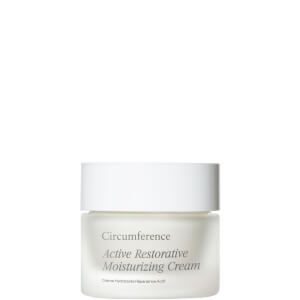
Circumference Active Restorative Moisturizing Cream
Works for
2 of 2 advertised claims delivered
MoisturizingPalmitoyl tetrapeptide-7, Palmitoyl tripeptide-1 + 29 moreStrong evidence
“Active Restorative Moisturizing Cream”
This product can help improve hydration of the skin with the two types of ingredients.
The first type is called “humectants”:
these ingredients help attract water.
When humectants are on the surface of the skin, they “pull in” the moisture from the outside environment, or from
within deeper layers of the skin. The following ingredients in this product do the job:
betaine, glycerin.
This product also contains ingredients called “occlusives”. They help reduce the speed with which our skin loses moisture to the outside environment. These ingredients also help soften the upper layer of the skin, so it feels less tight and nicer to the touch. The following ingredients in this product do the job: plukenetia volubilis seed oil, helianthus annuus extract.
The following ingredients in this product are especially good for supporting the skin barrier and helping with the hydration level: palmitoyl tetrapeptide-7, palmitoyl tripeptide-1
Anti-agingAdenosine, Palmitoyl tetrapeptide-7 + 4 moreStrong evidence
“All to bring youthful radiance to your skin.”
This product can help reduce and prevent fine lines and wrinkles, improve skin elasticity and firmness because it contains adenosine.
These ingredients in the product can also be helpful, even though there is less evidence for their effectiveness: palmitoyl tetrapeptide-7, palmitoyl tripeptide-1.
Keep in mind that it typically takes at least 6 weeks to notice any results because the changes that are needed to improve fine lines and elasticity happen in the deeper layers of the skin. No topical anti-aging product can “erase” wrinkles or fully reverse signs of aging.
Can it cause trouble?
Irritancy4 strong irritants: Rosmarinus officinalis leaf extract, Citrus aurantium bergamia fruit oil + 2 more — patch-test recommendedHigh risk
Comedogenic2 ingredients rated 2 or more on the 0–5 pore-clogging scale2 flagged

User reviews
Be the first — your take helps the next person decide.
Ingredients
Filter by role to see what each ingredient is doing.
Water~45–55%
Glycerin~4.7–5.7%
- Irritation risk
- Low
One of the best moisturizing ingredients. Naturally present in skin. It attracts water to the upper layer of the skin working as a humectant
More about GlycerinOpuntia ficus-indica seed oil~4.1–5%
- Irritation risk
- Medium
A plant oil that helps soften the upper layer of the skin and can support skin's barrier function due to its high content of linoleic acid. It also has anti-microbial properties
More about Opuntia ficus-indica seed oilSclerocarya birrea seed oil~3.1–3.7%
- Irritation risk
- Medium
An emollient that helps to soften the skin. It has a high contetn of oleic acid that might weaken the skin barrier. Might have some anti-oxidant properties. It might be somewhat helpful against hyperpigmentation.
More about Sclerocarya birrea seed oilCetearyl olivate~2.3–2.8%
Methylpropanediol~1.9–2.3%
Punica granatum seed oil~1.6–2%
- Irritation risk
- Low
Helps soften the upper layer of the skin
More about Punica granatum seed oilOrbignya oleifera seed oil~1.5–1.8%
- Irritation risk
- Low
A plant oil that can help soften the upper layer of the skin. Might be helpful in calming down inflammation in skin
More about Orbignya oleifera seed oilDicaprylyl ether~1.2–1.4%
- Irritation risk
- Low
Helps soften the upper layer of the skin while creating a non-greasy feel on the skin. Helps to dissolve other ingredients
More about Dicaprylyl etherSorbitan olivate~0.95–1.15%
Hydrogenated ethylhexyl olivate~0.7–1.05%
- Irritation risk
- Low
Helps soften the upper layer of the skin
More about Hydrogenated ethylhexyl olivateAdenosine~0.55–0.8%
- Irritation risk
- Low
Might help improve cell turnover and reduce inflammation in skin. One study shows that the ingredients might be able to help reduce dynamic wrinkles (for example, in the corners of the eyes or on the forehead)
More about AdenosineVitis vinifera leaf extract~0.5–0.7%
- Irritation risk
- Medium
Chlorella vulgaris extract~0.45–0.65%
- Irritation risk
- Medium
- Comedogenicity
- 3/5
A plant extract that can help to attract water to the upper layer of the skin and might have some anti-oxidant and anti-inflammatory properties
More about Chlorella vulgaris extractHyaluronic acid~0.4–0.6%
- Irritation risk
- Low
One of the best moisturizing ingredients. Attracts water into the upper layer of the skin. Naturally present in skin. Typically has large molecule size unless advertised otherwise on the product label. Helps support skin's barrier function and may help to reduce inflammation
More about Hyaluronic acidHelianthus annuus extract~0.45–0.65%
- Irritation risk
- Low
Helps soften the upper layer of the skin
More about Helianthus annuus extractHippophae rhamnoides fruit oil~0.4–0.6%
- Irritation risk
- High
A plant oil that might somewhat help to neutralize free radicals. It could be irritating
More about Hippophae rhamnoides fruit oilMoringa oleifera seed oil~0.35–0.65%
- Irritation risk
- Medium
A plant oil that helps soften the upper layer of the skin. Is unlikely to be helpful in restoring skin barrier function due to the low content of linoleic acid
More about Moringa oleifera seed oilAmmonium acryloyldimethyltaurate/vp copolymer~0.3–0.55%
- Irritation risk
- Low
Increases thickness of a product. Texture enhancer for oil-in-water emulsions
More about Ammonium acryloyldimethyltaurate/vp copolymerBetaine~0.25–0.5%
- Irritation risk
- Low
Helps attract water to the upper layer of the skin and improves the product texture
More about BetaineTremella fuciformis sporocarp extract~0.25–0.5%
- Irritation risk
- Low
Mushroom extract that helps attract water to the upper layer of the skin
More about Tremella fuciformis sporocarp extractPalmitoyl tetrapeptide-7~0.3–0.55%
- Irritation risk
- Low
A type of peptide. Peptides are excellent moisturizers and might be able support collagen production reducing fine lines and wrinkles
More about Palmitoyl tetrapeptide-7Palmitoyl tripeptide-1~0.3–0.5%
- Irritation risk
- Low
A type of peptide. Peptides are excellent moisturizers and might be able support collagen production reducing fine lines and wrinkles
More about Palmitoyl tripeptide-1Butylene glycol~0.25–0.45%
- Irritation risk
- Low
Used to create a nice product texture and help delivery of other ingredients. Might be somewhat helpful in attracting water to the upper layer of the skin
More about Butylene glycolCaprylic/capric triglyceride~0.3–0.55%
- Irritation risk
- Medium
A good mix of fatty acids that forms a protective layer on the skin. Improves the shelf life of products. Derived from coconut and glycerin
More about Caprylic/capric triglycerideCaprylyl glycol~0.25–0.5%
- Irritation risk
- Medium
Helps preserve products and creates a nice product texture
More about Caprylyl glycolCarbomer~0.25–0.45%
- Irritation risk
- Low
Helps create a thicker or gel-like product texture. It is not a surfactant but can be used in gentle cleansing formulations
More about CarbomerCetearyl alcohol~0.3–0.5%
- Irritation risk
- Low
- Comedogenicity
- 2/5
A non-drying alcohol. Works as an emollient. Helps water and oil mix together and creates a nice product texture
More about Cetearyl alcoholCetyl alcohol~0.3–0.5%
- Irritation risk
- Low
A non-drying alcohol that works to soften the skin and stabilize product formulations helping oil and water mix together
More about Cetyl alcoholCopernicia cerifera cera~0.3–0.5%
- Irritation risk
- Low
Brazilian palm wax. Helps soften the upper layer of the skin
More about Copernicia cerifera ceraPlukenetia volubilis seed oil~0.3–0.5%
- Irritation risk
- Low
A plant oil that works as a good moisturizer by softening the upper layer of the skin. Might be helpful in reducing inflammation in skin and reducing blemishes due to the large content of linoleic acid
More about Plukenetia volubilis seed oilHydrogenated olive oil unsaponifiables~0.25–0.5%
- Irritation risk
- Low
Help soften the upper layer of the skin
More about Hydrogenated olive oil unsaponifiablesLactic acid~0.25–0.45%
- Irritation risk
- Medium
An exfoliating and moisturizing alpha-hydroxy acid (AHA). Typically causes less irritation than other AHAs, for example, glycolic acid. At high concentrations (about 15%), lactic acid can help reduce lines and wrinkles. Recent studies show that lactic acid can support the "good" bacteria living on skin's surface (healthy skin microbiome)
More about Lactic acidMyristyl alcohol~0.25–0.5%
- Irritation risk
- High
Helps to stabilize the product formulation while softening the upper layer of the skin. Can be irritating
More about Myristyl alcoholOenothera biennis oil~0.25–0.5%
- Irritation risk
- Medium
Helps soften the upper layer of the skin and can support skin barrier function
More about Oenothera biennis oilOryza sativa bran extract~0.25–0.45%
Polysorbate 20~0.25–0.5%
Propanediol~0.25–0.5%
- Irritation risk
- Low
Acts as a solvent for other ingredients. Speeds up the absorption of other ingredients into the skin
More about PropanediolRhus verniciflua peel cera~0.25–0.5%
- Irritation risk
- Low
Rosmarinus officinalis leaf extract~0.2–0.4%
- Irritation risk
- High
Can be helpful in reducing inflammation in skin, including inflamed acne. It can be irritating
More about Rosmarinus officinalis leaf extractSimmondsia chinensis seed oil~0.25–0.5%
- Irritation risk
- Medium
Softens the upper layer of skin and helps restore the healthy skin barrier. Has shown to help calm down inflammation in skin. It is a stable oil, meaning that it retains its properties even when exposed to air.
More about Simmondsia chinensis seed oilJasminum sambac flower extract~0.2–0.35%
- Irritation risk
- Low
Citrus aurantium bergamia fruit oil~0.2–0.35%
- Irritation risk
- High
A plant oil with a high content of volatile compounds that can irritate the skin and lead to allergic reactions. Can lead to photosensitivity
More about Citrus aurantium bergamia fruit oilSodium lactate~0.2–0.35%
- Irritation risk
- Medium
Helps attract water to the upper layer of the skin. Is often used to adjust the pH level of the product
More about Sodium lactateSodium phytate~0.2–0.35%
Sodium polyacrylate~0.2–0.4%
- Irritation risk
- Low
Used to create a gel-like product texture, as well as to stabilize emulsions
More about Sodium polyacrylatePhenoxyethanol~0.15–0.25%
- Irritation risk
- Low
A preservative. It helps prevent bacterial growth in cosmetic products
More about PhenoxyethanolTocopherol~0.15–0.3%
- Irritation risk
- Low
Pure form of vitamin E. Can help moisturise and protect the skin from free radicals. Often used to help stabilise other ingredients or the formula itself
More about TocopherolPotassium sorbate~0.15–0.3%
Limonene~0.1–0.15%
- Irritation risk
- High
A common frangrance that can easily irritate skin, especially if exposed to air, light or heat
More about LimoneneLinalool~0.05–0.15%
Ingredient list view
Water, Glycerin, Opuntia ficus-indica seed oil, Sclerocarya birrea seed oil, Cetearyl olivate, Methylpropanediol, Punica granatum seed oil, Orbignya oleifera seed oil, Dicaprylyl ether, Sorbitan olivate, Hydrogenated ethylhexyl olivate, Adenosine, Vitis vinifera leaf extract, Chlorella vulgaris extract, Hyaluronic acid, Helianthus annuus extract, Hippophae rhamnoides fruit oil, Moringa oleifera seed oil, Ammonium acryloyldimethyltaurate/vp copolymer, Betaine, Tremella fuciformis sporocarp extract, Palmitoyl tetrapeptide-7, Palmitoyl tripeptide-1, Butylene glycol, Caprylic/capric triglyceride, Caprylyl glycol, Carbomer, Cetearyl alcohol, Cetyl alcohol, Copernicia cerifera cera, Plukenetia volubilis seed oil, Hydrogenated olive oil unsaponifiables, Lactic acid, Myristyl alcohol, Oenothera biennis oil, Oryza sativa bran extract, Polysorbate 20, Propanediol, Rhus verniciflua peel cera, Rosmarinus officinalis leaf extract, Simmondsia chinensis seed oil, Jasminum sambac flower extract, Citrus aurantium bergamia fruit oil, Sodium lactate, Sodium phytate, Sodium polyacrylate, Phenoxyethanol, Tocopherol, Potassium sorbate, Limonene, Linalool
Compare prices
Retailers ranked by price — lowest first.

Affiliate links · prices updated regularly
Worth comparing, line by line.
Match % combines shared ingredients, the first five ingredients, shared actives and hero ingredients, irritancy (lower counts in the alternative's favour), texture and body area. Only products in the same routine step are compared.
| CircumferenceActive Restorative Moisturizing CreamYOUR PRODUCT | Paula's choiceResist Intensive Repair Cream | |
|---|---|---|
| Match | — | 50% |
| Price | $147.05 | $34.41−$112.64 |
| Shared key ingredients | — | 7 of 18 |
| Key difference | — | Niacinamide |
| Irritancy | High | Medium |
| Drying alcohol | — | — |
| View product | Shop |

Product summary
Judging from the ingredient list, "Circumference - Active Restorative Moisturizing Cream" works well for improving skin hydration This moisturizer uses a good combo of humectants and emollients. These both types of ingredients are essentials for improving the skin hydration and keeping the skin barrier healthy. Humectants in this product (betaine, glycerin, hyaluronic acid, sodium lactate and tremella fuciformis sporocarp extract) help to increase the water content in the upper layer of the skin. (These ingredients do so by "capturing" water molecules from the outside air or from within the deeper layers of the skin). Emollients in this formulation (palmitoyl tetrapeptide-7, palmitoyl tripeptide-1, helianthus annuus extract, oenothera biennis oil and opuntia ficus-indica seed oil) help to reduce the moisture loss from the skin. They also soften the skin surface and relieve the feeling of dryness and tightness.
Ingredient callouts
- We like that this moisturizer contains peptides (palmitoyl tripeptide-1 0.30% - 0.50% and palmitoyl tetrapeptide-7 0.30% - 0.55%). There are many different kind of peptides and they are naturally present in our skin. They all are a combination of amino-acids. Some of them work as natural anti-biotics, promote wound-healing and production of collagen. The science is still not settled on how effective peptides in skincare are, but it is very likely that they have a benefit. Peptides might help restore the skin barrier and fight the signs of aging. At the very least, peptides work as humectants: they attract water to the upper layer of the skin and improve its hydration.
- Adenosine 0.55% - 0.80% in this product adds an anti-aging property to it. Adenosine is a chemical present inside our skin cells. A clinical trial confirmed that topical application of adenosine in a low concentration reduce dynamic wrinkles (these are the wrinkles that appear with age in a places where we our mimic is the most active, for example, in the corners of the eyes or on the forehead).
Irritation risk
We assess the overall irritancy of this moisturizer to be high. For a detailed overview of all potential irritants: click here
You can see the detailed formula review with the breakdown of all actives in the product and the full ingredient list with estimated concentrations in the tables below.
Price
The product retails for 110.00£ in the United Kingdom.
For a detailed price comparison: click here.
Sources cited in this review
Every concentration estimate and effectiveness label is anchored to one of these 27 studies and safety reviews.
- 1
- 2
- 3Allergic contact dermatitis due to Opuntia ficus‐indica var. sabotenpubmed.ncbi.nlm.nih.gov
- 4
- 5
- 6

Affiliate links · As an Amazon Associate, WIMJ earns from qualifying purchases.