Works for
1 of 1 advertised claim delivered
Moisturizing10 ingredients credited for this claimGood support
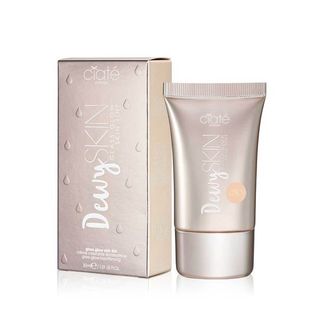
“Hydrating Hyaluronic Acid Brightening Vitamin C Moisture-Boosting Yuzu Extract Soothing Dragon Fruit extract Apply a pearl-sized amount to the face and blend to create a smooth, hydrated canvas that glows all day and provides up to 12 hours hydration*”
This product can help improve hydration of the skin with the two types of ingredients.
The first type is called “humectants”:
these ingredients help attract water.
When humectants are on the surface of the skin, they “pull in” the moisture from the outside environment, or from
within deeper layers of the skin. The following ingredients in this product do the job:
glycerin, sodium hyaluronate.
This product also contains ingredients called “occlusives”. They help reduce the speed with which our skin loses moisture to the outside environment. These ingredients also help soften the upper layer of the skin, so it feels less tight and nicer to the touch. The following ingredients in this product do the job: dimethicone, methicone.
Can it cause trouble?
Irritancy5 strong irritants: Alcohol denat., Parfum + 3 more — patch-test recommendedHigh risk
ComedogenicClean of flagged comedogenic ingredientsNone flagged
User reviews
Be the first — your take helps the next person decide.
Ingredients
Filter by role to see what each ingredient is doing.
Water~45–55%
Cyclohexasiloxane~6.1–7.4%
- Irritation risk
- Low
A silicone that serves as an emollient. Helps create a nice non-greasy feels
More about CyclohexasiloxanePhenyl trimethicone~4.2–5.2%
- Irritation risk
- Low
A type of silicone that can decrease loss of moisture from the skin surface. It helps create a nice product texture
More about Phenyl trimethiconeCetyl peg/ppg-10/1 dimethicone~2.7–3.3%
- Irritation risk
- Low
A type of silicone that helps water and oil mix together. Can help to soften upper layer of the skin
More about Cetyl peg/ppg-10/1 dimethiconeCetearyl ethylhexanoate~2.4–2.9%
- Irritation risk
- Low
An emollient that helps soften the skin
More about Cetearyl ethylhexanoateTrimethylsiloxysilicate~2–2.4%
- Irritation risk
- Low
A type of silicone that helps create a nice product consistency and support the delivery of other ingredients
More about TrimethylsiloxysilicatePeg-4~1.6–2%
- Irritation risk
- Low
Polypropylsilsesquioxane~1.5–1.8%
- Irritation risk
- Low
Ethylhexyl polyhydroxystearate~1.2–1.5%
- Irritation risk
- Low
Disteardimonium hectorite~0.95–1.15%
- Irritation risk
- Low
A type of clay that is used to thicken the product consistency
More about Disteardimonium hectoriteSynthetic fluorphlogopite~0.75–1.1%
- Irritation risk
- Low
A mineral that is used as an optical filter (makes the skin looks nicer through light reflection) and to improve the texture of cosmetic products
More about Synthetic fluorphlogopiteAlcohol denat.~0.55–0.85%
- Irritation risk
- High
Produces temporary toning effect. Can help dissolve other ingredients or preserve products
More about Alcohol denat.Dimethicone~0.55–0.85%
- Irritation risk
- Low
A silicone that helps to reduce water loss from the surface of the skin. Can temporarily "fill in" lines and wrinkles, absorb oil, and create a nice product finish
More about DimethiconePhenoxyethanol~0.45–0.7%
- Irritation risk
- Low
A preservative. It helps prevent bacterial growth in cosmetic products
More about PhenoxyethanolSodium chloride~0.45–0.7%
- Irritation risk
- Low
Used to stabilize mixtures of oil and water, and create thicker, gel-like product textures
More about Sodium chlorideBenzyl alcohol~0.35–0.65%
- Irritation risk
- High
A preservative. Can be used to mask unpleasant smell. Can be irritating
More about Benzyl alcoholSodium dehydroacetate~0.4–0.6%
Magnesium aluminum silicate~0.35–0.65%
- Irritation risk
- Low
Might be helpful in restoring skin barrier function and, when combined with zinc carbonate and malonic acid, reducing fine lines and wrinkles by stimulating elastin production. Also helps stabilize the product formulation
More about Magnesium aluminum silicateTalc~0.5–0.7%
Silica dimethyl silylate~0.3–0.6%
Methicone~0.3–0.55%
- Irritation risk
- Low
A type of silicone that helps soften the upper layer of the skin and reduces the water loss from the skin surface
More about MethiconeTocopheryl acetate~0.25–0.5%
- Irritation risk
- Medium
A more stable but less bio-available form of vitamin E compared to Tocopherol. Might help moisturize and protect the skin from free radicals, but mostly used in low concentrations to stabilize other ingredients.
More about Tocopheryl acetateSilica~0.35–0.65%
Parfum~0.2–0.4%
- Irritation risk
- High
An aromatic blend of unspecified and possibly irritating ingredients
More about ParfumLauroyl lysine~0.25–0.45%
- Irritation risk
- Low
Helps soften the upper layer of the skin and creates a nice product texture
More about Lauroyl lysineSodium phytate~0.25–0.45%
Sodium hyaluronate~0.25–0.45%
- Irritation risk
- Low
One of the best moisturizing ingredients. Attracts water into the upper layer of the skin
More about Sodium hyaluronateTriethoxycaprylylsilane~0.25–0.45%
- Irritation risk
- Low
A type of silicone that helps oil and water mix well together. Helps to disperse other ingredients, e.g. pigments, evenly in a formulation
More about TriethoxycaprylylsilaneAscorbyl palmitate~0.25–0.45%
- Irritation risk
- Medium
Being a lipid soluble form of vitamin C, it is more stable and can penetrate the skin better than L-Ascorbic acid. It is effective in protecting the skin from free radicals, as well as evening the skin tone, but is less effective in stimulating collagen production compared to L-Ascorbic acid.
More about Ascorbyl palmitateGlycerin~0.25–0.5%
- Irritation risk
- Low
One of the best moisturizing ingredients. Naturally present in skin. It attracts water to the upper layer of the skin working as a humectant
More about GlycerinAlcohol~0.25–0.45%
- Irritation risk
- High
Can be drying and contribute to skin irritation. Used in formulars to dissolve other ingredients, create a thinner product consistency or for its antibacterial properties
More about AlcoholHylocereus undatus fruit juice~0.2–0.4%
- Irritation risk
- Low
Citrus junos fruit extract~0.2–0.4%
- Irritation risk
- High
Contains essential oil. Can be irritating and lead to photosensitivity
More about Citrus junos fruit extractLactic acid~0.2–0.4%
- Irritation risk
- Medium
An exfoliating and moisturizing alpha-hydroxy acid (AHA). Typically causes less irritation than other AHAs, for example, glycolic acid. At high concentrations (about 15%), lactic acid can help reduce lines and wrinkles. Recent studies show that lactic acid can support the "good" bacteria living on skin's surface (healthy skin microbiome)
More about Lactic acidPentaerythrityl tetra-di-t-butyl hydroxyhydrocinnamate~0.2–0.4%
- Irritation risk
- Low
Used to increase stability of product formulations
More about Pentaerythrityl tetra-di-t-butyl hydroxyhydrocinnamateCitric acid~0.2–0.35%
- Irritation risk
- Medium
Can work as an exfoliant but is typically used to adjust the product pH
More about Citric acidMaltodextrin~0.2–0.35%
- Irritation risk
- Low
Used to stabilize the product formulation and can help absorb oil
More about MaltodextrinSodium benzoate~0.15–0.3%
Potassium sorbate~0.15–0.25%
Ascorbic acid~0.15–0.25%
- Irritation risk
- High
The most well-researched antioxidant that works in skin. Helps neutralize free radicals supporting collagen production, helping to even out the skin tone and preventing early signs of aging
More about Ascorbic acidCitronellol~0.15–0.25%
Ci 77891~0.15–0.25%
- Irritation risk
- Low
Titanium dioxide~0.1–0.2%
- Irritation risk
- Low
Works as a UV filter when used in high concentrations. It is photostable and is effective mostly against the UVB light, with some protection in the UVA range. In small concentrations, used for its ability to improve the color of cosmetic products. Is usually well tolerated by the skin
More about Titanium dioxideIron oxides~0.1–0.15%
- Irritation risk
- Low
An umbrella term for the following three colorants: CI 77491, CI 77492, CI 77499. They might be able to offer some protection against visible light, but the degree of the protection is not clear
More about Iron oxidesIngredient list view
Water, Cyclohexasiloxane, Phenyl trimethicone, Cetyl peg/ppg-10/1 dimethicone, Cetearyl ethylhexanoate, Trimethylsiloxysilicate, Peg-4, Polypropylsilsesquioxane, Ethylhexyl polyhydroxystearate, Disteardimonium hectorite, Synthetic fluorphlogopite, Alcohol denat., Dimethicone, Phenoxyethanol, Sodium chloride, Benzyl alcohol, Sodium dehydroacetate, Magnesium aluminum silicate, Talc, Silica dimethyl silylate, Methicone, Tocopheryl acetate, Silica, Parfum, Lauroyl lysine, Sodium phytate, Sodium hyaluronate, Triethoxycaprylylsilane, Ascorbyl palmitate, Glycerin, Alcohol, Hylocereus undatus fruit juice, Citrus junos fruit extract, Lactic acid, Pentaerythrityl tetra-di-t-butyl hydroxyhydrocinnamate, Citric acid, Maltodextrin, Sodium benzoate, Potassium sorbate, Ascorbic acid, Citronellol, Ci 77891, Titanium dioxide, Iron oxides
Compare prices
Retailers ranked by price — lowest first.
Affiliate links · prices updated regularly · As an Amazon Associate, WIMJ earns from qualifying purchases.
Sources cited in this review
Every concentration estimate and effectiveness label is anchored to one of these 12 studies and safety reviews.
- 1
- 2Final Report on the Safety Assessment of Dimethicone Copolyoljournals.sagepub.com
- 3
- 4
- 5
- 6Hyaluronic acid: A key molecule in skin agingncbi.nlm.nih.gov

Affiliate links · As an Amazon Associate, WIMJ earns from qualifying purchases.