Works for
MoisturizingPanthenol, Glycerin + 21 moreWorks well
“Infused with jojoba oil and shea butter, the moisturiser nourishes and hydrates, minimising the loss of natural moisture in the epidermis and leaving skin refreshed, dewy and soft.”
This product can help improve hydration of the skin with the two types of ingredients.
The first type is called “humectants”:
these ingredients help attract water.
When humectants are on the surface of the skin, they “pull in” the moisture from the outside environment, or from
within deeper layers of the skin. The following ingredients in this product do the job:
glutamic acid, glycerin.
This product also contains ingredients called “occlusives”. They help reduce the speed with which our skin loses moisture to the outside environment. These ingredients also help soften the upper layer of the skin, so it feels less tight and nicer to the touch. The following ingredients in this product do the job: butyrospermum parkii butter, helianthus annuus seed oil.
The following ingredients in this product are especially good for supporting the skin barrier and helping with the hydration level: panthenol
Anti-agingSide benefit the brand mentions · Retinyl palmitate, Threonine + 4 moreMay help
“Key Benefits Light, oil-free moisturiser brightens the complexion Antioxidants and vitamins fight free radical damage Creates a moisture barrier, retaining essential hydration Anti-inflammatories promote rejuvenation of cells for a healthy, youthful glow Light enough to be used daily, yet penetrates deeply for optimum results Natural ingredients and organic compounds for maximum skin health UK131440009”
This product contains retinyl palmitate, threonine. There is some human evidence that these ingredients help reduce and prevent fine lines and wrinkles and improve skin elasticity and firmness, though it is smaller or less consistent than the evidence for the best anti-aging ingredients.
Evens skin toneSide benefit · Retinyl palmitate, Ascorbic acidMay help
The following ingredient (ingredients) in this product might be helpful, but there is no evidence to confirm that it actually works: retinyl palmitate.
Can it cause trouble?
Irritancy8 strong irritants: Rosa damascena flower water, Citrus aurantium dulcis fruit extract + 6 more — patch-test recommendedHigh risk
Comedogenic3 ingredients rated 2 or more on the 0–5 pore-clogging scale3 flagged


User reviews
Be the first — your take helps the next person decide.
Ingredients
Filter by role to see what each ingredient is doing.
Rosa damascena flower water~28–35%
- Irritation risk
- High
Used to add a nice rose smell to the product. Might help attract water to the upper layer of the skin and have some anti-oxidant effect. Can be irritating
More about Rosa damascena flower waterWater~12–15%
Glycerin~5.5–6.7%
- Irritation risk
- Low
One of the best moisturizing ingredients. Naturally present in skin. It attracts water to the upper layer of the skin working as a humectant
More about GlycerinC12-15 alkyl benzoate~4.1–5%
- Irritation risk
- Low
Enhances the product texture and makes it more spreadable. Helps reduce water loss from the outer layer of skin. Extands the shelf life by preventing bacteria growth
More about C12-15 alkyl benzoateCetearyl ethylhexanoate~2.9–3.6%
- Irritation risk
- Low
An emollient that helps soften the skin
More about Cetearyl ethylhexanoateCoco-caprylate/caprate~2.3–2.8%
- Irritation risk
- Low
Helps to soften the upper layer of the skin without creating a greasy texture
More about Coco-caprylate/capratePpg-15 stearyl ether~1.8–2.2%
- Irritation risk
- Low
Help soften the upper layer of the skin and create a nice product consistency
More about Ppg-15 stearyl etherPhenoxyethanol~0.5–1%
- Irritation risk
- Low
A preservative. It helps prevent bacterial growth in cosmetic products
More about PhenoxyethanolStearic acid~1.4–1.7%
- Irritation risk
- Low
Helps oil and water mix together and works as an emollient
More about Stearic acidSimmondsia chinensis seed oil~1.1–1.4%
- Irritation risk
- Medium
Softens the upper layer of skin and helps restore the healthy skin barrier. Has shown to help calm down inflammation in skin. It is a stable oil, meaning that it retains its properties even when exposed to air.
More about Simmondsia chinensis seed oilSorbitan oleate~0.75–1.15%
- Irritation risk
- Medium
- Comedogenicity
- 2/5
Helps oil and water mix together
More about Sorbitan oleateSaccharide isomerate~0.65–0.95%
- Irritation risk
- Low
Helps attract water to the upper layer of the skin
More about Saccharide isomerateButyrospermum parkii butter~0.65–1%
- Irritation risk
- Low
- Comedogenicity
- 3/5
A great moisturising ingredient that softens the skin and reduces water loss from its upper layer. It also can be helpful in protecting skin from free radicals
More about Butyrospermum parkii butterCitrus aurantium dulcis fruit extract~0.55–0.8%
- Irritation risk
- High
A plant extract that is used as a fragrance. Can be irritating and lead to photosensitivity
More about Citrus aurantium dulcis fruit extractGlyceryl stearate~0.6–0.85%
- Irritation risk
- Low
An emollient that softens the skin and forms a protective layer on its surface. Helps water and oil mix together
More about Glyceryl stearatePeg-100 stearate~0.6–0.9%
- Irritation risk
- Low
Helps oil and water mix togehter and creates a nice product texture
More about Peg-100 stearateEthylhexylglycerin~0.5–0.75%
Carbomer~0.45–0.7%
- Irritation risk
- Low
Helps create a thicker or gel-like product texture. It is not a surfactant but can be used in gentle cleansing formulations
More about CarbomerIsopropyl myristate~0.5–0.75%
- Irritation risk
- Low
- Comedogenicity
- 3/5
An emollient that helps soften the skin. Could be comedogenic
More about Isopropyl myristateOenothera biennis oil~0.45–0.7%
- Irritation risk
- Medium
Helps soften the upper layer of the skin and can support skin barrier function
More about Oenothera biennis oilPropylene glycol~0.35–0.6%
- Irritation risk
- High
Helps oil and water mix together and can enhance the penetration of other ingredients into the skin. It can be irritating
More about Propylene glycolSodium hydroxide~0.35–0.65%
Panthenol~0.3–0.55%
- Irritation risk
- Low
Helps attract water to the upper layer of the skin and can help improve skin barrier function
More about PanthenolTocopheryl acetate~0.3–0.6%
- Irritation risk
- Medium
A more stable but less bio-available form of vitamin E compared to Tocopherol. Might help moisturize and protect the skin from free radicals, but mostly used in low concentrations to stabilize other ingredients.
More about Tocopheryl acetateAcacia decurrens flower wax~0.3–0.6%
Jasminum grandiflorum flower wax~0.3–0.6%
- Irritation risk
- Low
Narcissus poeticus flower wax~0.3–0.6%
- Irritation risk
- Low
Sodium hyaluronate~0.3–0.55%
- Irritation risk
- Low
One of the best moisturizing ingredients. Attracts water into the upper layer of the skin
More about Sodium hyaluronateRetinyl palmitate~0.3–0.55%
- Irritation risk
- High
Three steps removed from the active form of vitamin A - retinoic acid. To have an effect in the skin, it first needs to be converted twice to become the retinoic acid. This means it is less potent than retinol, but could also be less irritating. Once converted to the retinoic acid in the skin, it helps against all signs of aging, improves skin cell turnover and helps fight blemishes and clogged pores. However, in many cosmetic formulations, it is used in a concentration that is too low to have the full effect
More about Retinyl palmitateRosa damascena flower oil~0.3–0.55%
- Irritation risk
- High
Used as a fragrance. Can be irritating
More about Rosa damascena flower oilGlycoproteins~0.3–0.55%
Peg-8~0.3–0.55%
- Irritation risk
- Medium
Used to create a nice product consistency
More about Peg-8Lilium candidum bulb extract~0.3–0.5%
- Irritation risk
- Low
Helianthus annuus seed oil~0.3–0.6%
- Irritation risk
- Low
A great emollient due to its high linoleic acid content. One of the most effective plant oils in helping skin hydration and repairing skin barrier function
More about Helianthus annuus seed oilCitric acid~0.3–0.5%
- Irritation risk
- Medium
Can work as an exfoliant but is typically used to adjust the product pH
More about Citric acidMichelia alba leaf oil~0.25–0.45%
- Irritation risk
- High
An essential oil used in cosmetics for its smell. Can be irritating
More about Michelia alba leaf oilSodium citrate~0.25–0.5%
- Irritation risk
- Medium
Helps to control the skin's pH level. Maintains the skin's natural film of amino-lactic acids and oils. Helps to preserve products
More about Sodium citrateTocopherol~0.25–0.5%
- Irritation risk
- Low
Pure form of vitamin E. Can help moisturise and protect the skin from free radicals. Often used to help stabilise other ingredients or the formula itself
More about TocopherolDisodium edta~0.25–0.45%
Glutamic acid~0.25–0.45%
- Irritation risk
- Low
An amino-acid that helps attract water to the upper layer of the skin
More about Glutamic acidAscorbyl palmitate~0.25–0.45%
- Irritation risk
- Medium
Being a lipid soluble form of vitamin C, it is more stable and can penetrate the skin better than L-Ascorbic acid. It is effective in protecting the skin from free radicals, as well as evening the skin tone, but is less effective in stimulating collagen production compared to L-Ascorbic acid.
More about Ascorbyl palmitateBht~0.25–0.45%
Threonine~0.2–0.4%
- Irritation risk
- Low
An amino-acid that helps to attract water to the upper layer of the skin. In combination with other amino-acids, might help to reduce fine lines and wrinkles
More about ThreonineTripeptide-31~0.2–0.35%
- Irritation risk
- Low
Valine~0.15–0.3%
- Irritation risk
- Low
Ascorbic acid~0.15–0.3%
- Irritation risk
- High
The most well-researched antioxidant that works in skin. Helps neutralize free radicals supporting collagen production, helping to even out the skin tone and preventing early signs of aging
More about Ascorbic acidCitronellol~0.1–0.25%
Linalool~0.05–0.15%
Geraniol~0.05–0.1%
Ingredient list view
Rosa damascena flower water, Water, Glycerin, C12-15 alkyl benzoate, Cetearyl ethylhexanoate, Coco-caprylate/caprate, Ppg-15 stearyl ether, Phenoxyethanol, Stearic acid, Simmondsia chinensis seed oil, Sorbitan oleate, Saccharide isomerate, Butyrospermum parkii butter, Citrus aurantium dulcis fruit extract, Glyceryl stearate, Peg-100 stearate, Ethylhexylglycerin, Carbomer, Isopropyl myristate, Oenothera biennis oil, Propylene glycol, Sodium hydroxide, Panthenol, Tocopheryl acetate, Acacia decurrens flower wax, Jasminum grandiflorum flower wax, Narcissus poeticus flower wax, Sodium hyaluronate, Retinyl palmitate, Rosa damascena flower oil, Glycoproteins, Peg-8, Lilium candidum bulb extract, Helianthus annuus seed oil, Citric acid, Michelia alba leaf oil, Sodium citrate, Tocopherol, Disodium edta, Glutamic acid, Ascorbyl palmitate, Bht, Threonine, Tripeptide-31, Valine, Ascorbic acid, Citronellol, Linalool, Geraniol
Compare prices
Retailers ranked by price — lowest first.

Worth comparing, line by line.
Match % combines shared ingredients, the first five ingredients, shared actives and hero ingredients, irritancy (lower counts in the alternative's favour), texture and body area. Only products in the same routine step are compared.
| ChantecailleWater Flower FluidYOUR PRODUCT | AtwaterHeavy Armor Facial Moisturizer | earthscureNano Peptide Moisturizer + Amino Acids | COVER FXCustom Blending Moisturizer | |
|---|---|---|---|---|
| Match | — | 59% | 58% | 57% |
| Price | — | $37.00 | $38.00 | — |
| Shared key ingredients | — | 8 of 14 | 6 of 14 | 7 of 14 |
| Key difference | — | Niacinamide | Copper Tripeptide-1 | Ceramide Np |
| Irritancy | High | Medium | Medium | Medium |
| Drying alcohol | — | — | — | — |
| View product | Shop | Shop | Shop |


More alternatives: Cetaphil Redness Relieving Night MoisturizerBoots Skin Clear Lotion with niacinamide
Product summary
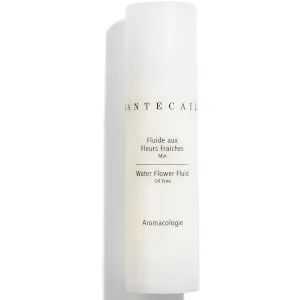
Based on the ingredients included, "Chantecaille - Water Flower Fluid" works well for moisturizing the skin. To work well, any moisturizer needs to include a combination of water-binding and emollient ingredients. Chantecaille - Water Flower Fluid ticks this box. Humectants in this product (panthenol, glycerin, saccharide isomerate, sodium hyaluronate and peg-8) help to increase the water content in the upper layer of the skin. (These ingredients do so by "capturing" water molecules from the outside air or from within the deeper layers of the skin). Isopropyl myristate, oenothera biennis oil, simmondsia chinensis seed oil, c12-15 alkyl benzoate and cetearyl ethylhexanoate in this product help decrease the water evoporation from the skin, so that it stays hydrated for longer. These ingredients also soften the skin and take away the feeling of tightness and dryness.
Ingredient callouts
- This product also contains Vitamin C (Ascorbic Acid). It can be an effective active for anti-aging and evening out the skin tone, but in this moisturizer it is used for stabilizing other ingredients in the formulation. In this concentration (0.05% - 0.20%) it cannot have a noticeable benefit for the skin.
- This moisturizer includes a form of Retinoids (vitamin A) - retinyl palmitate 0.15% - 0.70%, but this type of vitamin A is not very effective. It could in theory help with fine lines and wrinkles, but the effect is most likely minimal.
- Panthenol (pro-vitamin B5) at about 0.40% - 0.95% concentration. In this concentration, Panthenol works effectively to improve the skin barrier and reduce inflammation.
Irritation risk
We assess the overall irritancy of this moisturizer to be high. For a detailed overview of all potential irritants: click here
You can see the detailed formula review with the breakdown of all actives in the product and the full ingredient list with estimated concentrations in the tables below.
About the brand
According to Cruelty-Free Kitty "Chantecaille" is cruelty free, but its parent company is not.
Price
The product retails from 60.00$ up to 82.00$ in the United States, from 93.60CA$ up to 160.00CA$ in Canada and from 40.00£ up to 493.00£ in the United Kingdom.
For a detailed price comparison: click here.
Sources cited in this review
Every concentration estimate and effectiveness label is anchored to one of these 21 studies and safety reviews.
- 1
- 2
- 3Safety Assessment of Alkyl Esters as Used in Cosmeticscir-safety.org
- 4
- 5Surfactants and experimental irritant contact dermatitisncbi.nlm.nih.gov
- 6

Affiliate links · As an Amazon Associate, WIMJ earns from qualifying purchases.