Works for
2 of 2 advertised claims delivered
Moisturizing19 ingredients credited for this claimStrong support
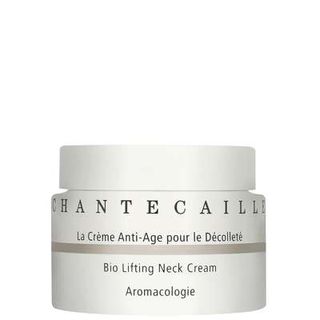
“Bio Lifting Neck Cream”
This product can help improve hydration of the skin with the two types of ingredients.
The first type is called “humectants”:
these ingredients help attract water.
When humectants are on the surface of the skin, they “pull in” the moisture from the outside environment, or from
within deeper layers of the skin. The following ingredients in this product do the job:
glycerin, zinc pca.
This product also contains ingredients called “occlusives”. They help reduce the speed with which our skin loses moisture to the outside environment. These ingredients also help soften the upper layer of the skin, so it feels less tight and nicer to the touch. The following ingredients in this product do the job: caprylic/capric triglyceride, squalane.
The following ingredients in this product are especially good for supporting the skin barrier and helping with the hydration level: acetyl hexapeptide-8
Anti-aging8 ingredients credited for this claimModerate support
“An innovative neck cream powered by botanicals that promote a more firm and brighter appearance of the delicate skin of the neck and décolleté while simultaneously moisturizing.”
This product contains acetyl hexapeptide-8, tetradecyl aminobutyroylvalylaminobutyric urea trifluoroacetate, vitis vinifera seed extract. These ingredients might be able to help reduce and prevent fine lines and wrinkles, improve skin elasticity and firmness, but there is not enough evidence that it actually works.
Anti-oxidationNot advertised by the brand · 6 ingredients credited for this claimStrong support
This product contains antioxidants (vitis vinifera seed extract) that can help neutralize free radicals in skin. By doing so, they can lessen the damage the skin gets from the UV light (sun).
Can it cause trouble?
Irritancy9 strong irritants: Rosa damascena flower water, Alcohol denat. + 7 more — patch-test recommendedHigh risk
Comedogenic1 ingredient rated 2 or more on the 0–5 pore-clogging scale1 flagged


User reviews
Be the first — your take helps the next person decide.
Ingredients
Filter by role to see what each ingredient is doing.
Rosa damascena flower water~28–34%
- Irritation risk
- High
Used to add a nice rose smell to the product. Might help attract water to the upper layer of the skin and have some anti-oxidant effect. Can be irritating
More about Rosa damascena flower waterWater~12–15%
Glycerin~5–6.1%
- Irritation risk
- Low
One of the best moisturizing ingredients. Naturally present in skin. It attracts water to the upper layer of the skin working as a humectant
More about GlycerinPropanediol~3.4–4.1%
- Irritation risk
- Low
Acts as a solvent for other ingredients. Speeds up the absorption of other ingredients into the skin
More about PropanediolCaprylic/capric triglyceride~2.9–3.6%
- Irritation risk
- Medium
A good mix of fatty acids that forms a protective layer on the skin. Improves the shelf life of products. Derived from coconut and glycerin
More about Caprylic/capric triglycerideCoco-caprylate/caprate~2.1–2.5%
- Irritation risk
- Low
Helps to soften the upper layer of the skin without creating a greasy texture
More about Coco-caprylate/caprate1,2-hexanediol~0.7–1%
Cetyl alcohol~1.5–1.9%
- Irritation risk
- Low
A non-drying alcohol that works to soften the skin and stabilize product formulations helping oil and water mix together
More about Cetyl alcoholSodium polyacrylate~1.5–1.8%
- Irritation risk
- Low
Used to create a gel-like product texture, as well as to stabilize emulsions
More about Sodium polyacrylateVp/va copolymer~1.2–1.5%
- Irritation risk
- Low
Used to stabilize product formulation and create a nice product consistency
More about Vp/va copolymerHydroxyethyl acrylate/sodium acryloyldimethyl taurate copolymer~0.75–1.1%
- Irritation risk
- Medium
A gelling agent that thickens the product consistency and leaves the skin with a velvety finish
More about Hydroxyethyl acrylate/sodium acryloyldimethyl taurate copolymerHydrogenated polydecene~0.6–0.95%
- Irritation risk
- Low
Helps to soften the upper layer of the skin and create a nice product texture
More about Hydrogenated polydeceneAlcohol denat.~0.55–0.85%
- Irritation risk
- High
Produces temporary toning effect. Can help dissolve other ingredients or preserve products
More about Alcohol denat.Glyceryl stearate~0.6–0.9%
- Irritation risk
- Low
An emollient that softens the skin and forms a protective layer on its surface. Helps water and oil mix together
More about Glyceryl stearateNiacinamide~0.5–0.75%
- Irritation risk
- Low
Is proven to be effective in reducing blemishes, evening out skin tone and helping to improve lines and wrinkles. It helps the skin to repair sun damage, calm down inflammation and keep maintain good levels of moisture. The concentration of about 2% is effective for supporting the skin barrier and evening out the skin tone. Concentration of 4-6% is better for helping with acne and balancing the sebum production
More about NiacinamideSqualane~0.55–0.85%
- Irritation risk
- Low
An oil naturally present in skin. Works as an emollient to soften the skin and form a protective layer on its surface without a greasy feeling.
More about SqualaneEthylhexylglycerin~0.5–0.75%
Pentylene glycol~0.5–0.75%
- Irritation risk
- Medium
Used to preserve products, dissolve other ingredients and create a nice product texture
More about Pentylene glycolZinc pca~0.45–0.65%
- Irritation risk
- Low
A compound that combines zinc with a hydrating ingredient PCA. Might to be helpful against acne and clogged pores. Can help calm down inflammation in skin. Could be helpful in reducing the formation of free radicals in skin. Might help to reduce fine lines in wrinkles, but solid evidence is missing
More about Zinc pcaPolysorbate 60~0.4–0.65%
Trideceth-6~0.35–0.6%
Coco-glucoside~0.4–0.6%
- Irritation risk
- High
Used as a cleansing agent (surfactant) in cleansers. Helps water and oil mix together in lotions. Can be irritating
More about Coco-glucoside3-aminopropane sulfonic acid~0.3–0.55%
Calcium hydroxymethionine~0.3–0.5%
- Irritation risk
- Low
Chlorella vulgaris/lupinus albus protein ferment~0.3–0.5%
- Irritation risk
- Low
- Comedogenicity
- 2/5
Hydroxyethylcellulose~0.45–0.7%
- Irritation risk
- Low
Used to thicken product formulations and create gel-like textures
More about HydroxyethylcelluloseNasturtium officinale flower/leaf extract~0.3–0.55%
- Irritation risk
- High
Used as a fragrance or masking agent
More about Nasturtium officinale flower/leaf extractPhytic acid~0.3–0.55%
- Irritation risk
- Medium
An alpha-hydroxy acid (AHA), but is mostly used to stabilize product formulations in cosmetics
More about Phytic acidCaprylyl glycol~0.3–0.55%
- Irritation risk
- Medium
Helps preserve products and creates a nice product texture
More about Caprylyl glycolRosa damascena flower oil~0.25–0.5%
- Irritation risk
- High
Used as a fragrance. Can be irritating
More about Rosa damascena flower oilMaltodextrin~0.45–0.65%
- Irritation risk
- Low
Used to stabilize the product formulation and can help absorb oil
More about MaltodextrinAlcohol~0.3–0.55%
- Irritation risk
- High
Can be drying and contribute to skin irritation. Used in formulars to dissolve other ingredients, create a thinner product consistency or for its antibacterial properties
More about AlcoholGlaucine~0.25–0.5%
- Irritation risk
- Low
Tetradecyl aminobutyroylvalylaminobutyric urea trifluoroacetate~0.25–0.5%
- Irritation risk
- Low
A peptide. It helps attract water to the upper layer of the skin, support skin's barrier function and might have some slight anti-aging effect through stimulating skin's own production of hyaluronic acid
More about Tetradecyl aminobutyroylvalylaminobutyric urea trifluoroacetateSorbitan isostearate~0.3–0.55%
- Irritation risk
- Low
Helps oil and water mix together
More about Sorbitan isostearateAcacia dealbata flower wax~0.3–0.6%
- Irritation risk
- Low
Citrus aurantium amara flower wax~0.3–0.55%
- Irritation risk
- High
Jasminum grandiflorum flower wax~0.3–0.55%
- Irritation risk
- Low
Sodium citrate~0.3–0.5%
- Irritation risk
- Medium
Helps to control the skin's pH level. Maintains the skin's natural film of amino-lactic acids and oils. Helps to preserve products
More about Sodium citrateSodium benzoate~0.3–0.5%
Lecithin~0.35–0.6%
- Irritation risk
- Low
Used mostly for creating emulsions - helping oil and water mix together. Helps soften the upper layer of the skin
More about LecithinPeg-8~0.3–0.55%
- Irritation risk
- Medium
Used to create a nice product consistency
More about Peg-8Michelia alba leaf oil~0.25–0.45%
- Irritation risk
- High
An essential oil used in cosmetics for its smell. Can be irritating
More about Michelia alba leaf oilSalicornia herbacea extract~0.25–0.45%
- Irritation risk
- Low
Potassium sorbate~0.25–0.5%
Tocopherol~0.25–0.5%
- Irritation risk
- Low
Pure form of vitamin E. Can help moisturise and protect the skin from free radicals. Often used to help stabilise other ingredients or the formula itself
More about TocopherolCitric acid~0.25–0.45%
- Irritation risk
- Medium
Can work as an exfoliant but is typically used to adjust the product pH
More about Citric acidGlaucine~0.25–0.45%
- Irritation risk
- Low
Magnesium chloride~0.25–0.45%
Ascorbyl palmitate~0.25–0.45%
- Irritation risk
- Medium
Being a lipid soluble form of vitamin C, it is more stable and can penetrate the skin better than L-Ascorbic acid. It is effective in protecting the skin from free radicals, as well as evening the skin tone, but is less effective in stimulating collagen production compared to L-Ascorbic acid.
More about Ascorbyl palmitateRubus idaeus leaf cell culture~0.25–0.45%
- Irritation risk
- Low
Magnolia officinalis bark extract~0.25–0.4%
- Irritation risk
- Low
Ascorbic acid~0.2–0.35%
- Irritation risk
- High
The most well-researched antioxidant that works in skin. Helps neutralize free radicals supporting collagen production, helping to even out the skin tone and preventing early signs of aging
More about Ascorbic acidPhenoxyethanol~0.2–0.35%
- Irritation risk
- Low
A preservative. It helps prevent bacterial growth in cosmetic products
More about PhenoxyethanolBiotin~0.2–0.35%
- Irritation risk
- Low
Might have some moisturising properties. Is not effective when applied topically beyond some moisturizing effect
More about BiotinVitis vinifera seed extract~0.15–0.3%
- Irritation risk
- Low
A plant extract that contains resveratrol and other anti-oxidant compounds that can help neutralize free radicals, reduce inflammation in skin and even out its tone. Can be also used to stabilize the product formulation
More about Vitis vinifera seed extractAcetyl hexapeptide-8~0.15–0.3%
- Irritation risk
- Low
A type of peptide. Peptides are excellent moisturizers and might be able support collagen production reducing fine lines and wrinkles
More about Acetyl hexapeptide-8Citronellol~0.15–0.25%
Linalool~0.1–0.15%
Geraniol~0.05–0.1%
Ingredient list view
Rosa damascena flower water, Water, Glycerin, Propanediol, Caprylic/capric triglyceride, Coco-caprylate/caprate, 1,2-hexanediol, Cetyl alcohol, Sodium polyacrylate, Vp/va copolymer, Hydroxyethyl acrylate/sodium acryloyldimethyl taurate copolymer, Hydrogenated polydecene, Alcohol denat., Glyceryl stearate, Niacinamide, Squalane, Ethylhexylglycerin, Pentylene glycol, Zinc pca, Polysorbate 60, Trideceth-6, Coco-glucoside, 3-aminopropane sulfonic acid, Calcium hydroxymethionine, Chlorella vulgaris/lupinus albus protein ferment, Hydroxyethylcellulose, Nasturtium officinale flower/leaf extract, Phytic acid, Caprylyl glycol, Rosa damascena flower oil, Maltodextrin, Alcohol, Glaucine, Tetradecyl aminobutyroylvalylaminobutyric urea trifluoroacetate, Sorbitan isostearate, Acacia dealbata flower wax, Citrus aurantium amara flower wax, Jasminum grandiflorum flower wax, Sodium citrate, Sodium benzoate, Lecithin, Peg-8, Michelia alba leaf oil, Salicornia herbacea extract, Potassium sorbate, Tocopherol, Citric acid, Glaucine, Magnesium chloride, Ascorbyl palmitate, Rubus idaeus leaf cell culture, Magnolia officinalis bark extract, Ascorbic acid, Phenoxyethanol, Biotin, Vitis vinifera seed extract, Acetyl hexapeptide-8, Citronellol, Linalool, Geraniol
Compare prices
Retailers ranked by price — lowest first.

Worth comparing, line by line.
Match % combines shared ingredients, the first five ingredients, shared actives and hero ingredients, irritancy (lower counts in the alternative's favour), texture and body area. Only products in the same routine step are compared.
| ChantecailleBio Lifting Neck CreamYOUR PRODUCT | Fenty SkinThicc N Smooth Rich Peptide Eye Cream | NEOGEN X SUR.MEDICV.Biome Advanced Eye Cream | KLAVUURejuve Pearlsation Multi Pearl Peptide Eye Cream | |
|---|---|---|---|---|
| Match | — | 86% | 83% | 82% |
| Price | $158.58 | $23.23−$135.35 | $25.16−$133.42 | $16.85−$141.73 |
| Shared key ingredients | — | 8 of 10 | 6 of 10 | 6 of 10 |
| Key difference | — | Gluconolactone | Copper Tripeptide-1 | Retinol |
| Irritancy | High | Medium | Medium | Medium |
| Drying alcohol | Contains drying alcohol | — | — | — |
| View product | Shop | Shop | Shop |

Product summary
Based on the ingredient list, "Chantecaille - Bio Lifting Neck Cream" can work well for skin moisturization. This moisturizer uses a good combo of humectants and emollients. These both types of ingredients are essentials for improving the skin hydration and keeping the skin barrier healthy. Humectants in this product (acetyl hexapeptide-8, glycerin, zinc pca, caprylyl glycol and peg-8) help to increase the water content in the upper layer of the skin. (These ingredients do so by "capturing" water molecules from the outside air or from within the deeper layers of the skin). Emollients in this formulation (caprylic/capric triglyceride, squalane, cetyl alcohol, coco-caprylate/caprate and caprylyl glycol) help to reduce the moisture loss from the skin. They also soften the skin surface and relieve the feeling of dryness and tightness.
Ingredient callouts
- This product also contains Vitamin C (Ascorbic Acid). It can be an effective active for anti-aging and evening out the skin tone, but in this moisturizer it is used for stabilizing other ingredients in the formulation. In this concentration (0.20% - 0.35%) it cannot have a noticeable benefit for the skin.
- We like that this moisturizer contains peptides (acetyl hexapeptide-8 0.15% - 0.30%). There are many different kind of Peptides and they are naturally present in our skin. They all are a combination of aminoacids. Some of them work as natural antibiotics, promote wound-healing and production of collagen. The science is still not settled on how effective Peptides are in skincare, but it is very likely that they have a benefit. Peptides might help restore the skin barrier and fight the signs of aging. At the very least, Peptides work as humectants: they attract water to the upper layer of the skin and improve its hydration.
Irritation risk
This moisturizer contains a bunch of common irritants, including ingredients that do not provide any known benefit for the skin. It might not be the best choice if your skin is sensitive. We assess the overall irritancy of this moisturizer to be high. For a detailed overview of all potential irritants: click here
You can see the detailed formula review with the breakdown of all actives in the product and the full ingredient list with estimated concentrations in the tables below.
About the brand
According to Cruelty-Free Kitty "Chantecaille" is cruelty free, but its parent company is not.
Price
The product retails from 188.00$ up to 336.00$ in the United States and from 119.95£ up to 3313.00£ in the United Kingdom.
For a detailed price comparison: click here.
Sources cited in this review
Every concentration estimate and effectiveness label is anchored to one of these 18 studies and safety reviews.
- 1
- 2
- 3Safety Assessment of Alkyl Esters as Used in Cosmeticscir-safety.org
- 4
- 5Safety Assessment of Polyene Group as Used in Cosmeticscir-safety.org
- 6

Affiliate links · As an Amazon Associate, WIMJ earns from qualifying purchases.