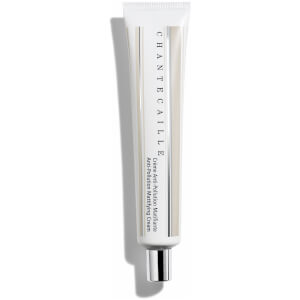
Chantecaille Anti-Pollution Mattifying Cream
Works for
2 of 2 advertised claims delivered
Anti-agingCamellia sinensis leaf extract, Tocopherol + 2 moreModerate evidence
“Protect and hydrate your skin with Chantecaille Anti-Pollution Mattifying Cream , a must-have skin saviour in an age where pollution poses a daily threat to skin.”
This product contains dimethylmethoxy chromanol. This ingredient help neutralize free radicals in skin. By doing so, they might be able to prevent early signs of aging (like fine lines and wrinkles), at least to some extent. These ingredients will not be able to "reverse" signs of aging.
MoisturizingSqualane, Caprylic/capric triglyceride + 14 moreGood evidence
“Desert Cactus Yeast Extract and White Tea Extract provide antioxidants and hydrate the skin.”
This product can help improve hydration of the skin with the two types of ingredients.
The first type is called “humectants”:
these ingredients help attract water.
When humectants are on the surface of the skin, they “pull in” the moisture from the outside environment, or from
within deeper layers of the skin. The following ingredients in this product do the job:
glycerin, caprylyl glycol.
This product also contains ingredients called “occlusives”. They help reduce the speed with which our skin loses moisture to the outside environment. These ingredients also help soften the upper layer of the skin, so it feels less tight and nicer to the touch. The following ingredients in this product do the job: caprylic/capric triglyceride, squalane.
Anti-oxidationNot advertised by the brand · Dimethylmethoxy chromanol, Rosa damascena flower water + 5 moreStrong evidence
This product contains antioxidants (dimethylmethoxy chromanol) that can help neutralize free radicals in skin. By doing so, they can lessen the damage the skin gets from the UV light (sun).
Can it cause trouble?
Irritancy6 strong irritants: Rosa damascena flower water, Rosa damascena flower oil + 4 more — patch-test recommendedHigh risk
ComedogenicClean of flagged comedogenic ingredientsNone flagged
User reviews
Be the first — your take helps the next person decide.
Ingredients
Filter by role to see what each ingredient is doing.
Rosa damascena flower water~28–35%
- Irritation risk
- High
Used to add a nice rose smell to the product. Might help attract water to the upper layer of the skin and have some anti-oxidant effect. Can be irritating
More about Rosa damascena flower waterWater~12–15%
Glycerin~5.5–6.7%
- Irritation risk
- Low
One of the best moisturizing ingredients. Naturally present in skin. It attracts water to the upper layer of the skin working as a humectant
More about GlycerinCaprylic/capric triglyceride~4.2–5.1%
- Irritation risk
- Medium
A good mix of fatty acids that forms a protective layer on the skin. Improves the shelf life of products. Derived from coconut and glycerin
More about Caprylic/capric triglycerideMethyl methacrylate crosspolymer~3.1–3.8%
- Irritation risk
- Low
Helps thicken the product consistency
More about Methyl methacrylate crosspolymerPolymethylsilsesquioxane~2.2–2.7%
- Irritation risk
- Low
A silicone that improves product texture and helps dissolve other ingredients. Can form a non-greasy film on the skin to prevent moisture loss
More about PolymethylsilsesquioxanePrunus amygdalus dulcis seed~1.8–2.2%
- Irritation risk
- Low
Helps soften the upper layer of the skin
More about Prunus amygdalus dulcis seedSqualane~1.8–2.2%
- Irritation risk
- Low
An oil naturally present in skin. Works as an emollient to soften the skin and form a protective layer on its surface without a greasy feeling.
More about SqualaneSodium polyacrylate~1.6–2%
- Irritation risk
- Low
Used to create a gel-like product texture, as well as to stabilize emulsions
More about Sodium polyacrylateMyristyl alcohol~1.2–1.5%
- Irritation risk
- High
Helps to stabilize the product formulation while softening the upper layer of the skin. Can be irritating
More about Myristyl alcoholC14-22 alcohols~0.95–1.2%
- Irritation risk
- Low
A non-drying alcohol that helps stabilize product formulations
More about C14-22 alcoholsPropanediol~0.75–1.1%
- Irritation risk
- Low
Acts as a solvent for other ingredients. Speeds up the absorption of other ingredients into the skin
More about PropanediolHydroxyethyl acrylate/sodium acryloyldimethyl taurate copolymer~0.7–1.05%
- Irritation risk
- Medium
A gelling agent that thickens the product consistency and leaves the skin with a velvety finish
More about Hydroxyethyl acrylate/sodium acryloyldimethyl taurate copolymerDiisopropyl adipate~0.7–1.05%
- Irritation risk
- Low
Helps soften the upper layer of the skin
More about Diisopropyl adipateMyristyl glucoside~0.7–1.05%
- Irritation risk
- Low
Marrubium vulgare extract~0.55–0.85%
- Irritation risk
- Low
Potassium cetyl phosphate~0.65–0.95%
- Irritation risk
- Medium
Helps oil and water mix together
More about Potassium cetyl phosphateEthylhexylglycerin~0.55–0.85%
C12-20 alkyl glucoside~0.55–0.85%
- Irritation risk
- Medium
Helps water and oil mix together
More about C12-20 alkyl glucosideLecithin~0.55–0.85%
- Irritation risk
- Low
Used mostly for creating emulsions - helping oil and water mix together. Helps soften the upper layer of the skin
More about LecithinLens esculenta seed extract~0.5–0.75%
- Irritation risk
- Low
Chlorphenesin~0.16–0.32%
Acrylic acid/acrylamidomethyl propane sulfonic acid copolymer~0.45–0.7%
- Irritation risk
- Low
Disodium edta~0.45–0.7%
Yeast extract~0.45–0.7%
- Irritation risk
- Low
Helps attract water to the upper layer of the skin and might have some anti-oxidant and skin lightening properties. It can help calm down inflammation in skin
More about Yeast extractDimethylmethoxy chromanol~0.45–0.7%
- Irritation risk
- Low
Can help neutralize free radicals in skin
More about Dimethylmethoxy chromanolGlyceryl caprylate~0.5–0.75%
- Irritation risk
- Low
An emollient that can also help water and oil mix together, as well as prevent bacteria growth in products
More about Glyceryl caprylateXanthan gum~0.45–0.65%
- Irritation risk
- Low
Used to create a thicker product consistency
More about Xanthan gum1,2-hexanediol~0.4–0.6%
Caprylyl glycol~0.45–0.65%
- Irritation risk
- Medium
Helps preserve products and creates a nice product texture
More about Caprylyl glycolPolysorbate 60~0.4–0.65%
Rosa damascena flower oil~0.35–0.65%
- Irritation risk
- High
Used as a fragrance. Can be irritating
More about Rosa damascena flower oilSorbitan isostearate~0.35–0.65%
- Irritation risk
- Low
Helps oil and water mix together
More about Sorbitan isostearatePeg-8~0.35–0.6%
- Irritation risk
- Medium
Used to create a nice product consistency
More about Peg-8Citric acid~0.3–0.6%
- Irritation risk
- Medium
Can work as an exfoliant but is typically used to adjust the product pH
More about Citric acidPhenoxyethanol~0.3–0.6%
- Irritation risk
- Low
A preservative. It helps prevent bacterial growth in cosmetic products
More about PhenoxyethanolMichelia alba leaf oil~0.25–0.5%
- Irritation risk
- High
An essential oil used in cosmetics for its smell. Can be irritating
More about Michelia alba leaf oilTocopherol~0.3–0.5%
- Irritation risk
- Low
Pure form of vitamin E. Can help moisturise and protect the skin from free radicals. Often used to help stabilise other ingredients or the formula itself
More about TocopherolAscorbyl palmitate~0.25–0.5%
- Irritation risk
- Medium
Being a lipid soluble form of vitamin C, it is more stable and can penetrate the skin better than L-Ascorbic acid. It is effective in protecting the skin from free radicals, as well as evening the skin tone, but is less effective in stimulating collagen production compared to L-Ascorbic acid.
More about Ascorbyl palmitateCamellia sinensis leaf extract~0.25–0.45%
- Irritation risk
- Low
Can contain potent anti-oxidant compounds (abbreviated ECG, GCG, EGC, and EGCG) that might help protect the skin from free radicals. Can help calm down inflammation and has some anti-bacterial properties. Unfortunately, these antioxidants are unstable and lose their effectiveness very quickly in products. The concentration of the antioxidant compounds in the extract also tends to be low to be effective in topical formulation
More about Camellia sinensis leaf extractPhenoxyethanol~0.15–0.3%
- Irritation risk
- Low
A preservative. It helps prevent bacterial growth in cosmetic products
More about PhenoxyethanolAscorbic acid~0.15–0.3%
- Irritation risk
- High
The most well-researched antioxidant that works in skin. Helps neutralize free radicals supporting collagen production, helping to even out the skin tone and preventing early signs of aging
More about Ascorbic acidCitronellol~0.15–0.25%
Linalool~0.1–0.15%
Geraniol~0.1–0.15%
Ingredient list view
Rosa damascena flower water, Water, Glycerin, Caprylic/capric triglyceride, Methyl methacrylate crosspolymer, Polymethylsilsesquioxane, Prunus amygdalus dulcis seed, Squalane, Sodium polyacrylate, Myristyl alcohol, C14-22 alcohols, Propanediol, Hydroxyethyl acrylate/sodium acryloyldimethyl taurate copolymer, Diisopropyl adipate, Myristyl glucoside, Marrubium vulgare extract, Potassium cetyl phosphate, Ethylhexylglycerin, C12-20 alkyl glucoside, Lecithin, Lens esculenta seed extract, Chlorphenesin, Acrylic acid/acrylamidomethyl propane sulfonic acid copolymer, Disodium edta, Yeast extract, Dimethylmethoxy chromanol, Glyceryl caprylate, Xanthan gum, 1,2-hexanediol, Caprylyl glycol, Polysorbate 60, Rosa damascena flower oil, Sorbitan isostearate, Peg-8, Citric acid, Phenoxyethanol, Michelia alba leaf oil, Tocopherol, Ascorbyl palmitate, Camellia sinensis leaf extract, Phenoxyethanol, Ascorbic acid, Citronellol, Linalool, Geraniol
Compare prices
Retailers ranked by price — lowest first.


Sources cited in this review
Every concentration estimate and effectiveness label is anchored to one of these 13 studies and safety reviews.
- 1
- 2
- 3Cosmetic allergy from myristyl alcoholncbi.nlm.nih.gov
- 4
- 5Patch testing with myristyl alcoholresearchgate.net
- 6

Affiliate links · As an Amazon Associate, WIMJ earns from qualifying purchases.