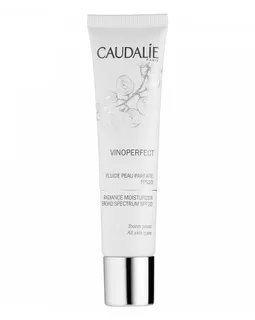
Caudalie Vinoperfect Radiance Moisturiser Broad Spectrum SPF 20
Works for
Sun protectionSPF 20 · 4 UV filters · Broad spectrumWeak protectionSPF under 30
This product offers broad spectrum sun protection, but it is weak. We recommend to use a broad spectrum sunscreen with at least SPF 30.
MoisturizingHeptyl undecylenate, Dimethicone + 10 moreWorks
“Vinoperfect Radiance Moisturiser Broad Spectrum SPF 20”
This product can help improve hydration of the skin with the two types of ingredients.
The first type is called “humectants”:
these ingredients help attract water.
When humectants are on the surface of the skin, they “pull in” the moisture from the outside environment, or from
within deeper layers of the skin. The following ingredients in this product do the job:
glycerin, hyaluronic acid.
This product also contains ingredients called “occlusives”. They help reduce the speed with which our skin loses moisture to the outside environment. These ingredients also help soften the upper layer of the skin, so it feels less tight and nicer to the touch. The following ingredients in this product do the job: dimethicone, squalane.
Evens skin tonePalmitoyl grapevine shoot extractNot delivered
“Suitable for use as a skin primer to remove excess sebum and control oil for an even skin tone.”
This product contains ingredients (palmitoyl grapevine shoot extract) that could help reduce hyperpigmentation (for example, post-acne marks or age spots) in theory, but there is not enough evidence that they actually work.
The biggest effect for evening out skin tone in this product comes from sun protection. Sun damage is the main factor causing age spots, darkening of post-acne marks and other discolorations. This is why sun protection is the best strategy for maintaining an even skin tone. We, however, do not recommend using this product as a sunscreen because the protection it offers is not strong enough).
Anti-blemishOleanolic acid ~0.15–0.3%, below the ~1% it needsUnder-dosed
“Vinoperfect Radiance Moisturiser Broad Spectrum SPF20 from Caudalie is a lightweight cream that works effectively to reduce the appearance of imperfections, dark spots and blemishes to deliver a healthy-looking, radiant complexion.”
Effective ingredients missing or their concentration is too low.
Anti-oxidationSide benefit · Palmitoyl grapevine shoot extract, Enantia chlorantha bark extract + 4 moreMay help
This product contains antioxidants (palmitoyl grapevine shoot extract) that can help neutralize free radicals in skin to lessen the damage it gets from the UV light (sun). There is some human evidence for this effect in skin, though it is smaller or less consistent than the evidence for the best antioxidants.
Can it cause trouble?
Irritancy4 strong irritants: Parfum, Limonene + 2 more — patch-test recommendedHigh risk
Comedogenic1 ingredient rated 2 or more on the 0–5 pore-clogging scale1 flagged
User reviews
Be the first — your take helps the next person decide.
Ingredients
Filter by role to see what each ingredient is doing.
Water~45–55%
Octocrylene~4.9–5.9%
- Irritation risk
- Medium
A weak sunscreen that protects against the sun rays that cause sunburn (UVB) and is somewhat effective against the UVA rays. It is quite stable and can help stabilize other, more vulnerable, sunscreen ingredients like Avobenzone. It is an organic, or so called "chemical" sunscreen
More about OctocryleneHeptyl undecylenate~4.3–5.2%
- Irritation risk
- Medium
Helps soften the upper layer of the skin, reduce water loss from the skin surface over time and create a nice product finish
More about Heptyl undecylenateDimethicone~3.2–3.9%
- Irritation risk
- Low
A silicone that helps to reduce water loss from the surface of the skin. Can temporarily "fill in" lines and wrinkles, absorb oil, and create a nice product finish
More about DimethiconeEthylhexyl salicylate~3.2–3.9%
- Irritation risk
- Low
Octisalate. A UV filter. It offers some protection against the sun rays that cause sunburn (UVB), but does not protect against the most aging sun rays (UVA). It loses its effectiveness quickly when exposed to sunlight. It is an organic, or so called "chemical" sunscreen
More about Ethylhexyl salicylateEthylhexyl methoxycinnamate~2.5–3.1%
- Irritation risk
- High
Octinoxate. When used in higher concentrations, works as a sunscreen protecting the skin from UVB rays. When used in lower concentration, helps to preserve the product formulation. Is shown to be harmful to coral reefs - consider avoiding bathing in coral reef areas when wearing a product with this ingredient. It can be irritating
More about Ethylhexyl methoxycinnamateIsoamyl laurate~1.7–2.1%
- Irritation risk
- Medium
Helps stabilize emulsions and create a nice product texture
More about Isoamyl laurateButyl methoxydibenzoylmethane~2–2.5%
- Irritation risk
- Medium
Avobenzone. An organic, or so-called "chemical" UV filter. Protects against both UVA and UVB rays. Needs to be combined with other filters in a formulation to be stable.
More about Butyl methoxydibenzoylmethaneMethyl methacrylate crosspolymer~1.2–1.5%
- Irritation risk
- Low
Helps thicken the product consistency
More about Methyl methacrylate crosspolymerSqualane~1–1.3%
- Irritation risk
- Low
An oil naturally present in skin. Works as an emollient to soften the skin and form a protective layer on its surface without a greasy feeling.
More about SqualaneGlyceryl stearate citrate~0.75–1.15%
- Irritation risk
- Low
Helps oil and water mix together while softening the upper layer of the skin
More about Glyceryl stearate citrateGlycerin~0.65–0.95%
- Irritation risk
- Low
One of the best moisturizing ingredients. Naturally present in skin. It attracts water to the upper layer of the skin working as a humectant
More about GlycerinSilica~0.95–1.15%
Butylene glycol~0.55–0.8%
- Irritation risk
- Low
Used to create a nice product texture and help delivery of other ingredients. Might be somewhat helpful in attracting water to the upper layer of the skin
More about Butylene glycolCi 77891~0.55–0.8%
- Irritation risk
- Low
Polyglyceryl-3 stearate~0.5–0.75%
- Irritation risk
- Low
Helps oil and water mix together
More about Polyglyceryl-3 stearateParfum~0.45–0.65%
- Irritation risk
- High
An aromatic blend of unspecified and possibly irritating ingredients
More about ParfumTocopheryl acetate~0.45–0.7%
- Irritation risk
- Medium
A more stable but less bio-available form of vitamin E compared to Tocopherol. Might help moisturize and protect the skin from free radicals, but mostly used in low concentrations to stabilize other ingredients.
More about Tocopheryl acetateBisabolol~0.3–0.6%
- Irritation risk
- Low
An active component of chamomile plant that historically has been used to calm down irritated skin. A recent study shows that bisabolol indeed can have some anti-inflammatory effect on skin, even though conclusive data is lacking. Bisabolol has a sweet floral scent and can be added to products for its aromatic properties
More about BisabololSodium polyacrylate~0.45–0.65%
- Irritation risk
- Low
Used to create a gel-like product texture, as well as to stabilize emulsions
More about Sodium polyacrylateHydrogenated lecithin~0.35–0.65%
- Irritation risk
- Low
Helps to retain moisture by creating a protective barrier on the skin. Rich in fatty acids. Improves product texture and helps with the penetration of other ingredients.
More about Hydrogenated lecithinBenzyl alcohol~0.3–0.55%
- Irritation risk
- High
A preservative. Can be used to mask unpleasant smell. Can be irritating
More about Benzyl alcoholPalmitoyl grapevine shoot extract~0.3–0.55%
- Irritation risk
- Medium
An extract from grape plant that can contain a potent antioxidant resveratrol. The manufacturer (Caudalie) claims that this particular extract is effective against hyperpigmentation. This effect would be explained by the resveratrol content. However, there is no independent research confirming the manufacturer's claim beside the potential for anti-oxidant activity
More about Palmitoyl grapevine shoot extractCaprylyl glycol~0.35–0.6%
- Irritation risk
- Medium
Helps preserve products and creates a nice product texture
More about Caprylyl glycolCassia angustifolia seed polysaccharide~0.3–0.55%
- Irritation risk
- Medium
Helps attract water to the upper layer of the skin. Is sometimes referred to as "natural" hyaluronic acid (even though hyaluronic acid is not unnatural and is present in human skin)
More about Cassia angustifolia seed polysaccharideAlumina~0.45–0.7%
- Irritation risk
- Low
The same compound that is used safely in dental implants and bone cements. In cosmetics, it is used to improve the consistency of products
More about AluminaEnantia chlorantha bark extract~0.3–0.55%
- Irritation risk
- High
A bark extract that might help clam down inflammation and neutralize free radicals , but evidence of effectiveness in skin is lacking
More about Enantia chlorantha bark extractDehydroacetic acid~0.3–0.55%
Rhus semialata extract~0.3–0.55%
- Irritation risk
- Low
Sodium phytate~0.3–0.55%
Hyaluronic acid~0.3–0.55%
- Irritation risk
- Low
One of the best moisturizing ingredients. Attracts water into the upper layer of the skin. Naturally present in skin. Typically has large molecule size unless advertised otherwise on the product label. Helps support skin's barrier function and may help to reduce inflammation
More about Hyaluronic acidPapain~0.3–0.55%
- Irritation risk
- High
An enzyme extracted from papaya fruit. Can have an exfoliating effect on the skin. Can be irritating
More about PapainCi 77491~0.3–0.55%
- Irritation risk
- Low
A red colorant made of iron oxide. Typically is not irritating
More about Ci 77491Carbomer~0.3–0.5%
- Irritation risk
- Low
Helps create a thicker or gel-like product texture. It is not a surfactant but can be used in gentle cleansing formulations
More about Carbomer1,2-hexanediol~0.25–0.45%
Bht~0.25–0.45%
Algin~0.25–0.4%
- Irritation risk
- Low
- Comedogenicity
- 3/5
Used to thicken product formulation. Can help attract water to the upper layer of the skin
More about AlginTocopherol~0.2–0.4%
- Irritation risk
- Low
Pure form of vitamin E. Can help moisturise and protect the skin from free radicals. Often used to help stabilise other ingredients or the formula itself
More about TocopherolOleanolic acid~0.15–0.3%
- Irritation risk
- Low
Might be helpful against blemishes, work as an anti-oxidant, reduce inflammation and improve skin's ability to hold on to moisture, but more research is needed to confirm its effectiveness when applied topically to human skin
More about Oleanolic acidLimonene~0.15–0.25%
- Irritation risk
- High
A common frangrance that can easily irritate skin, especially if exposed to air, light or heat
More about LimoneneGeraniol~0.15–0.25%
Linalool~0.15–0.25%
Ingredient list view
Water, Octocrylene, Heptyl undecylenate, Dimethicone, Ethylhexyl salicylate, Ethylhexyl methoxycinnamate, Isoamyl laurate, Butyl methoxydibenzoylmethane, Methyl methacrylate crosspolymer, Squalane, Glyceryl stearate citrate, Glycerin, Silica, Butylene glycol, Ci 77891, Polyglyceryl-3 stearate, Unknown, Parfum, Tocopheryl acetate, Bisabolol, Sodium polyacrylate, Hydrogenated lecithin, Benzyl alcohol, Palmitoyl grapevine shoot extract, Caprylyl glycol, Cassia angustifolia seed polysaccharide, Alumina, Enantia chlorantha bark extract, Dehydroacetic acid, Rhus semialata extract, Sodium phytate, Hyaluronic acid, Papain, Ci 77491, Carbomer, 1,2-hexanediol, Bht, Algin, Tocopherol, Oleanolic acid, Limonene, Geraniol, Linalool
Compare prices
Retailers ranked by price — lowest first.


Worth comparing, line by line.
Match % combines shared ingredients, the first five ingredients, shared actives and hero ingredients, irritancy (lower counts in the alternative's favour), texture and body area. Only products in the same routine step are compared.
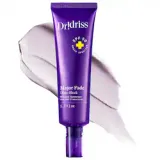
| CaudalieVinoperfect Radiance Moisturiser Broad Spectrum SPF 20YOUR PRODUCT | UriageAge Lift Protective Smoothing Day Cream SPF30 | The SaemEco Earth Light Sun Cream | Dr. IdrissMajor Fade Disco Block SPF 50 Broad-Spectrum Sunscreen Face Treatment for Brightening and Dark Spots | |
|---|---|---|---|---|
| Match | — | 42% | 40% | 40% |
| Price | — | $31.68 | $11.79 | $38.00 |
| Shared key ingredients | — | 6 of 14 | 5 of 14 | 6 of 14 |
| Key difference | — | Retinyl Palmitate | Niacinamide | Lactic Acid |
| Irritancy | High | Medium | Medium | Medium |
| SPF | SPF 20 | SPF 30 | SPF 50 | SPF 50 |
| Drying alcohol | — | — | — | — |
| View product | Shop | Shop | Shop |


More alternatives: No7 Future Renew Damage Reversal Day Cream SPF 25Estée Lauder Revitalizing Supreme+ Youth Power Creme SPF 25 Moisturizer
Product summary
"Caudalie - Vinoperfect Radiance Moisturiser Broad Spectrum SPF 20" offers broad spectrum protection. It means that it protects from both UVA and UVB rays (you can remember UVB as "burning" sunlight - they cause sunburn. You can remember UVA rays as "aging" - they do not lead to sunburn, but they cause photodamage and contribute to early signs of skin aging and hyperpigmentation). On the negative side, the SPF of this moisturizer is not high enough. We recommend to use a sunscreen with at least SPF 30 daily.
It also works as a moisturizer, so you do not have to use an additional hydrating product.
Sunscreen filters
This sunscreen uses so-called "chemical", or organic UV filters (organic simply means that their molecules contain atoms of carbon). These filters typically give good sun protection and rarely leave a white cast, but they can be irritating for sensitive skin. Here are the exact UV filters in this sunscreen: avobenzone 2.00% - 2.50%, octinoxate 2.50% - 3.10%, octisalate 3.20% - 3.90% and octocrylene 4.90% - 5.90%.
Irritation risk
There are quite a few common irritants in this product, including ingredients without particular skin benefits. We would not recommend it for sensitive skin. We assess the overall irritancy of this moisturizer to be high. For a detailed overview of all potential irritants: click here
You can see the detailed formula review with the breakdown of all actives in the product and the full ingredient list with estimated concentrations in the tables below.
Price
The product retails for 27.00£ in the United Kingdom.
For a detailed price comparison: click here.
Sources cited in this review
Every concentration estimate and effectiveness label is anchored to one of these 19 studies and safety reviews.
- 1
- 2Final Report on the Safety Assessment of Dimethicone Copolyoljournals.sagepub.com
- 3
- 4
- 5Potent antioxidative activity of Vineatrol30 grapevine-shoot extractpubmed.ncbi.nlm.nih.gov
- 6

Affiliate links · As an Amazon Associate, WIMJ earns from qualifying purchases.