
Uriage Age Lift Protective Smoothing Day Cream SPF30
Works for
3 of 3 advertised claims delivered
Sun protectionSPF 30 · 5 UV filtersBroad spectrum
This product offers a good level of protection against both UVB and UVA rays.
This sunscreen uses organic (so-called "chemical") sunscreen filters. Organic, or "chemical" filters usually provide reliable sun protection and rarely leave a white cast. Sunscreens with organic filters can sting eyes.
Anti-aging4 ingredients credited for this claimStrong support
“Age Lift Protective Smoothing Day Cream SPF30”
This product can help reduce and prevent fine lines and wrinkles, improve skin elasticity and firmness because it contains adenosine.
Keep in mind that it typically takes at least 6 weeks to notice any results because the changes that are needed to improve fine lines and elasticity happen in the deeper layers of the skin. No topical anti-aging product can “erase” wrinkles or fully reverse signs of aging.
This product can also help prevent early signs of skin aging because it offers a good level of broad spectrum sun protection. Sun damage is the main cause of premature skin aging, and protecting your skin from the sun is the best anti-aging strategy.
Evens skin tone2 ingredients credited for this claimStrong support
“The contours of the face are better defined.Thanks to the UVA/UVB filters, the skin is better protected from premature ageing and pigmentation spots.Tested under dermatological control.”
This product offers broad spectrum sun protection. It means that it can prevent hyperpigmentation and help keep the skin tone even (sun damage is the main factor causing age spots, darkening of post-acne marks and other discolorations).
MoisturizingNot advertised by the brand · 14 ingredients credited for this claimGood support
This product can help improve hydration of the skin with the two types of ingredients.
The first type is called “humectants”:
these ingredients help attract water.
When humectants are on the surface of the skin, they “pull in” the moisture from the outside environment, or from
within deeper layers of the skin. The following ingredients in this product do the job:
diglycerin, glycerin.
This product also contains ingredients called “occlusives”. They help reduce the speed with which our skin loses moisture to the outside environment. These ingredients also help soften the upper layer of the skin, so it feels less tight and nicer to the touch. The following ingredients in this product do the job: dimethicone, isocetyl stearate.
Can it cause trouble?
Irritancy2 strong irritants: Retinyl palmitate, ParfumMedium risk
Comedogenic1 ingredient rated 2 or more on the 0–5 pore-clogging scale1 flagged


User reviews
Be the first — your take helps the next person decide.
Ingredients
Filter by role to see what each ingredient is doing.
Water~45–55%
Ethylhexyl methoxycinnamate~5.3–6.5%
- Irritation risk
- High
Octinoxate. When used in higher concentrations, works as a sunscreen protecting the skin from UVB rays. When used in lower concentration, helps to preserve the product formulation. Is shown to be harmful to coral reefs - consider avoiding bathing in coral reef areas when wearing a product with this ingredient. It can be irritating
More about Ethylhexyl methoxycinnamateDimethicone~4.5–5.5%
- Irritation risk
- Low
A silicone that helps to reduce water loss from the surface of the skin. Can temporarily "fill in" lines and wrinkles, absorb oil, and create a nice product finish
More about DimethiconeEthylhexyl salicylate~3.7–4.5%
- Irritation risk
- Low
Octisalate. A UV filter. It offers some protection against the sun rays that cause sunburn (UVB), but does not protect against the most aging sun rays (UVA). It loses its effectiveness quickly when exposed to sunlight. It is an organic, or so called "chemical" sunscreen
More about Ethylhexyl salicylateOctocrylene~3.3–4%
- Irritation risk
- Medium
A weak sunscreen that protects against the sun rays that cause sunburn (UVB) and is somewhat effective against the UVA rays. It is quite stable and can help stabilize other, more vulnerable, sunscreen ingredients like Avobenzone. It is an organic, or so called "chemical" sunscreen
More about OctocryleneButyl methoxydibenzoylmethane~2.5–3.1%
- Irritation risk
- Medium
Avobenzone. An organic, or so-called "chemical" UV filter. Protects against both UVA and UVB rays. Needs to be combined with other filters in a formulation to be stable.
More about Butyl methoxydibenzoylmethaneIsononyl isononanoate~1.8–2.2%
- Irritation risk
- Low
Forms a protective film on the surface of the skin to prevent moisture loss. Gives a velvety feel to products while reducing tackiness
More about Isononyl isononanoateDicaprylyl ether~1.5–1.8%
- Irritation risk
- Low
Helps soften the upper layer of the skin while creating a non-greasy feel on the skin. Helps to dissolve other ingredients
More about Dicaprylyl etherGlycerin~1.3–1.6%
- Irritation risk
- Low
One of the best moisturizing ingredients. Naturally present in skin. It attracts water to the upper layer of the skin working as a humectant
More about GlycerinGlyceryl stearate~1–1.3%
- Irritation risk
- Low
An emollient that softens the skin and forms a protective layer on its surface. Helps water and oil mix together
More about Glyceryl stearatePeg-100 stearate~0.8–1.15%
- Irritation risk
- Low
Helps oil and water mix togehter and creates a nice product texture
More about Peg-100 stearatePolymethyl methacrylate~0.65–0.95%
- Irritation risk
- Low
Is used to enhance product texture and can help to optically mask skin imperfections
More about Polymethyl methacrylateButylene glycol~0.55–0.8%
- Irritation risk
- Low
Used to create a nice product texture and help delivery of other ingredients. Might be somewhat helpful in attracting water to the upper layer of the skin
More about Butylene glycolDiglycerin~0.5–0.75%
- Irritation risk
- Low
Helps attract water to the upper layer of the skin
More about DiglycerinIsocetyl stearate~0.5–0.75%
- Irritation risk
- Low
An emollient that helps soften the skin
More about Isocetyl stearatePolysorbate 60~0.45–0.7%
Ascorbyl tetraisopalmitate~0.45–0.7%
- Irritation risk
- Medium
A vitamin C derivative. Studies show that is might be effective in reducing hyperpigmentation, but there are no studies confirming that it is effectively converted into the bioavailable form of Vitamin C in skin. It is not clear how this derivative compares in effectiveness to the topical application of bioavailable form of vitamin C (L-ascorbic acid)
More about Ascorbyl tetraisopalmitateTocopheryl acetate~0.4–0.6%
- Irritation risk
- Medium
A more stable but less bio-available form of vitamin E compared to Tocopherol. Might help moisturize and protect the skin from free radicals, but mostly used in low concentrations to stabilize other ingredients.
More about Tocopheryl acetateRetinyl palmitate~0.3–0.6%
- Irritation risk
- High
Three steps removed from the active form of vitamin A - retinoic acid. To have an effect in the skin, it first needs to be converted twice to become the retinoic acid. This means it is less potent than retinol, but could also be less irritating. Once converted to the retinoic acid in the skin, it helps against all signs of aging, improves skin cell turnover and helps fight blemishes and clogged pores. However, in many cosmetic formulations, it is used in a concentration that is too low to have the full effect
More about Retinyl palmitateSodium hyaluronate~0.3–0.55%
- Irritation risk
- Low
One of the best moisturizing ingredients. Attracts water into the upper layer of the skin
More about Sodium hyaluronateCroton lechleri resin extract~0.3–0.5%
- Irritation risk
- Low
A plant extract that might have some anti-oxidant properties
More about Croton lechleri resin extractTocopherol~0.3–0.55%
- Irritation risk
- Low
Pure form of vitamin E. Can help moisturise and protect the skin from free radicals. Often used to help stabilise other ingredients or the formula itself
More about TocopherolAmmonium acryloyldimethyltaurate/vp copolymer~0.25–0.5%
- Irritation risk
- Low
Increases thickness of a product. Texture enhancer for oil-in-water emulsions
More about Ammonium acryloyldimethyltaurate/vp copolymerPhenoxyethanol~0.25–0.5%
- Irritation risk
- Low
A preservative. It helps prevent bacterial growth in cosmetic products
More about PhenoxyethanolCi 77891~0.25–0.45%
- Irritation risk
- Low
Titanium dioxide~0.35–0.65%
- Irritation risk
- Low
Works as a UV filter when used in high concentrations. It is photostable and is effective mostly against the UVB light, with some protection in the UVA range. In small concentrations, used for its ability to improve the color of cosmetic products. Is usually well tolerated by the skin
More about Titanium dioxideParfum~0.25–0.45%
- Irritation risk
- High
An aromatic blend of unspecified and possibly irritating ingredients
More about ParfumCetyl alcohol~0.3–0.55%
- Irritation risk
- Low
A non-drying alcohol that works to soften the skin and stabilize product formulations helping oil and water mix together
More about Cetyl alcoholChlorphenesin~0.16–0.32%
Mica~0.3–0.5%
- Irritation risk
- Low
Creates an illusion of smoother and more radiant skin tone. Adds shimmer to the skin by reflecting light
More about MicaAmmonium acryloyldimethyltaurate/beheneth-25 methacrylate crosspolymer~0.25–0.45%
- Irritation risk
- Medium
Used to stabilize product formulations
More about Ammonium acryloyldimethyltaurate/beheneth-25 methacrylate crosspolymerTetrasodium edta~0.25–0.4%
Caesalpinia spinosa fruit extract~0.25–0.4%
- Irritation risk
- Low
O-cymen-5-ol~0.05–0.1%
Xanthan gum~0.2–0.4%
- Irritation risk
- Low
Used to create a thicker product consistency
More about Xanthan gumCitric acid~0.15–0.3%
- Irritation risk
- Medium
Can work as an exfoliant but is typically used to adjust the product pH
More about Citric acidKappaphycus alvarezii extract~0.15–0.3%
- Irritation risk
- Low
A red algae extract that can help attract water to the upper layer of the skin and might have some antioxidant properties
More about Kappaphycus alvarezii extractAdenosine~0.15–0.25%
- Irritation risk
- Low
Might help improve cell turnover and reduce inflammation in skin. One study shows that the ingredients might be able to help reduce dynamic wrinkles (for example, in the corners of the eyes or on the forehead)
More about AdenosineTin oxide~0.2–0.4%
- Irritation risk
- Low
A colorant that can add a pearl-like appearance to the formulation
More about Tin oxideTheobroma cacao seed extract~0.1–0.2%
- Irritation risk
- Low
- Comedogenicity
- 3/5
Bht~0.1–0.15%
Ingredient list view
Water, Ethylhexyl methoxycinnamate, Dimethicone, Ethylhexyl salicylate, Octocrylene, Butyl methoxydibenzoylmethane, Isononyl isononanoate, Dicaprylyl ether, Glycerin, Glyceryl stearate, Peg-100 stearate, Polymethyl methacrylate, Butylene glycol, Diglycerin, Isocetyl stearate, Polysorbate 60, Ascorbyl tetraisopalmitate, Tocopheryl acetate, Retinyl palmitate, Sodium hyaluronate, Croton lechleri resin extract, Tocopherol, Ammonium acryloyldimethyltaurate/vp copolymer, Phenoxyethanol, Ci 77891, Titanium dioxide, Parfum, Cetyl alcohol, Chlorphenesin, Mica, Ammonium acryloyldimethyltaurate/beheneth-25 methacrylate crosspolymer, Tetrasodium edta, Caesalpinia spinosa fruit extract, O-cymen-5-ol, Xanthan gum, Citric acid, Kappaphycus alvarezii extract, Adenosine, Tin oxide, Theobroma cacao seed extract, Bht
Compare prices
Retailers ranked by price — lowest first.

Worth comparing, line by line.
Match % combines shared ingredients, the first five ingredients, shared actives and hero ingredients, irritancy (lower counts in the alternative's favour), texture and body area. Only products in the same routine step are compared.
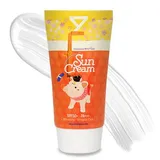
| UriageAge Lift Protective Smoothing Day Cream SPF30YOUR PRODUCT | The SaemEco Earth Light Sun Cream | Kiehl'ss Powerful Wrinkle Reducing Cream SPF30 | ElizaveccaMilky Piggy Sun Cream SPF50+ PA+++ | |
|---|---|---|---|---|
| Match | — | 59% | 59% | 57% |
| Price | $35.96 | $15.30−$20.66 | $15.00−$20.96 | $10.70−$25.26 |
| Shared key ingredients | — | 6 of 13 | 5 of 13 | 7 of 13 |
| Key difference | — | Niacinamide | Alteromonas Ferment Extract | Niacinamide |
| Irritancy | Medium | Medium | Low | Medium |
| SPF | SPF 30 | SPF 50 | SPF 30 | SPF 50 |
| Drying alcohol | — | — | — | — |
| View product | Shop | Shop | Shop |

Product summary
Based on the ingredient list, we assess that "Uriage - Age Lift Protective Smoothing Day Cream SPF30" can provide reliable sun protection. It can protect from both UVA and UVB rays. This is great news because not all sunscreens with SPF ratings give UVA protection. (UVA rays do not cause sunburn, but still damage our skin and lead to early aging).
It also works as a moisturizer, so you do not have to use an additional hydrating product. Like all broad-spectrum sunscreens, this product helps prevent early signs of aging.
Sunscreen filters
This is a so-called "chemical" sunscreen. It means that it uses organic UV filters. They typically offer good sun protection and rarely leave a white cast, but they can be irritating for some people with sensitive skin. These are the sun protection ingredients in this sunscreen: avobenzone 2.50% - 3.10%, octinoxate 5.30% - 6.50%, octisalate 3.70% - 4.50% and octocrylene 3.30% - 4.00%.
Irritation risk
There are some common irritants in this product, including ingredients that do not have benefits for the skin. We assess the overall irritancy of this moisturizer to be medium. For a detailed overview of all potential irritants: click here
You can see the detailed formula review with the breakdown of all actives in the product and the full ingredient list with estimated concentrations in the tables below.
Price
The product retails from 23.86£ up to 27.20£ in the United Kingdom.
For a detailed price comparison: click here.
Sources cited in this review
Every concentration estimate and effectiveness label is anchored to one of these 16 studies and safety reviews.
- 1
- 2Final Report on the Safety Assessment of Dimethicone Copolyoljournals.sagepub.com
- 3
- 4
- 5
- 6

Affiliate links · As an Amazon Associate, WIMJ earns from qualifying purchases.