Works for:
based on ingredients and %- Cleansing
Can it cause trouble?
- Irritation risk: high
- Comedogenic risk ingredients: 2
Key actives

Works for
Cleansing
What does the product description say?
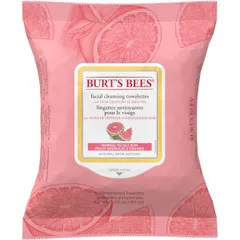
Gently cleanse your normal to oily skin of pore-clogging dirt, oil and makeup with a soft swipe of invigorating Pink Grapefruit.
Source: Burt's Bees US
This product works by removing dirt and oil from the surface of the skin. It uses a combination of mild cleansing agents (lysolecithin, polyglyceryl-4 caprate, xanthan gum) and should be able to cleanse the skin gently. Still keep in mind that any cleansing can disrupt the skin barrier, and most people do not need to cleanse their skin more than once per day.
Lecithin derivative. It helps oil and water mix together and can enhance penetration of other ingredients. It helps soften the upper layer of the skin
Used to create a thicker product consistency
How honest is this product?
| Promise | Can it deliver? |
|---|---|
| Cleansing |
Total Promises Fulfilled score: 100/100.
We receive a small commission for purchases made through these links at no cost for you. Thank you for your support! Learn more
Potential irritants
Comedogenic ingredients
User reviews (0)
Averages from community submissions.
No reviews yet for this product.
Be the first to share your experience!
Tried this product?
Help capture what the ingredient list can't—texture, finish, pilling, scent, and more. Answer what you can, skip the rest.
Takes ~30 seconds.
Reviews are shown in aggregate. No personal details.
Key Actives
Pure form of vitamin E. Can help moisturise and protect the skin from free radicals. Often used to help stabilise other ingredients or the formula itself
A salt derived from licorice. Works as an emollient to soften the upper layer of the skin and can help calm down inflammation. Might be helpful for skin lightening
Lecithin derivative. It helps oil and water mix together and can enhance penetration of other ingredients. It helps soften the upper layer of the skin
One of the best moisturizing ingredients. Naturally present in skin. It attracts water to the upper layer of the skin working as a humectant
Helps soften the upper layer of the skin and create a nice product texture
A good mix of fatty acids that forms a protective layer on the skin. Improves the shelf life of products. Derived from coconut and glycerin
A plant oil that might be able to help neutralize free radicals in skin
Sugar extract that helps attract water to the upper layer of the skin
Naturally present in skin and helps to attract water to its upper layer
Creates a thin drying film on the skin resulting in a short-term tightening effect
A good emollient that helps soften the skin and helps repair its barrier function. It can clog pores if used in high concentrations.
Used to create a thicker product consistency
An amino acid that is naturally present in skin and helps keep it hydrated. When used together with AHAs, it can reduce their irritating effect on the skin
Helps attract water to the upper layer of the skin. Is often used to adjust the pH level of the product
Potential irritants
A plant extract that can be irritating. It might contain a compound anthocyanin that could be helpful in neutralizing free radicals
A plant extract that is used as a fragrance. Can be irritating and lead to photosensitivity
Used as a fragrance. Can be irritating and cause photosensitivity
Creates a thin drying film on the skin resulting in a short-term tightening effect
Helps preserve products. Can mask unpleasant smell. Could be irritating
Produces temporary toning effect. Can help dissolve other ingredients or preserve products
An aromatic blend of unspecified and possibly irritating ingredients
A common frangrance that can easily irritate skin, especially if exposed to air, light or heat
A good mix of fatty acids that forms a protective layer on the skin. Improves the shelf life of products. Derived from coconut and glycerin
An emollient that softens skin and creates a nice product texture
Can have some moisturizing properties due to its sugar content
A plant oil that might be able to help neutralize free radicals in skin
A plant extract that can contain an antioxidant compound
A plant extract containing sugars that might help attract water to the upper layer of the skin. Is claimed by the manufacturer to help reduce pore size but evidence is lacking
A plant extract that might help neutralize free radicals in skin, but research on its efficacy in skin is lacking
A plant extract that contains small percentage of AHAs. Is unlikely to have any skin benefit due the small concentration of the active compounds
A plant extract that might contain salicylic acid
A plant extract that might have some antioxidant properties, but mostly used in cosmetics for its color
A good emollient that helps soften the skin and helps repair its barrier function. It can clog pores if used in high concentrations.
An exfoliating and moisturizing alpha-hydroxy acid (AHA). Typically causes less irritation than other AHAs, for example, glycolic acid. At high concentrations (about 15%), lactic acid can help reduce lines and wrinkles. Recent studies show that lactic acid can support the "good" bacteria living on skin's surface (healthy skin microbiome)
Can work as an exfoliant but is typically used to adjust the product pH
Helps attract water to the upper layer of the skin. Is often used to adjust the pH level of the product
Comedogenic ingredients
A good emollient that helps soften the skin and helps repair its barrier function. It can clog pores if used in high concentrations.
All ingredients
One of the best moisturizing ingredients. Naturally present in skin. It attracts water to the upper layer of the skin working as a humectant
Helps soften the upper layer of the skin and create a nice product texture
A good mix of fatty acids that forms a protective layer on the skin. Improves the shelf life of products. Derived from coconut and glycerin
An emollient that softens skin and creates a nice product texture
A plant extract that can be irritating. It might contain a compound anthocyanin that could be helpful in neutralizing free radicals
Can have some moisturizing properties due to its sugar content
A plant oil that might be able to help neutralize free radicals in skin
A plant extract that can contain an antioxidant compound
A plant extract containing sugars that might help attract water to the upper layer of the skin. Is claimed by the manufacturer to help reduce pore size but evidence is lacking
A plant extract that might help neutralize free radicals in skin, but research on its efficacy in skin is lacking
A plant extract that is used as a fragrance. Can be irritating and lead to photosensitivity
Used as a fragrance. Can be irritating and cause photosensitivity
A plant extract that contains small percentage of AHAs. Is unlikely to have any skin benefit due the small concentration of the active compounds
A plant extract that might contain salicylic acid
A plant extract that might have some antioxidant properties, but mostly used in cosmetics for its color
Sugar extract that helps attract water to the upper layer of the skin
Naturally present in skin and helps to attract water to its upper layer
Lecithin derivative. It helps oil and water mix together and can enhance penetration of other ingredients. It helps soften the upper layer of the skin
Creates a thin drying film on the skin resulting in a short-term tightening effect
A good emollient that helps soften the skin and helps repair its barrier function. It can clog pores if used in high concentrations.
An amino acid that is naturally present in skin and helps keep it hydrated. When used together with AHAs, it can reduce their irritating effect on the skin
A salt derived from licorice. Works as an emollient to soften the upper layer of the skin and can help calm down inflammation. Might be helpful for skin lightening
Pure form of vitamin E. Can help moisturise and protect the skin from free radicals. Often used to help stabilise other ingredients or the formula itself
An exfoliating and moisturizing alpha-hydroxy acid (AHA). Typically causes less irritation than other AHAs, for example, glycolic acid. At high concentrations (about 15%), lactic acid can help reduce lines and wrinkles. Recent studies show that lactic acid can support the "good" bacteria living on skin's surface (healthy skin microbiome)
Can work as an exfoliant but is typically used to adjust the product pH
Helps preserve products. Can mask unpleasant smell. Could be irritating
Produces temporary toning effect. Can help dissolve other ingredients or preserve products
Helps attract water to the upper layer of the skin. Is often used to adjust the pH level of the product
An aromatic blend of unspecified and possibly irritating ingredients
A preservative. It helps prevent bacterial growth in cosmetic products
A common frangrance that can easily irritate skin, especially if exposed to air, light or heat
Ingredient list view
Water, Glycerin, Decyl oleate, Oleyl erucate, Caprylic/capric triglyceride, Coco-caprylate, Hibiscus sabdariffa flower extract, Pyrus malus fruit extract, Rubus idaeus seed oil, Citrullus lanatus fruit extract, Lens esculenta fruit extract, Vaccinium myrtillus fruit extract, Adansonia digitata fruit extract, Scutellaria alpina flower/leaf/stem extract, Citrus aurantium dulcis fruit extract, Citrus limon fruit extract, Acer saccharum extract, Salix nigra bark extract, Beta vulgaris root extract, Saccharum officinarum extract, Hydrolyzed corn starch, Sodium pca, Ribose, Lysolecithin, Sclerotium gum, Pullulan, Glycine soja oil, Xanthan gum, Polyglyceryl-4 caprate, Arginine, Dipotassium glycyrrhizate, Sodium phytate, Tocopherol, Lactic acid, Citric acid, P-anisic acid, Alcohol denat., Sodium lactate, Sodium benzoate, Potassium sorbate, Parfum, Phenoxyethanol, Eugenol, Limonene, Linalool
- Glycerol and the skin: holistic approach to its origin and functions
- Anthocyanin-rich extract from Hibiscus sabdariffa calyx counteracts UVC-caused impairments in rats
- Hibiscus sabdariffa L. – A phytochemical and pharmacological review
- Liposome-containing Hibiscus sabdariffa calyx extract formulations with increased antioxidant activity, improved dermal penetration and reduced dermal toxicity
- Analyzing Lycopene Content in Fruits
- Lonicera caerulea and Vaccinium myrtillus fruit polyphenols protect HaCaT keratinocytes against UVB-induced phototoxic stress and DNA damage
- Herbal Medicine: Biomolecular and Clinical Aspects. 2nd edition.
- Safety Assessment of Citrus Fruit-Derived Ingredients as Used in Cosmetics
- Photosensitivity in children: An approach to diagnosis and management
- Safety Assessment of Citrus-Derived Peel Oils as Used in Cosmetics
- Ameliorating effect of dipotassium glycyrrhizinate on an IL-4- and IL-13-induced atopic dermatitis-like skin-equivalent model
- Final report on the safety assessment of Glycyrrhetinic Acid, Potassium Glycyrrhetinate, Disodium Succinoyl Glycyrrhetinate, Glyceryl Glycyrrhetinate, Glycyrrhetinyl Stearate, Stearyl Glycyrrhetinate, Glycyrrhizic Acid, Ammonium Glycyrrhizate, Dipotassium Glycyrrhizate, Disodium Glycyrrhizate, Trisodium Glycyrrhizate, Methyl Glycyrrhizate, and Potassium Glycyrrhizinate.
- Vitamin E in dermatology
- Vitamin E and Skin Health
- Epidermal and dermal effects of topical lactic acid
- Dual Effects of Alpha-Hydroxy Acids on the Skin
- Sodium anisate