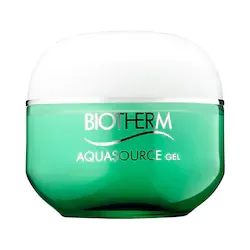
BIOTHERM Aquasource Gel Normal/Combination Skin
Works for
2 of 2 advertised claims delivered
Moisturizing12 ingredients credited for this claimStrong support
“An ultra-hydrating gel with enhanced aura leaf for extra glowing, hydrated skin.”
This product can help improve hydration of the skin with the two types of ingredients.
The first type is called “humectants”:
these ingredients help attract water.
When humectants are on the surface of the skin, they “pull in” the moisture from the outside environment, or from
within deeper layers of the skin. The following ingredients in this product do the job:
glycerin, hydroxyethyl urea.
This product also contains ingredients called “occlusives”. They help reduce the speed with which our skin loses moisture to the outside environment. These ingredients also help soften the upper layer of the skin, so it feels less tight and nicer to the touch. The following ingredients in this product do the job: butyrospermum parkii butter, dimethicone.
The following ingredients in this product are especially good for supporting the skin barrier and helping with the hydration level: ceramide np, hydroxypalmitoyl sphinganine
Evens skin tone2 ingredients credited for this claimModerate support
“This iconic moisturizer, now with an even more regenerative action and visible efficiency on brightness, leave skin softer, smoother, more even, and radiant in as little as 10 days.”
This product might be able to help reduce hyperpigmentation and even out the skin tone because it contains hydroxyethyl urea. The effect, if any, is likely to be small. Keep in mind that you would need to apply any topical skincare targetted at hypigmentation consistently for a couple of months to get a result. No topical skincare product can help get rid of hyperpigmentation (including post-acne marks and age spots) instantly.
The following ingredient (ingredients) in this product might be helpful, but there is no evidence to confirm that it actually works: capryloyl salicylic acid.
ExfoliationNot advertised by the brand · 4 ingredients credited for this claimStrong support
This product can help exfoliate the skin. In other words, it helps break down the bonds between dead cells on the surface of the skin and speed up the skin turnover. Skin often appears softer and brighter after exfoliation, but overdoing it can result in disrupted skin barrier. The following ingredient is doing the exfoliating job in this product: capryloyl salicylic acid, hydroxyethyl urea.
Can it cause trouble?
Irritancy7 strong irritants: Alcohol denat., Nasturtium officinale extract + 5 more — patch-test recommendedHigh risk
Comedogenic2 ingredients rated 2 or more on the 0–5 pore-clogging scale2 flagged

User reviews
Be the first — your take helps the next person decide.
Ingredients
Filter by role to see what each ingredient is doing.
Water~45–55%
Glycerin~4.5–5.5%
- Irritation risk
- Low
One of the best moisturizing ingredients. Naturally present in skin. It attracts water to the upper layer of the skin working as a humectant
More about GlycerinAlcohol denat.~4.2–5.2%
- Irritation risk
- High
Produces temporary toning effect. Can help dissolve other ingredients or preserve products
More about Alcohol denat.Dimethicone~3.1–3.8%
- Irritation risk
- Low
A silicone that helps to reduce water loss from the surface of the skin. Can temporarily "fill in" lines and wrinkles, absorb oil, and create a nice product finish
More about DimethiconeHydroxyethylpiperazine ethane sulfonic acid~2.3–2.8%
- Irritation risk
- Medium
Used to regulate product's pH, but can be also used as an exfoliator when included in higher concentrations. There is a controversy about whether it can generate free radicals and induce skin cell damage when used in topical products
More about Hydroxyethylpiperazine ethane sulfonic acidPrunus armeniaca kernel oil~1.9–2.4%
- Irritation risk
- Medium
An emollient that helps soften the skin
More about Prunus armeniaca kernel oilHydroxyethyl urea~1.6–2%
- Irritation risk
- Low
A derivative of urea, a compound that is naturally present in skin. Attracts water to the upper layer of the skin. Can enhance penetration of other ingredients
More about Hydroxyethyl ureaButyrospermum parkii butter~1.5–1.8%
- Irritation risk
- Low
- Comedogenicity
- 3/5
A great moisturising ingredient that softens the skin and reduces water loss from its upper layer. It also can be helpful in protecting skin from free radicals
More about Butyrospermum parkii butterNasturtium officinale extract~1.1–1.4%
- Irritation risk
- High
Used as a fragrance. Might have anti-oxidant properties
More about Nasturtium officinale extractC12-13 pareth-23~1.1–1.3%
C12-13 pareth-3~0.7–1%
Ceramide np~0.6–0.9%
- Irritation risk
- Low
A type of lipid similar to ceramides naturally present in skin. Helps to soften the upper layer of the skin and supports the skin barrier function to keep it hydrated. Can help to prevent inflammation in skin
More about Ceramide npCarbomer~0.5–0.75%
- Irritation risk
- Low
Helps create a thicker or gel-like product texture. It is not a surfactant but can be used in gentle cleansing formulations
More about CarbomerZinc gluconate~0.45–0.65%
- Irritation risk
- Medium
Typically used to stabilize the product formulations. It is a salt of a polyhydroxy acid (PHA) and in larger concentrations, can help shed the dead cells from the skin surface revealing smoother skin. It can help attract water to the upper layer of the skin. Might to be helpful against acne and clogged pores. Could be helpful in neutralizing free radicals, but solid research is missing. Due to the zinc content, might help calm down inflammation in skin
More about Zinc gluconateGlycine soja oil~0.45–0.65%
- Irritation risk
- Medium
- Comedogenicity
- 2/5
A good emollient that helps soften the skin and helps repair its barrier function. It can clog pores if used in high concentrations.
More about Glycine soja oilSodium chloride~0.45–0.7%
- Irritation risk
- Low
Used to stabilize mixtures of oil and water, and create thicker, gel-like product textures
More about Sodium chlorideSodium hydroxide~0.4–0.6%
Divinyldimethicone/dimethicone copolymer~0.35–0.65%
- Irritation risk
- Low
2-oleamido-1,3-octadecanediol~0.3–0.55%
- Irritation risk
- Low
Helps soften the upper layer of the skin and slow down the water loss over time
More about 2-oleamido-1,3-octadecanediolCholesterol~0.35–0.6%
- Irritation risk
- Low
An emollient that is naturally found in skin
More about CholesterolAmmonium polyacryloyldimethyl taurate~0.25–0.5%
- Irritation risk
- Low
Used to create a thicker product consistency
More about Ammonium polyacryloyldimethyl taurateDisodium edta~0.25–0.45%
Hydroxypalmitoyl sphinganine~0.25–0.4%
- Irritation risk
- Low
A type of lipid similar to ceramides naturally present in skin. Helps to soften the upper layer of the skin and supports the skin barrier function to keep it hydrated. Can help to prevent inflammation in skin
More about Hydroxypalmitoyl sphinganineCapryloyl salicylic acid~0.25–0.4%
- Irritation risk
- High
Vitreoscilla ferment~0.25–0.4%
- Irritation risk
- Low
Citric acid~0.25–0.45%
- Irritation risk
- Medium
Can work as an exfoliant but is typically used to adjust the product pH
More about Citric acidXanthan gum~0.25–0.5%
- Irritation risk
- Low
Used to create a thicker product consistency
More about Xanthan gumMenthoxypropanediol~0.25–0.45%
Ethylhexylglycerin~0.25–0.45%
Bht~0.2–0.4%
Tocopherol~0.25–0.4%
- Irritation risk
- Low
Pure form of vitamin E. Can help moisturise and protect the skin from free radicals. Often used to help stabilise other ingredients or the formula itself
More about TocopherolTocopheryl acetate~0.25–0.45%
- Irritation risk
- Medium
A more stable but less bio-available form of vitamin E compared to Tocopherol. Might help moisturize and protect the skin from free radicals, but mostly used in low concentrations to stabilize other ingredients.
More about Tocopheryl acetatePhenoxyethanol~0.2–0.4%
- Irritation risk
- Low
A preservative. It helps prevent bacterial growth in cosmetic products
More about PhenoxyethanolChlorphenesin~0.15–0.3%
Ci 19140~0.15–0.3%
Ci 42090~0.15–0.3%
Linalool~0.1–0.2%
Limonene~0.1–0.2%
- Irritation risk
- High
A common frangrance that can easily irritate skin, especially if exposed to air, light or heat
More about LimoneneCitral~0.05–0.15%
Parfum~0.05–0.1%
- Irritation risk
- High
An aromatic blend of unspecified and possibly irritating ingredients
More about ParfumIngredient list view
Water, Glycerin, Alcohol denat., Dimethicone, Hydroxyethylpiperazine ethane sulfonic acid, Prunus armeniaca kernel oil, Hydroxyethyl urea, Butyrospermum parkii butter, Nasturtium officinale extract, C12-13 pareth-23, C12-13 pareth-3, Ceramide np, Carbomer, Zinc gluconate, Glycine soja oil, Sodium chloride, Sodium hydroxide, Divinyldimethicone/dimethicone copolymer, 2-oleamido-1,3-octadecanediol, Cholesterol, Ammonium polyacryloyldimethyl taurate, Disodium edta, Hydroxypalmitoyl sphinganine, Capryloyl salicylic acid, Vitreoscilla ferment, Citric acid, Xanthan gum, Menthoxypropanediol, Ethylhexylglycerin, Bht, Tocopherol, Tocopheryl acetate, Phenoxyethanol, Chlorphenesin, Ci 19140, Ci 42090, Linalool, Limonene, Citral, Parfum
Compare prices
Retailers ranked by price — lowest first.
Worth comparing, line by line.
Match % combines shared ingredients, the first five ingredients, shared actives and hero ingredients, irritancy (lower counts in the alternative's favour), texture and body area. Only products in the same routine step are compared.
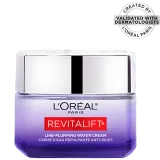
| BIOTHERMAquasource Gel Normal/Combination SkinYOUR PRODUCT | L'Oréal ParisMicro Hyaluronic acid + Ceramides line-plumping water cream | VichyIdéalia Night Recovery Gel-Balm | BIOAQUASOURCE DRY SKIN | |
|---|---|---|---|---|
| Match | — | 55% | 53% | 50% |
| Price | $69.69 | $32.99−$36.70 | $30.03−$39.66 | $47.00−$22.69 |
| Shared key ingredients | — | 5 of 14 | 5 of 14 | 10 of 14 |
| Key difference | — | Niacinamide | Niacinamide | Adenosine |
| Irritancy | High | Medium | Medium | High |
| Drying alcohol | Contains drying alcohol | Contains drying alcohol | Contains drying alcohol | Contains drying alcohol |
| View product | Shop | Shop | Shop |


Product summary
"BIOTHERM - Aquasource Gel Normal/Combination Skin" is a well-rounded moisturizing product. This moisturizer uses a good combo of humectants and emollients. These both types of ingredients are essentials for improving the skin hydration and keeping the skin barrier healthy. Glycerin and hydroxyethyl urea in this product (humectants) attract water molecules to the upper layer of the skin (the water comes from the outside air or from the deeper layers of the skin if the air is dry). Emollients in this formulation (ceramide np, cholesterol, glycine soja oil, prunus armeniaca kernel oil and butyrospermum parkii butter) help to reduce the moisture loss from the skin. They also soften the skin surface and relieve the feeling of dryness and tightness.
Ingredient callouts
- Another benefit is that this moisturizer contain ceramides (ceramide np 0.60% - 0.90%). Ceramides are an important part of our natural skin barrier. The ceramides used in skincare are synthetic or come from plants. They help soften the skin and can help "fill the gaps" in the skin barrier, keeping the skin hydrated and resilient for longer.
Irritation risk
This moisturizer contains a bunch of common irritants, including ingredients that do not provide any known benefit for the skin. It might not be the best choice if your skin is sensitive. We assess the overall irritancy of this moisturizer to be high. For a detailed overview of all potential irritants: click here
You can see the detailed formula review with the breakdown of all actives in the product and the full ingredient list with estimated concentrations in the tables below.
Price
The product retails for 50.00CA$ in Canada, for 104.59A$ in Australia and for 38.53£ in the United Kingdom.
For a detailed price comparison: click here.
Sources cited in this review
Every concentration estimate and effectiveness label is anchored to one of these 21 studies and safety reviews.
- 1
- 2
- 3Final Report on the Safety Assessment of Dimethicone Copolyoljournals.sagepub.com
- 4
- 5
- 6

Affiliate links · As an Amazon Associate, WIMJ earns from qualifying purchases.