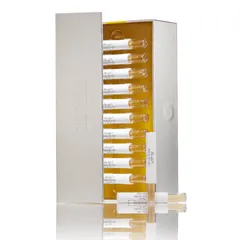
Works for:
based on ingredients and %- Moisturizing
- Anti-aging
Doesn't work for:
based on ingredients and %- Evens skin tone
Can it cause trouble?
- Irritation risk: high
- Comedogenic risk ingredients: 0
Key actives


Product Summary
"Biopelle - Tensage Intensive Serum 40" is effective for: Moisturizing
This product could be helpful for: Anti-aging, but its actives are not the most effective or are not well-studied.
Ingredient callouts
- Humectants (urea 0.10% - 0.45%, sucrose 0.10% - 0.50%, sucrose 0.50% - 1.15%, snail secretion filtrate 0.40% - 0.95%, snail secretion filtrate 25.00% - 37.00%, saccharide isomerate 0.40% - 0.90%, glutamic acid 0.10% - 0.35%, glutamic acid 0.40% - 1.00%, fructose 0.30% - 0.75%, fructose 1.00% - 1.50%, aspartic acid 0.10% - 0.45%, urea 0.45% - 1.10%, saccharide isomerate 3.10% - 4.70%, alanine 0.10% - 0.45%, aspartic acid 0.45% - 1.00% and alanine 0.45% - 1.05%). These ingredients help attract water to the upper layer of the skin and improve the skin hydration.
Price
The product retails for 136.00$ in the United States, from 163.20CA$ up to 287.50CA$ in Canada and for 284.58A$ in Australia.
For a detailed price comparison: click here.
Moisturizing
What does the product description say?
Hyaluronic acid and elastin noticeably improve the skin's tone and texture.
Source: Skinstore
This product contains good ingredients to attract water to the upper layer of the skin. These ingredients are called "humectants": alanine, aspartic acid.
When humectants are on the surface of the skin, they “pull in” the moisture from the outside environment, or from within deeper layers of the skin. If the air is dry, humectants can speed up the moisture loss from the skin. This is why it is a good idea to use another product on top of this one to help "seal in" the moisture (look for ingredients like dimethicone, squalane, oils and butters).
The following ingredients in this product are especially good for supporting the skin barrier and helping with the hydration level: urea
An amino-acid that helps increase skin hydration and might help to slightly improve skin firmness, potentially reducing lines and wrinkles
Typically contains hyaluronic acid that helps attract water to the upper layer of the skin. Might contain allantoin that is helpful in calming down inflammation. There is no evidence that it can have any further benefits for the skin, especially when used in skincare products
Can help attract water to the upper layer of the skin. In crystal form, it can work as a gentle exfoliant, gentler than the salt scrub. Helps stabilize the emulsion
Naturally present in skin (urea makes up about 7% of natural moisturizing factors in skin). Attracts water to the upper layer of the skin. Also has a positive effect on the skin barrier beyond the humectant action. Can enhance penetration of other ingredients. Is an exfoliating ingredient when used in high concentrations
An amino-acid that helps to attract water to the upper layer of the skin and might help to lighten the skin, but solid evidence is lacking
Helps attract water to the upper layer of the skin
An amino-acid that helps attract water to the upper layer of the skin
Helps attract water to the upper layer of the skin
Helps attract water to the upper layer of the skin. Could be helpful in restoring the skin barrier function
A sugar that is used to stabilize the product formulation. Can help attract water to the upper layer of the skin
A type of silicone. Helps create a nice product texture and can help soften the upper layer of the skin
Helps oil and water mix together and can enhance the penetration of other ingredients into the skin. It can be irritating
Anti-aging
What does the product description say?
SCA is a unique fibroblast growth factor that works to help skin regenerate tissue that is lost in the aging process and prevent further breakdown.
Source: Skinstore
This product contains aspartic acid. This ingredient might be able to help reduce and prevent fine lines and wrinkles, improve skin elasticity and firmness, but there is not enough evidence that it actually works.
An amino-acid that helps increase skin hydration and might help to slightly improve skin firmness, potentially reducing lines and wrinkles
A stable derivative of vitamin C. It is oil-soluble which means it is more likely to penetrate the skin compared to the pure form of vitamin C (which is water-soluble), but it is less bio-available and is way less effective in stimulating collagen and reducing wrinkles compared to the pure form of vitamin C (L-ascorbic acid) and its other derivatives (for example, magnesium ascorbyl phosphate). At the same time, this vitamin C derivative has been shown in studies to be effective in reducing acne, blemishes and clogged pores. It is less irritating then the pure form of vitamin C
Evens skin tone
What does the product description say?
Hyaluronic acid and elastin noticeably improve the skin's tone and texture.
Source: Skinstore
This product contains ingredients (alanine) that could help reduce hyperpigmentation (for example, post-acne marks or age spots) in theory, but there is not enough evidence that they actually work.
An amino-acid that helps to attract water to the upper layer of the skin and might help to lighten the skin, but solid evidence is lacking
How honest is this product?
| Promise | Can it deliver? |
|---|---|
| Moisturizing | |
| Anti-aging | |
| Evens skin tone |
Total Promises Fulfilled score: 75/100.
We receive a small commission for purchases made through these links at no cost for you. Thank you for your support! Learn more
Potential irritants
Comedogenic ingredients
No comedogenic ingredients detected
User reviews (0)
Averages from community submissions.
No reviews yet for this product.
Be the first to share your experience!
Tried this product?
Help capture what the ingredient list can't—texture, finish, pilling, scent, and more. Answer what you can, skip the rest.
Takes ~30 seconds.
Reviews are shown in aggregate. No personal details.
| Product | Similarity | Price | Irritancy |
|---|---|---|---|
 Biopelle Tensage Intensive Serum 40 | Current | ≈ $114.43 | |
Endocare Regenerating Anti-Aging Ampoules | 61% | $42.34 | |
Avant Skincare Hi-Retinol Restoring and Lifting Serum | 53% | ≈ $77.83 | |
 e.l.f. Hydrating Booster Drops | 50% | - |
Key Actives
A stable derivative of vitamin C. It is oil-soluble which means it is more likely to penetrate the skin compared to the pure form of vitamin C (which is water-soluble), but it is less bio-available and is way less effective in stimulating collagen and reducing wrinkles compared to the pure form of vitamin C (L-ascorbic acid) and its other derivatives (for example, magnesium ascorbyl phosphate). At the same time, this vitamin C derivative has been shown in studies to be effective in reducing acne, blemishes and clogged pores. It is less irritating then the pure form of vitamin C
A stable derivative of vitamin C. It is oil-soluble which means it is more likely to penetrate the skin compared to the pure form of vitamin C (which is water-soluble), but it is less bio-available and is way less effective in stimulating collagen and reducing wrinkles compared to the pure form of vitamin C (L-ascorbic acid) and its other derivatives (for example, magnesium ascorbyl phosphate). At the same time, this vitamin C derivative has been shown in studies to be effective in reducing acne, blemishes and clogged pores. It is less irritating then the pure form of vitamin C
Typically contains hyaluronic acid that helps attract water to the upper layer of the skin. Might contain allantoin that is helpful in calming down inflammation. There is no evidence that it can have any further benefits for the skin, especially when used in skincare products
Naturally present in skin (urea makes up about 7% of natural moisturizing factors in skin). Attracts water to the upper layer of the skin. Also has a positive effect on the skin barrier beyond the humectant action. Can enhance penetration of other ingredients. Is an exfoliating ingredient when used in high concentrations
An amino-acid that helps to attract water to the upper layer of the skin and might help to lighten the skin, but solid evidence is lacking
An amino-acid that helps increase skin hydration and might help to slightly improve skin firmness, potentially reducing lines and wrinkles
Typically contains hyaluronic acid that helps attract water to the upper layer of the skin. Might contain allantoin that is helpful in calming down inflammation. There is no evidence that it can have any further benefits for the skin, especially when used in skincare products
Naturally present in skin (urea makes up about 7% of natural moisturizing factors in skin). Attracts water to the upper layer of the skin. Also has a positive effect on the skin barrier beyond the humectant action. Can enhance penetration of other ingredients. Is an exfoliating ingredient when used in high concentrations
An amino-acid that helps to attract water to the upper layer of the skin and might help to lighten the skin, but solid evidence is lacking
An amino-acid that helps increase skin hydration and might help to slightly improve skin firmness, potentially reducing lines and wrinkles
Helps attract water to the upper layer of the skin
Helps attract water to the upper layer of the skin
Can help attract water to the upper layer of the skin. In crystal form, it can work as a gentle exfoliant, gentler than the salt scrub. Helps stabilize the emulsion
An amino-acid that helps attract water to the upper layer of the skin
Might be able to enhance blood flow in the skin. Can be irritating and result in skin redness
Helps attract water to the upper layer of the skin
Helps attract water to the upper layer of the skin
Can help attract water to the upper layer of the skin. In crystal form, it can work as a gentle exfoliant, gentler than the salt scrub. Helps stabilize the emulsion
An amino-acid that helps attract water to the upper layer of the skin
Might be able to enhance blood flow in the skin. Can be irritating and result in skin redness
Potential irritants
Helps oil and water mix together and can enhance the penetration of other ingredients into the skin. It can be irritating
Might be able to enhance blood flow in the skin. Can be irritating and result in skin redness
An aromatic blend of unspecified and possibly irritating ingredients
Typically contains hyaluronic acid that helps attract water to the upper layer of the skin. Might contain allantoin that is helpful in calming down inflammation. There is no evidence that it can have any further benefits for the skin, especially when used in skincare products
A stable derivative of vitamin C. It is oil-soluble which means it is more likely to penetrate the skin compared to the pure form of vitamin C (which is water-soluble), but it is less bio-available and is way less effective in stimulating collagen and reducing wrinkles compared to the pure form of vitamin C (L-ascorbic acid) and its other derivatives (for example, magnesium ascorbyl phosphate). At the same time, this vitamin C derivative has been shown in studies to be effective in reducing acne, blemishes and clogged pores. It is less irritating then the pure form of vitamin C
A more stable but less bio-available form of vitamin E compared to Tocopherol. Might help moisturize and protect the skin from free radicals, but mostly used in low concentrations to stabilize other ingredients.
Can work as an exfoliant but is typically used to adjust the product pH
Comedogenic ingredients
We couldn't find any comedogenic ingredients in this product
All ingredients
Typically contains hyaluronic acid that helps attract water to the upper layer of the skin. Might contain allantoin that is helpful in calming down inflammation. There is no evidence that it can have any further benefits for the skin, especially when used in skincare products
Helps oil and water mix together and can enhance the penetration of other ingredients into the skin. It can be irritating
A type of silicone. Helps create a nice product texture and can help soften the upper layer of the skin
A stable derivative of vitamin C. It is oil-soluble which means it is more likely to penetrate the skin compared to the pure form of vitamin C (which is water-soluble), but it is less bio-available and is way less effective in stimulating collagen and reducing wrinkles compared to the pure form of vitamin C (L-ascorbic acid) and its other derivatives (for example, magnesium ascorbyl phosphate). At the same time, this vitamin C derivative has been shown in studies to be effective in reducing acne, blemishes and clogged pores. It is less irritating then the pure form of vitamin C
Used to stabilize mixtures of oil and water, and create thicker, gel-like product textures
Helps attract water to the upper layer of the skin. Could be helpful in restoring the skin barrier function
Helps soften the upper layer of the skin and create a nice product finish
A more stable but less bio-available form of vitamin E compared to Tocopherol. Might help moisturize and protect the skin from free radicals, but mostly used in low concentrations to stabilize other ingredients.
Can work as an exfoliant but is typically used to adjust the product pH
A sugar that is used to stabilize the product formulation. Can help attract water to the upper layer of the skin
Can help attract water to the upper layer of the skin. In crystal form, it can work as a gentle exfoliant, gentler than the salt scrub. Helps stabilize the emulsion
Naturally present in skin (urea makes up about 7% of natural moisturizing factors in skin). Attracts water to the upper layer of the skin. Also has a positive effect on the skin barrier beyond the humectant action. Can enhance penetration of other ingredients. Is an exfoliating ingredient when used in high concentrations
An amino-acid that helps to attract water to the upper layer of the skin and might help to lighten the skin, but solid evidence is lacking
An amino-acid that helps increase skin hydration and might help to slightly improve skin firmness, potentially reducing lines and wrinkles
An amino-acid that helps attract water to the upper layer of the skin
Might be able to enhance blood flow in the skin. Can be irritating and result in skin redness
An aromatic blend of unspecified and possibly irritating ingredients
Typically contains hyaluronic acid that helps attract water to the upper layer of the skin. Might contain allantoin that is helpful in calming down inflammation. There is no evidence that it can have any further benefits for the skin, especially when used in skincare products
Helps oil and water mix together and can enhance the penetration of other ingredients into the skin. It can be irritating
A type of silicone. Helps create a nice product texture and can help soften the upper layer of the skin
A stable derivative of vitamin C. It is oil-soluble which means it is more likely to penetrate the skin compared to the pure form of vitamin C (which is water-soluble), but it is less bio-available and is way less effective in stimulating collagen and reducing wrinkles compared to the pure form of vitamin C (L-ascorbic acid) and its other derivatives (for example, magnesium ascorbyl phosphate). At the same time, this vitamin C derivative has been shown in studies to be effective in reducing acne, blemishes and clogged pores. It is less irritating then the pure form of vitamin C
Used to stabilize mixtures of oil and water, and create thicker, gel-like product textures
Helps attract water to the upper layer of the skin. Could be helpful in restoring the skin barrier function
Helps soften the upper layer of the skin and create a nice product finish
A more stable but less bio-available form of vitamin E compared to Tocopherol. Might help moisturize and protect the skin from free radicals, but mostly used in low concentrations to stabilize other ingredients.
Can work as an exfoliant but is typically used to adjust the product pH
A sugar that is used to stabilize the product formulation. Can help attract water to the upper layer of the skin
Can help attract water to the upper layer of the skin. In crystal form, it can work as a gentle exfoliant, gentler than the salt scrub. Helps stabilize the emulsion
Naturally present in skin (urea makes up about 7% of natural moisturizing factors in skin). Attracts water to the upper layer of the skin. Also has a positive effect on the skin barrier beyond the humectant action. Can enhance penetration of other ingredients. Is an exfoliating ingredient when used in high concentrations
An amino-acid that helps to attract water to the upper layer of the skin and might help to lighten the skin, but solid evidence is lacking
An amino-acid that helps increase skin hydration and might help to slightly improve skin firmness, potentially reducing lines and wrinkles
An amino-acid that helps attract water to the upper layer of the skin
Might be able to enhance blood flow in the skin. Can be irritating and result in skin redness
An aromatic blend of unspecified and possibly irritating ingredients
Ingredient list view
Snail secretion filtrate, Propylene glycol, Water, Saccharide isomerate, Hexylene glycol, Polysorbate 20, Peg/ppg-20/6 dimethicone, Sodium ascorbyl phosphate, Sodium chloride, Fructose, Glucose, Polyquaternium-10, Tocopheryl acetate, Citric acid, Tetrasodium edta, Dextrin, Sucrose, Urea, Alanine, Aspartic acid, Glutamic acid, Hexyl nicotinate, Parfum, Snail secretion filtrate, Propylene glycol, Water, Saccharide isomerate, Hexylene glycol, Polysorbate 20, Peg/ppg-20/6 dimethicone, Sodium ascorbyl phosphate, Sodium chloride, Fructose, Glucose, Polyquaternium-10, Tocopheryl acetate, Citric acid, Tetrasodium edta, Dextrin, Sucrose, Urea, Alanine, Aspartic acid, Glutamic acid, Hexyl nicotinate, Parfum
- The Effects of Filtrate of the Secretion of the Cryptomphalus Aspersa on Photoaged Skin
- The Effects of Snail Secretion Filtrate on the damaged skin barrier's recovery of the Atopic dermatitis
- Surfactants and experimental irritant contact dermatitis
- Propylene Glycol
- Skin-sensitizing and irritant properties of propylene glycol
- Sodium ascorbyl phosphate shows in vitro and in vivo efficacy in the prevention and treatment of acne vulgaris
- Sodium ascorbyl phosphate in topical microemulsions
- Final report of the safety assessment of L-Ascorbic Acid, Calcium Ascorbate, Magnesium Ascorbate, Magnesium Ascorbyl Phosphate, Sodium Ascorbate, and Sodium Ascorbyl Phosphate as used in cosmetics
- Regulation of collagen synthesis in human dermal fibroblasts by the sodium and magnesium salts of ascorbyl-2-phosphate
- Comparison of clinical efficacies of sodium ascorbyl phosphate, retinol and their combination in acne treatment
- Application of l-ascorbic acid and its derivatives (sodium ascorbyl phosphate and magnesium ascorbyl phosphate) in topical cosmetic formulations: stability studies
- Sodium L-ascorbyl-2-phosphate 5% lotion for the treatment of acne vulgaris: a randomized, double-blind, controlled trial
- Topical Glucose Induces Claudin-1 and Filaggrin Expression in a Mouse Model of Atopic Dermatitis and in Keratinocyte Culture, Exerting Anti-inflammatory Effects by Repairing Skin Barrier Function
- Augmentation of sebaceous lipogenesis by an ethanol extract of Grifola frondosa (Maitake mushroom) in hamsters in vivo and in vitro
- Topical urea in skincare: A review
- Combination of amino acids reduces pigmentation in B16F0 melanoma cells
- Acetyl aspartic acid, a novel active ingredient, demonstrates potential to improve signs of skin ageing: from consumer need to clinical proof
- In vivo topical application of acetyl aspartic acid increases fibrillin-1 and collagen IV deposition leading to a significant improvement of skin firmness
- The effects of topically applied hexyl nicotinate lotion on the cutaneous blood flow in patients with Raynaud's phenomenon
- Hexyl-Nicotinate-Induced Vasodilation in Normal Human Skin
- Differences among moisturizers in affecting skin susceptibility to hexyl nicotinate, measured as time to increase skin blood flow