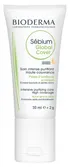
Bioderma Sébium Global Cover Intensive Purifying Care High Coverage +
Works for
Anti-blemishSalicylic acid, Bakuchiol + 2 moreWorks well
“Bioderma Sébium Global Cover Intensive Purifying Care High Coverage 30ml + 2g is a purifying care specially formulated for the skins with acne tendency.This tinted care acts at the origin of blemishes thanks to the Seborestore Technology [Fluidactiv Patent , Bakuchiol].”
This product can help reduce breakouts and clogged pores because it contains the following ingredient: salicylic acid. This ingredient is used for treating acne and can have a noticeable effect.
In addition, this product contains bakuchiol. It can help in reducing blemishes, even though it is less effective.
MoisturizingDiisopropyl adipate, Cera alba + 17 moreWorks
“This technology rebalances the composition of sebum so that it regains its natural moisturising functions on a lasting basis and prevents the formation of new imperfections.It hides established pimples and promotes their elimination.”
This product can help improve hydration of the skin with the two types of ingredients.
The first type is called “humectants”:
these ingredients help attract water.
When humectants are on the surface of the skin, they “pull in” the moisture from the outside environment, or from
within deeper layers of the skin. The following ingredients in this product do the job:
fructooligosaccharides, mannitol.
This product also contains ingredients called “occlusives”. They help reduce the speed with which our skin loses moisture to the outside environment. These ingredients also help soften the upper layer of the skin, so it feels less tight and nicer to the touch. The following ingredients in this product do the job: beeswax, bis-diglyceryl polyacyladipate-2.
Evens skin toneSide benefit · Bakuchiol, Glycyrrhetinic acid + 2 moreWorks well
This product can help reduce hypepigmentation and even out the skin tone because it contains the following effective ingredients: bakuchiol, salicylic acid
The following ingredient (ingredients) in this product might be helpful, but there is no evidence to confirm that it actually can help even out the skin tone: glycyrrhetinic acid, zinc gluconate.
Keep in mind that you would need to apply any topical skincare targetted at hypigmentation consistently for a couple of months to get a result. No topical skincare product can help get rid of hyperpigmentation (including post-acne marks and age spots) instantly.
Anti-agingSide benefit · Bakuchiol, Rhamnose + 1 moreWorks well
This product can help reduce and prevent fine lines and wrinkles, improve skin elasticity and firmness because it contains bakuchiol.
Keep in mind that it typically takes at least 6 weeks to notice any results because the changes that are needed to improve fine lines and elasticity happen in the deeper layers of the skin. No topical anti-aging product can “erase” wrinkles or fully reverse signs of aging.
Anti-oxidationSide benefit · Bakuchiol, Glycyrrhetinic acid + 2 moreWorks well
This product contains antioxidants (bakuchiol, glycyrrhetinic acid) that can help neutralize free radicals in skin. By doing so, they can lessen the damage the skin gets from the UV light (sun).
The following ingredients - ginkgo biloba leaf extract also can have an antioxidant effect, but there is less evidence to confirm their effectiveness in skin.
ExfoliationSide benefit · Salicylic acid, Zinc gluconateWorks well
This product can help exfoliate the skin. In other words, it helps break down the bonds between dead cells on the surface of the skin and speed up the skin turnover. Skin often appears softer and brighter after exfoliation, but overdoing it can result in disrupted skin barrier. The following ingredient is doing the exfoliating job in this product: salicylic acid.
Can it cause trouble?
Irritancy2 strong irritants: Alcohol denat., ParfumMedium risk
Comedogenic2 ingredients rated 2 or more on the 0–5 pore-clogging scale2 flagged

User reviews
Be the first — your take helps the next person decide.
Ingredients
Filter by role to see what each ingredient is doing.
Water~40–60%
Di-c12-13 alkyl malate~3.7–5.5%
- Irritation risk
- Low
Helps soften the upper layer of the skin
More about Di-c12-13 alkyl malateTitanium dioxide~4.4–6.6%
- Irritation risk
- Low
Works as a UV filter when used in high concentrations. It is photostable and is effective mostly against the UVB light, with some protection in the UVA range. In small concentrations, used for its ability to improve the color of cosmetic products. Is usually well tolerated by the skin
More about Titanium dioxideCi 77891~3.3–4.9%
- Irritation risk
- Low
Diisopropyl adipate~2.5–3.8%
- Irritation risk
- Low
Helps soften the upper layer of the skin
More about Diisopropyl adipateAluminum starch octenylsuccinate~2.1–3.1%
- Irritation risk
- Medium
Used to thicken the product's consistency
More about Aluminum starch octenylsuccinatePropanediol~1.8–2.6%
- Irritation risk
- Low
Acts as a solvent for other ingredients. Speeds up the absorption of other ingredients into the skin
More about PropanediolIsononyl isononanoate~1.6–2.3%
- Irritation risk
- Low
Forms a protective film on the surface of the skin to prevent moisture loss. Gives a velvety feel to products while reducing tackiness
More about Isononyl isononanoatePeg-30 dipolyhydroxystearate~1.3–1.9%
- Irritation risk
- Medium
Helps oil and water mix together
More about Peg-30 dipolyhydroxystearateZinc gluconate~1.1–1.7%
- Irritation risk
- Medium
Typically used to stabilize the product formulations. It is a salt of a polyhydroxy acid (PHA) and in larger concentrations, can help shed the dead cells from the skin surface revealing smoother skin. It can help attract water to the upper layer of the skin. Might to be helpful against acne and clogged pores. Could be helpful in neutralizing free radicals, but solid research is missing. Due to the zinc content, might help calm down inflammation in skin
More about Zinc gluconatePentaerythrityl distearate~1–1.5%
Caprylic/capric triglyceride~0.95–1.4%
- Irritation risk
- Medium
A good mix of fatty acids that forms a protective layer on the skin. Improves the shelf life of products. Derived from coconut and glycerin
More about Caprylic/capric triglycerideIron oxides~0.95–1.4%
- Irritation risk
- Low
An umbrella term for the following three colorants: CI 77491, CI 77492, CI 77499. They might be able to offer some protection against visible light, but the degree of the protection is not clear
More about Iron oxidesCi 77492~0.85–1.25%
Disteardimonium hectorite~0.8–1.2%
- Irritation risk
- Low
A type of clay that is used to thicken the product consistency
More about Disteardimonium hectoriteSalicylic acid~0.55–1.35%
- Irritation risk
- High
Used for skin exfoliation. It has an anti-inflammatory and anti-bacterial effect, helps to unclog pores, prevent blemishes and speed up healing of the existing ones. Sometimes referred to as a BHA (beta-hydroxy acid)
More about Salicylic acidBis-peg/ppg-14/14 dimethicone~0.55–1.35%
- Irritation risk
- Medium
Helps water and oil mix together
More about Bis-peg/ppg-14/14 dimethiconeIron oxides~0.6–1.35%
- Irritation risk
- Low
An umbrella term for the following three colorants: CI 77491, CI 77492, CI 77499. They might be able to offer some protection against visible light, but the degree of the protection is not clear
More about Iron oxidesCi 77491~0.5–1.2%
- Irritation risk
- Low
A red colorant made of iron oxide. Typically is not irritating
More about Ci 77491Bakuchiol~0.5–1.15%
- Irritation risk
- Medium
A plant extract that is, though different in chemical structure, acts similar to retinoids. First studies show that it can help reduce fine lines and wrinkles, improve skin tone, reduce clogged pores and blemishes, and reduce inflammation. There is no conclusive evidence that bakuchiol is as effective as retinol however. The study that directly compared retinol with bakuchiol used bakuchiol applied twice daily compared to once per day for the retinol. According to this study, bakuchiol is less irritating than retinol. Bakuchiol is extracted from seeds of Babchi plant. Other parts of the plant contain coumarins that could cause allergic and irritant reactions. These compounds should be removed in the extraction process when bakuchiol is produced, but it is a good idea to be cautious and stay away from products that include the Babchi plant extracts other than purified bakuchiol to avoid irritation
More about BakuchiolHydrogenated lecithin~0.5–1.2%
- Irritation risk
- Low
Helps to retain moisture by creating a protective barrier on the skin. Rich in fatty acids. Improves product texture and helps with the penetration of other ingredients.
More about Hydrogenated lecithinGlycyrrhetinic acid~0.45–1.05%
- Irritation risk
- Medium
Active compound of licorice root. Works to calm down inflammation, as an anti-oxidant, and might be helpful in lightening the skin and reducing hyperpigmentation
More about Glycyrrhetinic acidCandida bombicola/glucose/methyl rapeseedate ferment~0.5–1.15%
- Irritation risk
- Low
Helps water and oil mix together and preserve the product formulation
More about Candida bombicola/glucose/methyl rapeseedate fermentXanthan gum~0.5–1.15%
- Irritation risk
- Low
Used to create a thicker product consistency
More about Xanthan gumIron oxides~0.45–1.05%
- Irritation risk
- Low
An umbrella term for the following three colorants: CI 77491, CI 77492, CI 77499. They might be able to offer some protection against visible light, but the degree of the protection is not clear
More about Iron oxidesCi 77499~0.5–1.1%
Alcohol denat.~0.45–1.05%
- Irritation risk
- High
Produces temporary toning effect. Can help dissolve other ingredients or preserve products
More about Alcohol denat.Sodium hydroxide~0.5–1.1%
Laminaria ochroleuca extract~0.45–1.05%
- Irritation risk
- Low
- Comedogenicity
- 3/5
Helps attract water to the upper layer of the skin
More about Laminaria ochroleuca extractXylitol~0.45–1.05%
- Irritation risk
- Low
Helps attract water to the upper layer of the skin and repair the skin barrier function
More about XylitolPropylene glycol~0.45–1.05%
- Irritation risk
- High
Helps oil and water mix together and can enhance the penetration of other ingredients into the skin. It can be irritating
More about Propylene glycolDimethicone~0.5–1.2%
- Irritation risk
- Low
A silicone that helps to reduce water loss from the surface of the skin. Can temporarily "fill in" lines and wrinkles, absorb oil, and create a nice product finish
More about DimethiconeRhamnose~0.45–1.05%
- Irritation risk
- Low
Helps oil and water mix together. It also helps attract water to the upper layer of the skin
More about RhamnoseCitric acid~0.5–1.15%
- Irritation risk
- Medium
Can work as an exfoliant but is typically used to adjust the product pH
More about Citric acidFructooligosaccharides~0.45–1.05%
- Irritation risk
- Low
Help attract water to the upper layer of the skin
More about FructooligosaccharidesMannitol~0.45–1.05%
- Irritation risk
- Low
Helps to attract water to the upper layer of the skin
More about MannitolGinkgo biloba leaf extract~0.45–1.05%
- Irritation risk
- High
A plant extract that might help neutralize free radicals and reduce inflammation in skin. It can be irritating
More about Ginkgo biloba leaf extractPotassium sorbate~0.3–0.6%
Pentaerythrityl tetra-di-t-butyl hydroxyhydrocinnamate~0.5–1.15%
- Irritation risk
- Low
Used to increase stability of product formulations
More about Pentaerythrityl tetra-di-t-butyl hydroxyhydrocinnamateTriisopropanolamine~0.5–1.15%
- Irritation risk
- Low
Parfum~0.45–1.1%
- Irritation risk
- High
An aromatic blend of unspecified and possibly irritating ingredients
More about ParfumDiisostearyl malate~0.5–1.15%
- Irritation risk
- Medium
Helps to soften the upper layer of the skin
More about Diisostearyl malateTitanium dioxide~0.55–1.3%
- Irritation risk
- Low
Works as a UV filter when used in high concentrations. It is photostable and is effective mostly against the UVB light, with some protection in the UVA range. In small concentrations, used for its ability to improve the color of cosmetic products. Is usually well tolerated by the skin
More about Titanium dioxideCi 77891~0.45–1.1%
- Irritation risk
- Low
Silica~0.55–1.35%
Ppg-3 myristyl ether~0.5–1.15%
Bis-diglyceryl polyacyladipate-2~0.5–1.1%
- Irritation risk
- Low
Helps soften the upper layer of the skin and reduce water loss from its surface
More about Bis-diglyceryl polyacyladipate-2Octyldodecanol~0.5–1.15%
- Irritation risk
- Low
An emollient that helps to soften the skin and create a pleasant product texture and stabilize the formulation
More about OctyldodecanolPolyethylene~0.6–1.35%
Titanium dioxide~0.55–1.3%
- Irritation risk
- Low
Works as a UV filter when used in high concentrations. It is photostable and is effective mostly against the UVB light, with some protection in the UVA range. In small concentrations, used for its ability to improve the color of cosmetic products. Is usually well tolerated by the skin
More about Titanium dioxideHydrogenated castor oil~0.5–1.15%
- Irritation risk
- Medium
A plant oil that can help soften the skin. It might be helpful in calming down inflammation, but solid research is lacking. Is often used in lip products to create the needed product consistency
More about Hydrogenated castor oilCera alba~0.55–1.25%
- Irritation risk
- Medium
Forms a protective barrier that holds water and keeps dry skin hydrated. Keeps an emulsion from separating into its oil and liquid components, and increases the thickness of a product. Can be an allergen
More about Cera albaBeeswax~0.5–1.15%
- Irritation risk
- Low
Forms a protective barrier that holds water and keeps dry skin hydrated. Keeps an emulsion from separating into its oil and liquid components, and increases the thickness of a product. Can be an allergen
More about BeeswaxIsononyl isononanoate~0.5–1.15%
- Irritation risk
- Low
Forms a protective film on the surface of the skin to prevent moisture loss. Gives a velvety feel to products while reducing tackiness
More about Isononyl isononanoateCaprylic/capric triglyceride~0.5–1.1%
- Irritation risk
- Medium
A good mix of fatty acids that forms a protective layer on the skin. Improves the shelf life of products. Derived from coconut and glycerin
More about Caprylic/capric triglycerideChromium~0.45–1.05%
- Irritation risk
- Low
Potassium oxide~0.45–1.1%
- Irritation risk
- Low
Ci 77288~0.45–1.05%
- Irritation risk
- Low
Zinc oxide~0.5–1.1%
- Irritation risk
- Low
A broad spectrum sunblock (protects from both UVA and UVB rays). Is suitable for most sensitive skins. In small concentrations, can be used as a colorant
More about Zinc oxideAluminum hydroxide~0.4–0.9%
- Irritation risk
- Low
Is used to add opaque (non-transparent) appearance to formulations. Can be used to coat other ingredients for even dispersion. This is a different ingredient compared to the ones used in antipersperants (aluminium chloride and aluminium chlorohydrate)
More about Aluminum hydroxideStearic acid~0.5–1.1%
- Irritation risk
- Low
Helps oil and water mix together and works as an emollient
More about Stearic acidSucrose tetrastearate triacetate~0.4–0.9%
Disteardimonium hectorite~0.35–0.85%
- Irritation risk
- Low
A type of clay that is used to thicken the product consistency
More about Disteardimonium hectoriteIron oxides~0.35–0.75%
- Irritation risk
- Low
An umbrella term for the following three colorants: CI 77491, CI 77492, CI 77499. They might be able to offer some protection against visible light, but the degree of the protection is not clear
More about Iron oxidesCi 77492~0.35–0.8%
Zinc gluconate~0.3–0.7%
- Irritation risk
- Medium
Typically used to stabilize the product formulations. It is a salt of a polyhydroxy acid (PHA) and in larger concentrations, can help shed the dead cells from the skin surface revealing smoother skin. It can help attract water to the upper layer of the skin. Might to be helpful against acne and clogged pores. Could be helpful in neutralizing free radicals, but solid research is missing. Due to the zinc content, might help calm down inflammation in skin
More about Zinc gluconateMica~0.35–0.8%
- Irritation risk
- Low
Creates an illusion of smoother and more radiant skin tone. Adds shimmer to the skin by reflecting light
More about MicaLaminaria ochroleuca extract~0.15–0.65%
- Irritation risk
- Low
- Comedogenicity
- 3/5
Helps attract water to the upper layer of the skin
More about Laminaria ochroleuca extractPropylene carbonate~0.3–0.7%
- Irritation risk
- Low
Is used to dissolve other ingredients and create nice product texture
More about Propylene carbonateBlue 1 lake~0.15–0.6%
Ci 42090~0.15–0.55%
Triethoxycaprylylsilane~0.05–0.3%
- Irritation risk
- Low
A type of silicone that helps oil and water mix well together. Helps to disperse other ingredients, e.g. pigments, evenly in a formulation
More about TriethoxycaprylylsilaneBht~0.05–0.1%
Ingredient list view
Water, Di-c12-13 alkyl malate, Titanium dioxide, Ci 77891, Diisopropyl adipate, Aluminum starch octenylsuccinate, Propanediol, Isononyl isononanoate, Peg-30 dipolyhydroxystearate, Zinc gluconate, Pentaerythrityl distearate, Caprylic/capric triglyceride, Iron oxides, Ci 77492, Disteardimonium hectorite, Salicylic acid, Bis-peg/ppg-14/14 dimethicone, Iron oxides, Ci 77491, Bakuchiol, Hydrogenated lecithin, Glycyrrhetinic acid, Candida bombicola/glucose/methyl rapeseedate ferment, Xanthan gum, Iron oxides, Ci 77499, Alcohol denat., Sodium hydroxide, Laminaria ochroleuca extract, Xylitol, Propylene glycol, Dimethicone, Rhamnose, Citric acid, Fructooligosaccharides, Mannitol, Ginkgo biloba leaf extract, Potassium sorbate, Pentaerythrityl tetra-di-t-butyl hydroxyhydrocinnamate, Triisopropanolamine, Parfum, Diisostearyl malate, Titanium dioxide, Ci 77891, Silica, Ppg-3 myristyl ether, Bis-diglyceryl polyacyladipate-2, Octyldodecanol, Polyethylene, Titanium dioxide, Hydrogenated castor oil, Cera alba, Beeswax, Isononyl isononanoate, Caprylic/capric triglyceride, Chromium, Potassium oxide, Ci 77288, Zinc oxide, Aluminum hydroxide, Stearic acid, Sucrose tetrastearate triacetate, Disteardimonium hectorite, Iron oxides, Ci 77492, Zinc gluconate, Mica, Laminaria ochroleuca extract, Propylene carbonate, Blue 1 lake, Ci 42090, Triethoxycaprylylsilane, Bht
Compare prices
Retailers ranked by price — lowest first.

Worth comparing, line by line.
Match % combines shared ingredients, the first five ingredients, shared actives and hero ingredients, irritancy (lower counts in the alternative's favour), texture and body area. Only products in the same routine step are compared.
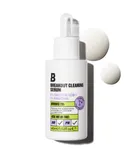
| BiodermaSébium Global Cover Intensive Purifying Care High Coverage +YOUR PRODUCT | NuhanciamBlemish Eraser | By BEAUTY BAYBreakout Clearing Serum | BythebeauBabchi Skin Rejuvenating Serum | |
|---|---|---|---|---|
| Match | — | 76% | 75% | 75% |
| Price | — | — | $6.66 | — |
| Shared key ingredients | — | 3 of 15 | 2 of 15 | 2 of 15 |
| Key difference | — | Niacinamide | Panthenol | Glycerin |
| Irritancy | Medium | Low | Low | Low |
| Drying alcohol | Contains drying alcohol | — | — | — |
| View product | Shop | Shop | Shop |


More alternatives: Dr Sam's Flawless Neutralising Gel Rollerpsa LIQUID CLARITY BHA & Bakuchiol Blemish Recovery Booster
Product summary
"Bioderma - Sébium Global Cover Intensive Purifying Care High Coverage +" is effective for: Evens skin tone, Anti-aging, Exfoliation and Anti-blemish
This product could be helpful for: Moisturizing, but its actives are not the most effective or are not well-studied.
Ingredient callouts
- this product contains Bakuchiol (0.50% - 1.15%). It is a plant extract that is has a similar effect to that of Retinoids but with less irritation. Bakuchiol can help reduce fine lines and wrinkles, improve skin tone, reduce clogged pores and blemishes, and reduce inflammation.
- Salicylic acid (0.55% - 1.35%). This is an oil-soluble exfoliating acid. Because of this property, it can work inside pores and help reduce the congestion. It has an anti-inflammatory effect and is used to treat acne. Because it is a quite strong exfoliator, be careful with using this product too often: it could result in over-exfoliation.
- Humectants (mannitol 0.45% - 1.05% and fructooligosaccharides 0.45% - 1.05%). These ingredients help attract water to the upper layer of the skin and improve the skin hydration.
Price
The product retails for 12.93£ in the United Kingdom.
For a detailed price comparison: click here.
Sources cited in this review
Every concentration estimate and effectiveness label is anchored to one of these 36 studies and safety reviews.
- 1Zinc salts in dermatologyncbi.nlm.nih.gov
- 2
- 3
- 4
- 5
- 6

Affiliate links · As an Amazon Associate, WIMJ earns from qualifying purchases.