Works for
1 of 1 advertised claim delivered
Moisturizing11 ingredients credited for this claimGood support
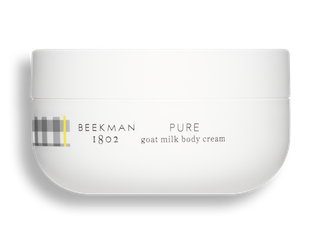
“An intensive treatment that softens and smooths skin, delivering long-lasting, maximum hydration deep into the skin Our most luxurious body cream feels silky when applying Absorbs quickly for instant hydration that lasts”
This product can help improve hydration of the skin with the two types of ingredients.
The first type is called “humectants”:
these ingredients help attract water.
When humectants are on the surface of the skin, they “pull in” the moisture from the outside environment, or from
within deeper layers of the skin. The following ingredients in this product do the job:
glycerin.
This product also contains ingredients called “occlusives”. They help reduce the speed with which our skin loses moisture to the outside environment. These ingredients also help soften the upper layer of the skin, so it feels less tight and nicer to the touch. The following ingredients in this product do the job: cocos nucifera oil, dimethicone.
Anti-oxidationNot advertised by the brand · 7 ingredients credited for this claimStrong support
This product contains antioxidants (vitis vinifera seed extract) that can help neutralize free radicals in skin. By doing so, they can lessen the damage the skin gets from the UV light (sun).
The following ingredients - pinus pinaster bark extract also can have an antioxidant effect, but there is less evidence to confirm their effectiveness in skin.
Anti-agingNot advertised by the brand · 5 ingredients credited for this claimModerate support
This product contains vitis vinifera seed extract. This ingredient might be able to help reduce and prevent fine lines and wrinkles, improve skin elasticity and firmness, but there is not enough evidence that it actually works.
Can it cause trouble?
Irritancy9 flagged ingredientsLow risk
Comedogenic2 ingredients rated 2 or more on the 0–5 pore-clogging scale2 flagged
User reviews
Be the first — your take helps the next person decide.
Ingredients
Filter by role to see what each ingredient is doing.
Water~40–60%
Glycerin~3.9–5.9%
- Irritation risk
- Low
One of the best moisturizing ingredients. Naturally present in skin. It attracts water to the upper layer of the skin working as a humectant
More about GlycerinCocos nucifera oil~3.7–5.6%
- Irritation risk
- Low
- Comedogenicity
- 3/5
An emollient. Found to be as effective as a moisturizer for dry skin as mineral oil. Could be comedogenic
More about Cocos nucifera oilElaeis guineensis oil~2.8–4.1%
- Irritation risk
- Low
Helps soften the upper layer of the skin
More about Elaeis guineensis oilEthylhexyl palmitate~2.1–3.1%
- Irritation risk
- Low
- Comedogenicity
- 3/5
An emollient that helps soften the skin and create a nice product texture
More about Ethylhexyl palmitateStearic acid~1.8–2.7%
- Irritation risk
- Low
Helps oil and water mix together and works as an emollient
More about Stearic acidStearyl alcohol~1.5–2.2%
- Irritation risk
- Low
An emollient that helps soften the skin
More about Stearyl alcoholDimethicone~1.4–2%
- Irritation risk
- Low
A silicone that helps to reduce water loss from the surface of the skin. Can temporarily "fill in" lines and wrinkles, absorb oil, and create a nice product finish
More about DimethiconeSodium stearate~1.4–2.1%
Mangifera indica seed butter~0.85–1.25%
- Irritation risk
- Low
Helps to soften the upper layer of the skin and might have some anti-oxidant effect
More about Mangifera indica seed butterAloe barbadensis leaf juice~0.5–1.2%
- Irritation risk
- Medium
Traditionally used to treat sunburns, dermatitis and inflammation, but evidence for its effectiveness is lacking. The extract can contain humectants that help attract water into the skin
More about Aloe barbadensis leaf juiceCaprae lac~0.4–0.95%
- Irritation risk
- Low
Goat milk~0.35–0.85%
- Irritation risk
- Low
Camellia sinensis leaf extract~0.35–0.85%
- Irritation risk
- Low
Can contain potent anti-oxidant compounds (abbreviated ECG, GCG, EGC, and EGCG) that might help protect the skin from free radicals. Can help calm down inflammation and has some anti-bacterial properties. Unfortunately, these antioxidants are unstable and lose their effectiveness very quickly in products. The concentration of the antioxidant compounds in the extract also tends to be low to be effective in topical formulation
More about Camellia sinensis leaf extractVitis vinifera seed extract~0.35–0.8%
- Irritation risk
- Low
A plant extract that contains resveratrol and other anti-oxidant compounds that can help neutralize free radicals, reduce inflammation in skin and even out its tone. Can be also used to stabilize the product formulation
More about Vitis vinifera seed extractVaccinium myrtillus seed extract~0.3–0.7%
- Irritation risk
- Low
Silybum marianum extract~0.3–0.7%
- Irritation risk
- High
Might be able to help neutralize free radical, calm down inflammation in skin, and even skin tone
More about Silybum marianum extractPinus pinaster bark extract~0.2–0.75%
- Irritation risk
- Medium
A plant extract that might help neutralize free radicals and reduce hyperpigmentation, but evidence of effectiveness of topical application is lacking. It can be an INCI name for the trademarked ingredient Pycnogenol (but could also be a different type of this plant's bark extract)
More about Pinus pinaster bark extractGinkgo biloba nut extract~0.15–0.55%
- Irritation risk
- Low
Tocopherol~0.15–0.55%
- Irritation risk
- Low
Pure form of vitamin E. Can help moisturise and protect the skin from free radicals. Often used to help stabilise other ingredients or the formula itself
More about TocopherolAscorbyl palmitate~0.1–0.45%
- Irritation risk
- Medium
Being a lipid soluble form of vitamin C, it is more stable and can penetrate the skin better than L-Ascorbic acid. It is effective in protecting the skin from free radicals, as well as evening the skin tone, but is less effective in stimulating collagen production compared to L-Ascorbic acid.
More about Ascorbyl palmitateAcrylates/c10-30 alkyl acrylate crosspolymer~0.1–0.5%
- Irritation risk
- Medium
Maintains the texture of skincare products. Allows the product to spread evenly. Helps oil and water mix together
More about Acrylates/c10-30 alkyl acrylate crosspolymerEthylhexylglycerin~0.1–0.4%
Phenoxyethanol~0.1–0.3%
- Irritation risk
- Low
A preservative. It helps prevent bacterial growth in cosmetic products
More about PhenoxyethanolXanthan gum~0.1–0.3%
- Irritation risk
- Low
Used to create a thicker product consistency
More about Xanthan gumSteareth-21~0.1–0.45%
Tetrasodium edta~0.05–0.15%
Ingredient list view
Water, Glycerin, Cocos nucifera oil, Elaeis guineensis oil, Ethylhexyl palmitate, Stearic acid, Stearyl alcohol, Dimethicone, Sodium stearate, Mangifera indica seed butter, Aloe barbadensis leaf juice, Caprae lac, Goat milk, Camellia sinensis leaf extract, Vitis vinifera seed extract, Vaccinium myrtillus seed extract, Silybum marianum extract, Pinus pinaster bark extract, Ginkgo biloba nut extract, Tocopherol, Ascorbyl palmitate, Acrylates/c10-30 alkyl acrylate crosspolymer, Ethylhexylglycerin, Phenoxyethanol, Xanthan gum, Steareth-21, Tetrasodium edta
Compare prices
Retailers ranked by price — lowest first.

Sources cited in this review
Every concentration estimate and effectiveness label is anchored to one of these 14 studies and safety reviews.
- 1
- 2
- 3
- 4
- 5Final Report on the Safety Assessment of Dimethicone Copolyoljournals.sagepub.com
- 6Extraction and Characteristics of Seed Kernel Oil from Mangopdfs.semanticscholar.org

Affiliate links · As an Amazon Associate, WIMJ earns from qualifying purchases.