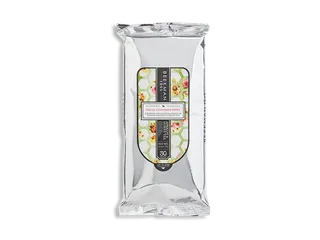
Beekman 1802 Apricot & Honey Tea Face Wipes
Works for
CleansingDecyl glucoside, Polysorbate 20Cleanses gently
“These cleansing, moisturizing wipes remove impurities and leave skin visibly refined.”
This product works by removing dirt and oil from the surface of the skin. It uses a combination of mild cleansing agents (decyl glucoside, polysorbate 20) and should be able to cleanse the skin gently. Still keep in mind that any cleansing can disrupt the skin barrier, and most people do not need to cleanse their skin more than once per day.
Even though this formulation is mild, the following cleansing agents could trigger an irritation or allergy for some people: decyl glucoside
Can it cause trouble?
Irritancy2 strong irritants: Retinyl palmitate, ParfumMedium risk
ComedogenicClean of flagged comedogenic ingredientsNone flagged
User reviews
Be the first — your take helps the next person decide.
Ingredients
Filter by role to see what each ingredient is doing.
Water~40–60%
Decyl glucoside~8.2–12.3%
- Irritation risk
- High
Helps oil and water mix together. Can be irritating
More about Decyl glucosideAloe barbadensis leaf extract~3.7–5.6%
- Irritation risk
- Medium
Traditionally used to treat sunburns, dermatitis and inflammation, but evidence for its effectiveness is lacking. The extract can contain humectants that help attract water into the skin
More about Aloe barbadensis leaf extractCalendula officinalis extract~2.9–4.3%
- Irritation risk
- High
A plant extract that might help neutralize free radicals in skin
More about Calendula officinalis extractCaprae lac~2.1–3.2%
- Irritation risk
- Low
Tocopheryl acetate~1.7–2.5%
- Irritation risk
- Medium
A more stable but less bio-available form of vitamin E compared to Tocopherol. Might help moisturize and protect the skin from free radicals, but mostly used in low concentrations to stabilize other ingredients.
More about Tocopheryl acetateAscorbic acid~1.5–2.3%
- Irritation risk
- High
The most well-researched antioxidant that works in skin. Helps neutralize free radicals supporting collagen production, helping to even out the skin tone and preventing early signs of aging
More about Ascorbic acidRetinyl palmitate~1.2–1.8%
- Irritation risk
- High
Three steps removed from the active form of vitamin A - retinoic acid. To have an effect in the skin, it first needs to be converted twice to become the retinoic acid. This means it is less potent than retinol, but could also be less irritating. Once converted to the retinoic acid in the skin, it helps against all signs of aging, improves skin cell turnover and helps fight blemishes and clogged pores. However, in many cosmetic formulations, it is used in a concentration that is too low to have the full effect
More about Retinyl palmitateCaffeine~1–1.5%
- Irritation risk
- Medium
Might be helpful in neutralizing free radicals. Can have a dehydration effect that might somewhat decrease the look of puffy eyes
More about CaffeineUbiquinone~0.85–1.25%
- Irritation risk
- Low
Coenzyme Q10. It helps neutralize free radicals in skin, improves skin hydration and might be helpful agains fine lines and wrinkles. It can be an allergen
More about UbiquinoneCitric acid~0.5–1.15%
- Irritation risk
- Medium
Can work as an exfoliant but is typically used to adjust the product pH
More about Citric acidChamomilla recutita flower extract~0.4–0.95%
- Irritation risk
- High
Plant extract that can have healing and anti-inflammatory properties. It is a potential allergen and can be irritating
More about Chamomilla recutita flower extractCamellia sinensis leaf extract~0.35–0.8%
- Irritation risk
- Low
Can contain potent anti-oxidant compounds (abbreviated ECG, GCG, EGC, and EGCG) that might help protect the skin from free radicals. Can help calm down inflammation and has some anti-bacterial properties. Unfortunately, these antioxidants are unstable and lose their effectiveness very quickly in products. The concentration of the antioxidant compounds in the extract also tends to be low to be effective in topical formulation
More about Camellia sinensis leaf extractPolysorbate 20~0.2–0.8%
Disodium edta~0.15–0.5%
Phenoxyethanol~0.1–0.45%
- Irritation risk
- Low
A preservative. It helps prevent bacterial growth in cosmetic products
More about PhenoxyethanolPotassium sorbate~0.1–0.3%
Sodium benzoate~0.05–0.25%
Parfum~0.05–0.15%
- Irritation risk
- High
An aromatic blend of unspecified and possibly irritating ingredients
More about ParfumIngredient list view
Water, Decyl glucoside, Aloe barbadensis leaf extract, Calendula officinalis extract, Caprae lac, Tocopheryl acetate, Ascorbic acid, Retinyl palmitate, Caffeine, Ubiquinone, Citric acid, Chamomilla recutita flower extract, Camellia sinensis leaf extract, Polysorbate 20, Disodium edta, Phenoxyethanol, Potassium sorbate, Sodium benzoate, Parfum
Compare prices
Retailers ranked by price — lowest first.
Affiliate links · As an Amazon Associate, WIMJ earns from qualifying purchases.
Worth comparing, line by line.
Match % combines shared ingredients, the first five ingredients, shared actives and hero ingredients, irritancy (lower counts in the alternative's favour), texture and body area. Only products in the same routine step are compared.
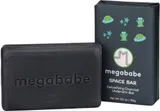
| Beekman 1802Apricot & Honey Tea Face WipesYOUR PRODUCT | megababeSpace Bar Detoxifying Charcoal Underarm Bar | ObagiObagiMD On the go Cleansing Wipes | Pacifica BeautyPineapple Wipeout Oil Cleansing Face Wipes | |
|---|---|---|---|---|
| Match | — | 62% | 40% | 39% |
| Price | — | $15.94 | — | — |
| Shared key ingredients | — | 1 of 7 | 2 of 7 | 2 of 7 |
| Key difference | — | Glycolic Acid | Trehalose | Hyaluronic Acid |
| Irritancy | Medium | Medium | Low | Medium |
| Drying alcohol | — | — | — | — |
| View product | Shop | Shop | Shop |


More alternatives: Cetaphil Gentle Skin Cleansing ClothsJosie Maran Argan Bare Naked Cleansing Wipes
Sources cited in this review
Every concentration estimate and effectiveness label is anchored to one of these 2 studies and safety reviews.
- 1
- 2

Affiliate links · As an Amazon Associate, WIMJ earns from qualifying purchases.