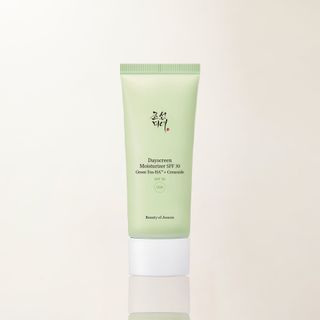
Beauty of Joseon Dayscreen Moisturizer SPF 30
Works for
2 of 2 advertised claims delivered
Sun protectionSPF 30 · 5 UV filtersBroad spectrum
This product offers a good level of protection against both UVB and UVA rays.
This sunscreen uses organic (so-called "chemical") sunscreen filters. Organic, or "chemical" filters usually provide reliable sun protection and rarely leave a white cast. Sunscreens with organic filters can sting eyes.
This product can be considered "reef safe" because it does not contain the UV filters (oxybenzone and octinoxate) that can be harmful to coral reefs when present in the water in high concentrations.
MoisturizingCeramide np, Sodium hyaluronate + 8 moreStrong evidence
“Dayscreen Moisturizer SPF 30”
This product can help improve hydration of the skin with the two types of ingredients.
The first type is called “humectants”:
these ingredients help attract water.
When humectants are on the surface of the skin, they “pull in” the moisture from the outside environment, or from
within deeper layers of the skin. The following ingredients in this product do the job:
sodium hyaluronate.
This product also contains ingredients called “occlusives”. They help reduce the speed with which our skin loses moisture to the outside environment. These ingredients also help soften the upper layer of the skin, so it feels less tight and nicer to the touch. The following ingredients in this product do the job: ceramide np, macadamia ternifolia seed oil.
The following ingredients in this product are especially good for supporting the skin barrier and helping with the hydration level: ceramide np
Anti-agingNot advertised by the brand · TocopherolStrong evidence
This product can help prevent early signs of skin aging because it offers a good level of broad spectrum sun protection. Sun damage is the main cause of premature skin aging, and protecting your skin from the sun is the best anti-aging strategy.
Evens skin toneNot advertised by the brand · No ingredient credited for this claimStrong evidence
This product offers broad spectrum sun protection. It means that it can prevent hyperpigmentation and help keep the skin tone even (sun damage is the main factor causing age spots, darkening of post-acne marks and other discolorations).
Can it cause trouble?
Irritancy12 flagged ingredientsLow risk
ComedogenicClean of flagged comedogenic ingredientsNone flagged

User reviews
Be the first — your take helps the next person decide.
Ingredients
Filter by role to see what each ingredient is doing.
Butyl methoxydibenzoylmethane2.7%
- Irritation risk
- Medium
Avobenzone. An organic, or so-called "chemical" UV filter. Protects against both UVA and UVB rays. Needs to be combined with other filters in a formulation to be stable.
More about Butyl methoxydibenzoylmethaneHomosalate5%
- Irritation risk
- Medium
A weak sunscreen that offers some protection against the sun rays that cause sunburn (UVB), but does not offer meaningful protection against protect against the most aging sun rays (UVA). It loses its effectiveness quickly when exposed to sunlight. It is an organic, or so called "chemical" sunscreen. When used in low concentrations, helps to stabilize the product formulation
More about HomosalateEthylhexyl salicylate4.5%
- Irritation risk
- Low
Octisalate. A UV filter. It offers some protection against the sun rays that cause sunburn (UVB), but does not protect against the most aging sun rays (UVA). It loses its effectiveness quickly when exposed to sunlight. It is an organic, or so called "chemical" sunscreen
More about Ethylhexyl salicylateOctocrylene4%
- Irritation risk
- Medium
A weak sunscreen that protects against the sun rays that cause sunburn (UVB) and is somewhat effective against the UVA rays. It is quite stable and can help stabilize other, more vulnerable, sunscreen ingredients like Avobenzone. It is an organic, or so called "chemical" sunscreen
More about OctocryleneWater~45–55%
Propanediol~6.3–7.7%
- Irritation risk
- Low
Acts as a solvent for other ingredients. Speeds up the absorption of other ingredients into the skin
More about PropanediolButyloctyl salicylate~5.8–7%
- Irritation risk
- Medium
A synthetic ester of salicylic acid that is used to help disperse pigments and boost effectiveness of sunscreen ingredients. It is able to absorb UV light (working as an organic, or chemical filter), but is not approved as a sunscreen ingredient on its own
More about Butyloctyl salicylatePolymethylsilsesquioxane~4.4–5.3%
- Irritation risk
- Low
A silicone that improves product texture and helps dissolve other ingredients. Can form a non-greasy film on the skin to prevent moisture loss
More about PolymethylsilsesquioxanePolyglyceryl-6 stearate~3.4–4.1%
- Irritation risk
- Low
Helps soften the upper layer of the skin
More about Polyglyceryl-6 stearate1,2-hexanediol~1.1–1.4%
Pentylene glycol~1.8–2.3%
- Irritation risk
- Medium
Used to preserve products, dissolve other ingredients and create a nice product texture
More about Pentylene glycolMethyl trimethicone~1.5–1.8%
- Irritation risk
- Low
A type of silicone that helps create a silky product finish and dissolve other ingredients
More about Methyl trimethiconeCaprylyl methicone~1.3–1.5%
- Irritation risk
- Low
A type of silicone that helps to soften the upper layer of the skin and create a nice product finish on the skin
More about Caprylyl methiconeTromethamine~1–1.2%
Acrylates/c10-30 alkyl acrylate crosspolymer~0.95–1.15%
- Irritation risk
- Medium
Maintains the texture of skincare products. Allows the product to spread evenly. Helps oil and water mix together
More about Acrylates/c10-30 alkyl acrylate crosspolymerAmmonium acryloyldimethyltaurate/vp copolymer~0.65–1%
- Irritation risk
- Low
Increases thickness of a product. Texture enhancer for oil-in-water emulsions
More about Ammonium acryloyldimethyltaurate/vp copolymerPolyacrylate crosspolymer-6~0.6–0.9%
- Irritation risk
- Low
Polyglyceryl-6 behenate~0.55–0.85%
Hippophae rhamnoides fruit oil~0.5–0.75%
- Irritation risk
- High
A plant oil that might somewhat help to neutralize free radicals. It could be irritating
More about Hippophae rhamnoides fruit oilEthylhexylglycerin~0.45–0.7%
Xanthan gum~0.4–0.6%
- Irritation risk
- Low
Used to create a thicker product consistency
More about Xanthan gumSodium stearoyl glutamate~0.5–0.75%
- Irritation risk
- Medium
Helps oil and water mix together
More about Sodium stearoyl glutamateCamellia sinensis leaf water~0.25–0.5%
- Irritation risk
- Low
Green tea leaf water. Might have some minimal anti-oxidant effect
More about Camellia sinensis leaf waterSodium hyaluronate~0.25–0.5%
- Irritation risk
- Low
One of the best moisturizing ingredients. Attracts water into the upper layer of the skin
More about Sodium hyaluronateMacadamia ternifolia seed oil~0.35–0.65%
- Irritation risk
- Medium
Plant oil from nuts that helps soften the upper layer of the skin. Contains a high concentration of oleic acid that can weaken skin's barrier function and increase water-loss while enhancing penetration of other ingredients
More about Macadamia ternifolia seed oilGlyceryl stearate~0.35–0.6%
- Irritation risk
- Low
An emollient that softens the skin and forms a protective layer on its surface. Helps water and oil mix together
More about Glyceryl stearateCeramide np~0.3–0.6%
- Irritation risk
- Low
A type of lipid similar to ceramides naturally present in skin. Helps to soften the upper layer of the skin and supports the skin barrier function to keep it hydrated. Can help to prevent inflammation in skin
More about Ceramide npTocopherol~0.2–0.4%
- Irritation risk
- Low
Pure form of vitamin E. Can help moisturise and protect the skin from free radicals. Often used to help stabilise other ingredients or the formula itself
More about TocopherolGlycolipids~0.2–0.4%
- Irritation risk
- Low
Ingredient list view
Butyl methoxydibenzoylmethane, Homosalate, Ethylhexyl salicylate, Octocrylene, Water, Propanediol, Butyloctyl salicylate, Polymethylsilsesquioxane, Polyglyceryl-6 stearate, 1,2-hexanediol, Pentylene glycol, Methyl trimethicone, Caprylyl methicone, Tromethamine, Acrylates/c10-30 alkyl acrylate crosspolymer, Ammonium acryloyldimethyltaurate/vp copolymer, Polyacrylate crosspolymer-6, Polyglyceryl-6 behenate, Hippophae rhamnoides fruit oil, Ethylhexylglycerin, Xanthan gum, Sodium stearoyl glutamate, Camellia sinensis leaf water, Sodium hyaluronate, Macadamia ternifolia seed oil, Glyceryl stearate, Ceramide np, Tocopherol, Glycolipids
Compare prices
Retailers ranked by price — lowest first.
Affiliate links · prices updated regularly · As an Amazon Associate, WIMJ earns from qualifying purchases.
Worth comparing, line by line.
Match % combines shared ingredients, the first five ingredients, shared actives and hero ingredients, irritancy (lower counts in the alternative's favour), texture and body area. Only products in the same routine step are compared.
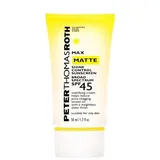
| Beauty of JoseonDayscreen Moisturizer SPF 30YOUR PRODUCT | CeraVeUltra-Light Moisturizing Lotion | La Roche-PosayToleriane Double Repair Facial Moisturizer with SPF | Peter Thomas RothMax Matte Shine-Control Sunscreen Broad Spectrum SPF45 | |
|---|---|---|---|---|
| Match | — | 63% | 61% | 58% |
| Price | $20.00 | $12.53−$7.47 | $19.99 | $35.36+$15.36 |
| Shared key ingredients | — | 5 of 8 | 5 of 8 | 6 of 8 |
| Key difference | — | Ceramide Ap | Niacinamide | Ceramide Eos |
| Irritancy | Low | Low | Low | Low |
| SPF | SPF 30 | SPF 30 | SPF 30 | SPF 45 |
| Drying alcohol | — | — | — | — |
| View product | Shop | Shop | Shop |

Sources cited in this review
Every concentration estimate and effectiveness label is anchored to one of these 11 studies and safety reviews.
- 1
- 2
- 3
- 4Safety Assessment of Tromethamine as Used in Cosmeticscir-safety.org
- 5Hyaluronic acid: A key molecule in skin agingncbi.nlm.nih.gov
- 6

Affiliate links · As an Amazon Associate, WIMJ earns from qualifying purchases.