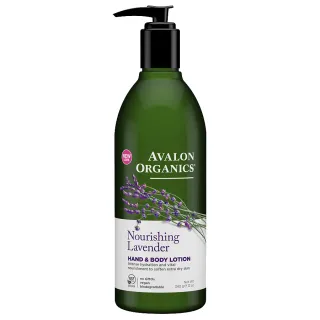
Avalon Organics Hand & Body Lotion Lavender

Avalon Organics Hand & Body Lotion Lavender

Efficacy75/100IrritancyHigh

Works for

Moisturizing
Glycerin, Carthamus tinctorius seed oil + 15 more
Works
What the product description says
“A triple dose of rich lipid sources - certified organic Sunflower, Flaxseed and Coconut Oils - restores the skin's lipid balance for long-lasting, easily absorbed moisturization and silky, supple skin.”
Source: Walgreens

This product can help improve hydration of the skin with the two types of ingredients.

The first type is called “humectants”:
these ingredients help attract water. When humectants are on the surface of the skin, they “pull in” the moisture from the outside environment, or from within deeper layers of the skin. The following ingredients in this product do the job: arginine, glycerin.

This product also contains ingredients called “occlusives”. They help reduce the speed with which our skin loses moisture to the outside environment. These ingredients also help soften the upper layer of the skin, so it feels less tight and nicer to the touch. The following ingredients in this product do the job: arginine, cocos nucifera oil.

GlycerinKey active· HumectantEffect: HighOne of the best moisturizing ingredients. Naturally present in skin. It attracts water to the upper layer of the skin working as a humectant~4.1–5%
Carthamus tinctorius seed oilKey active· EmollientEffect: HighAn emollient that helps soften the skin and might help calm down inflammation~3.1–3.8%
Glyceryl stearate seKey activeEffect: MediumUsed to stabilize the product formulations and works as an emollient~2.2–2.7%
Beta-glucanKey activeEffect: HighHelps attract water to the upper layer of the skin, calm down inflammation and irritation, restore the barrier function and support wound healing. It can be helpful in reducing fine lines and wrinkles~1.3–1.6%
Cocos nucifera oilKey active· Emollient, OcclusiveEffect: HighAn emollient. Found to be as effective as a moisturizer for dry skin as mineral oil. Could be comedogenic~0.35–0.6%
Persea gratissima oilKey active· EmollientEffect: HighAn emollient that helps soften the skin and could be helpful in repairing its barrier function~0.3–0.55%
Olea europaea fruit oilKey active· EmollientEffect: MediumAn emollient that helps soften the skin but is not effective for restoring its barrier function. Might be helpful to calm down inflammation~0.3–0.55%
Cetyl alcoholKey active· EmollientEffect: MediumA non-drying alcohol that works to soften the skin and stabilize product formulations helping oil and water mix together~0.3–0.5%
Sodium hyaluronateKey active· HumectantEffect: HighOne of the best moisturizing ingredients. Attracts water into the upper layer of the skin~0.25–0.45%
ArginineKey active· Humectant, OcclusiveEffect: HighAn amino acid that is naturally present in skin and helps keep it hydrated. When used together with AHAs, it can reduce their irritating effect on the skin~0.25–0.45%
Aloe barbadensis leaf juice· HumectantEffect: LowTraditionally used to treat sunburns, dermatitis and inflammation, but evidence for its effectiveness is lacking. The extract can contain humectants that help attract water into the skin~7.2–8.8%
Stearic acid· EmollientEffect: LowHelps oil and water mix together and works as an emollient~2–2.4%
Camellia sinensis leaf extractEffect: LowCan contain potent anti-oxidant compounds (abbreviated ECG, GCG, EGC, and EGCG) that might help protect the skin from free radicals. Can help calm down inflammation and has some anti-bacterial properties. Unfortunately, these antioxidants are unstable and lose their effectiveness very quickly in products. The concentration of the antioxidant compounds in the extract also tends to be low to be effective in topical formulation~1–1.3%
Linum usitatissimum seed oilEffect: Low~0.25–0.5%
Cucumis sativus fruit extractEffect: Low, below effective doseMight be somewhat helpful in reducing hyperpigmentation and neutralizing free radicals but its typical concentration in a product is too low for having an effect~0.65–0.95%
Butyrospermum parkii butterUnder-dosedA great moisturising ingredient that softens the skin and reduces water loss from its upper layer. It also can be helpful in protecting skin from free radicals~0.5–0.75%
Caprylic/capric triglycerideUnder-dosedA good mix of fatty acids that forms a protective layer on the skin. Improves the shelf life of products. Derived from coconut and glycerin~0.3–0.55%
Anti-oxidation
Side benefit · Camellia sinensis leaf extract, Carthamus tinctorius seed oil + 6 more
May help

This product contains antioxidants (camellia sinensis leaf extract) that can help neutralize free radicals in skin to lessen the damage it gets from the UV light (sun). There is some human evidence for this effect in skin, though it is smaller or less consistent than the evidence for the best antioxidants.

Camellia sinensis leaf extractKey activeEffect: MediumCan contain potent anti-oxidant compounds (abbreviated ECG, GCG, EGC, and EGCG) that might help protect the skin from free radicals. Can help calm down inflammation and has some anti-bacterial properties. Unfortunately, these antioxidants are unstable and lose their effectiveness very quickly in products. The concentration of the antioxidant compounds in the extract also tends to be low to be effective in topical formulation~1–1.3%
Carthamus tinctorius seed oilEffect: LowAn emollient that helps soften the skin and might help calm down inflammation~3.1–3.8%
Beta-glucanEffect: LowHelps attract water to the upper layer of the skin, calm down inflammation and irritation, restore the barrier function and support wound healing. It can be helpful in reducing fine lines and wrinkles~1.3–1.6%
Echinacea angustifolia extractEffect: LowPlant extract that might contain antioxidants, have antibacterial effect and help reduce inflammation, but solid evidence is lacking. Can be irritating~0.35–0.6%
Cucumis sativus fruit extractEffect: Low, below effective doseMight be somewhat helpful in reducing hyperpigmentation and neutralizing free radicals but its typical concentration in a product is too low for having an effect~0.65–0.95%
Butyrospermum parkii butterEffect: Low, below effective doseA great moisturising ingredient that softens the skin and reduces water loss from its upper layer. It also can be helpful in protecting skin from free radicals~0.5–0.75%
Tocopheryl acetateEffect: Low, below effective doseA more stable but less bio-available form of vitamin E compared to Tocopherol. Might help moisturize and protect the skin from free radicals, but mostly used in low concentrations to stabilize other ingredients.~0.25–0.45%
BisabololEffect: Low, below effective doseAn active component of chamomile plant that historically has been used to calm down irritated skin. A recent study shows that bisabolol indeed can have some anti-inflammatory effect on skin, even though conclusive data is lacking. Bisabolol has a sweet floral scent and can be added to products for its aromatic properties~0.2–0.4%

Can it cause trouble?

Irritancy
11 strong irritants: Echinacea angustifolia extract, Lavandula angustifolia flower/leaf/stem extract + 9 more — patch-test recommended
High risk
We flagged 22 ingredients with irritancy potential. Severity depends on your sensitivity threshold; the table lists the worst offenders first.
IngredientFunctionIrritationEst. amount
Chamomilla recutita flower extractPlant extract that can have healing and anti-inflammatory properties. It is a potential allergen and can be irritatingHigh~0.75–1.1%est.
Echinacea angustifolia extractPlant extract that might contain antioxidants, have antibacterial effect and help reduce inflammation, but solid evidence is lacking. Can be irritatingHigh~0.35–0.6%est.
Lavandula angustifolia flower/leaf/stem extractUsed as a fragranceHigh~0.5–0.7%est.
Citrus aurantifolia oil—High~0.45–0.65%est.
Citrus limon peel oilA highly irritating fragranceHigh~0.35–0.65%est.
Lavandula angustifolia oilAn essential oil. Potential allergen and can be irritating. It has some anti-bacterial propertiesHigh~0.3–0.6%est.
AlcoholCan be drying and contribute to skin irritation. Used in formulars to dissolve other ingredients, create a thinner product consistency or for its antibacterial propertiesHigh~0.2–0.4%est.
Benzyl alcoholA preservative. Can be used to mask unpleasant smell. Can be irritatingHigh~0.15–0.3%est.
CitralA fragrance with a lemon scent. A likely irritantHigh~0.15–0.25%est.
CoumarinA fragrance. Is a likely skin allergen and can be irritatingHigh~0.1–0.25%est.
GeraniolA fragrance. Can be irritatingHigh~0.1–0.15%est.
LimoneneA common frangrance that can easily irritate skin, especially if exposed to air, light or heatHigh~0.1–0.15%est.
LinaloolA fragrance. Can be irritatingHigh~0.05–0.1%est.
Aloe barbadensis leaf juiceTraditionally used to treat sunburns, dermatitis and inflammation, but evidence for its effectiveness is lacking. The extract can contain humectants that help attract water into the skinMedium~7.2–8.8%est.
Cucumis sativus fruit extractMight be somewhat helpful in reducing hyperpigmentation and neutralizing free radicals but its typical concentration in a product is too low for having an effectMedium~0.65–0.95%est.
Olea europaea fruit oilAn emollient that helps soften the skin but is not effective for restoring its barrier function. Might be helpful to calm down inflammationMedium~0.3–0.55%est.
Persea gratissima oilAn emollient that helps soften the skin and could be helpful in repairing its barrier functionMedium~0.3–0.55%est.
Caprylic/capric triglycerideA good mix of fatty acids that forms a protective layer on the skin. Improves the shelf life of products. Derived from coconut and glycerinMedium~0.3–0.55%est.
Potassium hydroxideUsed to adjust the pH level of productsMedium~0.25–0.45%est.
Sodium stearoyl glutamateHelps oil and water mix togetherMedium~0.3–0.55%est.
Tocopheryl acetateA more stable but less bio-available form of vitamin E compared to Tocopherol. Might help moisturize and protect the skin from free radicals, but mostly used in low concentrations to stabilize other ingredients.Medium~0.25–0.45%est.
Potassium sorbateA preservativeMedium~0.2–0.35%est.
Comedogenic
3 ingredients rated 2 or more on the 0–5 pore-clogging scale
3 flagged
These ingredients have a comedogenic rating of 2 or more on a 0–5 scale; the table shows each one's rating. In leave-on products they can clog pores in acne-prone skin.
IngredientFunctionRatingEst. amount
Butyrospermum parkii butterA great moisturising ingredient that softens the skin and reduces water loss from its upper layer. It also can be helpful in protecting skin from free radicals3/5~0.5–0.75%est.
Cocos nucifera oilAn emollient. Found to be as effective as a moisturizer for dry skin as mineral oil. Could be comedogenic3/5~0.35–0.6%est.
Glyceryl stearate seUsed to stabilize the product formulations and works as an emollient2/5~2.2–2.7%est.

User reviews

Would you recommend?
No community reviews yet.

Be the first — your take helps the next person decide.

Ingredients

Filter by role to see what each ingredient is doing.

Water~45–55%
Formula
Irritation risk
Low

Plain old water

More about Water
Aloe barbadensis leaf juice~7.2–8.8%
Irritant · medium
Irritation risk
Medium
Works for
MoisturizingReduces rednessReduces irritationAntibacterialAnti-inflammatoryAnti-blemishAnti-aging

Traditionally used to treat sunburns, dermatitis and inflammation, but evidence for its effectiveness is lacking. The extract can contain humectants that help attract water into the skin

More about Aloe barbadensis leaf juice
Glycerin~4.1–5%
Key active
Irritation risk
Low
Works for
Moisturizing

One of the best moisturizing ingredients. Naturally present in skin. It attracts water to the upper layer of the skin working as a humectant

More about Glycerin
Carthamus tinctorius seed oil~3.1–3.8%
Key active
Irritation risk
Low
Works for
MoisturizingAnti-oxidation

An emollient that helps soften the skin and might help calm down inflammation

More about Carthamus tinctorius seed oil
Glyceryl stearate se~2.2–2.7%
Key activeComedogenic 2/5
Irritation risk
Low
Comedogenicity
2/5
Works for
CleansingMoisturizing

Used to stabilize the product formulations and works as an emollient

More about Glyceryl stearate se
Stearic acid~2–2.4%
Formula
Irritation risk
Low
Works for
CleansingMoisturizing

Helps oil and water mix together and works as an emollient

More about Stearic acid
Avena sativa bran~1.8–2.2%
Formula
Beta-glucan~1.3–1.6%
Key active
Irritation risk
Low
Works for
Anti-inflammatoryReduces irritationMoisturizingAnti-oxidationAnti-agingAnti-blemish

Helps attract water to the upper layer of the skin, calm down inflammation and irritation, restore the barrier function and support wound healing. It can be helpful in reducing fine lines and wrinkles

More about Beta-glucan
Camellia sinensis leaf extract~1–1.3%
Key active
Irritation risk
Low
Works for
Anti-oxidationAntibacterialAnti-agingAnti-blemishEvens skin toneMoisturizing

Can contain potent anti-oxidant compounds (abbreviated ECG, GCG, EGC, and EGCG) that might help protect the skin from free radicals. Can help calm down inflammation and has some anti-bacterial properties. Unfortunately, these antioxidants are unstable and lose their effectiveness very quickly in products. The concentration of the antioxidant compounds in the extract also tends to be low to be effective in topical formulation

More about Camellia sinensis leaf extract
Chamomilla recutita flower extract~0.75–1.1%
Irritant · high
Irritation risk
High
Works for
Anti-inflammatory

Plant extract that can have healing and anti-inflammatory properties. It is a potential allergen and can be irritating

More about Chamomilla recutita flower extract
Cucumis sativus fruit extract~0.65–0.95%
Irritant · medium
Irritation risk
Medium
Works for
Anti-oxidationMoisturizing

Might be somewhat helpful in reducing hyperpigmentation and neutralizing free radicals but its typical concentration in a product is too low for having an effect

More about Cucumis sativus fruit extract
Echinacea angustifolia extract~0.35–0.6%
Irritant · high
Irritation risk
High
Works for
Anti-oxidation

Plant extract that might contain antioxidants, have antibacterial effect and help reduce inflammation, but solid evidence is lacking. Can be irritating

More about Echinacea angustifolia extract
Lavandula angustifolia flower/leaf/stem extract~0.5–0.7%
Irritant · high
Butyrospermum parkii butter~0.5–0.75%
Under-dosedComedogenic 3/5
Irritation risk
Low
Comedogenicity
3/5
Works for
MoisturizingAnti-agingAnti-oxidation

A great moisturising ingredient that softens the skin and reduces water loss from its upper layer. It also can be helpful in protecting skin from free radicals

More about Butyrospermum parkii butter
Citrus aurantifolia oil~0.45–0.65%
Irritant · high
Citrus limon peel oil~0.35–0.65%
Irritant · high
Irritation risk
High

A highly irritating fragrance

More about Citrus limon peel oil
Cocos nucifera oil~0.35–0.6%
Key activeComedogenic 3/5
Irritation risk
Low
Comedogenicity
3/5
Works for
Moisturizing

An emollient. Found to be as effective as a moisturizer for dry skin as mineral oil. Could be comedogenic

More about Cocos nucifera oil
Lavandula angustifolia oil~0.3–0.6%
Irritant · high
Irritation risk
High

An essential oil. Potential allergen and can be irritating. It has some anti-bacterial properties

More about Lavandula angustifolia oil
Linum usitatissimum seed oil~0.25–0.5%
Formula
Irritation risk
Low
Works for
Moisturizing
More about Linum usitatissimum seed oil
Olea europaea fruit oil~0.3–0.55%
Key activeIrritant · medium
Irritation risk
Medium
Works for
Moisturizing

An emollient that helps soften the skin but is not effective for restoring its barrier function. Might be helpful to calm down inflammation

More about Olea europaea fruit oil
Persea gratissima oil~0.3–0.55%
Key activeIrritant · medium
Irritation risk
Medium
Works for
Moisturizing

An emollient that helps soften the skin and could be helpful in repairing its barrier function

More about Persea gratissima oil
Arginine~0.25–0.45%
Key active
Irritation risk
Low
Works for
Moisturizing

An amino acid that is naturally present in skin and helps keep it hydrated. When used together with AHAs, it can reduce their irritating effect on the skin

More about Arginine
Bisabolol~0.2–0.4%
Formula
Irritation risk
Low
Works for
Reduces irritationAnti-inflammatoryAnti-oxidation

An active component of chamomile plant that historically has been used to calm down irritated skin. A recent study shows that bisabolol indeed can have some anti-inflammatory effect on skin, even though conclusive data is lacking. Bisabolol has a sweet floral scent and can be added to products for its aromatic properties

More about Bisabolol
Caprylic/capric triglyceride~0.3–0.55%
Under-dosedIrritant · medium
Irritation risk
Medium
Works for
Moisturizing

A good mix of fatty acids that forms a protective layer on the skin. Improves the shelf life of products. Derived from coconut and glycerin

More about Caprylic/capric triglyceride
Cetyl alcohol~0.3–0.5%
Key active
Irritation risk
Low
Works for
CleansingMoisturizing

A non-drying alcohol that works to soften the skin and stabilize product formulations helping oil and water mix together

More about Cetyl alcohol
Potassium hydroxide~0.25–0.45%
Irritant · medium
Irritation risk
Medium

Used to adjust the pH level of products

More about Potassium hydroxide
Sodium hyaluronate~0.25–0.45%
Key active
Irritation risk
Low
Works for
Moisturizing

One of the best moisturizing ingredients. Attracts water into the upper layer of the skin

More about Sodium hyaluronate
Sodium stearoyl glutamate~0.3–0.55%
Irritant · medium
Irritation risk
Medium
Works for
Cleansing

Helps oil and water mix together

More about Sodium stearoyl glutamate
Stearyl alcohol~0.3–0.5%
Formula
Irritation risk
Low
Works for
Cleansing

An emollient that helps soften the skin

More about Stearyl alcohol
Tocopheryl acetate~0.25–0.45%
Irritant · medium
Irritation risk
Medium
Works for
Anti-oxidation

A more stable but less bio-available form of vitamin E compared to Tocopherol. Might help moisturize and protect the skin from free radicals, but mostly used in low concentrations to stabilize other ingredients.

More about Tocopheryl acetate
Xanthan gum~0.25–0.45%
Formula
Irritation risk
Low
Works for
Cleansing

Used to create a thicker product consistency

More about Xanthan gum
Alcohol~0.2–0.4%
Irritant · high
Irritation risk
High
Works for
Antibacterial

Can be drying and contribute to skin irritation. Used in formulars to dissolve other ingredients, create a thinner product consistency or for its antibacterial properties

More about Alcohol
Benzyl alcohol~0.15–0.3%
Irritant · high
Irritation risk
High

A preservative. Can be used to mask unpleasant smell. Can be irritating

More about Benzyl alcohol
Potassium sorbate~0.2–0.35%
Irritant · medium
Irritation risk
Medium

A preservative

More about Potassium sorbate
Sodium benzoate~0.15–0.25%
Formula
Irritation risk
Low

A preservative

More about Sodium benzoate
Citral~0.15–0.25%
Irritant · high
Irritation risk
High

A fragrance with a lemon scent. A likely irritant

More about Citral
Coumarin~0.1–0.25%
Irritant · high
Irritation risk
High

A fragrance. Is a likely skin allergen and can be irritating

More about Coumarin
Geraniol~0.1–0.15%
Irritant · high
Irritation risk
High

A fragrance. Can be irritating

More about Geraniol
Limonene~0.1–0.15%
Irritant · high
Irritation risk
High

A common frangrance that can easily irritate skin, especially if exposed to air, light or heat

More about Limonene
Linalool~0.05–0.1%
Irritant · high
Irritation risk
High

A fragrance. Can be irritating

More about Linalool
Ingredient list view

Water, Aloe barbadensis leaf juice, Glycerin, Carthamus tinctorius seed oil, Glyceryl stearate se, Stearic acid, Avena sativa bran, Beta-glucan, Camellia sinensis leaf extract, Chamomilla recutita flower extract, Cucumis sativus fruit extract, Echinacea angustifolia extract, Lavandula angustifolia flower/leaf/stem extract, Butyrospermum parkii butter, Citrus aurantifolia oil, Citrus limon peel oil, Cocos nucifera oil, Lavandula angustifolia oil, Linum usitatissimum seed oil, Olea europaea fruit oil, Persea gratissima oil, Arginine, Bisabolol, Caprylic/capric triglyceride, Cetyl alcohol, Potassium hydroxide, Sodium hyaluronate, Sodium stearoyl glutamate, Stearyl alcohol, Tocopheryl acetate, Xanthan gum, Alcohol, Benzyl alcohol, Potassium sorbate, Sodium benzoate, Citral, Coumarin, Geraniol, Limonene, Linalool

Compare prices

Retailers ranked by price — lowest first.

Amazon USPrice as of 11/17 21:25 GMT
$19.98
Buy

Affiliate links · As an Amazon Associate, WIMJ earns from qualifying purchases.

Worth comparing, line by line.

Match % combines shared ingredients, the first five ingredients, shared actives and hero ingredients, irritancy (lower counts in the alternative's favour), texture and body area. Only products in the same routine step are compared.

Side-by-side comparison of this product against its closest alternatives
Avalon OrganicsHand & Body Lotion LavenderYOUR PRODUCTAlba BotanicaAlba coconut Moisturizing LotionNaturiumBio-Lipid Restoring Body LotionDerma EVitamin E Fragrance-Free Sensitive Skin Shea Body Lotion
Match—44%41%41%
Price$19.98$22.50+$2.52$14.88−$5.10$10.35−$9.63
Shared key ingredients—6 of 116 of 115 of 11
Key difference—BeeswaxNiacinamidePanthenol
Irritancy High Medium Medium Low
Drying alcohol Contains drying alcohol Contains drying alcohol ——
View product Shop Shop Shop

More alternatives: Noody Lotion potionBabo Botanicals Moisturizing Baby Lotion

Cheaper alternatives? See how this stacks up against similar formulas.
We compare ingredient profiles across our catalog — pick the closest match for your budget.
Open dupe finder

Sources cited in this review

Every concentration estimate and effectiveness label is anchored to one of these 16 studies and safety reviews.

  1. 1
  2. 2
  3. 3
  4. 4
  5. 5
  6. 6
Avalon Organics Hand & Body Lotion Lavender
Avalon OrganicsHand & Body Lotion Lavender

Affiliate links · As an Amazon Associate, WIMJ earns from qualifying purchases.

As an Amazon Associate, WIMJ earns from qualifying purchases.