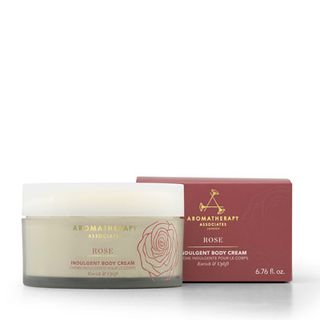
Aromatherapy Associates Rose Body Cream
Works for
1 of 1 advertised claim delivered
Moisturizing13 ingredients credited for this claimGood support
“Rose Body Cream”
This product can help improve hydration of the skin with the two types of ingredients.
The first type is called “humectants”:
these ingredients help attract water.
When humectants are on the surface of the skin, they “pull in” the moisture from the outside environment, or from
within deeper layers of the skin. The following ingredients in this product do the job:
glycerin, isomalt.
This product also contains ingredients called “occlusives”. They help reduce the speed with which our skin loses moisture to the outside environment. These ingredients also help soften the upper layer of the skin, so it feels less tight and nicer to the touch. The following ingredients in this product do the job: butyrospermum parkii butter, caprylic/capric triglyceride.
Can it cause trouble?
Irritancy23 strong irritants: Pelargonium graveolens oil, Limonene + 21 more — patch-test recommendedHigh risk
Comedogenic3 ingredients rated 2 or more on the 0–5 pore-clogging scale3 flagged

User reviews
Be the first — your take helps the next person decide.
Ingredients
Filter by role to see what each ingredient is doing.
Water~45–55%
Glycerin~4.6–5.6%
- Irritation risk
- Low
One of the best moisturizing ingredients. Naturally present in skin. It attracts water to the upper layer of the skin working as a humectant
More about GlycerinSqualane~4.1–5%
- Irritation risk
- Low
An oil naturally present in skin. Works as an emollient to soften the skin and form a protective layer on its surface without a greasy feeling.
More about SqualaneButyrospermum parkii butter~3.1–3.8%
- Irritation risk
- Low
- Comedogenicity
- 3/5
A great moisturising ingredient that softens the skin and reduces water loss from its upper layer. It also can be helpful in protecting skin from free radicals
More about Butyrospermum parkii butterPrunus amygdalus dulcis seed~2.2–2.7%
- Irritation risk
- Low
Helps soften the upper layer of the skin
More about Prunus amygdalus dulcis seedCaprylic/capric triglyceride~1.9–2.4%
- Irritation risk
- Medium
A good mix of fatty acids that forms a protective layer on the skin. Improves the shelf life of products. Derived from coconut and glycerin
More about Caprylic/capric triglycerideSimmondsia chinensis seed oil~1.6–2%
- Irritation risk
- Medium
Softens the upper layer of skin and helps restore the healthy skin barrier. Has shown to help calm down inflammation in skin. It is a stable oil, meaning that it retains its properties even when exposed to air.
More about Simmondsia chinensis seed oilCetearyl alcohol~1.5–1.8%
- Irritation risk
- Low
- Comedogenicity
- 2/5
A non-drying alcohol. Works as an emollient. Helps water and oil mix together and creates a nice product texture
More about Cetearyl alcoholCetearyl olivate~1.1–1.4%
Niacinamide~0.95–1.15%
- Irritation risk
- Low
Is proven to be effective in reducing blemishes, evening out skin tone and helping to improve lines and wrinkles. It helps the skin to repair sun damage, calm down inflammation and keep maintain good levels of moisture. The concentration of about 2% is effective for supporting the skin barrier and evening out the skin tone. Concentration of 4-6% is better for helping with acne and balancing the sebum production
More about NiacinamideTheobroma cacao seed butter~0.7–1.05%
- Irritation risk
- Low
- Comedogenicity
- 3/5
Helps soften the upper layer of the skin and can be helpful in restoring the skin barrier function. Might have some anti-oxidant effect
More about Theobroma cacao seed butterSorbitan olivate~0.55–0.85%
Phenoxyethanol~0.5–0.75%
- Irritation risk
- Low
A preservative. It helps prevent bacterial growth in cosmetic products
More about PhenoxyethanolIsomalt~0.45–0.7%
- Irritation risk
- Low
Helps attract water to the upper layer of the skin
More about IsomaltXanthan gum~0.45–0.65%
- Irritation risk
- Low
Used to create a thicker product consistency
More about Xanthan gumPelargonium graveolens oil~0.4–0.6%
Tocopherol~0.4–0.65%
- Irritation risk
- Low
Pure form of vitamin E. Can help moisturise and protect the skin from free radicals. Often used to help stabilise other ingredients or the formula itself
More about TocopherolEthylhexylglycerin~0.35–0.6%
Limonene~0.3–0.55%
- Irritation risk
- High
A common frangrance that can easily irritate skin, especially if exposed to air, light or heat
More about LimoneneCitronellol~0.25–0.5%
Cananga odorata flower oil~0.25–0.45%
Geraniol~0.25–0.45%
Citrus grandis peel oil~0.2–0.4%
- Irritation risk
- High
A plant oil with high content of volatile compounds that, especially when exposed to air, can cause allergic reactions and irritate the skin
More about Citrus grandis peel oilCymbopogon martini oil~0.2–0.4%
- Irritation risk
- High
Aromatic plant oil used in cosmetics as a fragrance. A likely irritant
More about Cymbopogon martini oilParfum~0.2–0.4%
- Irritation risk
- High
An aromatic blend of unspecified and possibly irritating ingredients
More about ParfumLinalool~0.2–0.4%
Citrus aurantium dulcis peel oil~0.25–0.45%
- Irritation risk
- High
An essentil oil from orange peel. Potential allergen and can be irritating
More about Citrus aurantium dulcis peel oilCitrus aurantium amara leaf/twig oil~0.25–0.45%
- Irritation risk
- High
Rosa damascena flower oil~0.25–0.45%
- Irritation risk
- High
Used as a fragrance. Can be irritating
More about Rosa damascena flower oilVetiveria zizanoides root oil~0.2–0.4%
- Irritation risk
- Low
Benzyl benzoate~0.2–0.4%
- Irritation risk
- High
Fragrance with sweet balsamic smell. Help to preserve products and dissolve other ingredients. Could trigger allergic reactions and be irritating
More about Benzyl benzoateCitral~0.2–0.4%
Cinnamomum camphora linalooliferum wood oil~0.2–0.35%
- Irritation risk
- High
Rhododendron ferrugineum leaf cell culture extract~0.2–0.4%
- Irritation risk
- Low
Lecithin~0.25–0.45%
- Irritation risk
- Low
Used mostly for creating emulsions - helping oil and water mix together. Helps soften the upper layer of the skin
More about LecithinLavandula angustifolia oil~0.2–0.35%
- Irritation risk
- High
An essential oil. Potential allergen and can be irritating. It has some anti-bacterial properties
More about Lavandula angustifolia oilCitrus limon peel oil~0.15–0.3%
Cymbopogon citratus leaf oil~0.15–0.3%
- Irritation risk
- High
Pogostemon cablin leaf oil~0.2–0.35%
Mentha piperita oil~0.1–0.2%
Benzyl salicylate~0.1–0.2%
Farnesol~0.1–0.2%
Schinus molle oil~0.1–0.2%
- Irritation risk
- Low
Artemisia pallens flower oil~0.05–0.1%
- Irritation risk
- Low
Boswellia carterii oil~0.05–0.1%
Ingredient list view
Water, Glycerin, Squalane, Butyrospermum parkii butter, Prunus amygdalus dulcis seed, Caprylic/capric triglyceride, Simmondsia chinensis seed oil, Cetearyl alcohol, Cetearyl olivate, Niacinamide, Theobroma cacao seed butter, Sorbitan olivate, Phenoxyethanol, Isomalt, Xanthan gum, Pelargonium graveolens oil, Tocopherol, Ethylhexylglycerin, Limonene, Citronellol, Cananga odorata flower oil, Geraniol, Citrus grandis peel oil, Cymbopogon martini oil, Parfum, Linalool, Citrus aurantium dulcis peel oil, Citrus aurantium amara leaf/twig oil, Rosa damascena flower oil, Vetiveria zizanoides root oil, Benzyl benzoate, Citral, Cinnamomum camphora linalooliferum wood oil, Rhododendron ferrugineum leaf cell culture extract, Lecithin, Lavandula angustifolia oil, Citrus limon peel oil, Cymbopogon citratus leaf oil, Pogostemon cablin leaf oil, Mentha piperita oil, Benzyl salicylate, Farnesol, Schinus molle oil, Artemisia pallens flower oil, Boswellia carterii oil
Compare prices
Retailers ranked by price — lowest first.

Affiliate links · prices updated regularly
Worth comparing, line by line.
Match % combines shared ingredients, the first five ingredients, shared actives and hero ingredients, irritancy (lower counts in the alternative's favour), texture and body area. Only products in the same routine step are compared.
| Aromatherapy AssociatesRose Body CreamYOUR PRODUCT | BiossanceSqualane and Caffeine Toning Body Cream - Unscented | MarudermHyaluronic Acid Moisturizer Face & Body Cream | La Roche-PosayLipikar Balm AP+ Body Cream for Extra Dry Skin | |
|---|---|---|---|---|
| Match | — | 89% | 89% | 87% |
| Price | $58.17 | $29.00−$29.17 | $21.99−$36.18 | $14.99−$43.18 |
| Shared key ingredients | — | 4 of 10 | 4 of 10 | 3 of 10 |
| Key difference | — | Caffeine | Panthenol | Ceramide Np |
| Irritancy | High | Low | Low | Low |
| Drying alcohol | — | — | — | — |
| View product | Shop | Shop | Shop |

Sources cited in this review
Every concentration estimate and effectiveness label is anchored to one of these 7 studies and safety reviews.
- 1
- 2
- 3
- 4
- 5Vitamin E in dermatologyncbi.nlm.nih.gov
- 6Vitamin E and Skin Healthlpi.oregonstate.edu

Affiliate links · As an Amazon Associate, WIMJ earns from qualifying purchases.